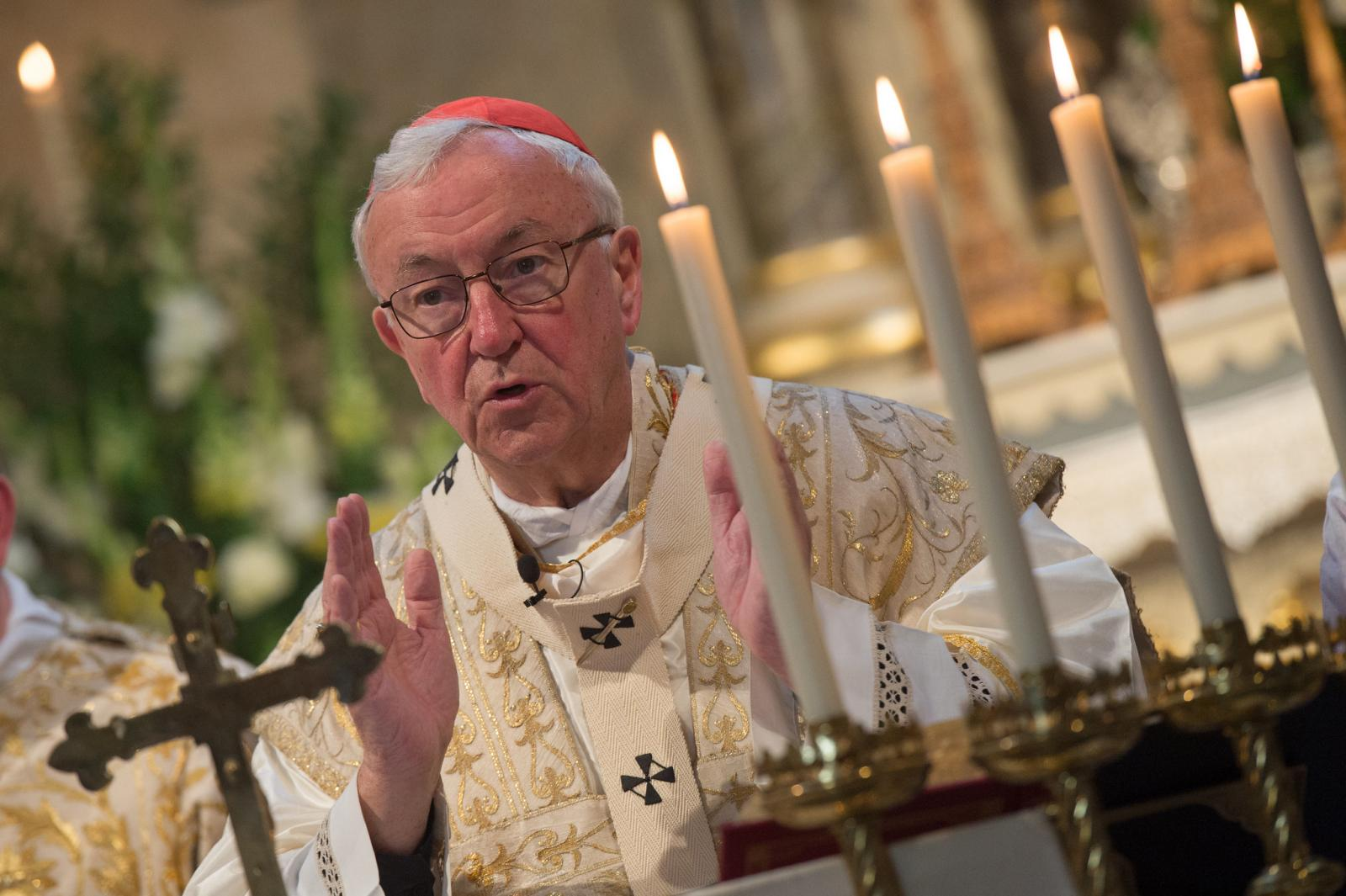
Cardinal Vincent Nichols has stressed that prayers must continue after more than 100 days of fighting in the Gaza Israel war:
‘The 100 days of warfare in Gaza and Israel illustrate, yet again, the horrors of war and the reinforcing of the barriers of hatred that it creates.
‘Our 100 days of prayer are not futile and our prayer must continue, not only for peace in the wider Middle East but also in Ukraine and all other areas riven by conflict.
‘The local Church tells us that the parish of the Holy Family in Gaza continues to be a place of safety for over 600 people, including over 50 severely disabled and very vulnerable children. They need our prayers and practical help financially.
‘So, too, we pray for all those involved in current negotiations to bring additional humanitarian aid to the beleaguered people of Gaza and medical aid to the hostages. Tireless efforts in negotiations are essential. This war and violence against the innocent must end. The hostages must be released. People must be able to live in peace. The long, slow work of reconstruction has to begin, sooner or later, on the ruined foundations of life in Gaza and in Israel. The challenges are immense and the dangers facing the world immediate and deeply troubling.’
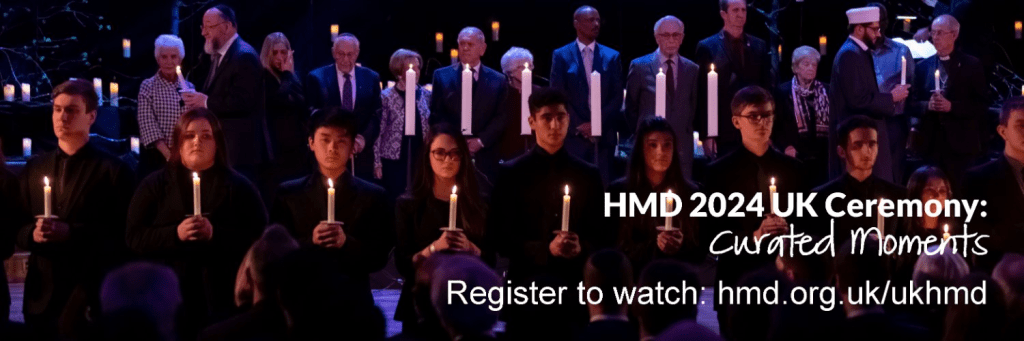
Join the nation on Saturday 27 January at 8pm to watch the ‘HMD 2024 UK Ceremony: Curated Moments’.
‘Curated Moments‘ is taken from the UK Holocaust Memorial Day Ceremony earlier in the week. It is vital that the entire nation can come together to commemorate Holocaust Memorial Day and to learn from genocide and build a better, safer future together.
Directly after the Curated Moments have finished at 8pm, people are asked to display lit candles safely in their windows to Light the Darkness to remember those who were murdered for who they were and to stand against prejudice and identity-based persecution in the world today.
About Holocaust Memorial Day
Holocaust Memorial Day (HMD) takes place on 27 January each year and is a time to remember the millions of people murdered during the Holocaust, under Nazi Persecution and in the genocides which followed in Cambodia, Rwanda, Bosnia and Darfur.
Holocaust Memorial Day is a time when we seek to learn the lessons of the past and recognise that genocide does not just take place on its own – it’s a steady process which can begin if discrimination, racism and hatred are not checked and prevented. We’re fortunate here in the UK; we are not at immediate risk of genocide. However, discrimination has not ended, nor has the use of the language of hatred or exclusion. There is still much to do to create a safer future and HMD is an opportunity to start this process.
To find out more about Holocaust Memorial Day visit:
Presentation by Neil Thorns, CAFOD Director of Advocacy – ‘Feedback from COP28‘
Neil Thorns, the Director of Advocacy for CAFOD, was the guest speaker at the Southern Dioceses Environment Network on Monday 15th January, 12.45-2.00pm, to give feedback to participants on the UN Climate Conference (COP28) held from 1-12 December 2023 .
Neil was present at COP28 in Dubai and has attended a number of previous COPs as a member of the Vatican delegation
For his presentation, Neil identified four headline outcomes from COP28:
Agreement on a Loss and Damage Fund
The UAE Consensus: Transition away from fossil fuels
Dubai – Baku – Belem Roadmap
Recognition of Food
He reported on each issue in more detail, explaining the significance of each and what it means for Catholics in the UK going forward.
Agreement on a Loss and Damage Fund
‘Loss and Damage’ is when poor communities overseas can no longer adapt to the effects of climate change but need to be able to respond when disasters occur. How do they get the resources they need?Developed countries who have done the most to cause the climate crisis have a responsibility towards these communities. ‘Loss and Damage’ has been kicking around for a long time in climate circles and in climate negotiations and a fund was finally agreed in principle Sharm El-Sheikh last year at COP27.
Operating the Fund was agreed on the first day of COP28 and money was put into it. Not enough money was put in, but what was important was that all the major countries contributed. For example, the US paid around $27 million which is just peanuts! The UK, in comparison has paid $45 million and the UAE $100 million. How that money is spent is going to be really important. It is also significant that ‘Loss and Damage’ will now be included for the first time in the Global Stock Take Process.
The Vatican is very interested in ‘Loss and Damage’ and especially non-economic ‘Loss and Damage’ – e.g. spiritual, cultural sites, language etc. The Vatican strongly supports ‘Integral Human Development’ so will continue to take a major interest in this aspect.
Neil said that people often ask, ‘Why do COPs have to happen annually? There have been 28 of them, are they achieving anything?’ His answer is ‘Yes!’ The pace may be slow, but the important thing is that we keep moving forward each year. The Global Stock Take Process is an important part of this. It is important to get things into the negotiations because then they get monitored and countries are accountable going forward. This was one of the biggest things to come out of COP28 and a big win for the first day.
2. UAE Consensus
Host countries like to get agreements named after themselves and so now we have the UAE Consensus arising as an outcome. COP28 was focused on the Global Stock Take that was agreed in Paris at COP21 in 2015 and came into force in 2020 whereby countries have to submit reports on how far they are doing to meet the principles of the Paris Agreement to keep global warming temperatures below 1.5C by 2050. All eyes were on COP28 to see if an end to Fossil Fuels would be included in the next Global Stock Take. Making a ‘transition away from fossil fuels’ was eventually included in the final agreement. It may not have been expressed in the strongest language – and was not what the Pope called for – but it was the first mention of an end to fossil fuels in a COP agreement. It is true there were a lot of caveats! For example, it didn’t call for taking away subsidies from fossil fuels, but we can start chipping away from this base.
3. Dubai – Baku – Belem Roadmap
COP29 will be in BAKU, Azerbaijan, in 2024 which is another oil state and will feature another COP president with oil company links.
COP30 will be in BELEM, Brazil in 2025 – a city in the Amazon rainforest.
These next two COPs are expected to be about finance. As Neil said, ‘Money makes the world go round!’ and at these next COPs progress of the Climate Fund will be closely scrutinised. A Climate Fund to enable developing countries to make adaptations was agreed in 2009 and set at $100bn per year. This target was meant to be reached by 2020 but is still only partially met. A ‘New Collective Quantified Goal’ has to be agreed this year in Baku to ensure that money gets to those countries for adaptation and loss and damage. Currently we using existing money to meet these commitments. For example, the UK is using part of the Overseas Aid Budget. This is essentially robbing Peter to pay Paul so we need innovative ideas on finance, such as a tax on international shipping. Levels of debt will be have to be addressed and debt cancellation considered as international finance architecture currently makes it difficult for developing countries to get loans, creating debt cycles that prevent spending on climate adaptation. The UK currently borrows money at 1 or 2%, while for Bangladesh it is 7 or 8%. There will also be questions about who pays? Should it be the historic big emitters? Or more recent emitters like Saudi Arabia, who don’t currently have any obligations to pay. A France-Kenya initiative to explore these options will report back to COP30 in Brazil.
4. Recognition of Food
A third of greenhouse gas emissions comes from our food and food systems. Food now needs to be considered in national plans. We can now include it in the whole aspect of deforestation. 150 countries are now pledged to include Food in their climate plans.
What Next?
The Vatican played an important role by talking about ending fossil fuels and talking about food and is in a position to ask for an ambitious Global Stock Take in these areas. The BBC reported on the Pope’s talk, read by Cardinal Parolin as the Pope himself was unable to attend due to illness. Media reports – especially the BBC which has a global reach – have an impact in COP spaces.
The rate of action is accelerating as we head towards 2025. The UK is heading into an election year and we can use this to promote improvements to our Nationally Determined Contribution (NDC). We need to let our elected representatives know what we want in terms of climate ambition.
Q & A with Neil
Q. How useful is a focus new tech e.g. solar panels? There are always side things happening alongside COP. More renewable energy deals were done at COP28 than ever before, which is a good thing. People at COP were talking about ‘carbon capture and storage’ but experts say it has very little impact so we can’t rely on it. Solar energy is making a huge difference. Especially in the US Joe Biden’s Inflation Reduction Bill has had a huge impact in creating green jobs. Tech linked to jobs makes for social change.
Q. What about the Vatican follow-up? Loss and Damage is a priority as I said earlier and talking about ending fossil fuels. The Catholic Church celebrates a Jubilee Year in 2025 and the Vatican is looking into how this can be linked to Brazil 2025 and COP30. Pope Francis said during the Covid pandemic that we don’t come out of a crisis the same. We come out either better or worse. Can we ensure that we come out better, with a better economics and better outcomes for the poorest?
Q. Can we push the CAFOD Fix the Food System even more? The Pope said in Laudato Si’ that ‘everything is connected.’ We have to link food with everything else and seeds is a big part in that. As CAFOD we can make some progress making sure that seeds find a place in the food plans for individual countries.
We then split into small breakout groups to discuss the questions: 1) What is your response to the outcomes of COP28? 2)What will you be focusing on for the environment in 2024?
Members of the Network were encouraged by the positive messaging from Neil. Participants asked how they might encourage people to be hopeful but at the same time make things like taking multiple flights socially unacceptable and wanted to be more confident in speaking up for the climate with family and friends. Members are focused on taking local actions, with several planning to taking part in the Christian Climate Action 10-Day Vigil in Lent. Some are involved with Greenpeace.
Participants also agreed that, while we are glad to hear that progress is being made, we need to make it known that progress needs to be faster, especially in this election year. CAFOD and SVP are working together on election material that will encourage Catholics to push for climate action this year.
Colette Joyce, Westminster Justice and Peace Co-ordinator, who convenes the Network said: “We are really grateful to Neil for representing us at COP28 and for his comprehensive reporting and analysis. Knowing that we can have an impact on the international processes helps motivate us to keep going with climate action on a local and parish basis.”
TheSouthern Dioceses Environment Networkis a network for all Catholics and our friends who careabout creation and meets monthly online on the second Monday of the month. It also organises other events online and in-person when this is possible. Some events take place jointly with the Northern Dioceses Environment Group, as we all work together to animate the Catholiccommunity in the long-term task of stabilising our climate and protecting our common home.We are inspired by the principles of Catholic Social Teaching, especially as set out by Pope Francis in the encyclical Laudato Si’, and the teachings on caring for the earth and one another found in Scripture.
Participants include CAFOD and Diocesan staff and volunteers, Laudato Si’ Animators, Journey to 2030, parishioners, clergy, religious and activists. You are welcome to attend as a one-off or to participate regularly.The Southern Dioceses are: Arundel & Brighton, Brentwood, Clifton, East Anglia, Plymouth, Portsmouth, Southwark and Westminster.
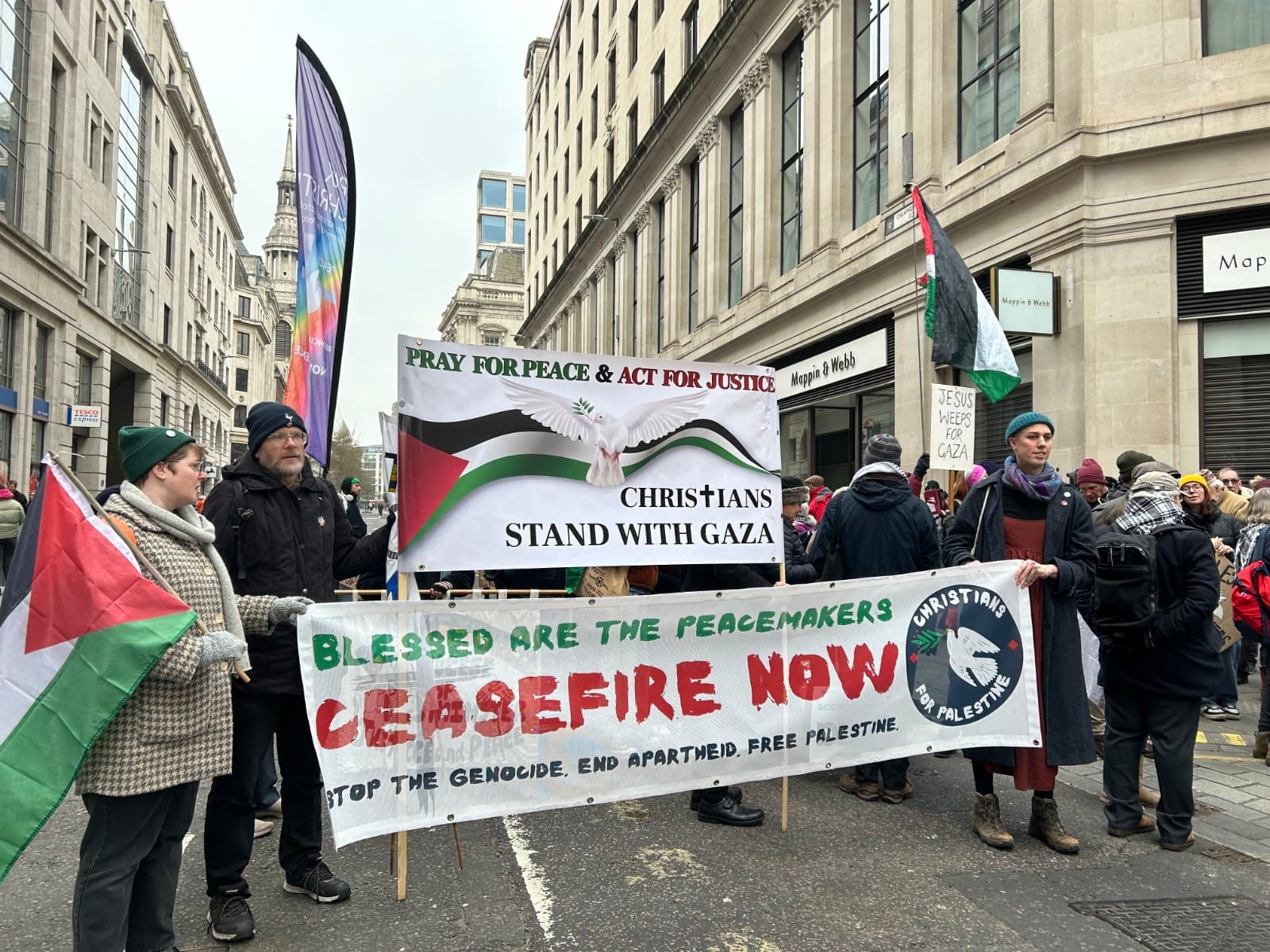
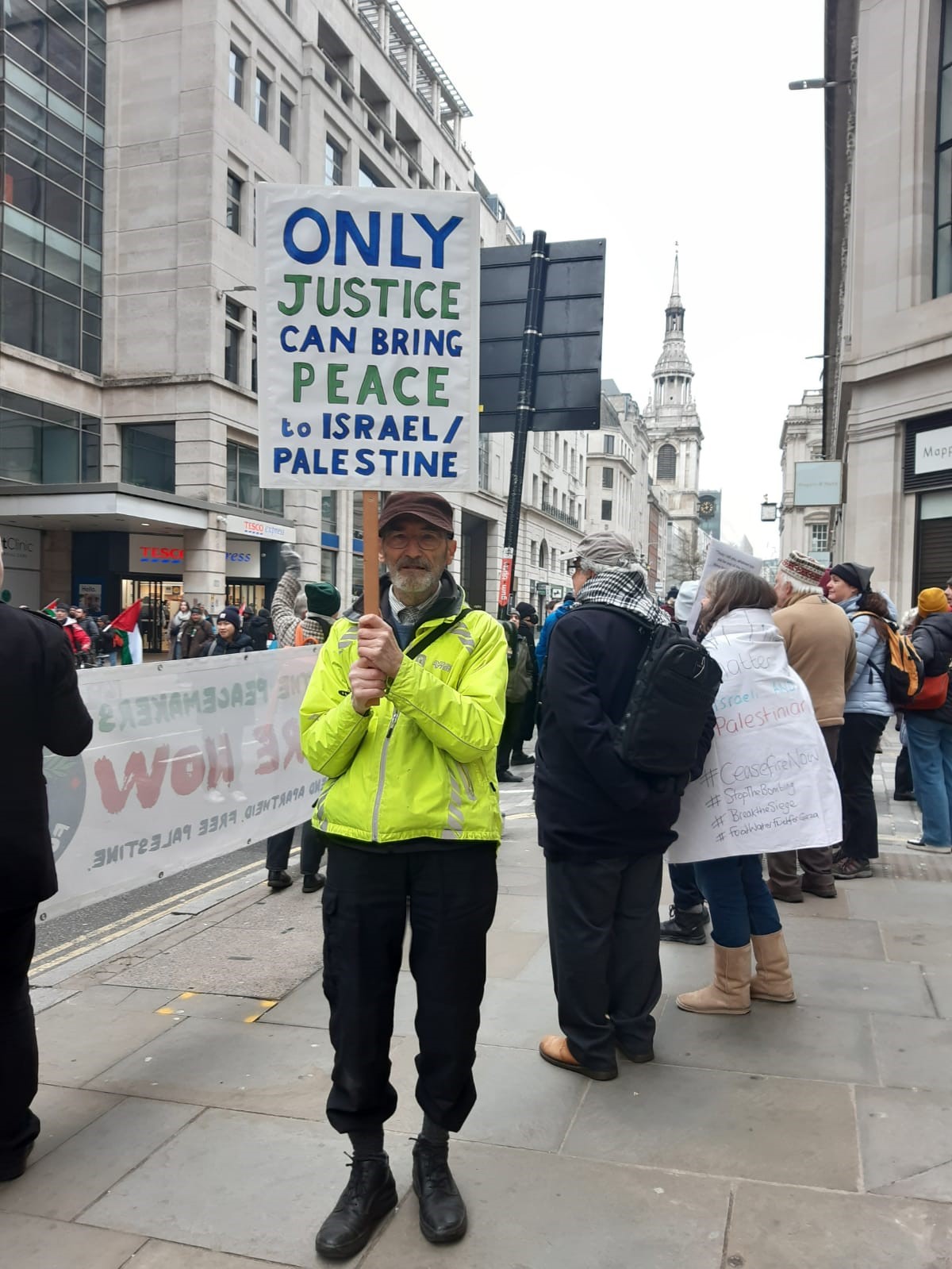
Up to half a million campaigners of all faiths and beliefs, marched through London on Saturday, from the Bank along Fleet Street towards Trafalgar Square down Whitehall to the Houses of Parliament, appealing for peace in Gaza and the West Bank.
Westminster Justice and Peace joined the Christian bloc, co-ordinated by Christians For Palestine, which included banners from Pax Christi, the Church of England, Quakers, the Columbans, London Catholic Worker, Passionists, Holy Land Trust, Fellowship of Reconciliation, Anglican Pacifist Fellowship, Sisters of St, Joseph of Peace and many more. We walked next to the Jewish bloc, which included hundreds of individuals and members of Na’Amod, International Anti-Zionist Network, Jews for Palestine, Torah Jews, JVL and other Jewish peace groups.
Columban Sisters Kate Midgley and Young Mi helped carry one of the Christian banners. Sr Mi said: “The reason I joined the demo is only a little gesture to show my solidarity towards suffering Palestinians. Because what is going on in Gaza and what Palestinians have to go through at this time is a total distortion of humanity.”
Little Amal – the 3.5 metre tall puppet of a nine-year-old Syrian refugee girl, who made the 8,000 km journey from the Syrian border to Manchester, in 2021, to highlight the plight of child refugees, led the front of the march, accompanied by a group of Palestinian children.
Speaking in Parliament Square, the Palestinian ambassador to the UK, Husam Zomlot, accused the British government of “complicity” with Israel. He said: “I stand before you with a broken heart but not a broken spirit.” He congratulated South Africa for bringing a genocide case against Israel at the UN’s international court of justice.
Sinn Féin’s president, Mary Lou McDonald, told the crowd that Palestinian freedom is possible. She said: “When I say this, standing in London, in common cause with you, having walked our own journey out of conflict, building peace for 25 years, this can happen. “This must happen and we will ensure that it does.”
Former Labour leader Jeremy Corbyn thanked South Africa for their bravery bring their case to the ICJ. He pointed out that the weapons used in the onslaught on Gaza are provided by the United States and the UK. Corbyn thanked everyone around the world and especially those campaigners in Israel who are speaking up for peace, justice and hope.
This was the seventh National March for Palestine in London organised by the Palestine Solidarity Campaign since October.
Protests took place in 120 cities around the world on Saturday, including Dublin, Edinburgh, Washington DC, Johannesburg, Kuala Lumpur, Paris, Rome and Milan.
On Peace Sunday, 14th January 2024, Pope Francis made a heartfelt appeal for an end to armed conflicts and a firm condemnation of war as “a crime against humanity.”
“War itself is a crime against humanity. People need peace. The world needs peace,” said the Pope at the Sunday Angelus prayer.
He also mentioned a program he had seen on an Italian TV channel just minutes before, in which the Vicar of the Custody of the Holy Land had spoken. Fr Ibrahim Faltas said: “we need to learn from John the Baptist how to cry out and show the path to follow.” Jesus, he added, is “the way. He is forgiveness, justice, love, and peace.”
“If we follow Jesus, we will truly have peace and there will be no war,” said Fr Faltas.
He noted that there are over 60 ongoing wars in the world, calling the global situation “utter confusion.” “We want to live in peace,” concluded Fr Faltas. “We want to follow Jesus, so we will have peace throughout the world.”
Peace Sunday – 14th January 2024 ‘Artificial Intelligence and Peace’
“Lord, come to our aid! Grant us peace, teach us peace; guide our steps in the way of peace. Open our eyes and our hearts and give us the courage to say: “Never again war!”
Mayor of London Sadiq Khan and Housing Justice CEO Kathy Mohan OBE holding the Charter.
On 7 December 2023 the Mayor attended St John’s Church in Waterloo, to sign the charter alongside more than 40 organisations including homelessness charities, local authorities and business representatives.
The Charter is backed by the ‘Life Off the Streets’ programme, a coalition of organisations working together to end rough sleeping in London.
The Charter started with a small group of organisations and city government officials – the Connection at St Martin’s, Groundswell, Housing Justice, The Passage, YMCA St. Paul’s, Bloomberg Associates, the Greater London Authority and London Councils — who wanted to engage better with the community and build a bigger movement around the goal to end rough sleeping.
More than 100 charities, faith groups, businesses and people with lived experience have helped to design and develop the Charter, creating a shared purpose and vision for tackling the challenge of rough sleeping in the capital.
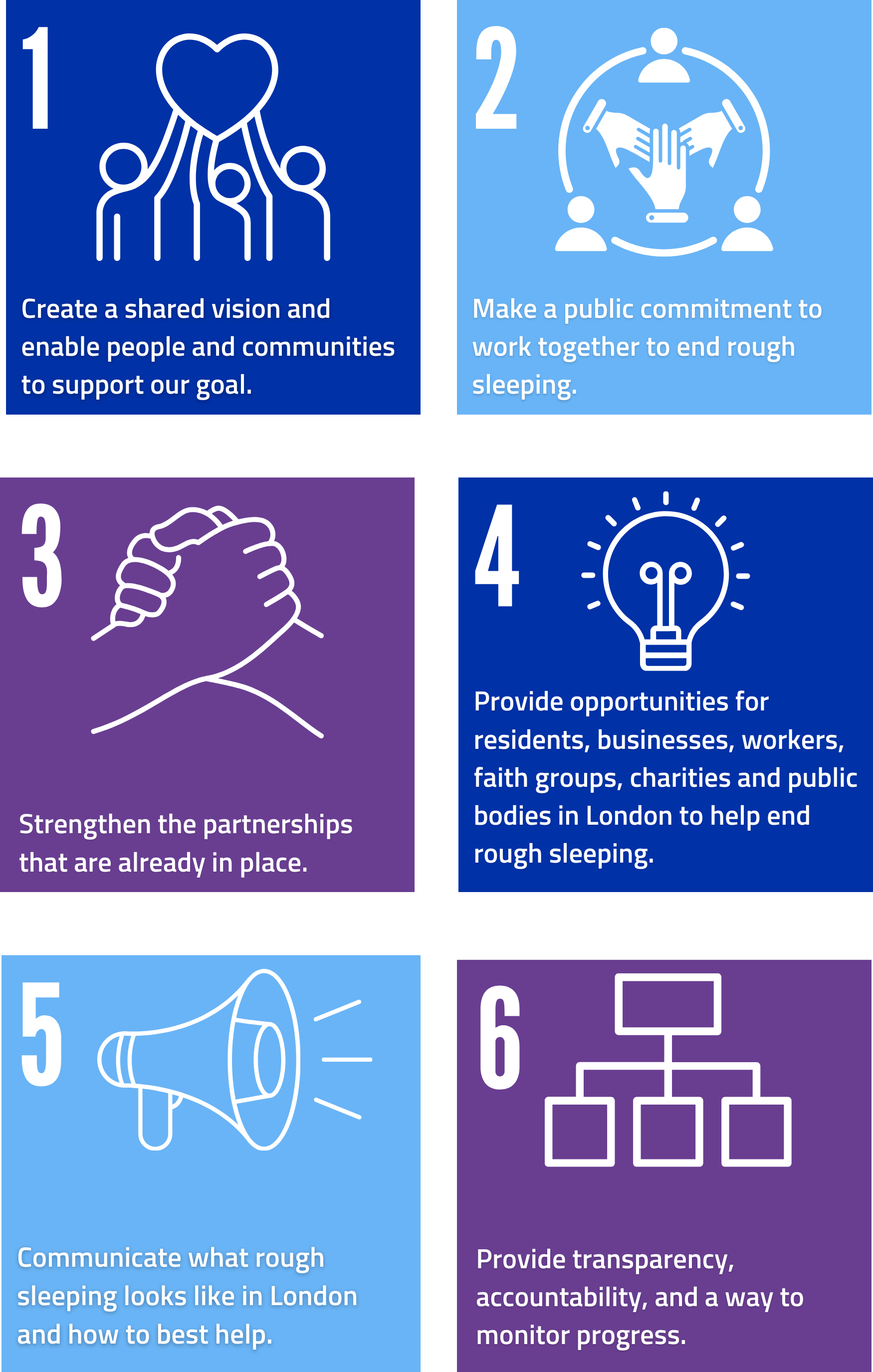
The London Charter to End Rough Sleeping follows six guiding principles:
People sleeping rough may have problems but they aren’t problem people.
Help needs to be in place to prevent people from sleeping rough in the first place; addressing the underlying causes of street homelessness not symptoms.
Everyone who sleeps rough is unique and there should be meaningful options for all, regardless of immigration status.
People who have experienced sleeping rough must be involved in the development and delivery of solutions.
Support, community links and accommodation needs to be in place so that people can thrive.
People sleeping rough must be safe from violence, abuse, theft and discrimination and have the full protection of the law.
Photo: Holy Family Church in Gaza (Mazur/CBCEW.org.uk)
Bishops of the Holy Land Coordination have issued a statement after two Christian women were killed in a sniper attack on the Holy Family Church compound in Gaza on 16th December 2023.
Holy Land Coordination Statement
The Bishops of the Holy Land Coordination were profoundly shocked and distressed at the killing by snipers on 16th December of two Christian women sheltering in the compound of the Holy Family church, Gaza. Messages were sent immediately to the Patriarch, His Eminence Cardinal Pierbattista Pizzaballa, and to the Parish Priest, Fr Gabriel Romanelli.
The Holy Land Coordination has been warmly welcomed by priests and parishioners on numerous occasions. We have witnessed firsthand the faith and commitment of the few parishioners who remain; and the dedicated care by the Missionaries of Charity of some fifty profoundly disabled people who live in the convent alongside the church.
The desecration of this compound and the destruction of the Sisters’ convent, ‘signalled’, according to the Patriarch, ‘as a place of worship since before the beginning of the war’, is profoundly disturbing. The shooting in cold blood of Nahida Anton and Samar Antoun, a mother and daughter seeking to enter the convent is unfathomable.
The Holy Land Coordination bishops represent a broad sweep of countries, each bishop committed to a just peace for all and to holding the plight of Christians of the Holy Land at the forefront of their governments’ concerns. We visit the Holy Land regularly to reassure these Christians that they are not forgotten. We seek also to understand better, and at first hand, the realities experienced by the people of three Abrahamic faiths sharing this Land; to fathom the possibility of hope in a two-state solution.
The atrocities perpetrated against Israeli Jews on 7th October and the subsequent killing by the Israeli Defence Force of nearly 20,000 Gazans, of whom 70% were women and children, would appear profoundly to jeopardise the prospects of any such resolution of this deep-seated conflict. Yet, the approaching celebration of Our Saviour’s birth two thousand years ago in the heart of the West Bank should serve as an incentive to people of faith, across the globe, to call down the Holy Spirit ever more fervently to move the hearts of all who can bring influence to bear on these lands and to find a way to cease the hostilities from all sides.
Bishop Nicholas Hudson (Chair of the Holy Land Coordination) Auxiliary Bishop of Westminster England and Wales
Bishop Nicolo Anselmi Bishop of Rimini Italy
Archbishop Udo Bentz Archbishop-elect of Paderborn Germany
Bishop Pierre Burcher Bishop Emeritus of Reykjavik Denmark, Finland, Iceland, Norway and Sweden
Bishop Christopher Chessun Anglican Bishop of Southwark Church of England
Bishop Michel Dubost Bishop Emeritus of Evry-Corbeil-Essonnes France
Archbishop Richard Gagnon Archbishop of Winnipeg Canada
Bishop William Kenney Auxiliary Bishop Emeritus of Birmingham England and Wales
Bishop Declan Lang Bishop of Clifton England and Wales
Bishop Donal McKeown Bishop of Derry Ireland
Archbishop William Nolan Archbishop of Glasgow Scotland
Archbishop Joan Enric Vives i Sicilia Bishop of Urgell and Co-Prince of Andorra Spain
Bishop Sithembele Sipuka Bishop of Mthatha South Africa
Bishop Paul Terrio Bishop Emeritus of St Paul Canada
Since 1998, the Bishops’ Conference’s Department for International Affairs has organised the annual meeting of the Coordination of Episcopal Conferences in Support of the Church of the Holy Land.
COP28 rally in central London, 9 December 2023 Image: Colette Joyce
Westminster Justice and Peace joined many other groups at the Global Day of Action march in central London for COP28 on 9 December 2023
Coinciding with the final days of the climate summit in Dubai, the London gathering brought together Christian groups including CAFOD, Jesuit Missions, Christian Aid, Tearfund, Christian Climate Action, Operation Noah, Green Christian, Laudato Si’ Movement, Columban Justice, Peace and Ecology, and the Quakers.
We also joined up with other activists from Faiths for the Climate and The Climate Coalition, marking the Global Day of Action for Climate Justice on the final Saturday of COP28 by taking part in COP28 marches and rallies throughout the UK.
We were united in calling for action at COP28 before time runs out.
The UN climate conference has now concluded and its impact is being assessed. While the negotiations have still fallen short of what is needed, in some ways the conference has exceeded expectations.
Reporting on the outcomes of COP28, Neil Thorns, Director of Advocacy at CAFOD, said:
“COP28 has confirmed what we need to do with an explicit reference to a world without fossil fuels and support to the most vulnerable communities through the agreement of a loss and damage fund.”
Neil recognises there is still a risk of delivering only the appearance of concern, rather than substantive change, but in his positive assessment, “We now have the basis to create greater ambition at our national levels. That is the way we will keep to a 1.5 degree pathway.
“It’s encouraging to see increasing government support to link the climate and food agendas, which should be reflected in future national plans and an urgent plan to transform our food system to provide greater support smallholder farmers.”
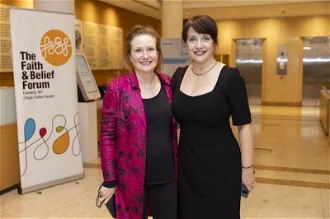
Safe in Faith, a Caritas Westminster project, providing faith-based support to victims of domestic abuse, was recognised in the London Faith & Belief Community Awards recently. The project was presented with the award in the Health & Wellbeing category, which recognises projects that create specialised services for the health and wellbeing of Londoners.
Accepting the award were Nikki Dhillon Keane, Head of Safe in Faith, and Esther Sweetman, Partnership Manager at Restored, a partner organisation that provides faith-based counselling.
Safe in Faith supports survivors of domestic abuse, sexual violence and exploitation in ways that understand how their faith impacts their experiences. Although it is a Catholic organisation, it provides support and counselling to anyone who would benefit from a faith informed approach.
Bishop John Sherrington, Auxiliary Bishop in Westminster and Lead Bishop for Life Issues at the Bishops’ Conference of England and Wales, said: “This is a significant recognition of the importance of a faith formed support for victims/survivors of domestic abuse and gender-based violence (GBV).
“Congratulations to Nikki Dhillon Keane of Caritas Westminster whose dedication and persistence have led to the development of this programme. Nikki has contributed to the Domestic Abuse Working Group of the Bishops’ Conference in the past and now develops this work in coordination with CSAN (Catholic Social Action Network).”
Safe in Faith provides training for clergy, religious sisters and pastoral workers to understand domestic abuse in the context of religious faith; how faith can be a support but also at times a barrier to safety. The training equips faith leaders to provide trauma-informed and knowledgeable support and signposting to help victims/survivors access the support they need.
Safe in Faith also has an interfaith network of counsellors and psychotherapists working at the intersection of domestic abuse, gender-based violence and faith. The project provides free and low-cost training for practitioners in working with abuse and trauma in the context of faith and spirituality.
CAFOD, Christian Aid and other humanitarian agencies and Christian church leaders from around the world have signed a joint letter to Prime Minister Rishi Sunak MP appealing for peace in Gaza. They say: “enough is enough” as Palestinian families in Gaza are being “wiped out.”
They also condemn the vitriolic “crimes of hate” against Jews and Muslims which are “straining community cohesion and interreligious efforts”.
The church leaders say: “We write as religious leaders to say enough is enough. We cannot remain silent as generations of families in Gaza are wiped out in an instant. World leaders cannot sit by while Palestinian civilians in Gaza experience such catastrophic destruction and trauma.
“The relentless and unrestrained bombing campaign with horrific indiscriminate effects and the ground invasion by Israel must end. We weep with broken hearts as we hear of hospitals, mosques, churches, and schools damaged and destroyed by this war. In Gaza, there is no safe place. There is no refuge. There is no escape.”
Since 7 October, more than 15,000 Palestinians have been killed in Gaza. 1,200 Israelis have also been killed. During the seven-day pause last week more than 100 Israeli hostages were exchanged for 240 Palestinian detainees and some humanitarian aid delivered.
Along with church leaders and other relief agencies, CAFOD is calling on all world leaders to press for a full and permanent ceasefire to come into effect immediately. The charity says this is the only serious option to stop further loss of civilian life and deepening the humanitarian catastrophe.
See the full letter and signatories below:
Rt Hon Rishi Sunak
Prime Minister of the United Kingdom of Great Britain and Northern Ireland
No 10 Downing Street, London, SW1P 2AB
November 29, 2023
“My eyes fail from weeping,
I am in torment within;
my heart is poured out on the ground
because my people are destroyed,
because children and infants faint
in the streets of the city.”
Lamentations 2:11
Dear Prime Minister,
We have watched in horror and sadness at the devastation unfolding in Palestine and Israel since October 7th. As leaders of Christian communities throughout the world, we join in grief for the Israelis and Palestinians who are mourning loved ones who have died.
Our faith compels us to speak out. To make clear that we oppose violence, whether directed toward Israelis or Palestinians. Even the loss of one more life is one too many. International humanitarian law must be respected and adhered to by all sides.
We welcome the recent announcement about the release of dozens of hostages and a parallel prisoner exchange, in addition to the desperately needed few days of a cessation of violence. Now is the time to redouble our efforts to insist that a long-standing bilateral ceasefire comes to fruition.
We acknowledge the profound and existential grief experienced as a result of the actions of Hamas on October 7 as a tragedy for Jewish people in Israel and around the world. We weep with those who have loved ones held hostage, and we pray for their immediate release.
Like the author of Lamentations, our broken hearts weep as we hear of Palestinian babies in Gaza dying and of the thousands of children who have lost their lives. More than eleven thousand Palestinians have been killed, tens of thousands have been wounded, and 1.6 million have been displaced from their homes and communities.
It is unacceptable that millions of people are in desperate need of clean water, adequate food, fuel for electricity, and urgently needed medical supplies. Without safe drinking water and proper medical supplies, poor hygiene conditions have already led to more preventable deaths, especially among children.
We weep with broken hearts as we hear of hospitals, mosques, churches, and schools damaged and destroyed by this war. In Gaza, there is no safe place. There is no refuge. There is no escape.
The escalation of war cannot be adequately understood without acknowledging the conflict’s broader backdrop – ongoing Israeli occupation and the disenfranchisement of Palestinians for more than 70 years. Three-quarters of Palestinian residents of Gaza are refugees dating back to 1948. Before 7 October 2023 had already been on track to be the deadliest year for Palestinians in the West Bank since the Second Intifada in 2000.
Under the current Israeli government, there has been a significant expansion of illegal settlements in the West Bank, emboldening Israeli settlers to act with impunity as they attack Palestinians and force them from their homes.
Settler violence has brutally intensified since 7th October, while there has been an increase in abuse, harassment, and discrimination of Palestinian Israeli citizens in Israel. A future where all human dignity in the region is respected looks distant if these realities are not acknowledged.
We stand up ardently against the vitriolic hatred that is being expressed around the world toward Jews, Muslims, and others because of firmly held convictions about the war. We condemn crimes of hate and uphold that all people should be able to live without fear, with security, and with equally protected human rights. We lament how this conflict is straining community cohesion and interreligious efforts.
We write as religious leaders to say enough is enough. We cannot remain silent as generations of families in Gaza are wiped out in an instant. World leaders cannot sit by while Palestinian civilians in Gaza experience such catastrophic destruction and trauma. The relentless and unrestrained bombing campaign with horrific indiscriminate effects and the ground invasion by Israel must end.
We are deeply grieved by the complicity of the United States and several other Western countries in the continued violence through efforts to actively oppose a ceasefire, including by vetoing multiple United Nations Resolutions.
Instead, we call on governments worldwide to do everything possible to secure a bilateral ceasefire, one that will stop all violence from Hamas and Israel, allow for the safe release of civilian hostages held in Gaza, and give immediate and adequate access to desperately needed humanitarian aid to be delivered, including through crossings to Israel.
Without an agreed upon end to violence from all parties – there is no path forward. We call on all governments to show support for the protection of all human life, advocating for a just and durable resolution to this crisis in which all Israelis and Palestinians might realize a vision of a just peace, illuminating human dignity, advancing security and self-determination for all.
Yours sincerely,
Christine Allen Director, CAFOD
Dr Nicola Brady General Secretary, Churches Together in Britain and Ireland
The Rt Rev Christopher Chessun The Lord Bishop of Southwark, Church of England
Rt Rev Michael Doe Assistant Bishop and Preacher to Gray’s Inn (London)
Anglican Diocese of Southwark Trustee The Balfour Project
Rt Rev Sally Foster-Fulton Moderator of the General Assembly, Church of Scotland
Rev Dr Tessa Henry-Robinson Moderator of the General Assembly, United Reformed Church
John Hill Interim General Secretary, The United Methodist Church – General Board of Church and Society
The Most Rev Dr Michael Jackson Archbishop of Dublin, Church of Ireland
Rt Rev Dr Michael Langrish Former Bishop of Exeter
Tim Livesey Chief Executive, Embrace the Middle East
Very Rev Andrew RC McLellan, CBE Former Moderator, General Assembly of the Church of Scotland
Rev Gill Newton President, Conference of the Methodist Church in Britain
Paul Parker Recording Clerk, Quakers in Britain
Father Timothy Radcliffe, OP Former Master of the Order of Preachers
Rev Chris Rose Director, Amos Trust
Patrick Watts Director, Christian Aid
The R. Rev Dr Jo Bailey Wells Deputy Secretary General, Anglican Communion, London
Joyce Ajlouny General Secretary, American Friends Service Committee (AFSC)
Archbishop Vicken Aykazian Ecumenical Director and Diocesan Legate Diocese, Armenian Church of America (Eastern)
Rev David E Bennett President, Moravian Church Provincial Elders’ Conference
Rev Bronwen Boswell Acting Stated Clerk, General Assembly Presbyterian Church (USA)
Bishop Susan J Briner Southwestern Texas Synod, Evangelical Lutheran Church in America (ELCA)
Rev LaMarco Antonio Cable Co-Executive, Global Ministries of the Christian Church (Disciples of Christ) and United Church of Christ (UCC)
Bishop Laurie Larson Caesar Oregon Synod, Evangelical Lutheran Church in America (ELCA)
Rev Dr Mae Elise Cannon Executive Director, Churches for Middle East Peace (CMEP)
The Rt. Rev. Paul-Gordon Chandler Episcopal Bishop of Wyoming, Founding President of CARAVAN
Stassi Cramm President, Community of Christ
Rev Dr Rob Dalrymple Leadership Board, Network of Evangelicals for the Middle East (NEME)
Bishop DeDe Duncan-Probe Diocese of Central New York, The Episcopal Church
The Rev Elizabeth A Eaton Presiding Bishop, Evangelical Lutheran Church in America (ELCA)
Pastor Ps L Elliott General Secretary, Rhema Family Churches
Bishop Paul D Erickson Greater Milwaukee Synod, Evangelical Lutheran Church in America (ELCA)
Rev Wesley Granberg-Michaelson General Secretary Emeritus, Reformed Church in America (RCA)
Susan Gunn Director, Maryknoll Office for Global Concerns
Andrew S Hamilton District Executive, Southeastern District Church of the Brethren
Lisa Sharon Harper President and Founder, Freedom Road
The Rev Deborah Hutterer Bishop of the Grand Canyon Synod, Evangelical Church in America (ELCA)
Bishop Richard Jaech Southwestern Washington Synod, Evangelical Church in America (ELCA)
Rev Kevin T Jones Bishop of Northeastern Iowa Synod, Evangelical Lutheran Church in America (ELCA)
Rev Nicolas Kazarian Greek Orthodox Archdiocese of America
Dr Peter Makari Co-Executive, Global Ministries of the Christian Church (Disciples of Christ) and United Church of Christ (UCC)
Archbishop Thabo Makgoba Anglican Church of Southern Africa
Rev Felix Malpica Bishop of the La Crosse Area Synod, Evangelical Lutheran Church in America (ELCA)
The Rev Lee M Miller II Bishop of the Upstate NY Synod, Evangelical Lutheran Church in America (ELCA)
Professor Leepo Modise University of South Africa
Bridget Moix General Secretary, Friends Committee on National Legislation (FCNL)
Bishop Joy Mortensen-Wiebe South-Central Synod of Wisconsin, Evangelical Lutheran Church in America (ELCA)
Rev Dr Lungile Mpetsheni General Secretary, The Uniting Presbyterian Church in Southern Africa
Bishop Malusi Mpumlwana General Secretary, South African Council of Churches
Scott Murphy President, Community of Christ
Rev Siphiwe Ndebele Evangelical Alliance of South Africa
Rev. David M. Neuhaus, SJ Superior of Holy Land Jesuits
Rev. Amy J Odgren Northeastern Minnesota Synod, Evangelical Lutheran Church in America (ELCA)
Rev. Teresa “Terri” Hord Owens General Minister and President, Christian Church (Disciples of Christ) in the US and Canada
Rev Dr Tyrone S. Pitts General Secretary Emeritus/Ecumenical Office , Progressive National Baptist Convention Inc.
The Rt Rev Bavi Rivera Bishop of Eastern Oregon, The Episcopal Church
Richard L. Santos President and CEO, Church World Service (CWS)
Bishop GS Seane Central Diocese, Evangelical Lutheran Church of South Africa (ELCSA)
Bishop Sithembele Sipuka Catholic Bishop of Umtata, South Africa
Andrea Smith Founding Board Member, Evangelicals4Justice
Rev Jason Smith Executive Director, BPFNA ~ Bautistas por la Paz
Bishop Kevin L. Strickland outhwestern Synod, Evangelical Lutheran Church in America (ELCA)
Bishop Pedro M Suarez Florida-Bahamas Synod. Evangelical Lutheran Church in America (ELCA)
Rev Adam Taylor President, Sojourners
Rev Dr Karen Georgia Thompson General Minister and President. United Church of Christ (UCC)
Rev N Tyokolwana Moravian Church, South Africa
Nikki Toyama-Szeto Executive Director. Christians for Social Action (CSA)
Rev Sandra María Van Opstal Founder, Chasing Justice
Father Thomas Zain Vicar General, Antiochian Orthodox Church






 Diocese of Westminster Justice and Peace Commission