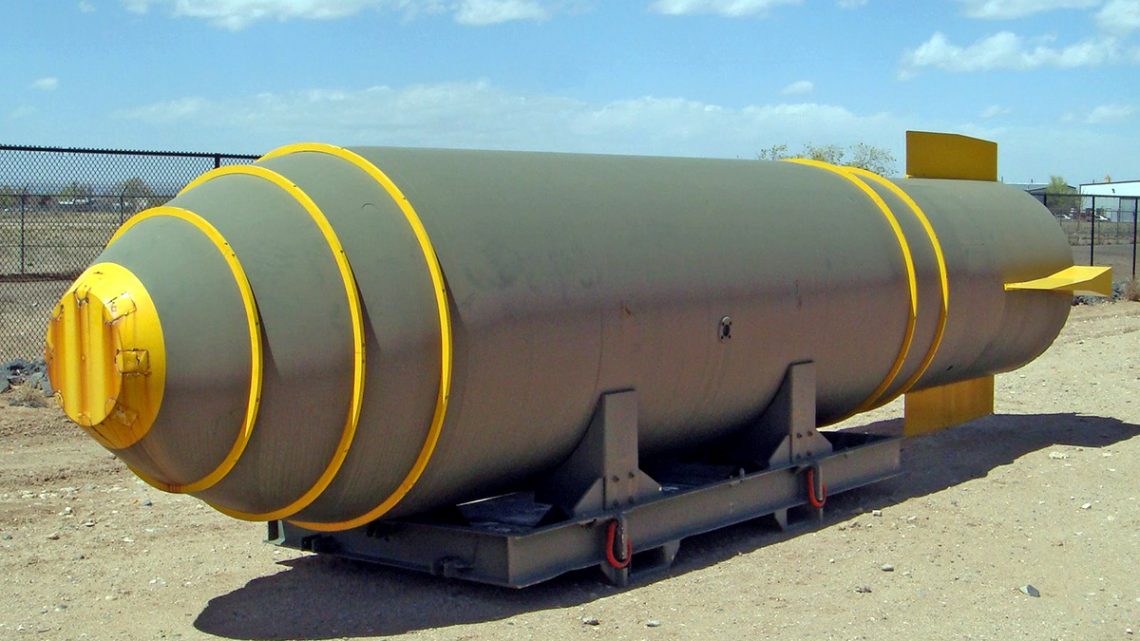
The Treaty was negotiated at the United Nations in 2017 and supported by 122 states. It will enter into legal force on 22 January 2021, banning nuclear weapons under international law.
THANKSGIVING SERVICE
On Friday 22 January at 11.30am the Network of Christian Peace Organisations will be gathering to celebrate the entry into force of the Treaty on the Prohibition of Nuclear Weapons with a short Thanksgiving Service hosted by the Network of Christian Peace Organisations. It will take place on Zoom and they hope to finish with bells ringing in celebration of nuclear weapons being banned. Click here for the Zoom link.
Join Pax Christi to reflect on Pope Francis’ World Peace Day Message ‘A Culture of Care as a Path to Peace’.
About this Event
Together we will gather on zoom to pray, share and reflect on Pope Francis’ message ‘A Culture of Care as a Path to Peace’. We will explore what this message calls us to do as peacemakers and how we respond to the call to live nonviolently.
If you have any questions or problems registering for this event, please contact the office at admin@paxchristi.org.uk
This year has been one of unprecedented and continuing challenges. We are all conscious of the need to restore and rebuild our communities here and around the world, accepting that we need new ways of working and relating to each other. The Christian message of peace, through reconciliation, justice and nonviolence, can offer hope and direction in these times. I invite you to seriously consider facilitating a collection for, or making a donation to, the work of Pax Christi at this time as a way to make a practical contribution to continuing the work of peace
Pax Christi National President, Archbishop Malcolm McMahon
Throughout the pandemic increasing numbers of families have faced extremely challenging circumstances, with many losing income and having to support children at home whilst schools have been closed.
Unfortunately, as schools have been forced to close again we are seeing the same problems of the first lockdown repeating themselves, with families struggling to access free school meal vouchers and being provided with low quality food parcels. Already the projects and schools we support have seen an increase in need with more families being referred for emergency support.
Anna Gavurin, Caritas Food Collective Co-ordinator said: “We believe every child deserves to have access to fresh, nutritious food and every family should be able to access food in a dignified manner. At Caritas Westminster we have supported this during the pandemic by running a supermarket voucher scheme that has so far distributed over £170,000 to more than 5000 people. This has enabled families to shop for themselves, with dignity and buy the items their families need most. This scheme has also supported parishes and schools to provide support for those who slip through the gaps and do not qualify for Free School Meals for certain reasons such as having no recourse to public funds. In the last week we have also been able to help schools support families who lost their jobs before Christmas and have not yet been given access to Free School Meal support.”
Anna continued, “These vouchers have provided a life line for many and do give choice to families, however increasing the cash available to struggling families is the most dignified solution. This offers families the ability to manage their budget more flexibly and keep on top of bills and other demands. It also allows them to shop in any retailer without stigma, enabling them to make savings and support the local economy. Direct financial support allows families to plan ahead and make the most efficient choices, rather than relying on food parcels. To call for this Caritas Westminster has joined with the Joseph Rowntree Foundation and a coalition of charities to ask the Government to make permanent the £20 uplift in Universal Credit and Working Tax Credit, and to extend it to people on Employment Support Allowance, Income Support and Job Seekers’ Allowance.”
Colette Joyce, the Co-ordinator of Westminster Justice and Peace said, “We have to ask as a society, who is benefiting from these food parcels – the recipients or the companies with the government contracts? It is not good enough. We have to ensure that when parents are struggling, every child has access to a proper meal of the same quality that you or I would choose for ourselves.”
Caritas Westminster and Westminster Justice and Peace call on the Government to:
Ensure families have the option to access supermarket voucher and cash options.
Expand Free School Meal provision to ensure children do not miss out because of their parent’s immigration status.
Keep the £20 uplift to Universal Credit so families have enough to live on and can manage their own budgets.
On Friday 22 January 2021 the Treaty on the Prohibition of Nuclear Weapons comes into force. This is an historic milestone on the path to nuclear disarmament and an opportunity to refocus on genuine peacebuilding rooted in dialogue, justice, respect for human dignity, and care for our planet.
In setting out the “moral and humanitarian imperative” for complete elimination of nuclear weapons, Pope Francis reminded us that “international peace and stability cannot be based on a false sense of security, on the threat of mutual destruction or total annihilation.” [1]
We urge support for the Treaty and repeat our call for the UK to forsake its nuclear arsenal. The resources spent on manufacturing, maintaining and upgrading these weapons of mass destruction, should be reinvested to alleviate the suffering of the poorest and most vulnerable members of our society, for the Common Good of all peoples. [2]
At the same time, we implore the government to strengthen its arms control regulations, tackling the manufacture and sale of other weaponry, which continues to destroy so many lives throughout the world.
Above all we pray: “Lord, Father of our human family, you created all human beings equal in dignity; pour forth into our hearts a fraternal spirit.
Move us to create healthier societies and a more dignified world, a world without hunger, poverty, violence and war.” [3]
+Declan Lang Bishop of Clifton Chair, International Affairs Department, Catholic Bishops’ Conference of England and Wales
+William Nolan Bishop of Galloway Commission for Justice and Peace, Catholic Bishops’ Conference of Scotland
Welcome to the first Justice & Peace E-bulletin of 2021.
We begin a new year with so many uncertainties and challenges. We are right in the midst of this dreadful pandemic which is changing so much of the way we live our lives. Our parish communities will each have their own stories of those who are suffering in different ways: physical illness, bereavements, loneliness, depression, lost jobs, increased poverty and destitution, and the inability to come together in person as a parish community. It’s a tough time and is likely to continue to be so for months ahead.
And yet there are so many heroic stories too of living out faith in sacrificial service of those who are victims of the pandemic, often by society forgotten, through the food banks, homeless services, and the different groups serving and advocating for the vast numbers of newly poor here on our streets. The Gospel of Justice and Peace has certainly been proclaimed throughout these last months in our communities and on our streets. If we can say there are graces of this dreadful time they are clearly visible in the social action and advocacy work going on around the Diocese. Here Justice and Peace Westminster has worked closely alongside Caritas Westminster marrying advocacy and action and so bringing to life the Church’s social conscience and mission.
While so much of the work of Justice & Peace has rightly focussed on these immediate and pressing needs the Commission, sub-committees and parish groups have addressed other issues of ongoing importance. In the wake of Black Lives Matter we have seen great motivation in addressing issues of racial justice in parishes, in the Church and society. Racial Justice Sunday on January 31st will be an opportunity to focus on this important issue. Similarly, Peace Sunday, celebrated on January 17th, will challenge us to think outside of our domestic borders to be in solidarity with those overseas ravaged by war and conflict and to examine our own complicity there through passive support of weapons manufacture and investment.
In a similar vein Pope Francis’ call to care for creation will continue to be echoed through how we promote environmentally friendly projects and policies and raise awareness of green issues, all leading up to a diocesan group going to COP 26 in November.
As we begin this new year of such uncertainty and challenge may we make a new commitment to allow the Gospel of justice and peace to take root in all our communities and respond to the Holy Father’s call on New Year’s Day when he encouraged all of us to work for a peace “sustained with patient and respectful dialogue” and “constructed with an open collaboration with truth and justice,” so 2021 may be “a year of peace, a year of hope.” It is up to everyone, Pope Francis says to take “by the hand those who need a comforting word, a tender gesture,” he said, and if “we begin to be in peace with ourselves,” it will spread to “those who are near us.”
May the God of Peace be with you and your loved ones at the start of this new year.
Fr Dominic Chair, Justice & Peace Commission, Diocese of Westminster
Westminster Justice & Peace Volunteer, Anne Tran, has been researching the latest developments in the campaign to cancel the debts of developing countries. She also helped to create a collage of Justice & Peace member photos, making our own contribution to the Cancel the Debt message. In this article she gives her own assessment of the campaign. Anne is a third-year International Politics student.
The Jubilee Debt Campaign focuses on pressuring the UK Government to cancel the debt, on what is owed by developing countries, in this case the pandemic has made the situation worse. Since the coronavirus, there is a greater need to drop the debt. Countries are now faced with the decision between paying back the debt or responding to the Covid health crisis. This demonstrates the dilemma faced by poor countries and their financial situation, that prevents them from exercising their own freedom to choose and attend matters that best suits their needs. In response, this led to supporters from different organisations and religious groups such as Christian Aid, CAFOD, Jubilee Debt Campaign, Oxfam, ONE and Global Justice Now vocalising their support by encouraging online petitions and releasing supporting statements.
The Catholic church has shown their support, especially with CAFOD and their initiative to promote the campaign through gathering hundreds of images of supporters holding up signs saying ‘Cancel the Debt’, along with an uploaded video with the members of the public and other organisations expressing their solidarity to cancel the Debt. The Justice and Peace Commission Team has also contributed towards this, with the staff members participating in the picture campaign, to help put the campaign forward. Outside of the Catholic realm, Oxfam has provided research in response to the campaign by outlining suggestions for world organisations and private lenders to take certain initiatives to attempt to alleviate the debt.
However, there is indication that the Jubilee Debt Campaign at the moment is currently stagnant. My reasoning follows: In April G20 Finance Ministers agreed to suspend debt for 77 countries for the rest of the year (saving $12Billion) and also encourage the initiative towards private lenders (also saving countries $8 Billion) with the Debt Service Suspension Initiative (DSSI). But, unfortunately, over the past few months the campaign and G20 no longer became a topic of interest. Instead it was overshadowed by the United States and China’s strained relationship and lack of involvement. This hindered the development that was made in April with the campaign. Consequently, G20 then retracted their statement and revised their initial stance and became more reluctant to take on the debt suspension. Instead, they have now stated that countries that wish to cancel the debt can follow through at their own expense. However, the hidden element of pressure, stress, or lack of emphasis on the importance of the liability in the first released statement, lessened the weight of importance compared to before. This made the campaign less effective as the months passed by and no longer became an issue of interest. But not all is lost. In October, G20 made another announcement that they have chosen to extend the suspension of the debt repayments for 6 months to provide additional support, after meeting with the group’s finance ministers and central bank governors, providing more hope towards the campaign.
The Financial Times have also provided an update on the campaign in an article by Jonathan Wheatley and David Pilling on 12 October 2020. They have highlighted the importance of the necessary aid that West African countries are needing at the moment, although countries like Kenya have stated that the campaign may prolong the country’s debt repayment. Ghana has stressed upon the responsibility as a former British Colony to help them with the debt along with other western states. This outcry has led to organisations like the Jubilee Debt Campaign, Westminster Justice & Peace and CAFOD to strengthen their support by continuing to release current updates on the Jubilee Debt Campaign and promoting the cause. We have seen the success of the support received from examples above where the petition may have had a moment of pause due to the uncertain political climate, but we can clearly see the long-term benefits from all the different organisations work in their constant advocacy, that encourages and moves the campaign forward. This has been evident through G20’s recent October announcement, demonstrating progress that has been made so far with the help of these organisations.
My research on the Jubilee Debt campaign regarding the petition has led me to believe that crisis management regarding any type of social, economic or health issue is a concern for all. Prior to the pandemic, or after, these issues remain important and still affect the lives of different individuals around the world. It is unfortunate that at times like this there are no direct solutions. But through researching on The Jubilee Debt Campaign, it has allowed me to gain a deeper insight into the different realities that developing countries face. There is no straight answer that can solve all the problems proposed, but I do believe a difference can be made. I have to credit the different organisations and groups for their sense of injustice that have led the campaign to a level of success with G20’s response and public awareness. However more can be done, as demonstrated above from the various examples, publicity and petition signatures are not enough to combat the World Politics from overshadowing the aims of the debt campaign. This highlights a serious issue today, especially on the importance and relevance on certain issues proposed, that are overtaken by the political tension among powerful states. Whilst challenges are ongoing battles, developing countries are confronted with daily discernments of life-threatening ultimatums. Overall, we must continue to create awareness and provide more informed decisions as a common goal to help these countries in need.
Westminster Justice & Peace advocates call on the Chancellor, Rishi Sunak, and the G20 countries to Cancel the Debt of developing countries and restructure those repayments towards healthcare to beat coronavirus.
Today we celebrate the World Day of Migrants and Refugees. To mark the day, Bishop Paul McAleenan was joined in a discussion covering the current challenges facing refugees in the UK, Europe and around the world in light of the Pope’s message.
By Barbara Kentish, Westminster Justice & Peace Commission Lead on Refugees and Migrants
Delivering letter at the French Embassy
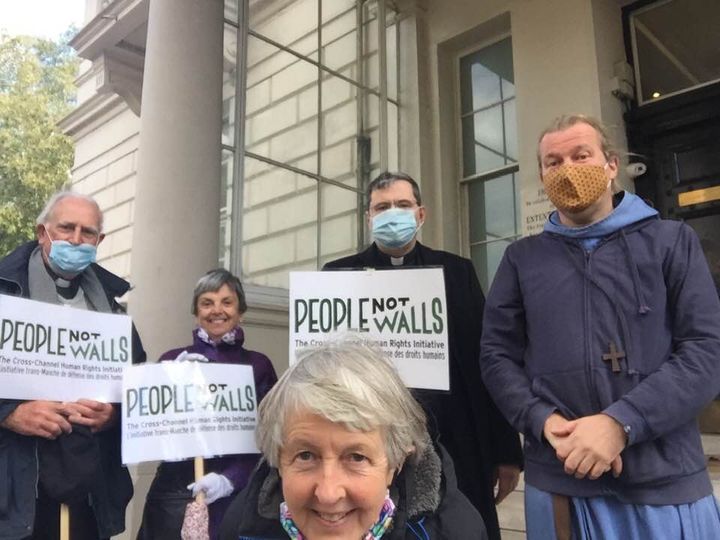
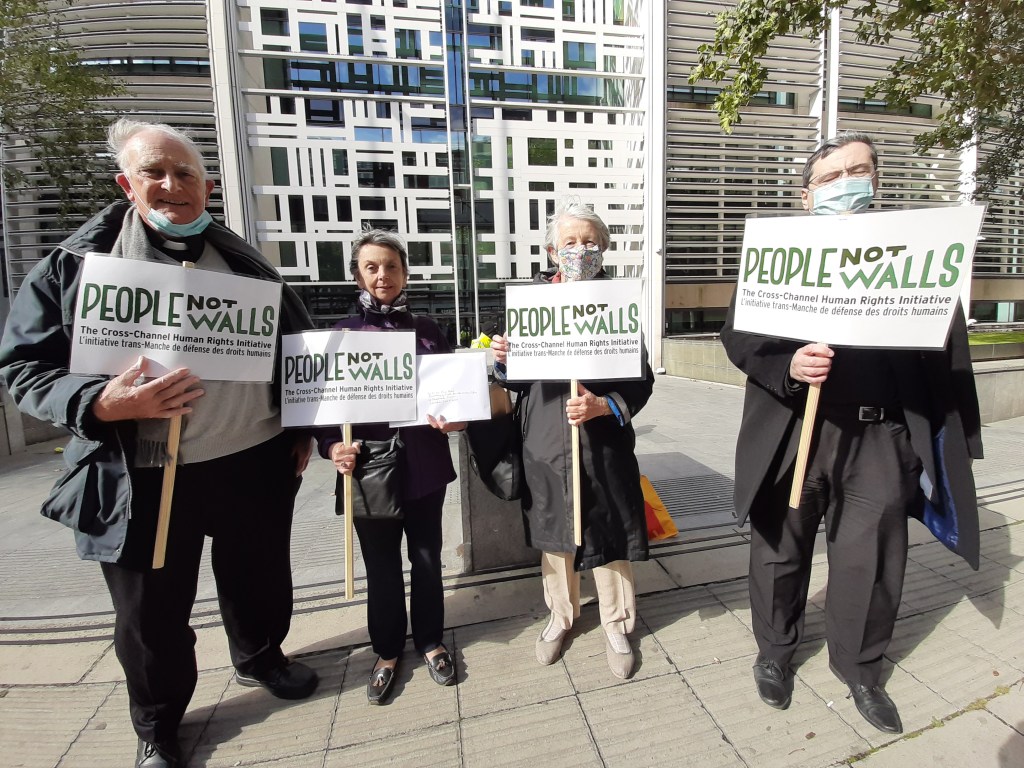
Five of us, obeying government guidelines on numbers, delivered our letter and petition as promised, to the French Embassy this morning. Pat Gaffney from Pax Christi, Fr Dominic Robinson SJ from Justice and Peace, Brother Johannes from London Catholic Worker, Fr Joe Ryan from West Green Tottenham parish and myself took the hundreds of signatures and our letter asking for French-British collaboration for a humanitarian outcome to the small-boat Channel crossings. We succeeded in handing it over to officials at the French Embassy in leafy Knightsbridge and had a pleasant walk across the park to the Home Office in Marsham Street. Here we found a very closed door. The head security officer told us, after he had investigated, that delivering petitions could only be done if accompanied by a solicitor! We had emailed earlier in the week, with copy of our letter, but this was not enough: you need your solicitor to go along too, so after a friendly chat with the security man, we beat a retreat. Rather like the rules on COVID 19, the UK Home Office can be extremely unpredictable. We will make an appointment of course, but this could be a long wait!
Turned back from the Home Office
There is still time to sign the petition until we get an appointment with Ms Priti Patel’s elusive staff!
Meanwhile, our friends on the other side of the Channel in Calais demonstrate for human rights in their city today (Saturday, 26 September.) We wish them well, and pray that they will be heard as they claim not only rights for migrants, but also for themselves, so they don’t pick up the infections.
online rally for World Refugee Day Saturday June 20th 2020
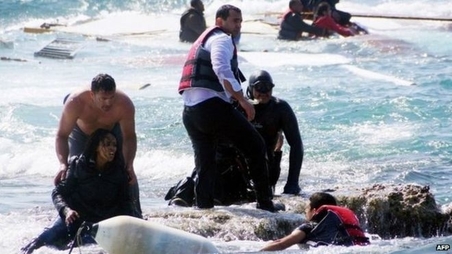
Join us to find out why people including families with children, and unaccompanied young people, are taking to the seas, and the events happening on our closest borders, which encourage them to this desperate action. Listen to speakers and organisations from both sides of the Channel, Alexandra Limousin (L’Auberge des Migrants), Human Rights Observers, Kent Refugee Action Network Young Ambassadors, Marie Charlotte Fabié (Safe Passage International), Secours Catholique, and others.
Then zoom live to the seafront in Dover, to join Seeking Sanctuary and Rt Rev Dr Rose Hudson-Wilkin, Bishop of Dover, for the Commemoration at the plaques for the migrants who died trying to reach the UK.
Sign up on Eventbrite to receive the click-on link a few days before the event. No need to add an app!
We stand in solidarity with our sisters and brothers in the USA as they challenge the evil of racism and the brutal killing of George Floyd. As the US Bishops made clear: “we cannot turn a blind eye to these atrocities and yet still try to profess to respect every human life. We serve a God of love, mercy, and justice.”
Systemic racism is embedded in our own society. The disproportionate harm suffered by BAME people throughout the COVID-19 pandemic has highlighted profound inequalities, marginalisation and injustice here in the UK. The peaceful Black Lives Matter protests taking place in our towns and cities this week reflect the understandable anger that so many people feel about this.
As Catholics we recognise that racism is an evil which must be opposed; we all have a responsibility for actively promoting racial justice. Whenever we ignore racism or dismiss BAME people’s experience of it, we are complicit in violations of human dignity. We pray for God’s help to overcome racism in all its forms and that we might protect everyone who suffers its consequences. We are all made in God’s image.
Bishop Declan Lang – Lead Bishop for International Affairs
Bishop Paul McAleenan – Lead Bishop for Racial Justice








 Diocese of Westminster Justice and Peace Commission