The campaign to clear the name of the late Jesuit priest Fr Stan Swamy continued with a vigil outside the Indian High Commission in London. Peaceful protestors gathered in front of India House, in Aldwych, on Friday, 11 July 2025, where they stood silently with placards calling for Fr Stan to be exonerated.
Fr Stan spent most of his life defending the rights of vulnerable communities in India, including Adivasi (indigenous tribal) and Dalit (low caste) people.
He was arrested by Indian authorities in October 2020 under controversial anti-terror laws for his alleged involvement in violence surrounding protests in 2018 in the village of Bhima Koregaon.
Suffering from Parkinson’s disease, he was kept in appalling conditions in prison and died as a result in July 2021, aged 84.
The demonstration, which was arranged by international development organisation Jesuit Missions, included prayers and readings on the theme of justice.
Paul Chitnis, Director of Jesuit Missions, attempted to hand over a box of cards signed in memory of Fr Stan at the end of the vigil, but this was refused by the High Commission staff.
Speaking at the vigil, Mr Chitnis said: “We continue to voice our call for Fr Stan’s name to be cleared, refusing to forget him and his legacy of working for the marginalised. Jesuits across the world and their supporters want the Indian Government to officially declare his innocence. We are also calling for due process for others arrested on similar charges, some of whom have been in pre-trial detention for years.”
In December 2022, Massachusetts-based digital forensics firm Arsenal Consulting reported the results of its investigation into the evidence which had led to Fr Swamy’s arrest and imprisonment. The report concluded that Fr Stan was systematically targeted in a cyber campaign over a four-year period during which time falsified evidence was planted on his computer.
Victims of knife crime in London were remembered at a memorial event held at St Mellitus Church, Tollington Park, in north London on Saturday 12 July. Fifty names were read out, and candles lit in memory of those young people: all under 30, many of them teens, of all ethnicities, and all leaving grief-stricken family and friends to cope with such devastating and senseless violence. Fifty, representing hundreds across London, murdered in recent years.
Parishioners of St Mellitus church, including some bereaved parents, were joined by leaders of the Finsbury Park Mosque, and Wightman Road Mosque, politicians, and partner organisations such as Caritas Westminster.
Sandra Campbell, CEO of Word 4 Weapons, described being a parent as ‘the hardest job in the world’, and identified with the difficulty of making choices which would best protect their children. Her charity installed (and empties regularly) a weapons disposal bin on the forecourt at St Mellitus. Word 4 Weapons has helped to remove tens of thousands of weapons from circulation, and is receiving an unprecedented number of new requests for bins from all over the country.
Speakers focussed on practical responses to knife crime, honouring the victims’ memory ‘not just with silence, but with purpose’ – as Islington Councillor Anjna Khurana put it. Islington Council ‘has been involved in the introduction of knife bins, “No Knife Shops” policies, and trauma-informed approaches to prevention and rehabilitation’. The Council supports local initiatives like the Targeted Youth Support service, parenting programmes, and the Ben Kinsella Trust, which offer young people positive alternatives and hope.
‘There’s lots for me to do as Member of Parliament, and there’s lots for us to do as a community,’ said Catherine West, MP for Hornsey and Friern Barnet. At a recent meeting with knife crime specialists from the Metropolitan Police, her team had learned details about the glamorisation of knives online, how knives are sourced through online platforms, and about illegal knives getting into the UK through false shipping declarations.
A previous commitment kept Jeremy Corbyn, MP for Islington North, from attending the commemoration, but he sent a strong message to the gathering. ‘Essentially, we can only defeat knife crime through education, understanding, and a sense of community that makes sure that all young people have purposeful activities and options available to them in the crucial hours after school each day and during their free time.’
All the guest speakers concurred. Tackling knife crime requires a multi-faceted approach, including remedial actions, legislation and policing, but fundamentally a shift away from our violent culture. ‘As a community, we all must play our part to foster a culture of respect and nonviolence,’ said Councillor Khurana.
In this process the Church has deep truths to offer, as outlined during the Mass celebrated earlier for all victims of violence in London. ‘Anything that happens to any of us affects all of us… How do I live, in the world, that interconnectedness?’ asked Spiritan Father Pascal, as he viewed the day’s ceremony in the context of opposing all forms of violence and choosing life. ‘We all stand for life; we stand in solidarity with one another with an act of respect to human life and dignity. That is the cry, the longing and hope of our shared humanity.’
In an address to members of the Centesimus Annus Pro Pontifice Foundation, Pope Leo XIV addressed the question of the development of social doctrine and stressed the responsibility of all the faithful to contribute to this process. In this way, he said, we would make a contribution to better understanding, hope and peace.
“I invite you, then, to participate actively and creatively in this discernment process, and thus contribute, with all of God’s people, to the development of the Church’s social doctrine in this age of significant social changes, listening to everyone and engaging in dialogue with all.”
Cardinal Vincent Nichols has shared a message for the upcoming tenth anniversary of Caritas Bakhita House, the Diocese of Westminster’s safe house for survivors of trafficking and exploitation.
To mark the anniversary, the Cardinal will celebrate a Mass of Thanksgiving in Westminster Cathedral on 30th June at 5.30pm, which will be attended by the centre’s staff, volunteers and supporters.
Cardinal Nichols extends the invitation to the faithful and general public, noting: ‘It’s a moment for us to thank God for the new life given through the work of [Caritas] Bakhita House, inspired by the compassion and the love that Jesus has for everyone; as he gave his life, that we might live life to the full.’
Opened in 2015, the initiative began as a response to Pope Francis’ injunction for the Church to contribute to combating human trafficking. Since then, the safe house has offered round-the-clock support to over 200 women, including tailored support plans, access to medical and psychological support, therapeutic activities and support with bringing perpetrators to justice.
Cardinal Nichols reflects: ‘I’m most proud of [Caritas] Bakhita House for the way it builds a community… of women who have been rescued from trafficking and found their way back to healthy, productive lives — along with many of their babies, too.’
l-r: Fr Michael Baggot, Jen Copestake, Fr Dominic Robinson, Dr Karen Singarayer, Matthew Sanders. Image: Diocese of Westminster
Dr Philip Crispin
From the outset of his pontificate, Pope Leo XIV has explained how the development of Artificial Intelligence (AI) inspired the choice of his papal name.
Speaking to the College of Cardinals after his election, he said: “I chose to take the name Leo XIV. There are different reasons for this, but mainly because Pope Leo XIII in his historic encyclical Rerum Novarum addressed the social question in the context of the first great industrial revolution.”
“In our own day, the Church offers to everyone the treasury of her social teaching in response to another industrial revolution and to developments in the field of artificial intelligence that pose new challenges for the defence of human dignity, justice, and labour.”
With serendipitous timing, the Catholic Union, in collaboration with Farm Street Church, Mayfair, hosted a panel discussion last Sunday 18th May entitled ‘AI, Faith and Ethics at a Crossroads: Discerning the Way Forward’ which explored the moral and spiritual challenges in this time of technological transformation. The event was convened and chaired by Farm Street Parish Priest, Fr Dominic Robinson SJ.
In her opening remarks, Dr Karen Singarayer, Vice-Chair of the Catholic Union of Great Britain, highlighted the opportunities and risks of the development of AI. She said: “The artificial intelligence revolution holds both promise and peril. The AI revolution seems to be impacting not only manual labourers but also professionals. The written word, once the exclusive realm of the human mind, is now increasingly the domain of machines. Video and audio too are more and more frequently AI-generated. Professions that long commanded social respect as learned or creative vocations now seem vulnerable in the face of the machine.”
She added: “These developments prompt us to ask difficult questions – what does it mean to be truly present to another human being? How are relationships, education, healthcare, and even evangelisation being reshaped by the advent of AI?”
Dr Singarayer paid tribute to the late Pope Francis as the leading moral voice regarding AI. He was ever mindful of the common good she said and noted his warning about the catastrophic consequences of allowing instruments of war to develop way beyond human oversight.
Jen Copestake, Correspondent at China Global Television Network Europe, said: “AI is no longer a matter of speculation; it is deeply embedded in all of our lives. We stand at a crossroads-not just technological, but moral and philosophical. As AI becomes more capable, present and even humanlike, the question is not just what it can do, but what should we do.”
She pointed to the pitfalls of AI which was not always programmed to embrace human diversity and posed the question whether soul-less machines with no human history could replicate human empathy and dignity.
Ms Copestake cited a prediction that, by 2030, 375 million workers globally would be forced to migrate or ‘transition’ and recollected that in Laudato Si Pope Francis had insisted that technological change should never render a person obsolete.
She spoke of the “seismic effect” of a predicted 70 per cent of jobs being transformed by AI and the imperative of protecting workers and the meaning behind the work they did which might, as Pope Francis had pondered, necessitate the move to introducing a universal basic income in order to preserve human dignity.
Furthermore, she continued, it was necessary to work upon improving the ecological impact of AI which was dependent on massive energy consumption. According to Catholic social teaching on ethical stewardship, harnessing the world’s resources should be sustainable not extractive.
Speaking on AI’s use in Evangelisation, Matthew Harvey Sanders, CEO of Longbeard, Creator of Magisterium AI, said: “What we found is that there’s a lot of people out there who aren’t ready to step into a church and talk to a priest or share their concerns, but they are ready to test their problem, their query out on a chatbot. . . . This isn’t a question of trying to replace the priest at all. It’s just recognizing where people are at. . . . We’ve seen testimonials of people who started a journey to the church or had misconceptions clarified. It’s been a beautiful project.”
He hailed the accelerated polyglot digitization of the Church’s library holdings and the World’s first Catholic language AI model Ephrem designed to offer deep insights into the teachings of the Church.
Fr Michael Baggot, Professor of Theology at Pontifical University of St Thomas Aquinas, Rome, spoke about how the Church is founded upon relationship, with God and each other. He said: “We are masters of communion. We are masters of relationship. We follow a God of relationship, not a solitary God, but a God who is eternal exchange of interpersonal love. If we’re made in the image of that God, we are called into being by a God of communion for communion-with that God and with the other persons made in the image of that God. We were made for interpersonal communion.”
The Church, he said, is “expert in humanity'” adding “I hope we know how to accompany people and their most profound needs.”
He warned against the abuses of AI’s virtual world, seductive and damaging as it moved from an attention economy to an affection economy but was lacking in compassion and an interior life.
Fr Baggot warned, too, against the possibility of “outsourcing” moral agency. While AI worked with data and statistical patterns it should never replace human responsibility. The Church insisted on equity, sexual and racial, he said.
Responding to audience questions, the panel hoped that greater efficiency through AI could liberate from certain forms of toil but feared that job losses could lead to social unrest and scapegoating. They feared, too, information overdrive and saturation.
AI should never replace the gift of humanity and personhood, underscored by the fundamental truth of the incarnational God, who took on our human flesh and blood, and served ‘fleshly’ human beings. Rather AI should be based upon human wisdom. Now was the time for discernment.
The Catholic Union is co-hosting a panel discussion with Farm Street Church exploring the moral and spiritual challenges of the AI era. This topic is particularly relevant especially given newly elected Pope Leo XIV’s comments about how AI is the main challenge to human dignity, justice and labour.
The discussion will take place on Sunday 18 May from 3-5pm at Farm Street Church, 114 Mount Street, London. There will be an opportunity for questions and all are welcome to attend this unique event in order to hear from experts discussing Faith and Ethics in a time of technological transformation.
The panel is as follows:
Fr. Michael Baggot, Professor of Theology at Pontifical University of St Thomas Aquinas, Rome,
Matthew Harvey Sanders, CEO of Longbeard, Creator of Magisterium AI
Jen Copestake, Correspondent CGTN Europe
Fr Dominic Robinson SJ, Parish Priest Farm Street Church, will Chair the discussion
Fr Dominic says: “There is so much to learn about AI and faith. With this expert panel we want to open the can of worms and really make sense of it. I look forward to welcoming people to the event at Farm Street.”
Religious think-tank, Theos, has published an open letter signed by over 100 women from different faith traditions voicing significant concerns over the current proposed legislation for Assisted Dying.
We believe that the Terminally Ill Adults Bill has insufficient safeguards to protect some of the most vulnerable in society, particularly women subject to gender-based violence.
Colette Joyce, Justice and Peace Co-ordinator for the Diocese of Westminster, and Nikki Dhillon-Keane, Head of Safe in Faith for Caritas Westminster, are among the signatories.
We write as a group of women of faith from different traditions and backgrounds passionate about care for people in vulnerable situations, many of whom have dedicated our professional lives to preventing male violence against women and girls.
We hold a variety of views on the principle of legalising assisted dying. However, we are all clear that the current legislation – The Terminally Ill Adults Bill – progressing through parliament, has insufficient safeguards to protect some of the most marginalised in society, particularly women subjected to gender–based violence, and abuse by a partner, who also experience intersecting barriers to a full and safe life.
We are concerned that the proposed legislation could create a new tool to harm vulnerable women, particularly those being subjected to domestic abuse and coercive control, by helping them to end their lives.
A report out last month showed that the number of domestic abuse victims who died by suicide in England and Wales was higher than the number of people killed by their abusive partner, for the second year running.
We know too that domestic abuse victims who are also women of faith can face a particular form of abuse[1] at the hands of their perpetrators, who may weaponise theologies and culture to harm and control their victims. We are concerned that the assisted dying legislation, as it stands, fails to take account of how faith and its role at the end of life, as well as its use by both perpetrators and the women they abuse, create complex dynamics that can lead to vulnerable women, who may also hold strong religious beliefs, seeing no way out but death.
We know that poverty and other inequalities increase the risk of women and girls being subjected to violence, ill health and the quality of care and support they receive from statutory institutions and civil society. We know too that in a society riven with inequalities, women who are from Black and minoritised communities, disabled women, migrant women and working–class women, struggle to be heard. Their voices are absent from conversations about this bill, and so too are those subjective to coercive control or violence. It is unclear to us how the legislation and its consultative process has taken account of the multiplicity of faiths, cultures, socio–economic and health backgrounds of our citizens and women who make up our country.
Much of the debate inside and outside parliament has been conducted by those empowered to speak of the importance of personal choice, without consideration of those who struggle to be heard in the public square. It is the voices of the unheard, ignored, and marginalised that we are compelled by our faith traditions and scriptures to listen and draw attention to, in the pursuit of good law–making for the common good – legislation that considers and protects the most vulnerable, not just those who speak loudest.
Having followed the progress of the bill through parliament, we are particularly concerned about:
The risk that people (mainly women) with controlling and abusive partners (mainly men) will be coerced into assisted death. While we welcome the adopted amendments that stipulate training for the assessing doctors and the panel members, this safeguard only comes into play after someone has already been coerced into declaring that they want an assisted death, and will clearly not catch all cases. We also know, from research and experience, that coercive control is a long–term process that is both insidious and subtle with women often unaware of it until the perpetrator’s behaviour escalates.
The reality that since 2016, deaths by suicide have been included in the scope of domestic homicide reviews and there is growing research on women who die by suicide as directly linked to having an abusive partner. We are concerned that if this legislation passes, women may seek assisted deaths to end their suffering at the hands of an abuser. Domestic Homicide Reviews also reveal the disproportionate number of Black and minoritised women who are failed by statutory and state agencies like the police, social services, health services and specialist services like substance misuse and mental health and women’s services despite their calls for help.
There are no longer High Court protections embedded in the Bill
There are insufficient protections for those with learning disabilities and people with anorexia.
The use of the vehicle of the Private Member’s Bill for this landmark legislation. This has resulted in the impact assessment being shared after the Bill Committee stage, which makes it difficult for all of us with concerns about inequalities to gauge how this legislation will affect Black and minoritised and faith communities, people with disabilities, and those experiencing economic disadvantage.
If assisted dying is seen as a response to alleviate suffering, without addressing the underlying structural issues that make life difficult and safeguard against harm, it could put undue pressure on vulnerable women to choose death over inadequate care.
This is no way to legislate, especially not on matters of life and death. We have serious concerns about the bill and its lack of safeguards. The bill has too much potential to hurt vulnerable people and so we are uniting as women from across faith traditions to speak up for vulnerable women, including victims of violence against women and girls, and disabled women, and raise our concerns publicly.
Signatories:
Chine McDonald, director, Theos
Bekah Legg, CEO, Restored
Huda Jawad, co–founder and executive director, Faith and VAWG Coalition
Sam Clifford, CEO, Jewish Women’s Aid
The Rt Revd and Rt Hon Dame Sarah Mullally DBE, Bishop of London
Dr Naomi Green, Assistant Secretary General, Muslim Council of Britain
Professor Sheila The Baroness Hollins, President, The Catholic Union of Great Britain
Rabbi Debbie Young–Somers
Zara Mohammed, former secretary general, Muslim Council of Britain
Hannah Rich, director, Christians on the Left
Revd Dr Helen Paynter, founding director, Centre for the Study of Bible and Violence
Naomi Lerer, CEO, Noa Girls
Amanda Jackson, senior advisor on diversity, World Evangelical Alliance
The Rt Revd Rachel Treweek, Lord Bishop of Gloucester and Anglican Bishop for HM Prisons
Commissioner Jenine Main, Territorial Leader, The Salvation Army, United Kingdom and Ireland
Louisa Collyer–Hamlin, Head of External Affairs, Catholic Union
Patricia Stoat, Science Health & Bioethics Committee of the National Board of Catholic Women
Rt Revd Rose Hudson–Wilkin, Bishop of Dover
Dr Sahira Dar, president, British Islamic Medical Association
Rachel Fink, CEO, S&P Sephardi Jewish Community
Tola Doll Fisher, Creative Director and Editor, Premier Woman Alive
Elizabeth Harris Sawczenko, OBE, Interfaith consultant
Nikki Dhillon Keane, Head of Caritas Safe in Faith
Jagbir Jhutti–Johal, Professor of Sikh Studies, University of Birmingham
Professor Tina Beattie, Professor Emerita of Catholic Studies, University of Roehampton, London
The Rt Revd Dr Joanne Woolway Grenfell, Bishop of Stepney and Lead Safeguarding Bishop for the Church of England
Natalie Collins, author and activist
Sian Rees, head of Bible Society Wales
Rt Revd Dr Jill Duff, Anglican Bishop of Lancaster
The Rt Revd Vivienne Faull, Lord Bishop of Bristol
Rev Catherine De Souza, CEO, Prison Fellowship England & Wales
Sally Hope, Domestic Abuse Practitioner and Writer
Dr Selina Stone, Lecturer in Theology and Ethics, University of Edinburgh
Dawn McAvoy, Both Lives UK
Mandy Marshall, Director for Gender Justice, Anglican Alliance and Anglican Communion
Revd Jenni Entrican, Former President of the European Baptist Federation
Alicia Edmund, Head of public policy Evangelical Alliance
Dr Madeleine Pennington, Quaker writer and head of research, Theos
Rev Leonora Wassell, Co–Chair, Methodist Women in Britain
Rebecca (Bex) Chapman, General Synod member and vice–chair, Christians in Media
Debra Green OBE, CEO, ROC
Alice Gray, palliative care doctor and assistant pastor, Oasis Church, Birmingham
Ruth Parrott, former president and co–chair, Methodist Women in Britain
Shermara Fletcher–Hoyte, Principal Officer for Pentecostal, Charismatic and Multi–cultural Relations, Churches Together in England
Catherine Butcher, author, lay reader, and member of General Synod
Faith Van Horne, PhD, Theology and Religion, University of Birmingham
Jamie Phear, writer and speaker
Rachel Muers, Professor of Divinity, University of Edinburgh
Jayne Manfredi, Anglican Deacon
Katharine Lock
Rev Cham Kaur–Mann, Co–Director, Next Leadership
The Rt Revd Esther Prior, Bishop of Aston
Rev Dr Kate Coleman, Co–Director, Next Leadership
Rosemary Nuamah–Williams, policy Adviser and advocate
Jo Chamberlain, National Environment Officer, Church of England Environment Programme
Dr Usha Reifsnider, Co regional Director, Lausanne Europe, Cultural Theology Consultant
Lucy Butt, CEO, Bramber Bakehouse
Dr Janet Soskice, Professor of Philosophical Theology, Emeritus, University of Cambridge
Stella Mbubaegbu CBE, FE College Principal & Chief Executive
Mary McHugh, National Board of Catholic Women of England and Wales
Hope Virgo, author, campaigner and Secretariat for the APPG for Eating Disorders
Rev Bev Thomas Ecumenical Minister & Social Justice Advocate
Rev Claire McClelland, Head of Chaplaincy, Newcastle upon Tyne Hospitals
Rev Jenny Kimble, Dean of Undergraduate Studies, Regents Theological College
Rev. Michelle Nunn, Principal, Regents Theological College, and Member of Elim’s National Leadership Team
The Venerable Karen Best, Archdeacon of Manchester
Dr Anne Richards, Policy Adviser, Church of England
Revd Dr Hannah Lewis, Lead Chaplain among the Deaf Community, Diocese of Oxford
Janie Oliver, CEO, Stewardship
Dr Calida Chu, Associate Editor, Practical Theology
The Revd Jessica Monopoli, Assistant Curate, St Mary’s Cockerton, and Clergy Lead at The Haven in Darlington, Co. Durham
Bobbi Kumari, founder, Living in Light
Barbara Earl, Croydon Quakers
Danielle Finch, freelance writer (disability, family & faith)
Rev. Rebecca Amoroso, Hospital Chaplain
Christina Mottram, retired lay Catholic hospital chaplain, Leicester Hospitals
Salomé Criddle, CEO, Thriving Women In Real Life
Revd Dr Joanne Cox– Darling, Methodist presbyter
Anupama Ranawana, Postdoctoral Researcher, Department of Theology and Religion, University of Durham
Danielle Wilson, Pioneer Pastor, Birmingham
Dr Claire Williams OMS, Lecturer in Practical Theology, Academic Inclusion Advocate, Regents Theological College
Reverend Joyce Fletcher, National Executive Director of Women and Family for the Church of God of Prophecy
Dionne Gravesande, trustee of Restored and co–chair, National Church Leader Forum
Dr Beverley Samways, Director, Unique Connections
Alianore Smith, member of the General Synod of the Church of England
Revd Novette Headley, Chair – Birmingham Methodist District
Colette Joyce, co–ordinator, Justice and Peace Commission, Diocese of Westminster
The Revd. Lis Goddard, vicar, St James the Less Pimlico
Doreen Patricia Waugh, domestic abuse practitioner, Justice and peace representative
Rev. Sarah Whittleston, National Elim Prayer Director
Dr Eve Poole OBE Lay Canon, York Minster
Revd Alexandra Lilley, Vicar, St George and All Saints Tufnell Park and Dean of Women’s Ministry
Michelle Dumont
Revd. Canon Kate Wharton, Vicar of St. Bartholomew’s Church, Roby, Liverpool, General Synod member, and Prolocutor of the Lower House of the Convocation of York.
Rani Joshi – South Asian Forum coordinator / Evangelical Alliance
Baroness Shaista Gohir – CEO, Muslim Women’s Network UK
This initiative follows a meeting organised in partnership with the Faith and Violence Against Women and Girls Coalition, and Restored, facilitated by Jewish Women’s Aid, and brought together by Theos.
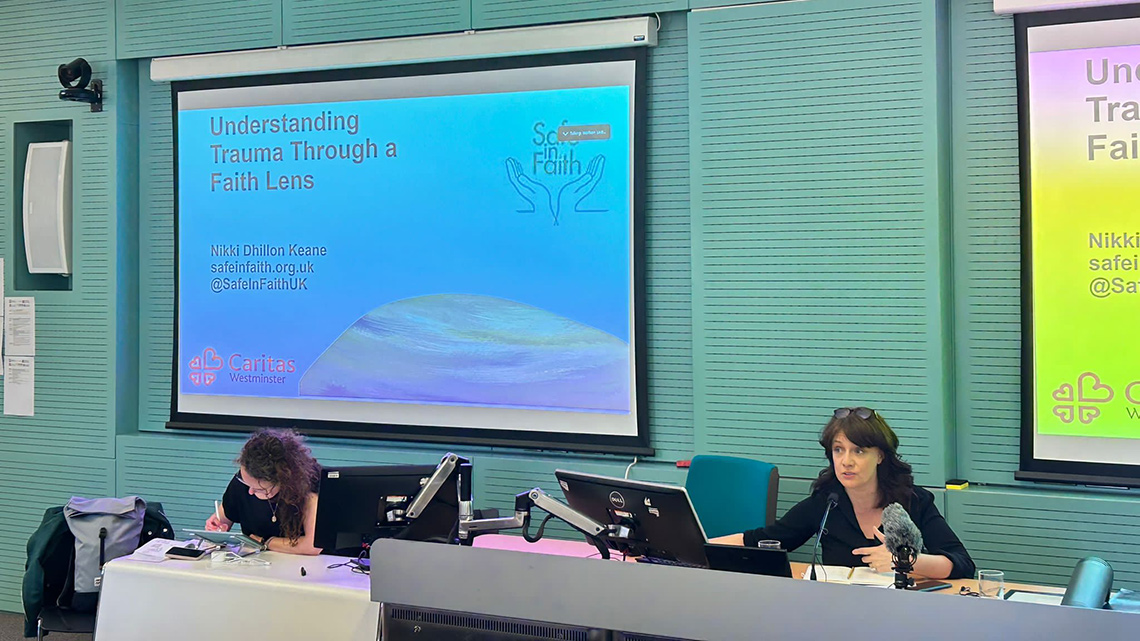
Nikki Dhillon Keane, founder of Safe in Faith UK, is a therapist who helps survivors of abuse and Head of Service at Caritas Safe in Faith on domestic abuse and assisted suicide.
‘The criminal justice system is just acknowledging the scale of possible criminal culpability in domestic abuse and suicide, while at the same time, a bunch of MPs seek to make it non-criminal.’
The questions raised by the proposed Terminally Ill Adults (End of Life) Bill are highly complex. It is difficult to imagine the deeply personal experience of terminal illness, for patients and their families. Raising questions about the safety of proposed legislation should in no way be viewed as a lack of compassion for people nearing the end of their lives; rather as an attempt to ensure that all people affected by this legislation, particularly the most vulnerable, are safe from harm.
There is one particularly vulnerable group for whom this legislation could significantly increase risk: victim/survivors of domestic abuse. Often invisible, they have, until very recently, been all but totally absent from the debate around assisted suicide. For many people being subjected to domestic abuse, however, this danger is all too evident.
Shortly after the evidence session of the Committee stage of the bill began. I found myself listening to Helena (not her real name), who was telling me why she was so worried about the bill: “It’s not for the same reason that other people have a problem with it,” she tells me.
Helena is a domestic abuse survivor, who used to live with her former husband in a country with legalised assisted dying. She explained her fear: “It is when your spouse wants to kill you, and the state gives them a totally legal way to do it…”
As a disabled woman, Helena had a higher risk of domestic abuse. In the UK, one in two deaf and disabled women experience domestic abuse during their lifetime. Helena continued: “My husband used to threaten to euthanise me if he got fed up with being my carer.” She tells me that legislation had expanded there to include chronic, not just terminal, illness – the all-too-familiar slippery slope.
For almost 20 years, Helena was subjected to coercive control by her then husband. Recognised in the UK as a criminal offence under the serious crimes act 2015, coercive control is the umbrella under which all the other forms of domestic abuse are perpetrated. Threats and isolation are common tactics, as is weaponising whatever is available for the perpetrator to gain and maintain control. If a victim has a disability or chronic illness, it is very common for that to be used by the perpetrator as part of the abuse, restricting access to medication, or aids such as wheelchairs or hearing aids. If the perpetrator also has the role of carer, escape – or even a chance to safely disclose abuse – can be almost impossible. Disability or illness can leave domestic abuse victims completely trapped with their abuser.
I have spent most of the last quarter century working with victim/survivors of domestic abuse. Coercive control, which tends to escalate slowly and subtly over time, can be extremely hard to recognise, even for those being subjected to it. It is even harder to prove. Any signs of physical harm are probably well hidden, or more often not present at all. Sometimes the first act of physical violence is the fatal one. More often, however, when domestic abuse becomes fatal, it is through suicide. An estimated three women take their life every week as a direct result of domestic abuse. A further 30 female domestic abuse survivors contemplate suicide every day. Recognition of the causal link between domestic abuse and suicide is a very recent development in British law. Domestic Abuse Related Death Reviews (which unlike Domestic Homicide Reviews, investigate domestic abuse related suicide) were only introduced in May 2024. While this development is welcome, most health and social work professionals receive little or no training in coercive control, missing opportunities to prevent further deaths.
Proposed amendments to the assisted suicide bill would require mandatory training for professionals to help them spot coercion. Most likely, this is intended as an important protection against relatives, motivated perhaps by thoughts of a dwindling inheritance, gently pressuring a terminally ill relative to consider the option of a swift assisted death, rather than expensive palliative care. However, training to help professionals recognise a terminally ill person wishing for death as the only escape from the torment of abuse is a more complex matter.
Macmillan Cancer Support has released a toolkit for professionals working with cancer patients to help them recognise domestic abuse. Just as they do with disabilities, domestic abuse perpetrators tend to weaponise critical or terminal illness as part of their abuse. Domestic abuse victims and perpetrators can be any age. Sometimes perpetrators abuse their spouse for decades. We need to be aware that there is a very real possibility that someone nearing the end of their life may also be a victim of domestic abuse, and that this is likely to affect decisions about assisted suicide.
Given the high levels of suicidality among victims, and the control that abusers have over them, it is easy to see how assisted suicide legislation could be twisted into a method for perpetrators to kill their spouse with impunity. Prof Jane Monkton-Smith, a specialist in fatal coercive control, has shared her fears about the bill on social media: “The CJS [criminal justice system] is just acknowledging the scale of possible criminal culpability in domestic abuse and suicide, whilst at the same time, a bunch of MPs seek to make it non-criminal.”
Currently, in the UK, a woman is murdered by her partner or former partner every five days. In countries where assisted suicide is legalised there is (perhaps unsurprisingly) a significant lack of research into any potential links between legally assisted suicides and domestic abuse. However, there is information from the UK regarding so-called “mercy killings”. This is a term used to describe someone being killed illegally but with the claimed intent to relieve suffering. A disturbing review of over 100 UK mercy killings by the research centre The Other Half found that “mercy killings are not the wanted, hastened deaths that need assisted dying. They are overwhelmingly violent domestic homicides of women by men”.
Whatever views people may have about what it means to die with dignity, it is clear that there are serious risks which would arise from passing the assisted suicide bill into legislation. As Helena put it: “I just don’t want anyone living with the fear and threats that I had. Whatever we do, we need to make sure that we don’t open the door to another way for men to harm women and get away with it.”
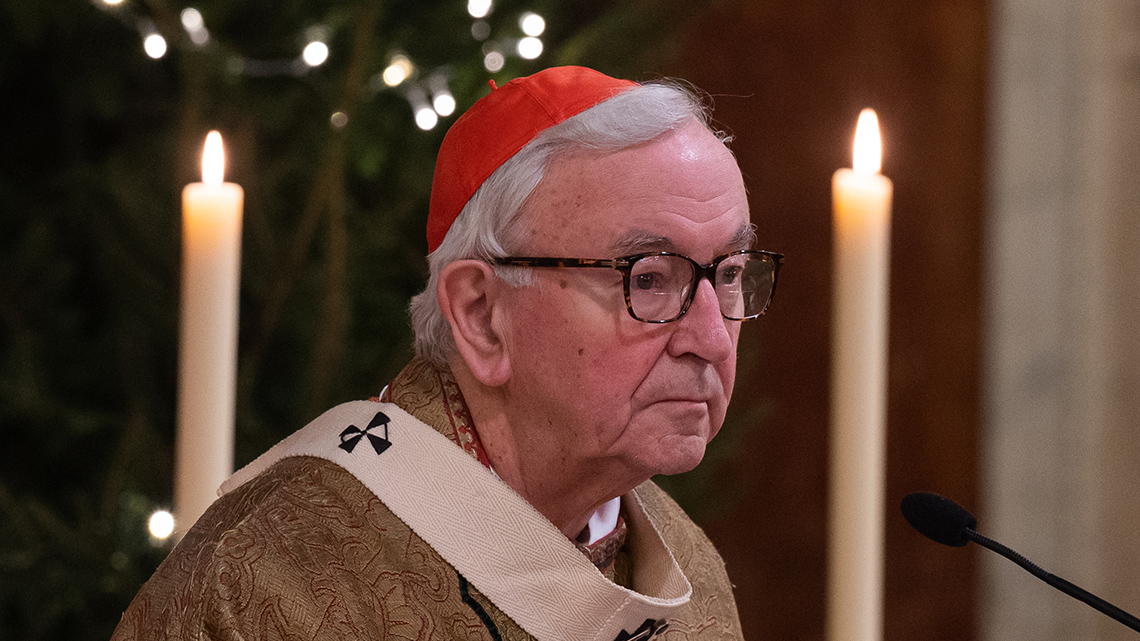
Cardinal Nichols has called the way in which the assisted suicide bill is being handled ‘deeply irresponsible’ and a ‘shambles’.
Speaking to Christian Fellowship, a group at News UK, the Cardinal expressed serious concern that MPs had only spent a few hours debating assisted suicide when they spent more than a hundred times longer debating banning fox hunting in 2004.
He said:
‘I believe it is deeply irresponsible of any government to allow a change of this magnitude to be carried out without due, proper, government-supported parliamentary process’.
‘I think what’s happening, if it came to pass, would be the biggest change that this country has seen for many, many decades at least, probably more. On the back of what – five, six, seven hours’ debate?
‘I was told that the fox hunting bill [in 2004] endured 700 hours of debate.’
Despite these concerns, he hoped that the bill could still be defeated as it makes it way through the Houses of Parliament: ‘I don’t think that story’s over yet.’
The Hunting Act 2004 passed after 700 hours of parliamentary debate and a government inquiry – the Terminally Ill Adults (End of Life) bill, passed on November 29 by 330 to 275 last year after five hours of debate.
Cardinal Nichols added that there was ‘something deeply lacking in a government that isn’t prepared to guide and sponsor,if it wants to, this process of legal change’.
In October last year, Cardinal Nichols issued a pastoral letter to his diocese, encouraging Catholics to contact their MPs ahead of the debate.
In it, he raised concerns: ‘the right to die can become a duty to die’.
He said:
‘Once assisted suicide is approved by the law, a key protection of human life falls away. Pressure mounts on those who are nearing death, from others or even from themselves, to end their life in order to take away a perceived burden of care from their family, for the avoidance of pain, or for the sake of an inheritance.’
‘The radical change in the law now being proposed risks bringing about for all medical professionals a slow change from a duty to care to a duty to kill.’
At this webinar, participants will learn a little more about the insidious issue of Human Trafficking and Modern Slavery in the UK and importantly what we can do as ‘Pilgrims of Hope’ during this Jubilee Year to help victims of Human Trafficking as we shine a light on this important issue.
Brian O’ Toole, who is a member of the National Justice and Peace Network (NJPN), Act to Prevent Trafficking (APT Ireland) and the Religious in Europe Networking Against Trafficking in Europe (RENATE) and Talitha Kum will be hosting this webinar entitled: Open the Doors to Freedom from Trafficking and Exploitation on Thursday 6 February 2025 at 7pm.






 Diocese of Westminster Justice and Peace Commission