Our Lady of Fatima Parish, White City, in West London, have taken the plunge and decided to host their own hustings, ahead of the General Election on 4th July 2024.
Candidates have agreed to attend from the Labour, Conservative, Reform, Green and Liberal Democrat parties.
All are standing in the Hammersmith and Chiswick Constituency.
If your parish is doing anything similar in the Diocese, do let us know here at the Justice and Peace Commission.
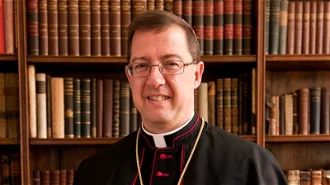
Bishop John Sherrington, Lead Bishop for Life Issues for the Bishops’ Conference of England and Wales, has released a statement on the Criminal Justice Bill expressing his deep concern about two tabled amendments that seek to liberalise abortion laws. They are set to be debated next week.
Bishop Sherrington also voiced his support for two other tabled amendments, one of which would reduce the abortion time limit and the other that would not allow babies with Down syndrome to be aborted up to birth.
Bishop Sherrington’s full statement is below:
Four amendments have been submitted to the Criminal Justice Bill which relate to the protection of unborn babies and will be debated on 15 May.
I support the amendment from Caroline Ansell MP (New Clause 15) that would reduce the abortion time limit to 22 weeks. As a result of advances in medical practices many babies can now survive if born at 22 or 23 weeks’ gestation. I hope that parliamentarians will support this amendment.
Likewise, I call on parliamentarians to support the amendment tabled by Sir Liam Fox MP (New Clause 41), which will bring an end to the situation whereby babies diagnosed with Down syndrome can be aborted up to birth. This would be a step towards ending the discrimination against babies diagnosed with a disability in our current abortion law.
However, I am deeply alarmed by two amendments to the same Bill, one of which is proposed by Dame Diana Johnson MP (New Clause 1). This amendment, if passed, will remove any legal protection for unborn babies when a woman seeks to bring about her own abortion at any stage of pregnancy. A further danger presented by this amendment is that women could abort their own pregnancies at home through the use of abortion pills at any point in the pregnancy, which could seriously endanger a woman’s health and life. Moreover, the risks of coerced or forced abortion would only increase as the legal safeguards around abortion decrease.
The second amendment by Stella Creasy MP (New Clause 40) includes proposals to decriminalise abortion up to the 24th week for any party involved and carries similar threats to pregnant women and their unborn babies.
The Church recognises the struggle and trauma which may lead some pregnant women to consider an abortion. Such difficult situations require pastoral and medical care for vulnerable women in their time of need. When cases of illegal abortions are prosecuted, it is for the judge to decide the appropriate balance of justice and mercy for all involved.
Our current legislation provides some level of protection for pregnant mothers and unborn babies by keeping abortion within the criminal law. Relaxing abortion legislation further would be a tragic mistake for both mother and child.
As Pope Francis has said: “It is troubling to see how simple and convenient it has become for some to deny the existence of a human life as a solution to problems that can and must be solved for both the mother and her unborn child”. In England and Wales, both unborn child and pregnant mother deserve full protection under our laws, as some of the most vulnerable in our society.
I encourage people to contact their MPs to make their views clear on these amendments.
Bishop John Sherrington
Lead Bishop for Life Issues and Auxiliary Bishop of Westminster
British Sign Language (BSL) ‘Our Father’ – Caritas Westminster Deaf Service’
This week is Deaf Awareness Week; a time to focus on the Deaf Community and their presence in our parishes.
Shell Roca, Head of Caritas Westminster Deaf Service, writes, “the community has a great deal to offer our parishes. Our parishes need to be accessible and welcoming to the Deaf Community.”
One such gift is British Sign Language. A seminarian at Allen Hall says, “Learning BSL has helped me to appreciate the beauty of communication. Learning to communicate with those in the Deaf Community in their own language has helped me broaden my theological and philosophical understanding of my faith.”
This year of preparation for the Holy Year in 2025 has been designated a Year of Prayer, with a special focus on the Our Father.
Why not take the time to learn the Our Father in BSL this year, using the video above, and enhance your own prayer?
If you can already pray the Lord’s Prayer in BSL, this might be a good time to teach other people in your parish or church organisation so that more of us can pray it together.
It’s Deaf Awareness Week; a time to focus on the Deaf Community and their presence in our parishes. The Deaf Community have a lot to offer the wider Catholic family. You may well have already seen on TV from Strictly Come Dancing and the Great British Bake Off, that Deaf people can dance and cook; in both cases brilliantly. Deaf people can be Eucharistic Ministers, they can be readers at Mass, part of the team who do the flowers, or prepare the tea and coffee after Mass.
Deaf men can be priests and deacons; the community has a great deal to offer our parishes. Our parishes need to be accessible and welcoming to the Deaf Community.
One group of people who have started on that journey by learning to sign in church are some of the seminarians currently studying at Allen Hall. Representing Hexham and Newcastle, Liverpool, Plymouth, Portsmouth, Southwark and Westminster Dioceses, these are our future “signing priests”.
On the 14th April for the first time that any of us are aware of, a Mass in Word and Sign was celebrated at Allen Hall by Fr Keith Stoakes. The seminarians who have been learning to sign took part, signing a reading, the bidding prayers and signing two hymns.
Deaf people were invited to the Mass and greatly enjoyed the experience. “Mass at Allen Hall, wow, that was special. The seminarians were so good. I was impressed.”
With refreshments afterwards and an opportunity to chat, the Deaf Community were able to share with the seminarians their experiences of being Deaf Catholics, an example of which being the distance some of the group have to travel to access a Mass that is signed, with one attendee coming all the way from Dorset. There are so few opportunities for Deaf people to attend a signed Mass and practice their Catholic faith.
Two of the seminarians reflected on their start of this journey of learning to sign Mass and work with the Deaf Community: “Learning BSL has been a thoroughly enjoyable experience. Being able to have conversations and engage the Deaf Community in the Mass and liturgy has been incredibly useful during parish placements and will be of great use in my future ministry. BSL has been beneficial in helping me to hold basic conversations from fingerspelling, expressing feelings and being able to lead prayers.”
“Learning BSL has helped me to appreciate the beauty of communication. As a man training for the Priesthood being able to communicate the Gospel with a variety of people is vital. Learning to communicate with those in the Deaf Community in their own language has helped me broaden my theological and philosophical understanding of my faith.”
Dr Raymond Perrier, Director of the Denis Hurley Centre in Durban, South Africa, gave the following address during the Ecumenical Service to mark the 44th anniversary of the martyrdom of St Oscar Romero at St Martin in the Fields, Trafalgar Sqhaere, London on Saturday, 16 March 2024.
Prayerful and Prophetic Resilience in the Face of Injustice
We have, in the figures of St Oscar Romero of El Salvador and Denis Hurley of Durban, South Africa, two ‘golden arches’. Two men who used their position as archbishops in the Catholic church to be ‘a voice for the voiceless’. They operated on different sides of the planet; while Hurley was a leading figure in the Second Vatican Council in the 1960s, Romero was relatively unknown outside his home country until his death; and while Romero was an archbishop for under three years, Hurley was a bishop for almost 60 years. Yet there are some remarkable similarities between their lives.
Being of similar age, they both studied for the priesthood in Rome in the 1930s. Frustratingly we cannot prove that they ever met, though Hurley in his memoirs assumes that they must have attended the same lectures. What we do know is that they had a shared experience of seeing the rise of fascism in Italy and then the conflicted response of the Church in the face of political intimidation. They both spent part of their lives training future priests – really quite bookish men who were unlikely revolutionaries. The appointment of each of them to high office in the Church was surprising, though for different reasons: Romero was chosen because he was the quiet man who had been a rural bishop and, it was thought, would not rock the boat; Hurley, when he was appointed in 1947, was absurdly young: in fact at 31 he was the youngest bishop in the entire Catholic world.
But once they were in charge of dioceses, both had the experience of being conscientised by their own people and most especially by the poor and marginalised. Romero broke the conventions of the strictly classist Salvadoran society by mixing with peasants and listening to their experiences. There are moving photos on the Romero Trust website of him walking the streets, or sharing a meal with ordinary families, to connect with the lives of his people. Hurley broke the even stricter laws of Apartheid South Africa by reaching out to citizens of all colours and hearing at first hand what injustices and daily humiliations they faced. Hurley also broke the equally strict conventions of his Church at the time by listening to and empowering lay people, women, Christians of other denominations and people of other faiths.
By walking alongside their people, these bishops learnt about the exclusions, oppression and violence that was happening in their countries and that so many other leaders – political and religious – chose to ignore. They thus both became icons in the struggle against injustice having the courage to use the platform they had to speak out in a divided society. And what they said was often not what people wanted to hear. Of course, that deafness is still true today and we just sang Hurley’s own words in the hymn: “We humbly ask your pardon, Lord: the ones who hear are all too few.”
For their stand against injustice, both archbishops faced intimidation and vilification, a cool reception from members of their church, from their fellow bishops and even from Rome, and warnings from their governments of legal actions and death threats. Romero of course did not survive these. He was assassinated while saying Mass almost exactly 44 years ago on 24 March 1980 – the blood of the chalice mixing with his own blood in the supreme image of martyrdom. Hurley was spared such violence and lived to see the transition to a democratic South Africa; he died 20 years ago, in his 90th year.
In both these men we see a prophetic stance but importantly it is a prophetic stance that is rooted in prayer and in Scripture. There is a lovely story told of a group of young revolutionary-minded trainee priests in San Salvador, creeping out of the seminary to campaign on the streets, and passing an old priest who was on his knees praying in the chapel. They mocked him wondering why he could not be more like their great hero the activist Archbishop Romero. And then the old priest stood up and turned around and it was indeed Archbishop Romero.
Through all their actions, Romero and Hurley were doing no more – and no less – than Jesus proclaims in his first public sermon as recounted in Luke chapter 4. Jesus enters the synagogue in Nazareth, takes out the scroll and reads from the prophet Isaiah: “The Spirit of the Lord is upon me; he has anointed me.” Hurley chose as his episcopal motto a phrase from 2 Corinthians which we have just heard read: “Where the Spirit is, there is Freedom”. And it is in the power of that anointing by the Spirit that Hurley and Romero find freedom and were able to show others the way to freedom. It is the freedom to preach good news to the poor, to liberate captives, to open the eyes of the blind, to bind up the broken hearted.
Both Hurley and Romero used their pulpits, and used the media available to them, to preach good news to the people of their own countries. Both men also benefited hugely in their ministry from the support of CAFOD and Christian Aid to make sure that the truth of what was happening was heard further afield. As we heard from Romero’s words earlier:
“It is not enough to demand justice. The civilisation of love also demands truth…and truth is what is lacking in our situation…When the truth is spoken it gives offence, and the voices that speak the truth are silenced.”
Romero was silenced by his assassination but, as he had predicted: “they may kill an archbishop, but I will rise again in the Salvadoran people”. Hurley was also fearless in witnessing to the truth, often standing on his own outside Durban City Hall holding a placard and daring the authorities to arrest him. He was also supremely creative in how he could use the power of religious symbols to tell the truth to the world. Let me give one example.
At the height of the state of emergency, in March 1985, a group of anti-Apartheid activists had been detained without charge in the central prison in Durban and Hurley wanted to show solidarity with them. Strictly speaking it was illegal for him even to mention that they were detained, let alone organise any kind of public demonstration. His great lieutenant, a lay man called Paddy Kearney, came to Hurley with an idea. “Is it not, your Grace, an ancient tradition of the church that a bishop should be able to visit his congregants on Good Friday?”. “Is it?” asked Hurley; “well,” Paddy replied, “it is an ancient tradition: who knows?”
So Hurley went to the Chief of Police and explained this ancient tradition to him and the Chief of Police, a loyal member of the Dutch Reformed Church, felt he could not refuse. But then Hurley explained that, since not all the detainees were Catholic, the Anglican bishop and the Methodist and the rest should also be allowed to visit the prison. And so, at dawn on Good Friday, Hurley led a group of fellow Christian leaders into the jail so that they could pray with the detainees; meanwhile a group of other Christians who had by coincidence turned up at the same time stood in a circle around the prison and sang hymns so the prisoners would know they were not forgotten. And then they all walked away in complete silence, so they did not break the rules on public protests.
This was not a protest but a prayer service – a prayerful and prophetic witness – that comforted the afflicted inside the prison and afflicted the comfortable forces of the Apartheid regime. That tradition of a silent ecumenical walk of witness at dawn on Good Friday continues to this day and we will be marking it in central Durban in two weeks’ time.
The ecumenical nature of that event is worth noting in this wonderful ecumenical service. We should remember that Romero was honoured by Westminster Abbey many years before he was canonised by Rome. Long before it was encouraged, or even allowed, for Catholics to mix with ‘our separated brothers and sisters’, Hurley was reaching out to Christians of other denominations and indeed to people of other faiths since Durban has sizeable Muslim and Hindu communities. One of his great collaborators was Ela Gandhi, grand-daughter of the Mahatma. I am proud to say that the Denis Hurley Centre in Durban is located between the Catholic Cathedral, the largest mosque and the site of Mahatma Gandhi’s law office. We are, as far we know, the only building in the world named after a Catholic archbishop which houses a halal kitchen so we can work together with all faiths to feed the poor.
If Isaiah calls us to bind up the broken-hearted, then every act of ecumenical or interfaith collaboration is an opportunity to bind up the broken heart of the one God who created us all.
Romero did not live to see liberation in El Salvador – it came after his death. But he also did not live to see how that liberation would later be squandered by politicians who once fought for the poor and now ignore their plight and feather their own nests. Hurley did live to see liberation with South Africa’s first democratic elections 30 years ago in 1994 – that was a moment celebrated especially here in Trafalgar Square where for so many years there had been a valiant protest outside South Africa House next door to us. But Hurley died before the pot of gold in the rainbow nation was found to be empty – stolen by members of a party that claimed to be the liberators or sold by businesses and political leaders to the highest bidder.
Romero and Hurley might have hoped that their successors as religious leaders in El Salvador or South Africa (or even here in Britain) would have continued the fight against injustice with the same vigour. And some of them do; but by no means all. Can we put our hands on our hearts and say that we have – to use Hurley’s words from 1960 – ‘a true social apostolate, a systematic effort to concentrate the energies of divine light and life on the failings of human conduct’?
Because, of course, the anointing that Jesus mentions in Luke 4 is and not for just for him or for Romero and Hurley. Each one of us by our baptism has been anointed; the Spirit of the Lord is on each one of us and the manifesto of Isaiah should be the manifesto of all our lives. So what does this mean for us sitting here today?
We heard Hurley’s words from 64 years ago reminding the Church that in a bitterly divided community, its mission is one of salvation. And that while we can hope to draw on the strength of God, we have to constantly be aware of – and challenge – the weakness of humans, starting with our own frailty.
In El Salvador and in South Africa today the work of bringing good news to the poor is far from over. I would suggest that the same is true of the bitterly divided nation which looks to this square as the epicentre for celebration and for protest. The over-riding need for that good news is something I see every day in central Durban at the Denis Hurley Centre. It is a place where people of all faiths come together to serve the homeless, refugees, drug users, the unemployed – the captives of our economic system who are looking to be liberated. So many wonderful parallels to the work of St Martin in the Fields. Occasionally, especially when there is an election coming up, government with its massive resources does remember that these are the poor and marginalised whom Hurley and others fought valiantly to liberate from Apartheid. But more often than not, the poor are forgotten by the South African government because (to use Hurley’s words) of “the slowness or the failure or the refusal of humans to respond to the call of God.”
In the face of increasing injustice and indifference – in El Salvador, in South Africa or here in Britain – one temptation for people of faith is to retreat. But as Romero put it: “To pray and wait for God to do something is not holiness, it is laziness.” We are all anointed and called to constantly find ways, small and large, to bring good news to the poor, to bind up the broken hearted and to open the eyes of the blind – starting with opening our own eyes and then encouraging others to see what they would rather ignore.
Another temptation is to be committed to act but then to wait for the perfect moment. In Luke 4 we are told of the year of the Lord’s favour – that sounds like a great time to act and until then we should just wait, shouldn’t we? Clearly, Romero did not live to see the year of the Lord’s favour: but he did what he could when he could and entrusted the rest to God: accepting that he was a worker not the master builder. In South Africa with the elections 30 years ago it looked as if we had reached that Kairos moment – the year of the Lord’s favour. But of course 1994 was just the start of another mountain and at the Denis Hurley Centre we are very aware that we still have a long way to climb. The example of the lives of Romero and Hurley remind of what Jesus tells us in Luke 4: there is no excuse for waiting: for now is the acceptable time, now is the day of the Lord’s salvation.
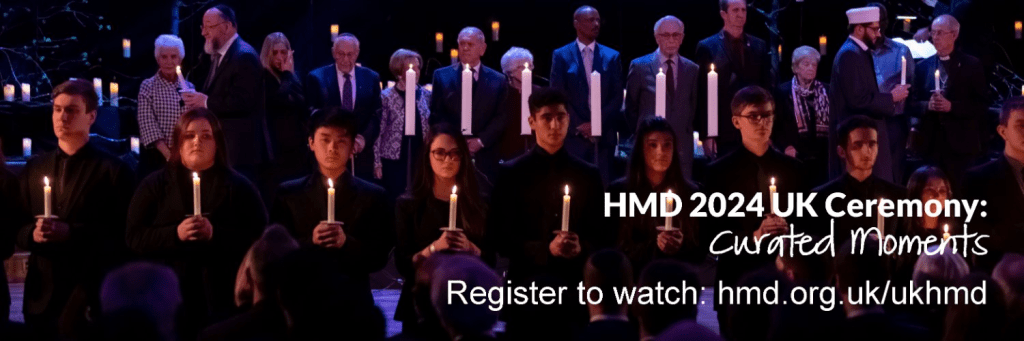
Join the nation on Saturday 27 January at 8pm to watch the ‘HMD 2024 UK Ceremony: Curated Moments’.
‘Curated Moments‘ is taken from the UK Holocaust Memorial Day Ceremony earlier in the week. It is vital that the entire nation can come together to commemorate Holocaust Memorial Day and to learn from genocide and build a better, safer future together.
Directly after the Curated Moments have finished at 8pm, people are asked to display lit candles safely in their windows to Light the Darkness to remember those who were murdered for who they were and to stand against prejudice and identity-based persecution in the world today.
About Holocaust Memorial Day
Holocaust Memorial Day (HMD) takes place on 27 January each year and is a time to remember the millions of people murdered during the Holocaust, under Nazi Persecution and in the genocides which followed in Cambodia, Rwanda, Bosnia and Darfur.
Holocaust Memorial Day is a time when we seek to learn the lessons of the past and recognise that genocide does not just take place on its own – it’s a steady process which can begin if discrimination, racism and hatred are not checked and prevented. We’re fortunate here in the UK; we are not at immediate risk of genocide. However, discrimination has not ended, nor has the use of the language of hatred or exclusion. There is still much to do to create a safer future and HMD is an opportunity to start this process.
To find out more about Holocaust Memorial Day visit:
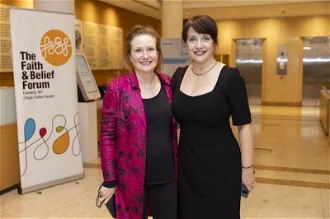
Safe in Faith, a Caritas Westminster project, providing faith-based support to victims of domestic abuse, was recognised in the London Faith & Belief Community Awards recently. The project was presented with the award in the Health & Wellbeing category, which recognises projects that create specialised services for the health and wellbeing of Londoners.
Accepting the award were Nikki Dhillon Keane, Head of Safe in Faith, and Esther Sweetman, Partnership Manager at Restored, a partner organisation that provides faith-based counselling.
Safe in Faith supports survivors of domestic abuse, sexual violence and exploitation in ways that understand how their faith impacts their experiences. Although it is a Catholic organisation, it provides support and counselling to anyone who would benefit from a faith informed approach.
Bishop John Sherrington, Auxiliary Bishop in Westminster and Lead Bishop for Life Issues at the Bishops’ Conference of England and Wales, said: “This is a significant recognition of the importance of a faith formed support for victims/survivors of domestic abuse and gender-based violence (GBV).
“Congratulations to Nikki Dhillon Keane of Caritas Westminster whose dedication and persistence have led to the development of this programme. Nikki has contributed to the Domestic Abuse Working Group of the Bishops’ Conference in the past and now develops this work in coordination with CSAN (Catholic Social Action Network).”
Safe in Faith provides training for clergy, religious sisters and pastoral workers to understand domestic abuse in the context of religious faith; how faith can be a support but also at times a barrier to safety. The training equips faith leaders to provide trauma-informed and knowledgeable support and signposting to help victims/survivors access the support they need.
Safe in Faith also has an interfaith network of counsellors and psychotherapists working at the intersection of domestic abuse, gender-based violence and faith. The project provides free and low-cost training for practitioners in working with abuse and trauma in the context of faith and spirituality.
A group of Westminster parishioners recently completed a Taster Course in British Sign Language, (BSL) given by Shell Roca, Caritas Deaf Service, at Sacred Heart Church, Kilburn. Shell was an inspiring teacher – she taught us some basic greetings, questions, Mass parts and prayers but more importantly – gave us some understanding of what Deaf people experience in their parishes. It’s estimated that one in six parishioners is Deaf or hard or hearing – they have so much to offer the Church community – whether it is learning about our faith or other skills – but we really need to make our communities more accessible to them.
I always imagined that Deaf people were able to communicate through lip-reading – but in fact it is estimated that only 30-40 percent of speech sounds can be lip-read – even under the best conditions! More than 150,000 people use BSL. It was considered a true language in 2003, but officially recognised as a language with legal status in the UK last year. (Read more about BSL here: https://en.wikipedia.org/wiki/British_Sign_Language )
Shell showed us that BSL isn’t simply English with hand signs. It is a different language with its own grammar and sentence construction, using graceful combination of hand gestures, facial expressions and body language. They might take us quite a long time to time to learn – but at least we’ve made a start!
Shell also explained that there are lots of other sign languages around the world – even the Irish use a different one. (Fr Terry Murray, Parish Priest at Kilburn uses that one) – but that’s another story.
At the end of the course Shell gave us information about where we can take more courses in BSL. Several of us are planning to do that.
During the recent Synodal discussions the main response from Deaf people in Westminster Diocese, was the need for more interpreters, so that Mass and the life of the Church is more accessible to them. Deaf Catholics want to practice their faith, contribute to their parish and be fully part of Catholic Church.
UPCOMING EVENTS
Sunday 10 December 4pm London: Signed Mass at St Mary & St Michael, 2 Lukin Street, Commercial Road E1 0AA
Sunday 17 December 11.30am Signed Mass At Our Lady Queen of Apostles, 141 Woodhall Lane, Welwyn Garden City, Herts AL7 3TP
Sunday 7 January 4.30pm London: Signed Mass Westminster Cathedral Hall, Ambrosden Avenue, Victoria SW1P 1QH – Entrance to the hall via choir school car park. Mass starts at 4.30pm and there will be the opportunity for confession before Mass starts.Mass is in BSL and in spoken English. Entrance to the hall is via the choir school car park (the Hall is also wheelchair accessible).
A nationwide project to encourage local action against human trafficking and modern slavery in partnership with police and statutory agencies is being launched at a Catholic parish in Hitchin, Hertfordshire, on Thursday, 30 November. The project aims to mobilise local communities across the United Kingdom to recognise and report the signs of human trafficking to the police and call on all government agencies to ensure their neighbourhoods become slave-free.
Hitchin was chosen as the launchpad for this nationwide project as it has had a long association in the struggle against slavery. It was one of the first towns to set up its own anti-slavery society in 1825, following leading abolitionist Thomas Clarkson setting up the first national society. A monument to Clarkson was erected in nearby Wadesmill, Hertfordshire in recognition of the place where he famously devoted his life to anti-slavery in 1785 while resting at Wadesmill on his way to London from Cambridgeshire. Freed slave and leading abolitionist Henry Garnett also visited Hitchin in 1850 in recognition of the town’s place in the movement to abolish slavery.
The Hitchin event is organised by the Santa Marta Group and the Roman Catholic Diocese of Westminster, which also covers Hertfordshire. The Santa Marta Group was set up in 2014 when Pope Francis instructed Cardinal Vincent Nichols, Archbishop of Westminster to lead the work to end human trafficking and modern slavery as an important mission for the Catholic Church across the world. SMG now has partners in over 40 countries, working with leaders in police, the justice system, diplomats, business as well as local communities.
The United Nations currently estimates there are 50 million people trafficked across the world, making over $150bn in profits for criminal gangs. In the UK alone last year 17,000 victims of trafficking were identified, with around 40% being children and 25% of victims being UK nationals. The scale of this crime against humanity led to all United Nations members making the eradication of human trafficking and modern slavery one of its Sustainable Development Goals (SDG 8.7 – which calls for immediate action by all UN members to eradicate forced labour, end modern slavery and human trafficking, and eliminate the worst forms of child labour by 2030).
Cardinal Nichols, president of the Santa Marta Group, said: “This crime against humanity damages individuals and communities everywhere, for these victims of human trafficking are not remote; they are in our midst, in our local communities here in the UK.
“We are all part of this endeavour. Individuals and local communities can change events through what we do and what we demand is done by the police, government agencies and businesses in our neighbourhoods. I appeal to all of you to take up this challenge. These resources, prepared by the Santa Marta Group, will inform you about human trafficking and show what you can do to bring about the changes that will end this evil trade and help to restore freedom and dignity to so many of our brothers and sisters.”
The aim of the Hitchin event is to start a process that will enhance awareness and understanding of human trafficking and modern slavery around Catholic parishes and other local community groups. At the end of these sessions, these groups will have received awareness and guidance on how to use their individual and collective voices to increase actions in countering this horrific crime in their localities and improve services for victims.
SMG’s new ‘Guidance and Awareness Handbook’ for parishes will be distributed for the first time. It will provide ideas and suggestions on increasing prevention, protection, support to victims, and accountability led by communities but delivered by statutory agencies.
By initiating the conversation and equipping local communities with knowledge on how to spot and combat human trafficking and modern slavery within their own communities, the UK will be brought one step closer to eradicating this crime and fulfilling the aims of SDG 8.7.
This event has been organised through the collaboration of Bishop Paul McAleenan from the Westminster Diocese with the Santa Marta Group. The presentation and subsequent discussion will be led by SMG’s Global Strategy Director, Kevin Hyland, formerly the UK’s first Independent Anti-Slavery Commissioner. This event is the start of a series of events in the Hertfordshire area and across the UK that will continue over the coming year.
‘Awareness and Guidance for Communities’ will take place at Our Lady Immaculate & St Andrew Parish Hall, 16 Nightingale Road, Hitchin, SG5 1QS, November 30, 2023, 7pm – 9pm






 Diocese of Westminster Justice and Peace Commission