Westminster Volunteering Fair takes place this Saturday, 9 March, from 3 – 5pm in Westminster Cathedral Hall.
Volunteering is good for you and has the power to transform lives – including your own!
A range of charities will be hosting stalls, including:
Assumption Volunteers, CAFOD, Mary’s Meals, PACT, Jesuit Refugee Service UK, Radio Maria, Catholic Listeners, Age UK, Hitchin Pantry, Landings, Little Village, Westminster Justice & Peace Commission, Notre Dame Refugee Centre, SVP (St Vincent de Paul Society), St Monica’s Foodbank, White City Food Hub, Stella Maris, Providence Row, Community Enterprise Catalyst and Caritas Westminster.
Giving your time is a most precious gift. Whether you have a lot of time or can help out occasionally, you can make a difference!
“Over time, I have grown both personally and professionally, and the lessons I’ve learned from this experience are invaluable. You have all become like family to me. The memories, shared moments, and the camaraderie we’ve built make you the best team I have ever had the privilege to work with.”
A Little Village volunteer
“Not all of us can do great things. But we can do small things with great love.” St Teresa of Calcutta
Westminster Justice and Peace Commission will be in attendance. Do come along, even if you are already a volunteer with us, but would just like to know more about the other groups that are promoting volunteering in the Diocese to help with your work for justice and peace.
In response to the request to feed into parishes and deaneries for the next stage of the synodal process, some fifteen or so justice and peace activists from across the Westminster diocese gathered virtually on Zoom to discuss MISSION and FORMATION on Tuesday 28th February, 7.30-9.00pm.
Opening Prayer
We stand before You, Holy Spirit, as we gather together in Your name. With You alone to guide us, make Yourself at home in our hearts; teach us the way we must go and how we are to pursue it. We are weak and sinful; do not let us promote disorder. Do not let ignorance lead us down the wrong path nor partiality influence our actions. Let us find in You our unity so that we may journey together to eternal life and not stray from the way of truth and what is right. All this we ask of You, who are at work in every place and time, in the communion of the Father and the Son, forever and ever. Amen
After the Synodal Prayer
Those present tried to listen to what the Holy Spirit was saying to us individually and together as a group.
1. The first half of our meeting explored the theme – OUR MISSION
How do we witness as a parish and proclaim our faith to those who have never heard of Christ; to those who have ceased walking with Him; and with those who come to church? And how should we organise ourselves as parishes to do this more effectively?
The mission of the Church as People of God is described in the catechism as being “the salt of the earth and the light of the world; this People is the most sure seed of unity hope and salvation for the whole human race” to what extent are we achieving this or failing to do so? One person quoted Paul VI “modern man listens more willingly to witnesses than teachers and if he does listen to teachers, it is because they are witnesses”. Or, according to James (2.18): “I will show thee my faith by my works”. Accordingly, practically living out our commitment to justice and peace are central to witnessing to our faith and we have a responsibility to get across the message that we are all called to be witnesses. Sometimes something as simple as wearing a cross and chain can be active witness.
Many of those present cited ways in which their parishes are currently witnessing to their faith and proclaiming that faith to others in the community – whether active in the parish, or ‘lapsed’, or those who were never part of the community. For those parishes who have one, the parish hall can prove a fantastic resource which becomes a central community hub – for believers and unbelievers alike – drawing in local people who see it as ‘theirs’ as they partake in shared events. In this way, some have even on occasion signed up for RCIA. Many talked of the wider community events engaged in by their parishes – local Foodbanks, inter-faith outreach, carol concerts, parish picnics – all aimed at building up a sense of community and welcome. Others talked of the importance of welcoming ‘newcomers’ or ‘returners’ or ‘visitors’ to church – some parishes have ‘welcomers’ (especially young people) to ensure that people feel welcomed and ‘reached out to’. In one parish they actively contacted former parishioners who were no longer attending since lockdown, to see how they were, check on any access issues and informed them of events happening. Yet others talked of the importance of communication including social media – Facebook, parish newsletters, Twitter/X etc etc – as a way of getting their message out beyond ‘Sunday Mass’ – to the housebound, to people passing by the church building on the high street etc.
One contributor noted that we witness to our faith by just being there: alongside the marginalised and dispossessed and sick, just as Jesus was. However, sometimes this may be seen as too ‘political’ – which raised questions for the later ‘formation’ segment. Another agreed that witnessing to our faith is in part about WHAT gets done, but also HOW it is done – as people of faith, we offer something more than the community resource that others may provide – by according dignity and respect to all with whom we engage, the quality of our welcome and inclusiveness can convey Christ’s love in a unique way.
Another welcomed any efforts to proclaim “we are here” – make the church building itself attractive with doors open and providing a visible presence of living faith in the area. Another point made was showing our inclusiveness when people can see others like themselves visible in the church and participating in church activities e.g. the presence of female servers on the altar.
Yet someone else referred to the importance of making more visible justice and peace issues in the life of the parish – and the importance of education. Again an issue for the later formation discussion – how do we tackle root causes of injustice? How do we move with the times? How do we help people address issues such as Artificial Intelligence (the topic of the Pope’s Peace Sunday message this year), the arms trade, and how our taxes are being spent?
Several people spoke of the vibrancy of their own parishes in reaching out beyond Sunday Mass participants – as well as the challenges of diversity, language barriers etc. – in forging a strong sense of community. And some spoke of the need to “go out into the world” – participation in inter-church events like the Walk of Witness on Good Friday; or bread and soup lunches and social activities which bring people in. In areas where there are many people wanting to go to Mass, but unable to get there unaided, some volunteers offer car-rides or just assistance with wheelchairs – an offer, whether taken up or not, is greatly appreciated as a message of outreach and love to those otherwise largely housebound. The question is surely “how do we bring Christ to people”? It was also emphasised that covid had led to many ‘old’ systems breaking down – Readers/Eucharistic Ministers etc. not returning to their previous roles …..has enough been done to reach out to them and encourage them to realise how needed they are?
A lot of concern was expressed about the need to engage our children and young people – are we doing enough to appeal to young people? Some distribute prayer cards; others organise coffee mornings at which young people are encouraged to play an active role; some find that music (of all kinds) can offer a transcendent experience – for parishioners of all ages. If Christ is at the centre of our mission, how do we make our prayer and our liturgies ever more powerful. One parish offers a ‘Landings’ programme which creates a culture of welcome and allows people to tell their stories about why they have been away from the Church. Nothing can beat the ‘human touch’ – having people welcome visitors, have the clergy available after Mass, have Parish Council members visible and available, and alerting the parish to the outreach work being done ‘in their name’ with homeless or whatever, so as to draw them actively into this work.
2. The second half of the meeting explored OUR FORMATION
What formation do we need to witness our faith ever more effectively? What structures may need to change and what organisation is needed to promote opportunities for formation?
Some of this debate had already been flagged earlier – why is justice and peace work sometimes seen as ‘political’ and therefore controversial? What can be done to counter this? In practical terms, how do we learn to tackle the root causes of injustice, and not be satisfied with offering ‘band-aid’ relief?
One contributor emphasised the importance of all formation being sustainable and of the whole parish having a clarity of mission, and the role of each individual in delivering on that mission. Leadership formation is vital – to help create and sustain a sense of community and so that everyone knows they have a role to play. Leadership training is vital for the clergy but also for leaders of the various parish groups – Readers, Catechists etc – leadership needs to be ‘owned’ by many many people. We must not forget the contribution of other Catholic groups working in our parish e.g. SVP, Legion of Mary, CAFOD, Caritas to our delivering our mission. We need formation in communicating our message – do we know enough about, and do we share what we know, about Catholic Social Teaching and the scriptural basis for all our efforts. Another participant agreed that we need formation for everyone, and it needs to be ongoing. We should be taking every opportunity to help people see the problems of the visible world, but also to know that we are reaching beyond that world to the invisible world, and that we are all on that journey of faith together. Schools cannot do it all, nor can parishes, so individuals much be asked WHAT do they believe and WHY. Have we thought through our answers to the world’s questions – questions such as “if you say God is a loving God, how is there such evil in the world?” or “People can behave virtuously without a belief in God, so why do you ‘need’ God?”. People needs succinct and non-abstract (or overly theological) answers to these questions. Maybe we should all be mentioning our faith much more, and explaining why it is our faith that motivates us engage in trying to make this a better world? We certainly need to use every tool available to us to ‘form’ ourselves and others – homilies, parish newsletters, catechist and other formal courses….
One participant noted that the Established (Anglican) church treats every single person living within their parish boundaries as a ‘parishioner’ – whereas Catholics tend to think of parishioners as those who regularly attend church. Maybe we need a change in mindset? One good news item is that Catholic Social Teaching is now being routinely taught to children and young people in schools – so it may be that we need to work out ways in which older adults can ‘catch up’!
As several people had spoken of the concern that we were losing (or failing to adequately involve) young people – many of the comments alluded in particular to this ‘missing’ constituency. How do we pass on the Faith to the next generation – particularly if they don’t go to a Catholic school. So young people seek both relevance and authenticity – in which case, the best way to ‘form’ them is to involve them in active service to others. Confirmation candidates helping out at the local Foodbank; as ‘welcomers’ to the parish; taking part in some of the ‘routine’ roles (cleaning, reading, etc) so that they are a visible part of the church community etc. They after all should be trained to be “Ambassadors for Christ”. One parish noted that their young people were very proud to be seen helping out at Mass, and social events, and look forward to playing an active role. Another parish reported the very positive experience of having a youth worker in the parish – resulting in very visible results in terms of the engagement of younger parishioners. Can parishes share some of this kind of resource? Sometimes we rely on the Catholic school system to pass on the faith – but many children cannot attend Catholic schools, and if we don’t accompany all our young people, we will lose them.
Several mentioned the importance of an online presence too – for young people as well as others. We need to show that we are Christians by our love – maybe some of us need to engage in ‘Catholic Twitter’? There are also a range of opportunities – such as FLAME (next due in 2025); youth pilgrimages; Million Minutes, World Youth Day – which can be used to form the next generations – to bring them to the ‘mountain top’ and gain positive experiences of working for social justice and witnessing to their faith. In a reiteration of the earlier point about young people looking for “relevance” and “authenticity”, someone said young people are looking for opportunities to DO and to BE – to grow through action. Accordingly, the challenge is not so much on young people, but what the whole parish is doing to really reach out to them, and engage them fully in the life of the community?
Others talked of the value of developing a consensus on formation and training within the parish so that everyone can feel involved and so that their diverse talents can be put to best use. Engaging people through volunteering is often a good way in to helping them nurture their relationship with God. We also need to be creative about the diversity of the parish community: for example, homilies consistently addressed at families, or married couples, can make single people feel like outsiders. Formation would also help in developing inter-faith outreach. Small “At Your Word Lord” and other house groups have proved very powerful in some parishes in building up strong ties and helping people explore their faith together in a ‘safe space’. This also led one contributor to talk of the value of having our views challenged – some Catholics think they absolutely KNOW what God want us to do – and it is good to expand and develop our faith. After all ‘faith’ and ‘religion’ can be different and it is useful to tease out such differences and expand and deepen our understanding in so doing. As Catholics we often tend, like the Gospel story, to bury our talents in the sand, when we should be ‘spending’ our talents generously and sharing them with excitement.
Another participant said that leadership formation is needed by the clergy but is currently under-resourced; and there is also a need for more formation in the synodal process itself – how do we encourage each other to listen more? How do we help mentor each other and promote an ongoing formation, involving both clergy and laity? One participant noted that the clergy needs a real support network if they are to provide leadership in their communities and parish clergy also need support from the hierarchy. We should be using the many opportunities that already exist (eg preparation for the Sacraments) to reach out not only to the young people themselves, but to whole families. Once people are already drawn in for something specific, they are more likely to listen to further opportunities for formation.
Next Steps – Deans Meeting on 6th March 2024
As a next step for the Diocese of Westminster, the Deans have been asked to gather the fruit of all the parish reflections in the Diocese for presentation at the Council of Deans meeting on 6th March. This extended meeting will include two lay or religious representatives for every Deanery.
A meeting for the whole Diocese is envisaged after Easter.
Pope Francis has called for an immediate ceasefire in Gaza and urged us to raise our voices to say ‘Enough’. Join us in this prayer Novena to add your voice.
All are welcome to join Westminster Justice and Peace for our on-going online 9-Day Novena of Prayer for the Holy Land every evening until Friday 8th March, 8.00-8.45pm
Dates: 29th February – 8th March 2024, 8.00-8.45pm
In this Novena to Our Lady Untier of Knots, we pray for the populations of Palestine and Israel suffering the terrible consequences of violence and war and for an end to all war.
We pray that they may feel the concrete reality of God’s love.
The Novena to Our Lady Untier of Knots is a wonderful nine-day prayer dedicated to the Mother of God.
It is Pope Francis’ favourite Novena and one of the most popular Novenas worldwide.
You are welcome to join us for as much or as little of the Novena as you are able.
Please email Colette Joyce on justiceandpeace@rcdow.org.uk to get the Zoom link if the Eventbrite booking is full.
Pope Francis issued another heartfelt appeal for an immediate ceasefire in Gaza, on Sunday. Speaking during the Angelus in St Peter’s Square, he said: “Every day, in my heart, I carry the pain and suffering of the populations in Palestine and Israel due to the ongoing hostilities.”
Expressing grief for “the thousands of dead, the wounded, the displaced, the immense destruction that wreaks pain and suffering on the small and defenceless who see their future compromised.” Pope Francis called on all men and women of goodwill to raise their cry for peace.
“Do we really think we are building a better world in this way? .. Enough, please. Let us all say: Enough, please!” he repeated: “Stop the war.”
“Let us all say: “Enough”, please!”
The Pope continued with an appeal to continue negotiations for an immediate ceasefire in Gaza and throughout the region, “so that the hostages may be freed and return to their anxiously awaiting loved ones, and so that the civilian population may have safe access to necessary and urgent humanitarian aid.”
“I encourage the continuation of negotiations for an immediate ceasefire in Gaza and throughout the region.”
And please, he concluded: “Don’t forget tormented Ukraine, where many people die every day. It is a place of great sorrow.”
Pope Francis’ appeal on the Third Sunday of Lent is just the latest in many he has issued since 7 October 2023.
There are still 130 Israeli hostages in the hands of Hamas, with over 30 of them feared dead.
The death toll of Palestinians killed by Israeli strikes on the Gaza strip has exceeded 30,000, with many thousands more missing. More than 70,000 people have been injured, while there is very limited medical available, as all the hospitals have been bombed and are desperately short of medical supplies. More than 1.3 million people have been displaced and facing a catastrophic humanitarian situation. Two-thirds of them are women and children.
The head of the Norwegian Refugee Council who has just returned from Gaza has said there is now a famine in the north of the territory. Yan Egerlund told the BBC that he had been prepared for a nightmare, but what he saw was much worse. He said that was because Israel was not opening nearby border crossings to let aid in. He also condemned the United States, Germany and the UK for selling weapons to Israel.
During his Angelus address Pope Francis also mentioned the upcoming International Day for Disarmament and Non-Proliferation Awareness challenging our family of nations to be bold and work for disarmament.
At a time in which military and arms spending is soaring due to the many conflicts afflicting the world, the Holy Father urged all members of “the great family of nations” to be courageous and work for disarmament.
He recalled that on March 5, the second International Day for Disarmament and Non-Proliferation Awareness is observed.
“How many resources are wasted on military expenses that, due to the current situation, sadly continue to increase!” He expressed his hope for a shift in mindset and investments.
“I strongly hope that the international community understands that disarmament is, above all, a duty: disarmament is a moral obligation… Disarmament is a duty: a moral obligation.”.. “We need to engrave this in our minds!”
“This requires courage from all members of the great family of nations: to shift from the balance of fear to a balance of trust.”
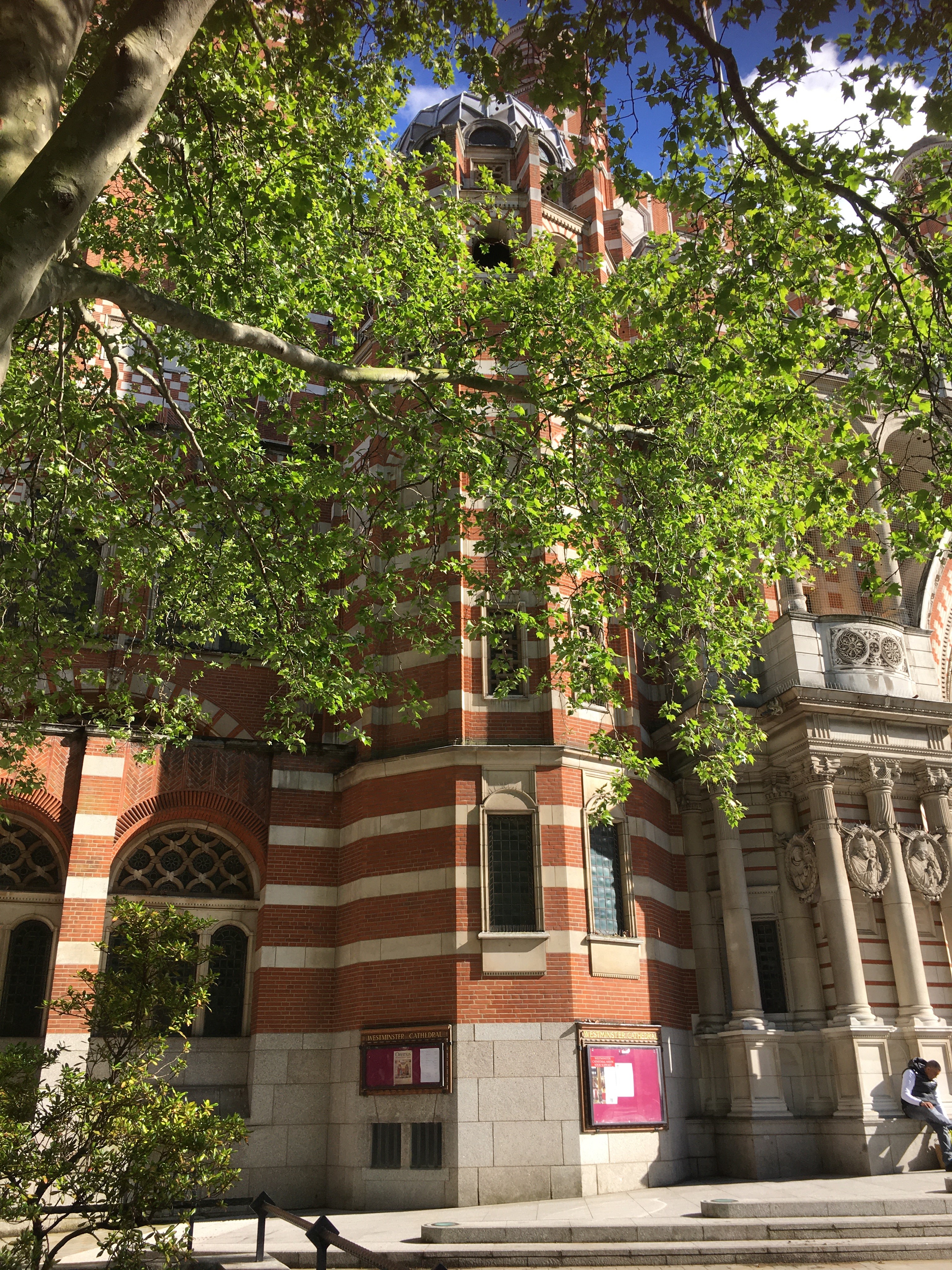
Westminster Cathedral through a London Plane Tree. Photo C Joyce
Source: Ellen Teague
A call for action on systemic change to tackle the Climate Crisis was made at the online quarterly meeting of the National Justice and Peace Network (NJPN) on Saturday. Around 40 representatives of diocesan commissions in England and Wales heard four speakers address the theme: ‘Live or Let Die – A call to care for the poor and for the Earth’.
Michael Chambers of Brentwood Diocese highlighted the results of a survey of young people’s views on climate: “We want systemic change – not just individual action” was a key point; and: “we’re doing other things less important – we need funds for protecting biodiversity and climate.”
Young people warned against becoming desensitised to the full impacts of climate change and urged that Christians advocate for urgent action and stay hopeful, especially for the sake of future generations. It is important to maintain hope despite the waves of dire warnings about planetary systems being pushed into dangerous instability.
In a presentation on ‘Environmental Justice’, Ellen Teague of the Columban Justice, Peace and Ecology Team showed images from the 10-day 24 hour ‘No Faith in Fossil Fuels’ Vigil at parliament which ended as the NJPN was meeting. She quoted from ‘Laudate Deum’ where Pope Francis said, “groups negatively portrayed as ‘radicalised’… are filling a space left empty by society as a whole,” (LD 58). The key advocacy points of the vigil were: the UK to move away from the use of oil and gas, reparation payments for damage caused by climate change in the Global South, and investment in green policies. Campaigners are not often the decision makers but they are very often the decision shapers, according to UN Head Antonio Gutterez.
She called for the UK government to honour its climate commitments, promising to bring all greenhouse gas emissions to net zero by 2050. And for the COP process to speed up international action to stop rising too far beyond the 1.5 degrees threshold which has already been breached.
NJPN members were urged to lobby the nine Catholic dioceses still investing in fossil fuels to disinvest, which, according to Operation Noah, includes promising never to invest in them in the future. There was a reminder that FaithInvest offers courses for investment managers and that the NJPN Environment Group keeps the network up to date with campaigns, events and resources. Also, a reminder that in many countries environmental defenders, especially indigenous people, risk their lives when they try to protect vulnerable communities, water and biodiversity from destructive activities.
Andrew Jackson, Chief Executive of Pax Christi England and Wales, spoke on ‘Environmental issues as a cause of conflict’. Climate change causes conflict because it intensifies competition over land and water, affects food production, and forces migration. Paragraph 57 of ‘Laudato Si’ says, “It is foreseeable that once certain resources have been depleted, the scene will be set for new wars.”
And wars contribute to climate change. The example was given of the burning of oil fields by the retreating Iraqi army in Kuwait during the first Gulf War in 1991 where Kuwait’s occupied oil fields were turned into a desert inferno. “Environment is the silent victim of conflicts,” said Andrew. Wars can destroy landscapes as well as communities. He provided information about the scale of military greenhouse gas emissions. Military emissions are around 5.5% of total global emissions.
Colette Joyce of Westminster Justice and Peace Commission and Coordinator of the Southern Dioceses Environmental Network started her presentation with a photo of Westminster Cathedral taken through the branches of a London Plane tree in the piazza. How many have barely noticed the London Plane trees outside the cathedral? There is a need for greater appreciation of and engagement with the natural world around us and for personal carbon reduction. But she stressed her belief in collective action and systemic change. Colette is working with Westminster Diocese for carbon neutrality by 2030. She supported the Christian Climate Action Vigil outside parliament and is preparing for the ‘Laudato Si’ anniversary on 24 May, the next Season of Creation in the Autumn and COP29 in Baku during November.
The Northern Area Environment Group is due to meet on 28 February; the Southern area on 11 March. Ideas to be developed at those meetings include a strategy for building up to the Season of Creation and pushing for all Catholic Dioceses to shun fossil fuels. The Scarborough parishes of Middlesbrough Diocese are considering putting environmental reflections in their weekly bulletins. Some dioceses are working with universities – Lancaster with Lancaster University and Leeds with Leeds Trinity – to monitor carbon emission from church buildings. Bishops will be asked to urge parishes and schools in their dioceses to sign up to the LiveSimply programme. At a macro level, all agreed to support the UN’s Sustainable Development Goals.
Anne Peacey, the Chair of the NJPN, said speakers and workshops for July’s NJPN Conference will be announced soon. The theme of the 19-21 July conference in Derbyshire is ‘Just Politics’.
In this Novena to Our Lady Untier of Knots, we pray for the populations of Palestine and Israel suffering the terrible consequences of violence and war and for an end to all war.
We pray that they may feel the concrete reality of God’s love.
The Novena to Our Lady Untier of Knots is a wonderful nine-day prayer dedicated to the Mother of God.
It is Pope Francis’ favourite Novena and one of the most popular Novenas worldwide.
You are welcome to join us for as much or as little of the Novena as you are able.
Please email Colette Joyce on justiceandpeace@rcdow.org.uk to get the Zoom link if the Eventbrite booking is full.
Westminster Justice and Peace were represented at the launch of a 10-Day Vigil of Prayer, taking place outside the Houses of Parliament from 14th-24th February 2024.
We were surprised by the cameras from GB News and an interview by Jacob Rees-Mogg with Christian Climate Activist, Melanie Nazareth.
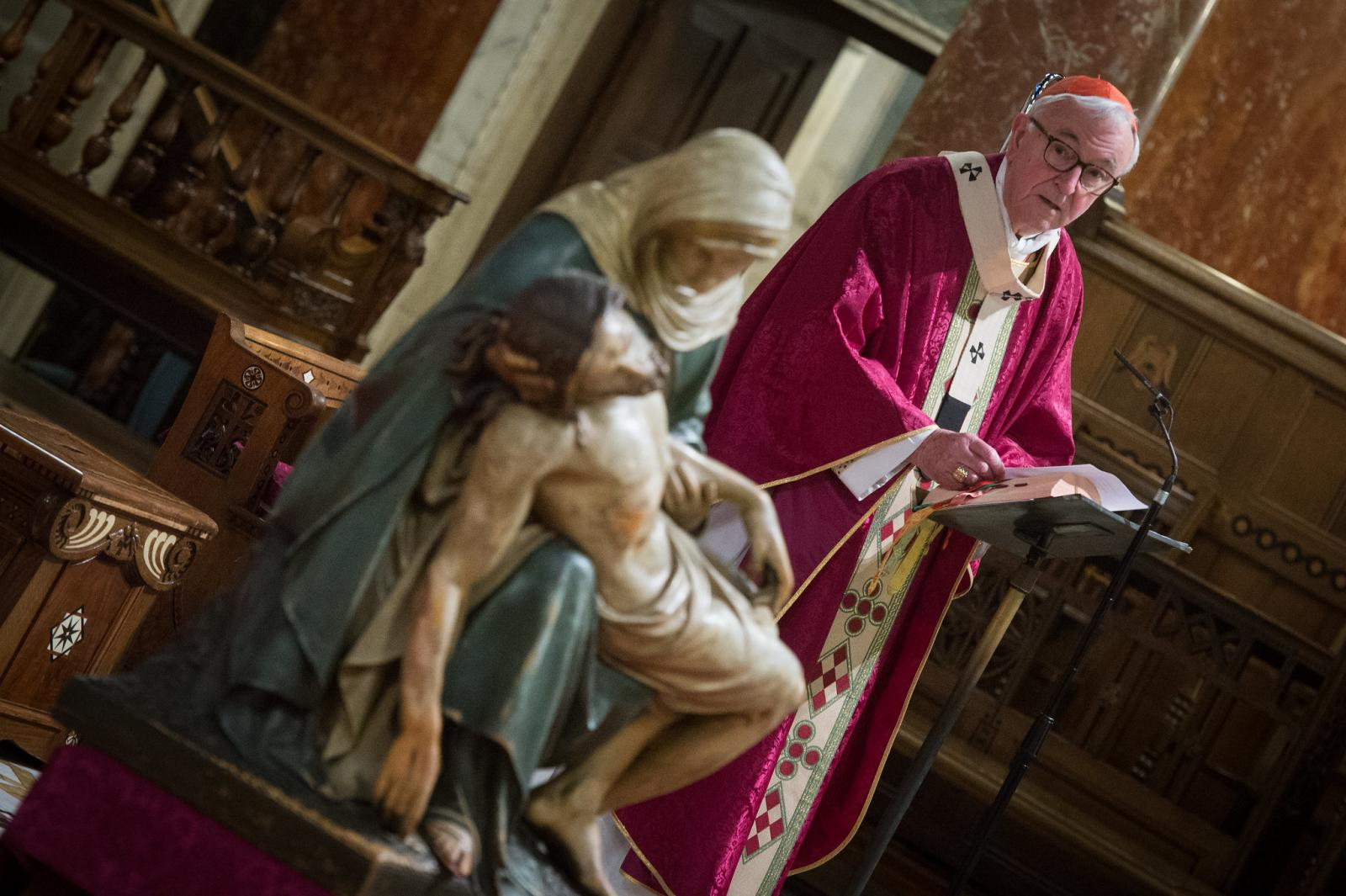
Cardinal Vincent Nichols has written to priests in the diocese to ask for a special focus of prayer on 8 March for peace in the Holy Land.
In his message, he writes: ‘As we are all aware, the situation in the Holy Land has not improved, with failed negotiations, increasing humanitarian distress and a rising death toll.
‘As Lent begins, I would like to urge that we continue our efforts, not least in prayer.
‘And so I ask that, on Friday 8 March, there is a special focus of prayer for the Holy Land across the diocese. This could take the form of a dedicated time of prayer, perhaps before the Blessed Sacrament, for peace in the Holy Land. It could be as simple as making any regular Lenten devotions you may be having on that day for this intention.’
He asks priests to make their ‘parishioners aware, and encourage them to make a special effort to take part.’
The Cardinal invites all the faithful in the diocese to take part in these prayers and devotions in their parishes.




 Diocese of Westminster Justice and Peace Commission