Bishop John Sherrington – The Continuing Call to Ecological Conversion: Reducing our Carbon Footprint in the Diocese of Westminster

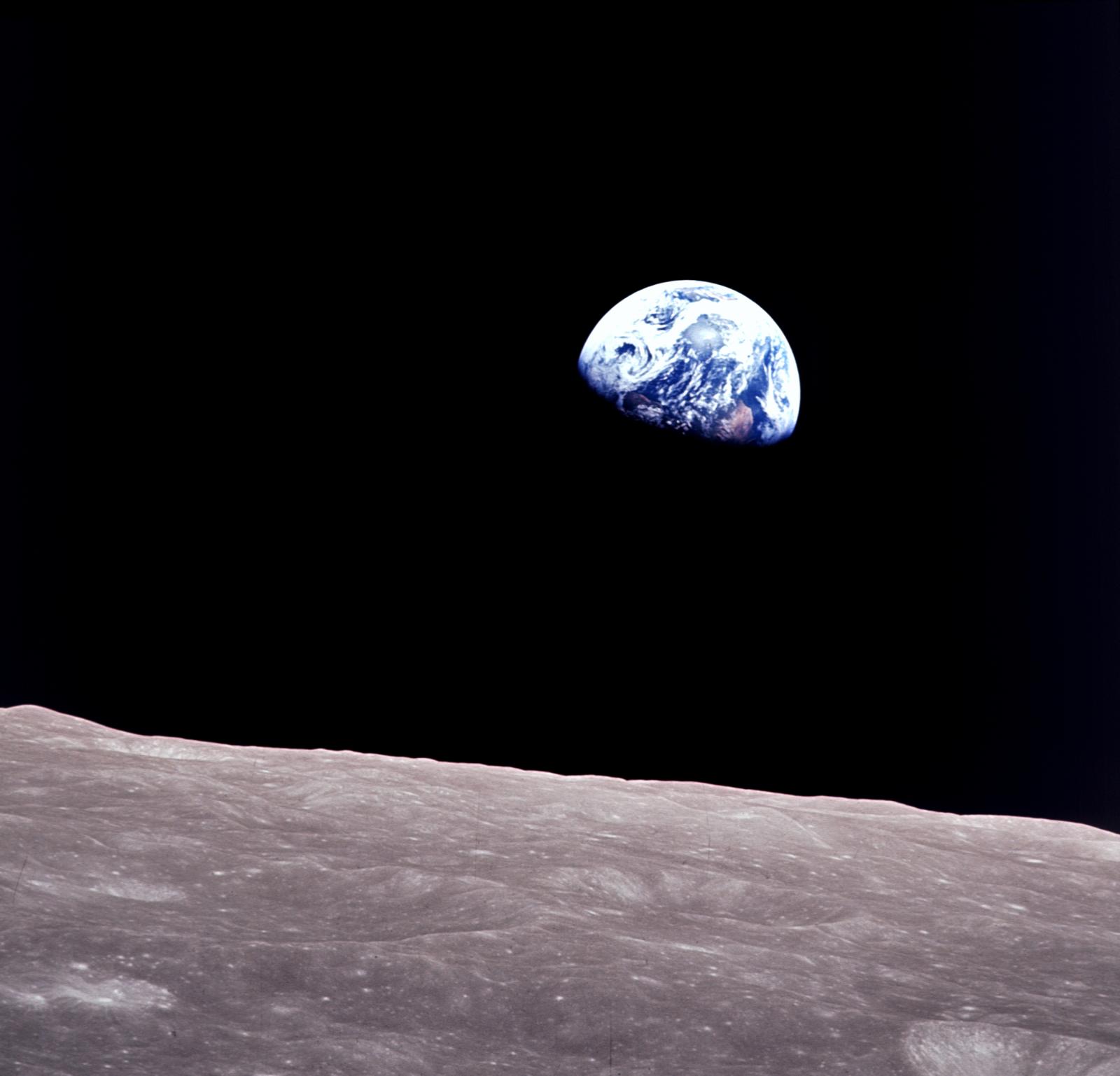
Earth-rise. Photo: NASA

Source: RCDOW

Opening talk given by Bishop John Sherrington at the ‘Towards Decarbonisation Seminar’ for parish teams on 18th February 2023

Today’s meeting is the next stage in our reflection on how to reduce the carbon footprint of the diocese and to live more fully the Church’s teaching on the care of our common home. 

The evocative photograph that illustrates this article shows ‘earthrise’. It is the first photograph taken by an astronaut of the earth rising in front of the moon. It dates from the Apollo 8 mission in December 1968. I remember the excitement of these pictures arriving from space as a young boy. The photograph evokes wonder and awe as we look at our beautiful world and see the patterns of cloud, sea, and land. 

Economics and Development

In 1967 St Paul VI published Populorum Progressio on the development of peoples. He argued for the need to place persons at the heart of development rather than economics. He developed the term authentic human development (PP 14) which becomes a focus for Catholic Social Teaching.

Questions of development and economics were the subject of much debate in the 1960s and 1970s. I remember discussions at school about wind and solar power, tidal energy, and questions about future nuclear expansion. On my bookshelves I found Barbara Ward and René Dubos’ book Only One Earth – the Care and Maintenance of a Small Planet published in 1972. It was a set of papers commissioned by the UN on the human environment. These papers argue the dangers of a world dominated by a prevailing attitude to technology which fails to respect people and the good of the planet. 

I am sure that many of you will be familiar with Ernst Schumacher’s book Small is Beautiful (1973) which challenged the economic theories of the 1970s that argued that progress was always an improvement. Fifty years later we recognise the prophetic vision of these authors. 

At the end of the same decade in 1979, St Francis of Assisi was named as the patron of ecology by St John Paul II. 

Integral Ecology

Pope Francis in Laudato Si’ (2015) gives us the most recent systematic reflection on the care of our common home. He is inspired by his namesake St Francis of Assisi who celebrated and sang of the beauty of creation in his Canticle of Brother Sun. The encyclical opens with this inspiration:

LAUDATO SI’, mi’ Signore” – “Praise be to you, my Lord”. In these words of his beautiful canticle, Saint Francis of Assisi reminds us that our common home is like a sister with whom we share our life and a beautiful mother who opens her arms to embrace us. He sings, “Praise be to you, my Lord, through our Sister, Mother Earth, who sustains and governs us, and who produces various fruit with coloured flowers and herbs. (LS 1)

The Pope writes of the need to build an integral ecology, one that includes all aspects of the human and social development including the care of the gift of creation. He reminds us that we cannot discuss care of our common home without respect for the dignity of every human person. St Francis inspires justice towards our neighbour.

St Francis was concerned for both God’s creation and for the poor and outcast – remember he shared his rich clothes with a beggar. He loved, and was deeply loved for his joy, his generous self-giving, his openheartedness. He was a mystic and a pilgrim who lived in simplicity and in wonderful harmony with God, with others, with nature and with himself. He shows us just how inseparable the bond is between concern for nature, justice for the poor, commitment to society, and interior peace. (LS 10)

All is Gift

St Francis helps us appreciate that creation is a gift. All is Gift. A growth in gratitude for the gifts we have received could help us focus this season of Lent. We seek to appreciate the gifts we have been given by God and offer thanks and praise to him.

What is more, Saint Francis, faithful to Scripture, invites us to see nature as a magnificent book in which God speaks to us and grants us a glimpse of his infinite beauty and goodness. “Through the greatness and the beauty of creatures one comes to know by analogy their maker” (Wis 13:5); indeed, “his eternal power and divinity have been made known through his works since the creation of the world” (Rom 1:20). (LS 12)

The Book of Genesis, as well as psalms 8 and 104, sing of the glory of God’s creation. Man and woman are the apex of God’s creation, created in his image and likeness. They are called to be stewards and care for this wonderful gift of our common home imitating the delight and mercy of the Creator. 

St John Paul II captures this sense:

Faced with the sacredness of life and of the human person, and before the marvels of the universe, wonder is the only appropriate attitude. (Letter of St John Paul II to Artists, 1999)

Gerard Manley Hopkins captures this in the introduction to his poem God’s Grandeur, which begins,

The world is charged with the grandeur of God.
    It will flame out, like shining from shook foil;
    It gathers to a greatness, like the ooze of oil
Crushed… 

Further, we are reminded by Pope Francis that, ‘Rather than a problem to be solved, the world is a joyful mystery to be contemplated with gladness and praise.’ (LS 12)

The only worthy response to this gift of our common home is gratitude which leads to generosity. 

The Holy Trinity and Created Reality

The starting point for a Christian theological reflection is God the Trinity; God who is Three Persons in One God. The divine Persons, the Father, the Son and the Holy Spirit, exist in relationships of love with one another. The Father loves the Son; the Son loves the Father. St Augustine describes the Holy Spirit as the ‘kiss of love’ who proceeds from the Father and the Son, as we pray in the Creed. St Bonaventure offers further insight to understanding these relationships. The Pope refers to his theology in the encyclical:

St Bonaventure teaches us that each creature bears in itself a specifically Trinitarian structure, so real that it could be readily contemplated if only the human gaze were not so partial, dark and fragile. In this way, he points out to us the challenge of trying to read reality in a Trinitarian key. (LS 239) 

We are invited to see how God has left his mark on all of creation. The created world, according to the divine model, is a web of relationships. A central theme of the encyclical is that ‘Everything is interconnected’. The Father creates the heavens and the earth; the Son redeems all creation from the effects of sin; the Holy Spirit draws all of creation towards ‘a new heaven and a new earth’ (Rev 21:1) and ‘makes all things new’ (Rev 21:5). This dynamic reveals, albeit imperfectly, the Trinitarian structure of created reality and its relationship with the Creator. This is clearly seen in David Attenborough’s nature programmes, e.g. Blue Planet, Frozen Planet, which are all about relationships.

The Effects of Sin

Almost from the beginning, God’s creation is scarred by sin. The Book of Genesis shows how the harmony of God’s creation is broken by the Fall; the relationship between Adam and Eve, with God and with the earth. The relationships are broken because they ate of the fruit of the tree of knowledge of good and evil and desired to be like gods. Injustice and violence interrupt the harmony and enter the world with their effects still visible in our world today. 

Hopkins in God’s Grandeur captures this state of alienation with creation,


Why do men then now not reck his rod?
Generations have trod, have trod, have trod;
     And all is seared with trade; bleared, smeared with toil;
     And wears man’s smudge and shares man’s smell: the soil
Is bare now, nor can foot feel, being shod.

I was privileged to visit the parish in Quezon City, Philippines, where the city dump of Payatas is located, when I was teaching at a Vincentian seminary. I observed four trucks a minute delivering the city’s waste. The dump, home to many people who scavenged to survive, was open from dawn to dusk. I accompanied the local priest to celebrate a month’s mind Mass for a 14 year old who had been killed when he was struck by a dumper truck. In simplicity we celebrated the Mass, Christ’s redemption of mankind, and prayed for the repose of his soul.

As a response, we are invited to listen and hear the cry of the earth and the cry of the poor (LS 49).

Reconciliation in Christ

We have hope because God in his love sent his Son to redeem the world. The familiar words of St Paul deepen our hope,

Therefore, if anyone is in Christ, he is a new creation. The old has passed away; behold, the new has come. All this is from God, who through Christ reconciled us to himself and gave us the ministry of reconciliation; that is, in Christ God was reconciling the world to himself, not counting their trespasses against them, and entrusting to us the message of reconciliation. Therefore, we are ambassadors for Christ, God making his appeal through us. We implore you on behalf of Christ, be reconciled to God. (2 Cor 5) 

Christ reconciles all things to God overcoming the sins of injustice and violence. All is to be reconciled to the Father who desires ‘a new heaven and a new earth’ (Rev 21:1) and who ‘makes all things new’ (Rev 21:5). The Holy Spirit brings about a new creation. The final lines of Hopkins’ poem promise the consolation and presence of the Holy Spirit brooding over the world. 

And for all this, nature is never spent;
    There lives the dearest freshness deep down things;
And though the last lights off the black West went
    Oh, morning, at the brown brink eastward, springs —
Because the Holy Ghost over the bent
    World broods with warm breast and with ah! bright wings.

We are called to be ambassadors for Christ proclaiming the coming of God’s kingdom of justice, peace and joy in the Holy Spirit. We are invited to cooperate in the work of redemption: 

“Peace, justice and the preservation of creation are three absolutely interconnected themes, which cannot be separated and treated individually without once again falling into reductionism”. Everything is related, and we human beings are united as brothers and sisters on a wonderful pilgrimage, woven together by the love God has for each of his creatures and which also unites us in fond affection with brother sun, sister moon, brother river and mother earth.

(LS 92)

Pope Francis describes how we mature as Christians by entering deeply into this web of relationships and helping to build the solidarity which exists with all of creation,

The human person grows more, matures more and is sanctified more to the extent that he or she enters into relationships, going out from themselves to live in communion with God, with others and with all creatures. In this way, they make their own that trinitarian dynamism which God imprinted in them when they were created. Everything is interconnected, and this invites us to develop a spirituality of that global solidarity which flows from the mystery of the Trinity. (LS 240)

Growing in gratitude

Pope Francis calls for the ecological conversion of Christians ‘whereby the effects of their encounter with Jesus Christ become evident in their relationship with the world around them. Living our vocation to be protectors of God’s handiwork is essential to a life of virtues; it is not an optional or a secondary aspect of our Christian experience’ (LS 217). 

As we grow in gratitude, thanksgiving and praise for the gifts we have received, so we become ‘poor in spirit. Freed from selfishness and a desire for possessions, we grow in the virtue of humility and simplicity. Laudato si’ captures this spirit,

It is a return to that simplicity which allows us to stop and appreciate the small things, to be grateful for the opportunities which life affords us, to be spiritually detached from what we possess, and not to succumb to sadness for what we lack. This implies avoiding the dynamic of dominion and the mere accumulation of pleasures (LS 222). 

We seek growth in justice towards our neighbour and God, temperance or moderation of our desires, prudent choices which lead to our maturity as Christians and the courage to live the vision and understanding of an integral ecology. As Pope Francis tells us, 

There is a nobility in the duty to care for creation through little daily actions, and it is wonderful how education can bring about real changes in lifestyle… All of these reflect a generous and worthy creativity which brings out the best in human beings. Reusing something instead of immediately discarding it, when done for the right reasons, can be an act of love which expresses our own dignity. (LS 211)

Our Conversion

Today we reflect on the choices to be made in parishes about heating, lighting and other ways to reduce energy consumption and the carbon footprint of the diocese. 

The life of St Francis inspires our conversion and repentance of our sins, faults and failures in relation to God’s beautiful creation (LS 218).

Finally, let us reflect again on Hopkins’ poem:

The world is charged with the grandeur of God.
    It will flame out, like shining from shook foil;
    It gathers to a greatness, like the ooze of oil
Crushed. Why do men then now not reck his rod?
Generations have trod, have trod, have trod;
    And all is seared with trade; bleared, smeared with toil;
    And wears man’s smudge and shares man’s smell: the soil
Is bare now, nor can foot feel, being shod.

And for all this, nature is never spent;
    There lives the dearest freshness deep down things;
And though the last lights off the black West went
    Oh, morning, at the brown brink eastward, springs —
Because the Holy Ghost over the bent
   World broods with warm breast and with ah! bright wings.

Gerard Manley Hopkins

Bishop John Sherrington

This is the second in a series of occasional reflections on the call to ecological conversion by Bishop Sherrington. The first is available to read here.

Links

The Diocese of Westminster has committed to do its utmost to become carbon neutral by 2030 in its parishes and curial buildings. It has also expressed its commitment to working with schools to encourage them to follow the same path. As Pope Francis explains in Laudato Si’, caring for God’s created world and cooperating with the Holy Spirit in this work of creation is everyone’s responsibility, not least that of the faithful.

Follow the link to view the 2021 carbon footprint report, watch Cardinal Vincent’s video and read the accompanying documents below to find out more:

Diocese of Westminster: The Road to Carbon Neutrality

Southern Dioceses Environment Network

Westminster Justice and Peace E-Bulletin March 2023

Fr Dominic writes:

Prayer, fasting, and works of charity are the three traditional strands of Lenten observance recommended by the Church. 

As such, they are part of a whole, representing how on our Lenten journey we live out our faith as God’s Pilgrim People and, as the living out of the Church’s social teaching is at the heart of our faith, each dimension involves the hallmark of the Kingdom of love, peace, justice, truth. 

In our prayer we are called to remember those most in need, especially those affected by war and conflict, and those on the margins in whatever way. 

We are called to make some concrete expression of our need for God in fasting from earthly pleasures, and in so doing are in solidarity with those who suffer and grow into closer communion with the whole of creation groaning for rebirth.  CAFOD’s Lent Family Fast Day is a good time to do this but, of course, the whole of Lent presents opportunities for fasting. 

And we are called to do something tangible which assists those most in need and our ailing planet.  Here we can volunteer through Caritas with the homeless, food banks, with the SVP and so many other charities, and there are so many practical things we can do to care better for the environment 

There is so much we can do as individuals and as communities in our parishes, schools and chaplaincies, to prepare for the greatest feast of the Church’s year at Easter. If nothing else, however, I hope we can spend some more time reflecting on our own frailty and sinfulness as God’s constantly journeying Pilgrim People, to be renewed in our commitment to be a Church which truly proclaims the Kingdom of peace and justice, to be a Church which, as the Holy Father puts it, is a Church not just with or for but “of the poor”.

The Lent 2023 Faith-Sharing group resource, prepared this year by Westminster Justice and Peace, is there also to help us embrace Lenten renewal in communities.  I hope that our growing network of Contacts representing our communities can promote it.  Download a copy

In encouraging us to use it widely, this gives me the opportunity to thank all our contacts and other volunteers for the work of Justice & Peace in their communities, and especially Colette Joyce, for all the work on this and so much else as Justice & Peace Co-ordinator.

I thank also the Commission, now rebuilding and growing, and this month welcome back Hilda McAfferty, who will represent the vast network of parishes in West London where so much valuable work is going on.

Many thanks again for your faithfulness to the work of Justice and Peace in our diocese.

And a blessed Lent to all!   

Fr Dominic Robinson, SJ
Chair, Westminster Justice and Peace

Westminster Justice and Peace on Radio Maria Tuesdays at 11.15am, starting 7th March

‘Enlarge the space of your tent, spread out your tent cloths unsparingly, lengthen your ropes and make firm your pegs.’

Isaiah 54, 2

Word of Life: Enlarging the Space of Our Tent

Radio Maria are running a five-week series beginning on 7th March and continuing through Lent every Tuesday at 11.15am with guests Fr Dominic Robinson SJ and Colette Joyce from the Diocese of Westminster, sharing reflections from their Lent Faith Sharing resource ‘Enlarging the Space of Our Tent’.

In these programmes, Fr Dominic Robinson SJ and Colette Joyce reflect on issues which are at the heart of the Kingdom in 2023: poverty, the impact of the cost of living, homelessness, racial justice, the care of creation, the welcome we extend to migrants and refuges, and peace-making. As we journey through Lent we are called to make more space in our hearts and minds as a community of missionary disciples. In reflecting on these challenges we keep our eyes on Jesus, travelling with him towards the cross and the eventual joy of the resurrection.

‘Justice and Peace are at the heart of the Kingdom preached by Jesus. The Church prays that Jesus might accomplish in us: A Kingdom of Truth and Life, A Kingdom of Holiness and Grace, A Kingdom of Justice, Love and Peace. This is an echo of the Beatitudes that Jesus taught. What is difficult is to know how to achieve this…’

Bishop Nicholas Hudson, Auxiliary Bishop of Westminster

Fr Dominic Robinson SJ is Parish Priest of The Immaculate Conception Church, Farm Street, and the Chair of the Westminster Diocesan Justice & Peace Commission and Colette Joyce is the Commission’s Coordinator.

Cardinal Calls for ‘Unceasing Prayer’ for Ukraine

Source: RCDOW

On the first anniversary of the start of the war in Ukraine, Cardinal Nichols has called for continued support and prayer.

Calling this day a ‘solemn and distressing moment’, he appealed for ‘an unceasing prayer for peace’.

In his message, he writes: ‘This first anniversary of the invasion of Ukraine is a solemn and distressing moment. The people of Ukraine continue to suffer. We must all continue our support, both in practical ways and in an unceasing prayer for peace.’

More on War in Ukraine

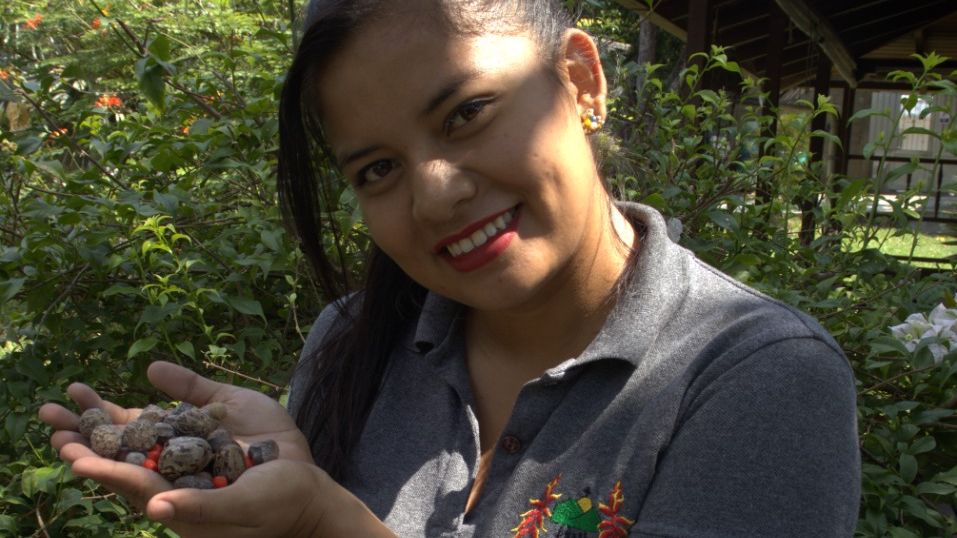
Chance to hear youth worker from Colombian Amazon speak at White City and FLAME

Jenny Garzón Saavedra, CAFOD partner, holding seeds from the Amazon

Wednesday 1st March – Our Lady of Fatima, White City

Jenny Garzón Saavedra, a youth worker in San Vicente de Caguán, in the Colombian Amazon will be speaking on Wednesday evening, 1 March at Our Lady of Fatima Parish Hall, White City, west London. 7.30pm start. (Refreshment from 7.15pm)

The hall is beside The Presbytery, Commonwealth Avenue, White City Estate London W12 7QR which is at the back of the church. Nearest tube stations are White City on Central Line and Wood Lane on Hammersmith & City. It is 5 mins walk from Bloemfontein Road bus stop on the 207, 607, and 260 busses along the Uxbridge Road and it is 2 mins from the White City shops bus stop on the 283 from Hammersmith Bus Station to Hammersmith Hospital.

Jenny works for CAFOD partner, FUNVIPAS, which is the local diocese’s social outreach team. She trains and supports parish groups who are still feeling the effects of 50 years of conflict in Colombia, and in areas where there are no paved roads, running water, electricity or access to health care. Jenny works on a project that helps communities learn to care for creation and put this into practice in all areas of their lives. For example, communities find innovative ways to recycle discarded household objects into useful items.

Saturday 4th March – Flame 2023 at Wembley Arena

Jenny will also be sharing her inspirational work with 8,000 young people at Flame 2023 at the Wembley Arena along with Archbishop Tagle and others on Saturday 4 March, and will be visiting schools and parishes as part of her visit.

Jenny is a talented painter and uses painting to help children/teenagers learn about their rights – such as the right to a healthy environment – and to participate in decisions that affect them.

Jenny has witnessed the deforestation of the Amazon for cattle: “I dream that our land, our Amazon, will not disappear. I dream that we continue to take care of it, defend it and love it”.

Report from CAFOD Colombia

Ecumenical Prayer Service for Peace in Ukraine on 24th February 2023, 9am

An Ecumenical Prayer Service for Peace in Ukraine will take place at the Ukrainian Catholic Cathedral of the Holy Family in Exile in Duke Street, Westminster, London W1 5BQ at 9am on Friday, 24 February 2023, marking the first anniversary of the Russian invasion.

The service will be led by Rt Rev Kenneth Nowakowski, Bishop of the Ukrainian Catholic Eparchy of the Holy Family of London.

At 4pm there will be an Ecumenical Memorial Service at the Statue of St Volodymyr the Great on the corner of Holland Park and Holland Park Avenue.

Link

Ukrainian Catholic Cathedral, London

Ukraine Appeal Updates

Southern Dioceses Environment Network Meeting – 13 February, 12.45-2.00pm, ‘Laudato Si’ in 2023′

Laudato Si’ in 2023

The next meeting of the Southern Dioceses Environment Network (SDEN) on Monday 13th February 2023, 12.45-2.00pm, will be an exploration of ‘Laudato Si’ in 2023’, revisiting Pope Francis’ document to see how it is inspiring and continues to guide our agenda in this, its eighth anniversary year.

John Paul de Quay (Journey to 20230), Colette Joyce (Westminster Justice & Peace), Richard Busellato (Rethinking Choices) and Sian Thomas (Caritas Brentwood) from the Planning Group will all be presenting short inputs on aspects of the encyclical Laudato Si’ that are motivating them. You will also be invited to share the phrases and sentences that most inspire you.

As it is also the day before Valentine’s Day, we will once again be participating in the ‘Show the Love’ social media event to show our love for the environment online.

Please bring, draw or decorate a green heart ready for a screenshot!!

To register, please book in advance using the Eventbrite link below or write to Colette at colettejoyce@rcdow.org.uk

More About the Southern Dioceses Environment Network

The SDEN is a network for all Catholics and our friends who care about creation and meets monthly online on the second Monday of the month. We also organise occasional other events online and in-person.

Some events take place jointly with the Northern Dioceses Environment Group, as we all work together to animate the Catholic community in the long-term task of stabilising our climate and protecting our common home.

We are inspired by the principles of Catholic Social Teaching, especially as set out by Pope Francis in the encyclical Laudato Si’, and the teachings on caring for the earth and one another found in Scripture.

Participants include CAFOD and Diocesan staff and volunteers, Laudato Si’ Animators, clergy, parishioners, religious and activists. You are welcome to attend as a one-off or to participate regularly.

The Southern Dioceses are: Arundel & Brighton, Brentwood, Clifton, East Anglia, Plymouth, Portsmouth, Southwark and Westminster.

Southern Dioceses Environment Network

Bishop Nicholas Hudson – Intervention at the European Continental Assembly in Prague

Source: Catholic Bishops Conference of England and Wales

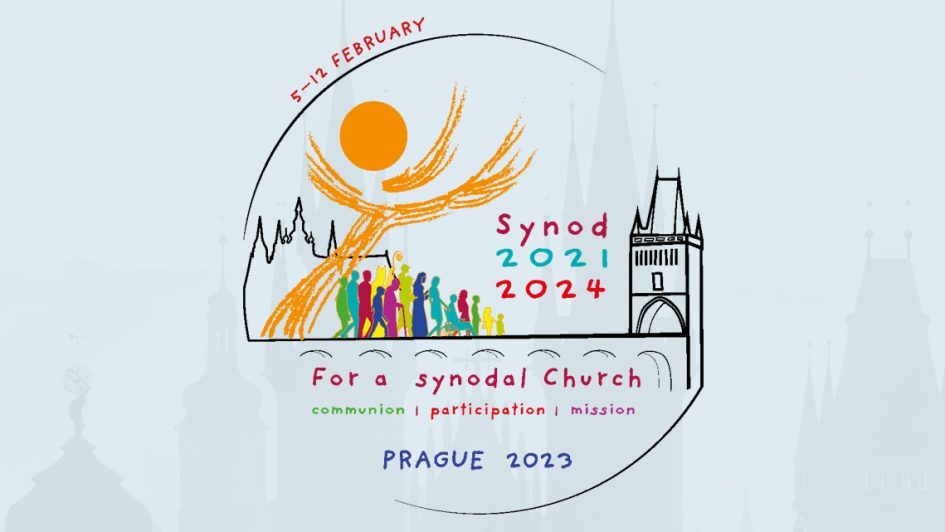
Bishop Nicholas Hudson, who oversees Justice and Peace in the Diocese of Westminster, is one of four representatives from England and Wales joining over 200 delegates from Europe in the Czech capital of Prague to discern the fruits of the synodal work at the local level. A further ten country representatives are attending remotely.

The European continental assembly for the third phase of the Synod on Synodality is taking place from 5-12 February. Then, in October 2023, the Synod of Bishops will meet in Rome for the first of two synod gatherings.

Delegation for England and Wales

Attending in person in Prague

Bishop Nicholas Hudson (Lead, Auxiliary Bishop, Diocese of Westminster)
Rev. Jan Nowotnik (Director of Mission for the Bishops’ Conference)
Sarah Adams (Diocese of Clifton)
Jessica Wilkinson (Diocese of Leeds)

Attending via live stream

Dr Johan Bergström-Allen
Amy Cameron
Rev. David Cross
Deborah Cottam
Sr Lynda Dearlove VCF
Simeon Elderfield
Elizabeth Harris-Sawczenko
Fr John McGowan OCD
Rev. Dr Callan Slipper
John Smartt

Intervention by Bishop Nicholas, Prague, 6 February 2023

In England and Wales, the resonances were deep between the Document for the Continental Stage (DCS) and our own National Synthesis. The role of women had been a headline finding of the Synod in our countries[1] – as it was in the DCS. Like the DCS, we heard fewer calls for women’s ordination than for their inclusion in the Church’s governance. However, we noted that few lay men exercise governance roles either.

Other headline findings which we shared with the DCS? Inclusion was a dominant concern of our Synodal journey: the inclusion of LGBT+ people; the inclusion of remarried divorcees in the life of the Church. These conversations often encountered a tension which the DCS echoed from our National Synthesis: the tension to be found in the Church needing boldly to “(proclaim) its authentic teaching while at the same time offering a witness of radical inclusion and acceptance.”[2] 

The inclusion of young people was also a dominant topic in our Synodal journey. Many dioceses had a large youth engagement, especially from schools.  The joy expressed by the young people who took part contrasted with the pain of those concerned about young people’s involvement. This tension the DCS failed to observe. However, we were with DCS in recognising the tension between young people who seek to adhere to the 1962 Missal and those who prefer more contemporary celebrations.[3] We felt DCS did not communicate sufficiently the “sadness and anger… sense of grievance and marginalisation”[4] of many around the liturgy.

As in most countries, many English and Welsh priests were unclear as to how they were supposed to engage with the Synodal process. As in most countries, there was frequent expression of appreciation for our priests, along with concern that too much is asked of them. However, clergy and laity alike were surprised to find scant reference in DCS to clerical sexual abuse.[5]

The deepest resonance came with the call for formation, which pervades both DCS and our National Synthesis[6] – a sense that diverse resonances and tensions call for diverse types of formation. This is to say:

  • formation which gives voice both to those who feel themselves to be on the margins of the Church and also to the voice of Tradition;
  • formation in truth and mercy: formation that holds in tension the authority of Scripture, Tradition, the Magisterium and personal experience;
  • formation in the Faith, not least in the teachings of Vatican II;
  • formation in Synodality – for clergy and laity together;
  • formation in listening;
  • formation in accompaniment. 

The desire for formation might be expressed as a yearning for a Synodal spirituality. Such a spirituality could be captured, in essence, as a tent held up by the four vital poles – of encounter, journeying, formation, and accompaniment.


[1] “One of the headline findings of the Synod in England and Wales,” Catholic Bishops’ Conference of England & Wales, National Synthesis Document, https://www.cbcew.org.uk/wp-content/uploads/sites/3/2022/06/synod-national-synthesis-england-wales.pdf London, 2022, #15

[2] ibid. #49; DCS #30

[3] “Trying to have their own space in liturgy and songs, ”DCS #9

[4] National Synthesis Document #72

[5] This especially given the DCS’s acknowledgment that it is an “obstacle of particular relevance on the path of walking together,” DCS #20

[6] ibid. #82-83

LINKS

Bishops Conference of England and Wales – Synodal Pathway

Report from Farm Street Parish Synodal Day – 21st February 2023

Diocese of Westminster – For a Synodal Church: Communion, Participation, Mission

Working Together for Racial Justice – Reflection by Nalini Nathan

Nalini Nathan, General Secretary of the Conference of Religious and a trustee of CARJ, the Catholic Association for Racial Justice, offers three thoughts to help us focus on ‘Working Together’ for racial justice.

On 5 February, the Catholic Church in England and Wales celebrates Racial Justice Sunday. It’s the day the Church focuses on the need to oppose racism and pursue racial justice with renewed vigour.

The theme for 2023 is “All are included in the mission of Christ and His Church. Let us walk together, pray together and work together.”

This reflection, from Nalini Nathan, General Secretary of the Conference of Religious and a trustee of CARJ, focuses on ‘Working Together’ for racial justice.

+++

My name is Nalini, and I am the General Secretary for the Conference of Religious in England and Wales. I am also a member of the Christian Network Against Caste Discrimination and a trustee for a number of charities including CARJ, the Catholic Association for Racial Justice and the Margaret Clitherow Trust which supports Traveller, Gypsy and Roma communities.

In the next few minutes, I’ll be sharing three ponderings I have about working together if every race and ethnicity are to be included in the mission of Christ and His Church.

Firstly, our unique ancestries are a gift. The world has been blessed with such a broad diversity of cultures and therefore perspectives, knowledge, skills and experiences. Working with different people to ourselves should, I think feel like being in a sweet shop.  I want mine and all cultures to be seen for what they are, a gift from God!

I should be so grateful that God has blessed me with chocolate brown skin that protects me from harmful rays, from cancer, even from wrinkles! I save so much money not needing to use sunbeds or fake tan. But more seriously, so often in life, my skin colour has been a hindrance. There’s the avoidance, that change in tone when someone speaks to you, the ignorant mistaken or at times deliberate aggressive comments, the being overlooked for promotion when you’re the most qualified or experienced person for the job. There’s the scapegoating,  the stepping on, the passive-aggressive behaviours and the trauma of healing from ignorant comments, isolation and oppression. As a Catholic, I find this at odds with my faith. I was taught that like everyone, that I am made not just good but very good, that we are all made very good, each called to be a jewel in God’s crown.

Secondly, I want to mention privilege. I come from more than one culture. That’s my privilege, that’s one of my blessings. I humbly embrace my cultural privilege. It helps me be a better Christian, a better Catholic as it increases me empathy, compassion and communication skills to relate to the stranger, to relate to the outsider, to relate to the person who is being treated as invisible.

Privilege has become the dirty word of our post-covid society. There is absolutely nothing wrong with being given privilege. It’s your talent, it’s your gift. There’s nothing wrong with having privilege if you are a Catholic as long as you are using it for the glory of God and as long as you are not stealing it from someone else.

I wonder, are we aware of our privileges, if so, how are we using them to work with and support others? How are we using them to help others flourish?

Finally, I want to reflect on how we might look at each other through the eyes of God. The first thing we are told in the bible is that God is a creator. ‘In the beginning he created…’ I look at the diversity of what he has created, the diversity of plants and wildlife. God is clearly a creator of diversity. We are taught that we are the Body of Christ. Are our cultures also different parts of this Body, which are meant to work together to build up the kingdom of God? If we oppress one part of the body, one culture, are we damaging ourselves?

Like those of different cultures who face rejection in their workplaces, parishes and schools, Jesus too felt rejection throughout His life, even before He was born, when there was not place at the inn. It is a natural human behaviour to feel the need to surround ourselves with people who are similar to ourselves. We want to fit in, we want to feel validated and sometimes there are opportunities to preserve things by working with people similar to ourselves. But as Catholics, like the early Christians, we are called to sometimes put away our own insecurities and need to fit it, to instead look outwards. I wonder, way back when God chose the Israelites, did he consider that the land of Christ’s birth would be the place that united the known world of that time? Israel, a land that links Africa, Asia and Europe. Quietly, Christ was born at a place that brought together the continents, and then 33 years later, again, he reached out his hands to the world.

So the three things I just reflected on were that if we wish to work together it might be helpful to remember that:

  1. Each and every culture is a gift from God that is needed for working to build up His kingdom.
  2. Own your privilege -it is a gift to be used to help others step forward, it can be used to help others participate and share their talents.
  3. Look outwards, that’s a part of the mission and calling of each of us who make up the Body of Christ and His Church.

Every culture is a gift, own your privilege, look outwards.

Catholic Bishops Conference of England and Wales Racial Justice Sunday Resources

Prayer

God of our past, present and future, 
you created each one of us in your image and likeness,
help us to recognise you in each person.

As we pray for end to suffering caused by racism
lead us this day to walk with one another,
pray with one another and work together,
so that we create a future based on justice and healing,
where all can fulfil the hope you have for all peoples. 

We ask this through Christ our Lord.

Amen

Racial Justice Sunday, 5th February 2023

The theme for this year’s Racial Justice Sunday is:

‘All are included in the mission of Christ and his Church.
Let us walk together, pray together and work together.’

It reflects the role each of us must play in promoting the mission of Christ and His Church. This was inspired by conversations around last year’s Racial Justice Sunday and Pope Francis’ visit to Canada in July 2022 when he spoke about looking towards a future of ‘Justice, healing and reconciliation’.

There are new resources for 2023 on the Catholic Bishops Conference of England and Wales website and we are also invited to return to the images produced last on ‘Made in the Image God’ for deeper reflection.

Gallery of Saints – Chosen by parishioners and especially commissioned for Our Lady of Fatima Catholic Parish, White City, in West London. Photo @ Fr Richard Nesbitt

Prayer

God of our past, present and future, 
you created each one of us in your image and likeness,
help us to recognise you in each person.

As we pray for end to suffering caused by racism
lead us this day to walk with one another,
pray with one another and work together,
so that we create a future based on justice and healing,
where all can fulfil the hope you have for all peoples. 

We ask this through Christ our Lord.

Amen

Catholic Bishop’s Conference of England and Wales – Racial Justice Sunday

Rooting Out Racism in the Parish – Our Lady of Fatima, White City