Fr Tom O’Brien Address for London Climate Action Week Interfaith Service

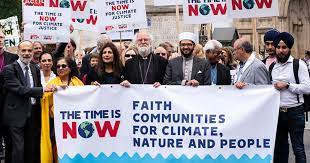
Father Tom O’Brien, Parish Priest of Our Lady Immaculate and St Andrew, Hitchin, and member of Westminster Justice and Peace Commission, gave the following address at the online interfaith service to mark the start of London Climate Action Week “Take Care for our common home” on 27th June 2021.

Coming together as we are today, united in a passionate concern for our common home and sharing our insights and beliefs, is precisely what Pope Francis wanted to happen when, in 2015, he wrote a letter to everyone in the world called Laudato Si or Praise be to you. Recognising that we face a catastrophic crisis, Pope Francis publicly proclaimed and clarified our deep concern for the destruction happening to our planet. He also recognised that this crisis can only be addressed together and globally. Whatever our differences of faith or of non-faith, we are all united in our growing concern for the future of our planet. The letter spells out the challenges we face clearly and succinctly and also recognises that we need to act now before it’s too late.

We believe that God called us to be stewards of creation which Pope Francis summarises as cultivating, ploughing, working, as well as caring, protecting, overseeing and preserving the natural world. This implies a relationship of mutual responsibility between human beings and nature. Each community can take from the bounty of the earth whatever it needs for subsistence, but it also has the duty to protect the earth and to ensure its fruitfulness for coming generations. It is a call to work with a creation that is only too willing to work with us.

The letter recognises that: “We urgently need a humanism capable of bringing together the different fields of knowledge, including economics, in the service of a more integral and integrating vision. Today, the analysis of environmental problems cannot be separated from the analysis of human, family, work related and urban contexts, nor from how individuals relate to themselves, which leads in turn to how they relate to others and to the environment” (#141).

Throughout the letter care for the earth is conjoined with care for the poor. They are indispensably connected. Laudato Si: “The human environment and the natural environment deteriorate together; we cannot adequately combat environmental degradation unless we attend to causes related to human and social degradation. In fact, the deterioration of the environment and of society affects the most vulnerable people on the planet: ‘Both everyday experience and scientific research show that the gravest effects of all attacks on the environment are suffered by the poorest'” (#48).

Our exploitation and abuse of the resources of the earth have led to increased Tsunamis, a continuing global rise in temperature that affects climate in a way that the poor, who depend on the land for sustenance, face long term droughts leading to a lack of clean water and starvation (25,000 a day, UN). Seeking survival leads them into underpaid jobs in which they are exploited, their basic rights are ignored and their freedom denied, so that we can have cheaper food and cheaper clothes to which they have no access. Laudato Si states There can be no renewal of our relationship with nature without a renewal of humanity itself. There can be no ecology without an adequate anthropology” (#118).

We are called to an inner conversion to a radical change in lifestyle, to living more simply, being less wasteful, to recycle and re-use, to be more generous to those in need. We must urgently lobby the government not to decrease our overseas support aid and even increase it.

Some of the fastest growing businesses in America are in energy efficiency and renewable energy helping produce the same output for half the energy.”

Businesses, who promote sustainability through the supply chain, have reduced their costs. They see pollution as a form of waste.

An organization that doesn’t waste anything is proved to be more efficient and more profitable.

Young people, led by the likes of Greta Thunberg, are calling for and fighting for a radical reduction in Co2 emissions. The recent G7 meeting has committed to fading out the use of fossil fuels and investing in renewable energy.

Being positive and hopeful is actually an important way to combat climate change. “We must look toward our positive shared future. The more we articulate the ability to get to that place, the more likely we are to get there.”

Expression of Hope;

Encouragingly, in Laudato Si, Pope Francis adds:

“Yet all is not lost. Human beings, while capable of the worst, are also capable of rising above themselves, choosing what is good, and making a new start, whatever their mental and social conditioning. We are able to take an honest look at ourselves, to acknowledge our deep dissatisfaction, and to embark on new paths. No system can completely suppress our openness to what is good, true and beautiful. I appeal to everyone throughout the world not to forget this dignity which is ours. No one has the right to take it from us. (#205)”

This was the first time London Climate action week had held an interfaith service and it was organised by South London interfaith group and Faiths Forum for London. Among the wide range of speakers there was humanist Richard Norman and pagan Robin Horne. Dr Ruth Valerio of Tearfund, Rabbi Jonathan Wittenberg, Zahra Kanani from Streatham mosque, Zoroastrian Vista Khosravi, Robert Harrap General director of SGI-UK, Sikh Balbir Singh Bakshi and Jain Varsha Dodhia all spoke about what there faith teaches about Creation and some of the practical actions their communities have undertaken. Bishop Karowei Dorgu, Anglican Bishop of Woolwich spoke about Southwark as an eco-diocese and what parishes are doing.

The recording can be found at: www.youtube.com/watch?v=Np08uqSWiok
Westminster Justice & Peace E-Bulletin – July 2021

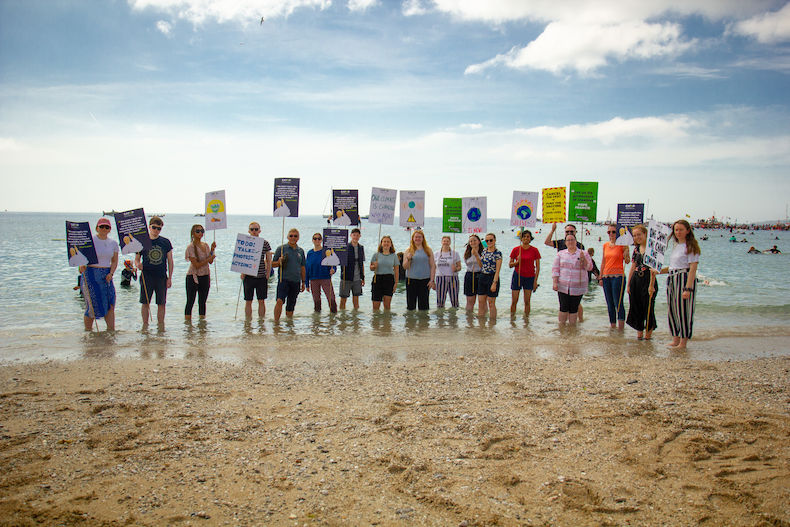
CAFOD Young Adult Campaigners at the G7, Cornwall

Read about Three Actions for the Summer of Climate Justice:

1)  As part of CAFOD’s G7 Youth Delegation, Caitlin Boyle, Caritas Westminster’s Information Officer, spent the weekend 11-13 June in Cornwall.

Caitlin writes: For as long as I can remember, I have been interested in campaigning for social justice, a key factor in why I wanted to work for Caritas Westminster, the social action agency of the Diocese of Westminster. We arrived in Cornwall on Thursday evening, and hosted an interfaith service at Truro Cathedral … read full article on the Caritas website     

2) The Young Christian Climate Network (YCCN) is an action-focused community of young Christians in the UK aged 18-30, from different denominations, choosing to follow Jesus in the pursuit of climate justice. The YCCN has organised a 1,000+ mile relay pilgrimage from Carbis Bay in Cornwall, where the G7 summit took place, up to Glasgow, where COP26 will be meeting in November. The walkers want to see systematic change on a global and a local scale.

Molly Clarke, who walked the first day, said: “Our Relay is about rising to the moment. This year, with COP26 happening on our doorstep, is an opportunity like no other to call for change. Taking part in our pilgrimage was the most wonderful, once-in-a-lifetime experience, and I urge everyone to get involved…” read full article on Independent Catholic News website

3) Care of Creation Briefings take place online 1.00-1.45pm every Monday and will continue in the lead-up to the UN Climate Conference COP26 in Glasgow, 1-12 November 2021.

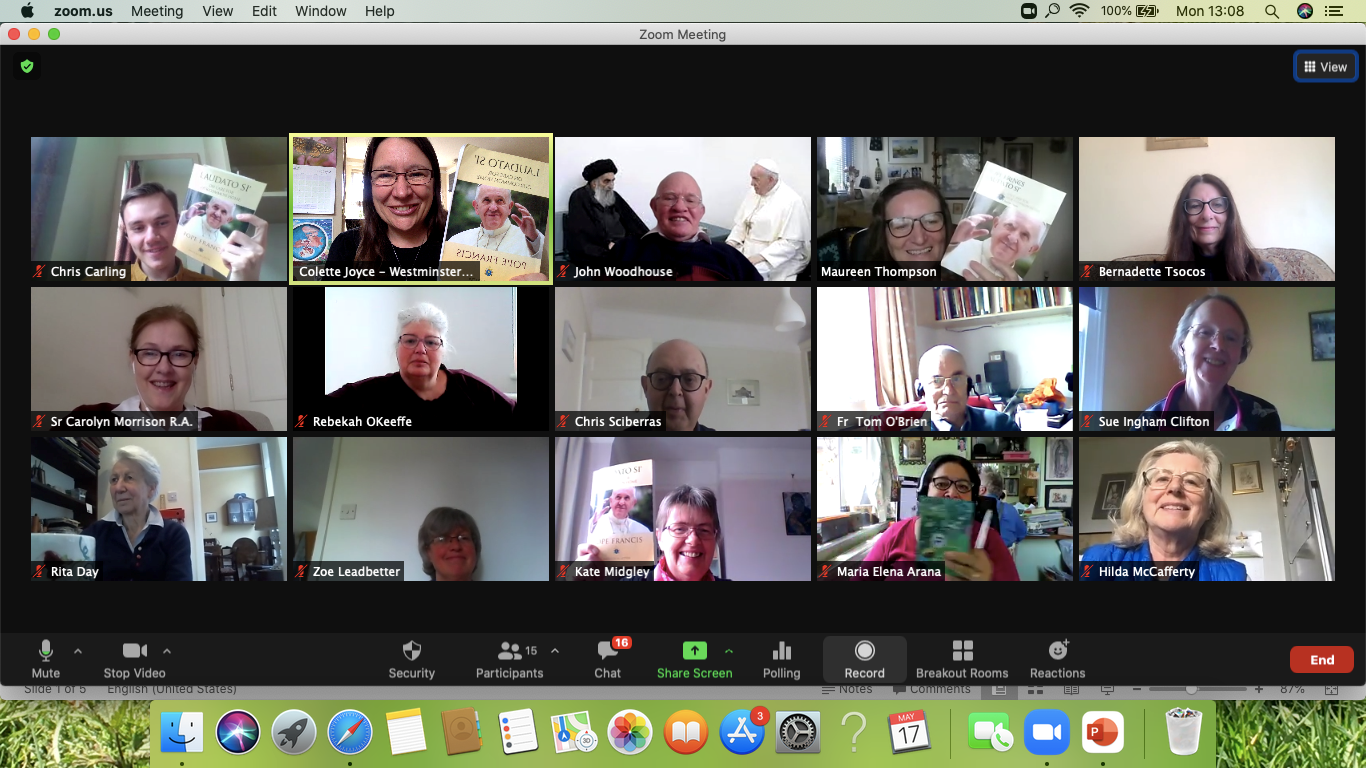
Colette Joyce and Nali Nathan report: Passionate social justice activists from across London and the South-East of England have been coming together on Zoom every Monday lunchtime in 2021 to pray, share ideas, and take unified action for Climate Justice. They discuss all aspects of Care of Creation including preventing habitat loss, protecting biodiversity, eliminating waste, promoting sustainable development, global racial justice, Live Simply Parishes, Journey to 2030, communicating with clergy, parishioners and bishops, and building ecumenical and interfaith partnerships. The Monday Briefings bring together Catholics from five dioceses – Arundel & Brighton, Brentwood, Portsmouth, Southwark and Westminster… read full report on the Westminster Justice & Peace Commission website

A Celebration of Trees

Tree Walkers, Morpeth Terrace, behind Westminster Cathedral, London, SW1

Source: Ellen Teague, Independent Catholic News

How often do we notice the trees in places familiar to us?..

Why is it important to do so?..

And what does care of trees have to do with our faith?..

On Sunday 27 June, I joined a group finding out about trees in the vicinity of Westminster Cathedral. I’ve visited the area many times since childhood, but hardly noticed them before now.

This was an event as part of London Climate Action Week. The experience, organised by Westminster Justice and Peace, was special because it seems to be the first time that valuing trees was firmly on the agenda of a diocesan body.

It seemed strange to be gathering outside the Cathedral under a banner, ‘Tree Walk from Westminster Cathedral,’ but it shouldn’t have been. Care of Creation is an element of Catholic Social Teaching, all underlined by the 2015 Encyclical, Laudato Si’.

Colette Joyce, Westminster Justice & Peace Co-ordinator, led the two-hour walk. She reflected on the importance of trees within Christian tradition and invited contemplation of some of the many beautiful trees within easy walking distance of Westminster Cathedral.

As we strolled, we were encouraged to think about the nature and purpose of trees, especially their role in maintaining a stable climate that enables all life Earth to exist and thrive. Trees bind soil, remove carbon dioxide from the air and release oxygen, as well as providing a home for many species of birds and insects. Along the way we considered, too, the significance we attach to trees – from the solemn prayer before the wood of the Cross to the celebratory decoration of Christmas trees.

When we met outside Westminster Cathedral’s West Door we were immediately invited to admire the two mature London Plane trees in the piazza. Plane was widely planted as a street tree during the 18th and 19th centuries, being sturdy and suitable for city life for many reasons. It requires little root space and can survive in most soils and a wide range of temperatures. One of these two trees provided welcome shade for my son James who spent a number of hours standing with young people from dioceses around England and Wales waiting to see Pope Benedict during his visit in 2010. The Westminster youth contingent was under the Plane tree nearest the West Door, and he was very grateful.

We learnt that more than half of London’s eight million trees are Planes and they provide the important service of removing pollution from the atmosphere. The mottled olive, brown and grey bark breaks away in large flakes to reveal new cream-coloured bark underneath, a process which cleanses the tree of pollution stored in the outer bark. Each year London’s trees remove 2,241 tonnes of pollution which is a major contribution to public health.

When we moved off down Morpeth Terrace we passed rows of Plane trees and stopped at the end under a statue of St Francis of Assisi for a short reflection and prayer. Then there was Willow Place, named after Willow trees that were formerly common here. And Ginkgo in Rochester Road, a tree which survived the dinosaurs and the ice age, and, Colette told us, was the first tree to recover in Hiroshima after the city was destroyed by a nuclear bomb in August 1945. Then we walked around Vincent Square, a 13-acre green space lined with mature trees including London Plane. In Rutherford Street we admired the Silver Birches, whose white bark reflects heat and whose tolerance to pollution makes them a common sight in urban landscapes. Silver Birches also provides food and habitat to more than 300 insect species.

By gardens near the Cardinal Hume Centre we heard the tenth century, ‘The Dream of the Rood’ and heard how trees are mentioned in the Bible more than any living thing other than God and people. 56 Bible verses talk about trees.

We crossed Victoria Street and sat down in a grassy area for a short reflection on what trees mean to us. “Daily walks in the trees of Dulwich Wood got me though Covid” said one person. “This walk is a spiritual journey, about making a connection with trees,” said another.

“They’re the lungs of the world,” and “we must learn to keep the mature trees, not just plant new ones,” seemed to be common concerns about global deforestation and the HS2 project in particular in Britain. One member of the group lamented the disruption around Euston Station where she lives and has seen several public gardens destroyed and trees axed. We considered the quote from JRR Tolkien on our flier: ‘Every tree has its enemy, few have an advocate. In all my works I take the part of trees against all their enemies.’

Of course, London used to be covered in forest. This is reflected in the fact that so many parts of London are named after trees and woods. There’s the three Oaks (Burnt, Gospel and Honor), Nine Elms, Royal Oak Station, Wood Green, Forest Hill and Forest Gate.

Our final stop was St James’ Park, a green gem of 57 acres and we stopped to admire a Black Mulberry, Weeping Beech and a Caucasian Wingnut! There are around 1,250 individual trees in St James’s Park from around 35 species. The two islands in the lake, with their secluded woodlands and shrubberies, serve as nesting sites and refuges for birds. As we watched the ducks and geese waddling between the trees we thanked Colette profusely for this beautiful experience.

The walk was so successful that she has organised another one on 5 September! Several people have booked in already.

London Climate Action Week Events – 26th June – 4th July 2021

Circular Tree Walk from Westminster Cathedral – Sunday 5 September 2021, 3-5pm
Book with Eventbrite. Free.

Care of Creation Weekly Briefings in London and the South East

Care of Creation London and South-East, Monday Lunchtime Briefing in Laudato Si’ Week, May 2021

Passionate social justice activists from across London and the South-East of England have been coming together on Zoom every Monday lunchtime in 2021 to pray, share ideas, and take unified action for Climate Justice. They discuss all aspects of Care of Creation including preventing habitat loss, protecting biodiversity, eliminating waste, promoting sustainable development, global racial justice, Live Simply Parishes, Journey to 2030, communicating with clergy, parishioners and bishops, and building ecumenical and interfaith partnerships.

The gatherings take place at 1.00-1.45pm every Monday and will continue in the lead-up to the UN Climate Conference COP26 in Glasgow, 1-12 November 2021.

The Briefings were initiated by staff and volunteers from diocesan Justice and Peace Commissions, CAFOD and the Laudato Si’ Animators (a group who have received training via the Global Catholic Climate Movement) and bring together Catholics from five dioceses – Arundel & Brighton, Brentwood, Portsmouth, Southwark and Westminster – as a means to create a unified approach among Catholics in London and the South-East during this critical year for environmental action.

There is a report from each Diocese every week, a time of prayer, and presentations on environmental issues of interest. Guest speakers who have presented to the group so far include: Danny Sweeney (Co-ordinator, J & P Scotland) on preparations for COP26 in Glasgow by Justice & Peace Scotland, Maria Elena Arana (CAFOD Livesimply Co-ordinator) on national CAFOD campaigns, Jane Mellett (European Co-ordinator, Laudato Si’ Animators) on Global Catholic Climate Movement campaigning, Molly Clarke and Flo Wright (Young Christian Climate Network organisers) on the YCCN Relay, Cornwall G7 to Glasgow COP26, and London Residency, 5th-8th August, and Caitlin Boyle (CAFOD volunteer) reporting on the young adult action at the G7 in Cornwall.

Dr Emma Gardner (Head of Environment, Diocese of Salford) and Edward de Quay (Laudato Si’ Research Institute) will speak at the next meeting on Monday 28th June, 1pm.

A weekly newsletter is circulated to participants after every meeting. The group is growing rapidly and now has over 50 people signed up. New members are always welcome and we hope that more people from the five dioceses will come on board as we get closer to COP26 and the opportunity it presents to appeal to government and big business to step up their climate ambition, as the times demand. Attendees can drop in to just one Briefing during the year or come every week, as suits them. Guests from beyond the five dioceses are always welcome!

If you would like to attend the meetings or be added to the Care of Creation mailing list please email Colette Joyce, Westminster Justice and Peace Co-ordinator, colettejoyce@rcdow.org.uk.

The meetings are open to anyone who cares about the environment and is sympathetic to the Catholic community and Catholic Social Teaching.

Prayed at Care of Creation Briefing on 14th June 2021

Patient Trust

Above all, trust in the slow work of God.
We are quite naturally impatient in everything
    to reach the end without delay.

We should like to skip the intermediate stages.
We are impatient of being on the way to something
    unknown, something new.

And yet it is the law of all progress
    that it is made by passing through
    some stages of instability—
    and that it may take a very long time.

And so I think it is with you;
    your ideas mature gradually—let them grow,
    let them shape themselves, without undue haste.

Don’t try to force them on,
    as though you could be today what time
    (that is to say, grace and circumstances acting on your own good will)
     will make of you tomorrow.

Only God could say what this new spirit
    gradually forming within you will be.

Give Our Lord the benefit of believing
    that his hand is leading you,
    and accept the anxiety of feeling yourself
    in suspense and incomplete.

Pierre Teilhard de Chardin, SJ
excerpted from Hearts on Fire

The Unsustainable Truth – Sustainability and Investments, Kings College Webinar, 16 June 2021

Dr David Ko and Richard Busellato presented a King’s College webinar on investments and sustainability on 16th June 2021. Their book on the ethics of sustainability is due to be published by Panoma Press in November. Both David and Richard are participants in the London & South-East Care of Creation Monday Lunchtime Briefings hosted by Westminster Justice and Peace. Dr David Ko is the Justice and Peace Parish Contact for Our Lady of Victories, Kensington.

What is going on with sustainability? Why do we keep damaging the environment? What is really driving the problems? Is it the fault of the big businesses and the economy? Or, is it actually all on us? A case of “Lord make me pure, but just not yet”.

With three decades of investment experience working with pensions and savings institutions, Dr David Ko and Richard Busellato explored the ways in which we are all pushing the world beyond its limits. Our investments are draining the world of its resources just so we can hoard money for our individual futures – our retirement. If we are going to be sustainable, forget retiring – it is the ethical thing to do. If we can’t retire, what are we working for? If investing is unsustainable, should we save at all?


Speakers
Dr David Ko and Richard Busellato are authors of a book on the sustainability issues of investments. After three decades in the industry, even as seasoned professionals they somewhat ashamedly admit to only recognizing recently the extent of the problems. We save to protect our own future, but the savings need to grow by so much that they destroy the future. The problem is our economy is not designed for a world with finite limits; an economic model for this needs to be centred on ethics and purpose. Having worked at renowned hedge funds such as LTCM and Millennium, and investment companies such as Henderson and Bank of America, they have recently left the industry so they may speak more freely. 

The Webinar was hosted by King’s College Fellow, Dr Kamiar Mohaddes.

https://www.kings.cam.ac.uk/digitalweek/the-unsustainable-truth

G7 Interfaith Event – Report from Cornwall

Watch interfaith messages to G7 leaders from an Interfaith Event organised by CAFOD at Truro Cathedral on the eve of the G7 Leaders meeting in Cornwall, Thursday 10th June 2021.

Source: Ellen Teague, Independent Catholic News

Truro Cathedral hosted an online ‘act of witness’ this evening, on the eve of the G7 summit. Participants sent messages to world leaders of Canada, France, Germany, Italy, Japan, the United Kingdom and the United States that people of faith in the UK and internationally expect the leaders at their summit in Cornwall to put in place plans for a global green recovery from Covid-19 and other crises.

The event was organised by CAFOD, Christian Aid, Tearfund, World Vision, Islamic Relief and Faith for the Climate Network. Speakers were from faith groups and from communities affected by the coronavirus, climate, and debt crises globally. Young campaigners who had travelled to Cornwall for the G7 summit were among around 80 people in the Cathedral but more than 1,000 joined online. Afterwards, CAFOD provided an online message board where anybody could send a message online to the leaders.

Ruth Valerio, Canon Theologian of Rochester Cathedral, welcomed everybody and homed in on the issues of vaccines, debt cancellation and climate action. She felt the G7 and COP26 in Glasgow in November provide, “huge opportunities for us to leave the damaging track we have been on.” Some hands of the ‘waves of hope’ initiative were waved in the cathedral.

Fr Augusto Zampini of the Vatican Covid-19 Commission called for better international access to vaccines and the suspension of intellectual property rights, which have held up vaccine distribution. He urged the cancellation of the debts of poor countries and called on G7 leaders, “to take seriously the commitment to care for our common home and implement the Paris Agreement of 2015”. He felt, we must “use creativity to improve our relationship with ecosystems” and “do our best to change this course of ecological destruction.”

Rt Rev Nicholas Holtam of Salisbury urged for political leaders “to put aside selfish concerns and work for the world’s common good.” He wanted the UK government to reinstate the full foreign aid budget which was reduced last year. His focus was a call for spiritual change and to rebuild human relationship with creation and the creator. “We cannot depend on techno-optimism” he suggested. Bishop Mark O’Toole of Plymouth received a clap when, quoting from Laudato Si’, he said the Catholic Church stood alongside other denominations and faiths in listening “to the cry of the Earth and the cry of the poor.” He urged a reduction in consumption, work for change in the direction of justice, and community conversion to act for the common good. And he touched on the need for structural change, particularly re-evaluating the current model of economic growth which promotes inequality and commodification of the environment.

Rabbi Jonathan Wittenberg and a young Muslim, Sikh, Hindu and Buddhist called for moves towards a more sustainable relationship with nature. Andy Norfolk, Pagan representative from the Cornwall Faiths Forum, said faiths, “should find it easy to find a vision for a better world” and urged G7 leaders to look beyond short-termism and urgently address long term challenges. Davina Bacon of the Young Christian Climate Network spoke of the young people’s relay walk to Glasgow, starting on Sunday, recalling that “the tradition of pilgrimage is strong in many faiths.” She also highlighted that near the affluent G7 conference centre and local holiday homes around St Ives live many people on low incomes. She told the G7, “when you are making decisions – remember those made poor by systemic injustice; they don’t have a seat at your table.”

CAFOD G7 Interfaith Event – Thursday 10th June, 7pm Livestreamed from Truro Cathedral

Building a Better World after the Pandemic

 CAFOD (Catholic Agency for Overseas Development) is live-streaming an event organised in conjunction with Christian Aid, Tearfund, World Vision, Islamic Relief and Faith for the Climate on Thursday 10th June at 7.00-8.00pm

It will be hosted by Truro Cathedral for people of faith to reflect ahead of the G7 summit and send a message to world leaders. 

The G7 summit will see heads of government of seven of the world’s richest countries – including President Joe Biden – travel to Cornwall and discuss how the world can rebuild after the coronavirus pandemic.

Prime Minister Boris Johnson has a crucial role to play, with the UK holding the presidency of the G7, CAFOD wants to send a message to him and the other G7 leaders that people of faith in the UK and around the world expect them to put in place plans for a global and green recovery from the crisis which leaves no one behind. 

The pandemic means people can’t all travel to Cornwall to send this message to the leaders at the summit.

But that doesn’t stop people from coming together online in an act of witness. 
So, instead of travelling to Cornwall, CAFOD invites people to join together on laptops, tablets or phones at an event on Thursday 10 June.

There will be reflections on the impact of the pandemic, rebuilding and sending a digital message to the presidents and prime ministers ahead at the start of their meeting the next day.

Visit the CAFOD website and register to watch online

West London Justice and Peace Network – Next Meeting Saturday 5th June, 10-12, on Zoom

The next meeting of the West London Justice & Peace Network takes place on Saturday 5th June, 10am-12noon on Zoom and will include a discussion of the recent Forum on The Catholic Vision of Work, as well as sharing on other current issues of interest to West London parishes.

To join the mailing list and receive details of West London Justice and Peace meetings, please contact Maggie on maggiebeirne@googlemail.com

The Deaneries in West London are: Brent, Ealing, Harrow, Hillingdon, Hounslow and Upper Thames.

Read Maggie Beirne’s Article on The Catholic Vision of Work

The Catholic Vision of Work – Reflections from Maggie Beirne

Rerum Novarum, Pope Leo XIII, 1891

Maggie Beirne is a member of the Diocese of Westminster Justice & Peace Commission and co-ordinates the West London Network for Justice and Peace

The topic of “work” seems to be fashionable currently – with books and seminars on different aspects of the theme.  This is at least in part due to covid 19 and the belief that attitudes to, and experience of, work has changed dramatically in recent years.  But will this re-thinking of the world of work be of short or long-term duration; and what do Catholics have to offer to the debate?   

This latter question was addressed recently both by way of an international academic conference hosted by St Mary’s University, Twickenham, discussing the theme of “Rerum Novarum 130 years on: the future of the world of work” and a meeting of the Westminster Diocesan Forum on Social Justice & Peace, held on 22nd May 2021, exploring what our faith says today about what needs to happen practically on the ground.

Rerum Novarum dating from 1891 and issued by Leo XIII speaks to a different era but is regarded as the first of the social encyclicals upon which later Catholic Social Teaching builds.  People of faith were told that: “the Church commits itself to the reform of society, for society can only be healed by Christian life and teaching”.  Employers are exhorted to render what is ‘just’ to their workforces; workers should create workers’ associations consistent with Christian principles to improve the condition of the poor; and the state should intervene to prevent strikes by removing the causes of conflict, in particular by improving the conditions of labour.  

Whilst many of the St Mary’s conference speakers built extensively on the theological basis for the principles set out in Rerum Novarum, it was interesting also to hear similar concepts being explored by those speaking from a secular perspective.  Matthew Taylor spoke to his report entitled “Good Work” citing “all work in the UK economy should be fair and decent with realistic scope for development and fulfilment”.  He argued that this principle was true in terms of social justice but also because it ensured people’s health, productivity, and the creation of an active engaged civil society.  Will Hutton built on the concept of ‘good’ work by quoting Aristotle to the effect that we are happy – and will lead the good life – if we accept that we have a purpose in life.  Christians believe that they have a definite purpose in life – to quote John Henry Newman “God has created me to do Him some definite service; He has committed some work to me which He has not committed to another; I have my mission”.

It was this mission that was explored at the Westminster Social Justice and Peace Forum – participants looked to the learning from covid about the world of work.  Covid taught many of us that we have sometimes placed an economic rather than a social value on the work that people do.  We pay corporate bankers very well, but it was NHS workers, bus drivers, carers, and refuse collectors whose work we really valued in the last year.  So, how do we use this time of reflection to re-focus on the purpose of work, giving people more control over their work and recognising that work of the ‘heart’ is as important (and often more important) than the work of the ‘brain’ which society tends to privilege in terms of respect and monetary reward.

The Forum explored questions such as: if work is meant to give us a sense of purpose, identity and meaning, how can we reflect that in terms of everyone’s right to dignity, to just wages, and to fair conditions of work.  Our Catholic Social Teaching says that work shapes us as moral persons, so why is it that so many of us think of work only in terms of paid work?  What respect should be accorded to the work done in the home, as a carer, as a campaigner for the care of creation, as a person volunteering in the political or civic realm?  Work is good for us – making us more fully human and allowing us to become part of God’s redemptive plan for the world.  But how do we bring this faith perspective into the world of work?  Speakers and participants had lots of practical ideas.

These ideas can be grouped, as is the practice at previous Forums, according to what could be done by people as individuals, as active members of parishes, and at a diocesan level.

As individuals:  until the 20th century, Catholics were very active in social movements, but this seems to be less true these days?  Could I be doing more – in my workplace, in the home, in my local area, in my lobbying of my local MP etc – to challenge poor working conditions, to respect other workers, to promote efforts which will assure the fair treatment of all workers?  Covid reminded us of the importance of appreciating all those frontline workers (bus drivers, corner shop workers, etc) for their important contributions to the common good – will I maintain this post-covid, or will they become ‘invisible’ for me again?  Do I respect the God-given talents of all those around me?  Do I use my weekly shop to reward good employers and penalise bad ones and do I inform myself so as to know the difference? Do I buy Fairtrade where possible and if I personally face unemployment or under-employment have I turned to my church for moral and practical support?

As parishes:  What is my parish doing about issues of employment/unemployment/under-employment/poor pay/bad working conditions for its parishioners and our immediate neighbours?  Does the parish even know the conditions people are working in locally?  If the parish already has a Foodbank/advice service/benefits signposting effort, does it need more volunteers; does it report regularly on this work to the whole parish so that it becomes a community endeavour?  If the parish has no such project underway, are there other neighbouring ecumenical or secular efforts that they could work alongside to promote social justice?  What is being done internationally about the right to work and the dignity of labour – if you are not a Fairtrade parish, ask why not?  Is the parish helping out with offering shelter to refugees/asylum seekers and/or campaigning for better treatment?  Is the parish listening to all its congregation in all its diversity (age, gender, ethnicity, disabilities), and to all its different experiences of the world of work?   

As a diocese: is our church leadership vocal enough on these issues?  Does the Catholic church speak out regularly when it sees policies being introduced which undermine the dignity of work?  As we come out of the pandemic, what will it say about the moral imperative of addressing the economic and racial inequalities highlighted and exacerbated by covid?  What is being done to train our priests and catechists, and use our liturgical opportunities (Sunday Mass, 1st Communion, Confirmation events) to alert the faithful to the duty of all to speak for the voiceless?  Does it provide practical resources to be used at local level; does it regularly assess its own employment and procurement practices; do the church’s investments reflect our Catholic social teaching? Very practically, the Pope has talked positively about a Universal Basic Income – this is a new concept for many; should we have a period of discernment about it?  

Many emphasised the importance of Catholics developing a vision of work which could inform our day-to-day activities and our advocacy efforts, noting that this duty is not ours alone, but one due to future generations.   It is today’s youth especially which needs to be able to believe in the dignity and meaning of work, and in this way determine for themselves their own God-given mission in life.

Read more reports from the Forum

WEST LONDON JUSTICE & PEACE NETWORK

The next meeting of the West London Justice & Peace Network takes place on Saturday 5th June, 10am-12noon on Zoom and will include a discussion of the recent Forum on The Catholic Vision of Work, as well as sharing on other current issues of interest to West London parishes.

To join the mailing list and receive details of West London Justice and Peace meetings, please contact Maggie on maggiebeirne@googlemail.com

The Deaneries in West London are: Brent, Ealing, Harrow, Hillingdon, Hounslow and Upper Thames.