Hope, Humility, Trust – Bishop Nicholas reports from the Synod

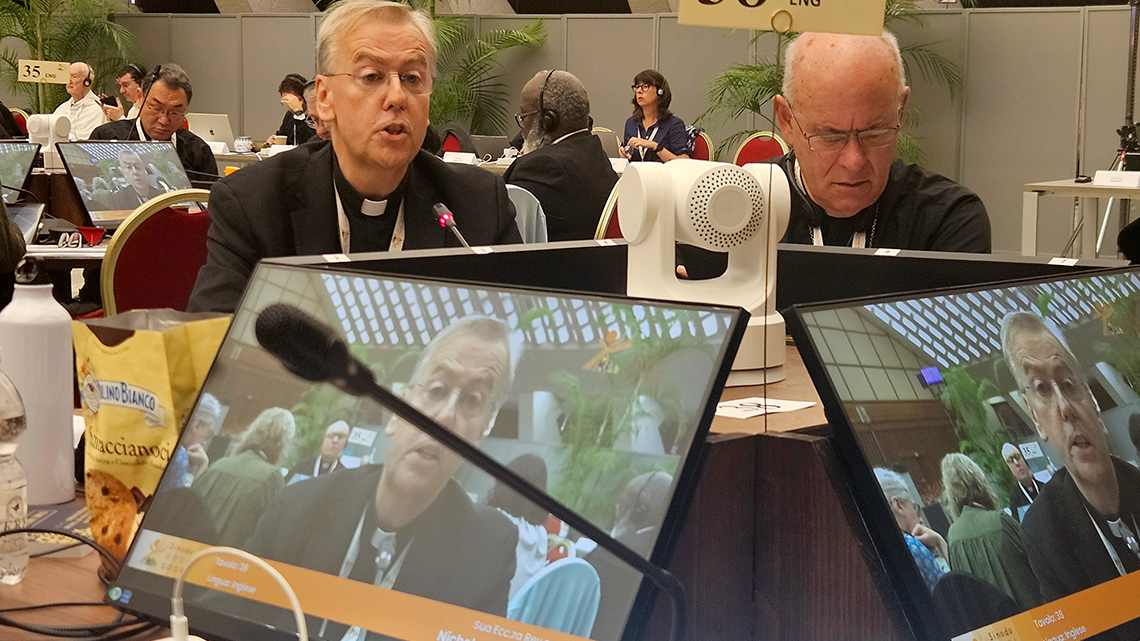
Bishop Nicholas at the Synod. ©synod.va/Lagarica

Source: RCDOW

We stand at the half-way point of the Second Assembly of the Synod of Bishops in Rome that is exploring ‘Synodality’, how the Catholic Church can be a missionary synodal Church in our times.

Bishop Nicholas Hudson, who was chosen by Pope Francis to be a Synod member, has sent back a fascinating insight on proceedings as the Synod enters its latter stages.

The Holy Father’s eyes lit up brightly when I told him about our online meeting for priests. 120 priests from across England and Wales had come together with Archbishop Wilson, Bishop Stock and me just before our departure for the Synod. This was to hear the reports of two priests, Fr Marcus Holden and Fr Anthony Rosso, who had attended a meeting recently at Sacrofano near Rome for priests from around the world to share perspectives on synodality. Pope Francis had asked that, on their return, priests come together from across our countries to share the fruits of this gathering. He was so pleased to hear we had achieved this!

Empower parishes to be synodal
I detected, in that meeting of priests, an openness to synodality; a desire to know how we can begin to be more synodal in our parishes, which is precisely the focus of our Synod. We have been asking, for two weeks now, how we can be a missionary Synodal Church. There is a strong sense in the Synod Hall that, at the end of this Assembly, we shall be wishing to communicate something which will be easy to comprehend; and able to empower parishes to embark on a more synodal approach.

It has been a fascinating journey already. We gathered first in retreat, led by the newly-named Cardinal, Fr Timothy Radcliffe OP. He urged us in this Synod to be above all good listeners. Echoing Paul, that ‘faith is born of listening’ (Romans 10, 7), he suggested we should listen in order not so much to reply as to learn.

The centrality of salvation
As we came together for the first experience of round-table sharing, it was moving to listen to one another recalling the fruits that had been harvested from last year’s session. These had been gathered up comprehensively in the ‘Foundations’ section of the Instrumentum Laboris, the working document which guides our journey. They included the centrality of salvation, which Fr Marcus had pointed out at Sacrofano to be missing from the report of last October’s Assembly, and which I was pleased to find mentioned frequently in this ‘Foundations’ section of the working document, a measure of how the creators of the Synod had listened to the priests. We recalled, in those first few days, major insights yielded by last year’s Assembly, insights into coresponsibility, the importance of including laypeople in discernment at all levels of the Church, the gift to the Church of Conversation in the Spirit, and so much more.
Collaboration between lay and ordained
Soon we found ourselves in the groups to which we would belong for a fortnight to navigate together the process of the Synod proper. My table has been facilitated impressively by a female lecturer from Australia, the group comprising: two other women, one from Jordan, the other, Sr Nathalie Becquart XMCJ, French Undersecretary of the Synod of Bishops; Cardinal Roche, and bishops from the US, Kyiv, South Sudan, Nigeria, and Pakistan; with a German Presbyterian minister as our ‘fraternal delegate’. I find myself recalling often the words of Pope Francis in his opening address, when he said the presence of so many committed laypeople emphasises the need for collaboration between lay and ordained.

Deepening of perspectives and friendships
It has been extraordinarily stimulating in this group to navigate together the three major sections, on ‘Relationships’, ‘Means’ and ‘Contexts’. The fact that we remain in the same group for all three modules is a development from last year; and has been deepening of both perspectives and friendships. I marvel at the breadth of Church experience represented at my table! It is a feeling I found well captured in the very first pages of the working document which describes a synodal Church as ‘a pilgrim people in every part of the world seeking synodal conversion for the sake of mission.’ It conjures up our table wonderfully!

Our consideration of ‘Relationships’ majored on the Trinitarian foundation of discipleship in baptism; that communion is for mission, initiation for mission. Discussion of the sharing of gifts between churches who share communion with us and with other ecclesial communities also yielded a sense of a deeply shared mission which we hold in common. Listening to one another’s understanding about the ‘Means’ by which to realise this mission was dominated by Formation.

Bishop Hudson’s intervention
In my intervention, I pointed out that the word ‘Evangelisation’ is entirely absent from the document; and yet a synodal Church must have the New Evangelisation at its core. I suggested Conversations in the Spirit might be understood as a most timely strategy for realising the call of successive popes for synodal conversation, not only among ourselves but also with members of other ecclesial communions, other faiths and people who profess no faith. Formation for this would be essential. Transparency and accountability also featured largely in the section.

Sharing perspectives, lastly, on ‘Contexts’ has yielded a striking sense that Church belonging is in many places no longer simply a matter of geography. The suggestion that the Church is ‘where we follow people to’ was brought home to me very movingly by the African Bishop in my group who said, ‘When the fishermen go hunting for fish, we follow them; when the miners abandon their village to pursue the goldrush, we go with them.’

The significance of digital media for evangelisation also featured highly. But there was a rootedness in our sharing too, an awareness that, where the Church is more stable, deep consideration needs to be given to how the diverse councils for discernment at our disposal might be made more synodal. We have yet to conclude the discussion of ‘Contexts’; and to see what it may continue to yield. Then we move back to our first groups to begin work on the document about which we shall vote. 

Hope, humility and trust
The Synod is a unique experience. It feels very much like a journey, a shared journey that we make together, much more a pilgrimage than a conference. It felt very pilgrimage-like to process, laypeople leading the bishops together into St Peter’s Square for the opening Mass; to celebrate a vigil of mercy, a penitential service, after our retreat; to come in prayer to the Basilica of St Mary Major on the eve of the anniversary of the 7th October Hamas terror attack in Israel to pray the rosary and all to fast the next day; to gather one evening on the site of St Peter’s martyrdom for an ecumenical vigil; and to meet for Mass in St Peter’s in diverse rites and languages across the month.

In his opening address, Pope Francis indeed chose to describe this journey as a ‘journey we make together with hope, humility and trust.’ Hope, humility and trust, these three words I have held onto and sought to aspire to; and find they capture wonderfully the spirit in which so many around me also seek to live this unique enterprise.
Fr Hugh Mackenzie: A Hospital Chaplain’s Opposition to Assisted Dying

Photo: RCDOW

Source: RCDOW

Fr Hugh Mackenzie shares a couple of angles upon why the Church opposes legalising assisted suicide or euthanasia, inspired by some philosophy and some deathbed ministry at St John’s Hospice. 

Human beings are good beings. This is true even if they do bad actions, but especially if they have bad suffering. To be alive is to have an importance. This basic value is not earnt but received along with life itself. Love of someone affirms that importance. Denying the importance of someone’s life is not true love. 

The basic concepts of good and bad, right and wrong, compassion and trust, emerge from this intrinsic value of the human. Goodness is ultimately about fostering the human person. To set criteria by which the importance of someone staying alive can be evaluated, undermines their basic value and the very basis of morality and civilisation.

You don’t need to believe in God to understand this, but it does complete the picture. In the light of faith, we believe that life is a gift of God and that every human being has an eternal dignity.  The basic value and vocation of human life is not earnt but given, by God.

This all means that St Paul was right, the way we live and die affects everyone else (Rom 14:7). No one is an island. It is wrong to argue as some do that euthanasia is a matter of personal choice.

Legalising euthanasia would profoundly change the relationship between medical professionals and patients in hospitals and care homes. It would also damage trust within families. The sick and elderly often worry that they are a burden on others and could easily feel pressurised into asking for help to end their lives. In countries where euthanasia is legal, resources for hospices and funding for research into better end-of-life treatments have been tragically reduced.

Far from life becoming pointless in the face of terminal illness, such moments can be occasions of amazing grace, as I and many hospital chaplains can attest. Loving when carrying a cross saves the world.

The end of life’s journey can present serious physical and mental challenges, yet pain is always easier to bear when we are at peace. Research shows that persistent requests for assisted suicide are rare when people’s spiritual needs are adequately met. Our ‘quality of life’ is not just about physical health and autonomy, but about our spiritual well-being. Human dignity is sustained by the love we receive and the love we give and ultimately, real peace comes from living, and dying, in the love of God.

This is why we should surround the dying not just with the best physical care but with constant prayer, like Our Lady at the foot of the cross. This is the true meaning of ‘assisted dying’.

19 November, 7pm, Stella Maris Mass and prayer vigil for crew of highjacked ship at St Anselm and St Cecilia, Holborn

Source: Stella Maris

A special Mass and prayer vigil to mark the one-year anniversary of the hijacking of the Galaxy Leader will take place in London on Tuesday, 19th November.

On this day last year, Houthi rebels seized the car carrier in the Red Sea, taking its 25 crew members hostage. Their whereabouts is not publicly known.

Stella Maris will be holding this service to stand in solidarity with the seafarers from the Galaxy Leader and their families, offering comfort and support as they continue to endure captivity. We will also pray for all seafarers who have faced threats and attacks while carrying out their vital work, as well as for peace and stability in the region.

This is an opportunity for the community to come together in reflection and prayer, remembering those who remain in danger and praying for their safe release.

The Mass and prayer vigil will take place on 19 November, 7pm in the Church of St Anselm and St Cecilia, Kingsway, London WC2A 3JA

To register your attendance, see: https://stellamaris.org.uk/galaxyleadervigil/

Cardinal calls on Catholics to take action and oppose assisted suicide

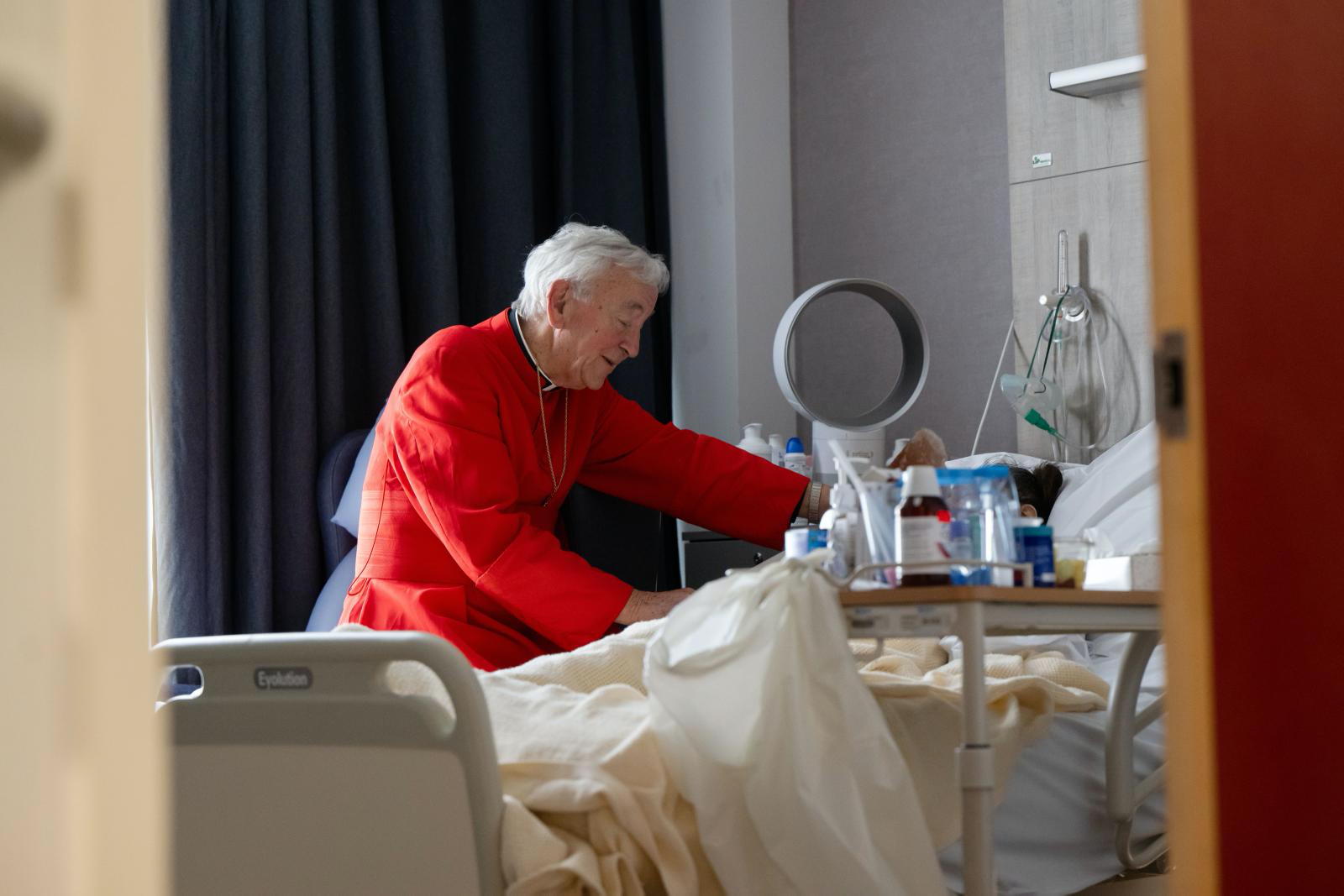
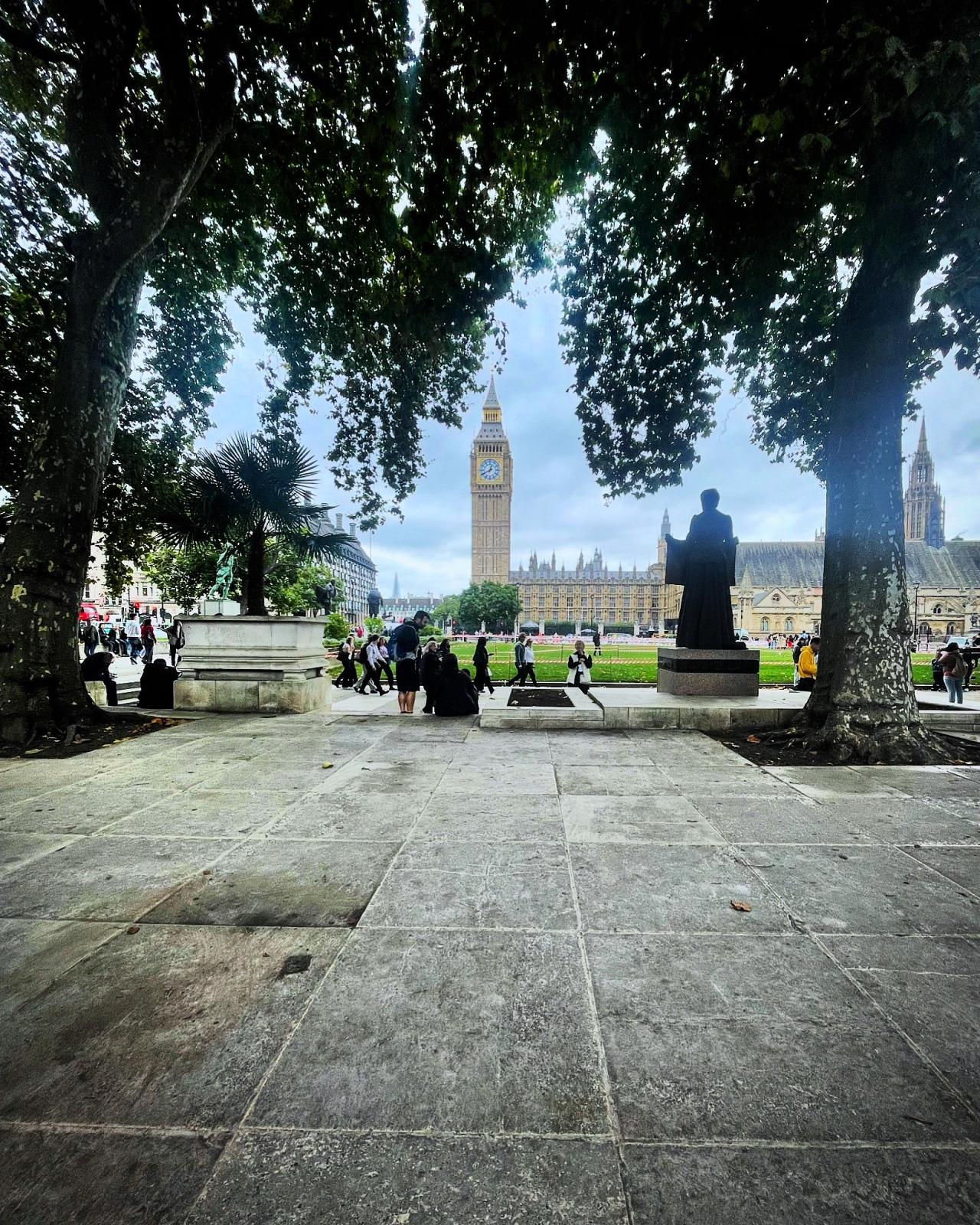
Photo: RCDOW

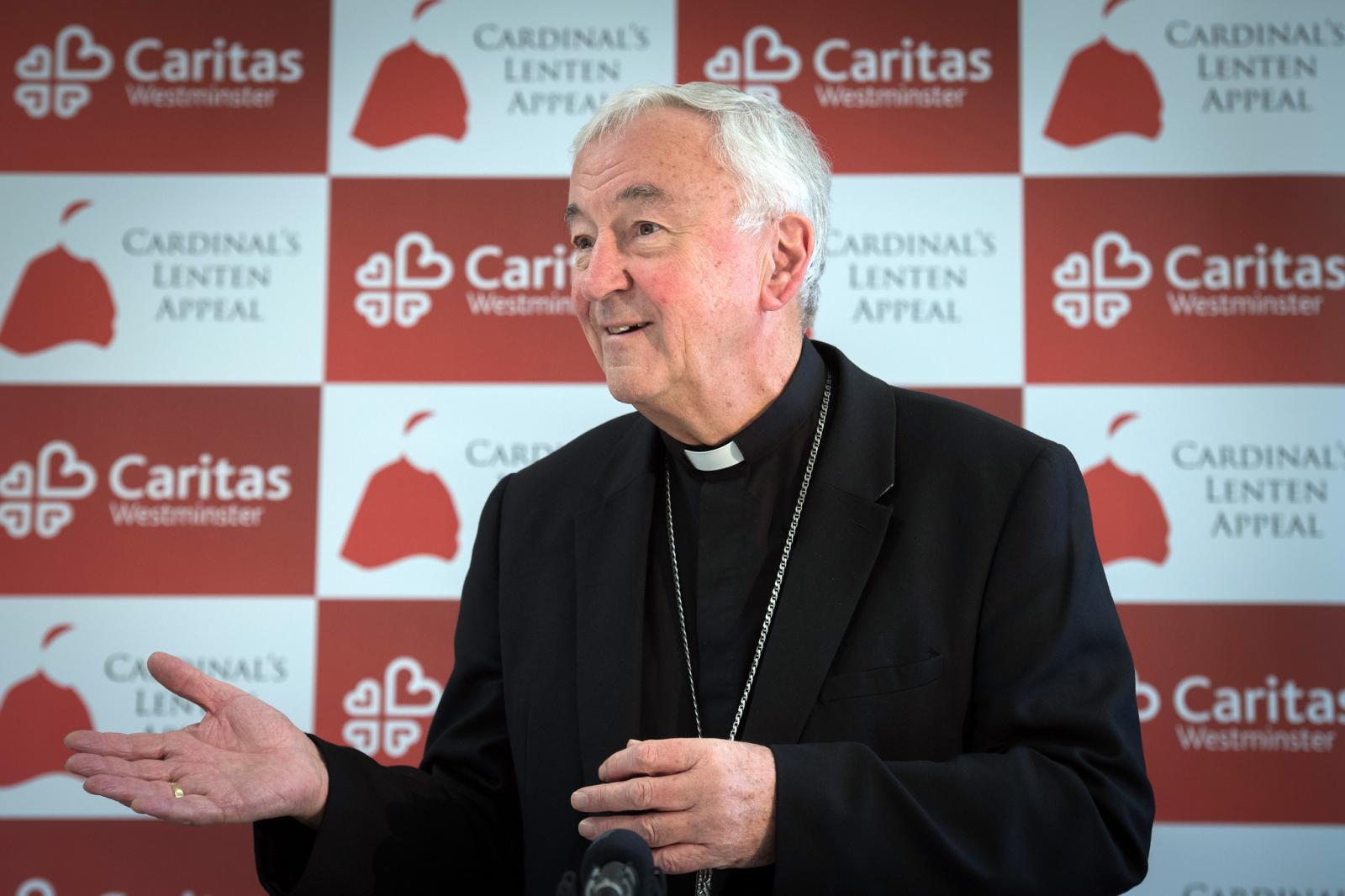
Cardinal Vincent Nichols, President of the Bishops’ Conference and Archbishop of Westminster, has issued a pastoral letter on assisted suicide that will be read in the churches of his diocese on the weekend of 12-13 October. 

Referring to a private members’ bill on assisted suicide that will be introduced to the House of Commons on Wednesday, 16 October 2024, the Cardinal offers three key points for Catholics to be aware of, and calls on the faithful to be fully engaged in the debate and to write to their MP to oppose assisted suicide being rushed into law.

Slippery slope

‘The evidence from every single country in which such a law has been passed is clear,’ says Cardinal Vincent. ‘That the circumstances in which the taking of a life is permitted are widened and widened, making assisted suicide and medical killing, or euthanasia, more and more available and accepted.’

Be careful what you wish for, he says: ‘This proposed change in the law may be a source of relief to some. But it will bring great fear and trepidation to many, especially those who have vulnerabilities and those living with disabilities. What is now proposed will not be the end of the story. It is a story better not begun.’

A right to die can become a duty to die

The Cardinal’s second key point examines how removing legislation that prohibits an action in favour of introducing a law that permits, changes societal attitudes – that which is permitted is often and easily encouraged.

‘Once assisted suicide is approved by the law, a key protection of human life falls away. Pressure mounts on those who are nearing death, from others or even from themselves, to end their life in order to take away a perceived burden of care from their family, for the avoidance of pain, or for the sake of an inheritance,’ says Cardinal Vincent. ‘I know that, for many people, there is profound fear at the prospect of prolonged suffering and loss of dignity. Yet such suffering itself can be eased. Part of this debate, then, must be the need and duty to enhance palliative care and hospice provision, so that there can genuinely be, for all of us, the prospect of living our last days in the company of loved ones and caring medical professionals. This is truly dying with dignity.

‘The radical change in the law now being proposed risks bringing about for all medical professionals a slow change from a duty to care to a duty to kill.’

Being forgetful of God belittles our humanity

His third point is that being forgetful of God belittles our humanity. For people of faith, our life flows from God and is a gift of the Creator. Cardinal Vincent emphasises that suffering is an intrinsic part of our human journey:

‘The questions raised by this bill go to the very heart of how we understand ourselves, our lives, our humanity,’ he says. ‘Every human being is made in the image and likeness of God. That is the source of our dignity and it is unique to the human person. The suffering of a human being is not meaningless. It does not destroy that dignity.’

One of the fundamental concerns surrounding this bill is that it will give a person of sound will and mind the right to end their life:

‘We know, only too well, that suffering can bring people to a most dreadful state of mind, even driving them to take their own lives, in circumstances most often when they lack true freedom of mind and will, and so bear no culpability. But this proposed legislation is quite different. It seeks to give a person of sound will and mind the right to act in a way that is clearly contrary to a fundamental truth: our life is not our own possession, to dispose of as we feel fit. This is not a freedom of choice we can take for ourselves without undermining the foundations of trust and shared dignity on which a stable society rests.’

This is not a debate that starts and ends next week. Cardinal Vincent concludes by asking Catholics to play an active part in the conversation in the coming months. ‘Have discussions with family, friends and colleagues. And pray,’ he says. ‘Please remember: be careful what you wish for; the right to die can become a duty to die; being forgetful of God belittles our humanity.’

Read the Cardinal’s Pastoral Letter in full here.

Link

Catholic Bishops Conference of England and Wales – Ten reasons to oppose assisted suicide and euthanasia

Better Off Dead? – Review of BBC1 documentary presented by Liz Carr

Right to Life – Contact your MP

Christians for Palestine Prayers at St Anselm & St Cecilia’s

Christians for Palestine at St Anselm & St Cecilia’s, 5 October 2024. Photo: ICN

Source: Jo Siedlecka, Independent Catholic News

A record number of Christians from different denominations – clergy, religious and laypeople – gathered for prayers at St Anselm & St Cecilia’s Catholic church in Holborn on Saturday 5th October 2024, before joining the 20th National March, from Russell Square to Whitehall, to appeal to the government to stop arming Israel and demand a permanent ceasefire in Gaza, Lebanon, Yemen, Israel and Iran.

The prayers were led by Revd Sam Fletcher, an Anglican priest from Exeter, and Colette Joyce, Westminster Justice and Peace Coo-ordinator.

The Jewish Bloc was also the largest ever.

Organisers say more than 300,000 people took part in the demonstration.

John Sloboda, academic, musician, and co-founder of Iraq Body Count , told ICN: “As a British Catholic I consider that participating in these marches and rallies is an important act of witness that I can offer, in the face of the ongoing decimation of the Palestinian people.

“What our taxes are paying for goes against everything I hold dear as a Christian. Marching together with fellow Christians jointly asserting “not in our name” brings some relief and encouragement, in the face what would otherwise be an overwhelming sense of despair about our country and the ultra-timid role our church leaders are playing at this potentially apocalyptic juncture in world history…” More

Read full article Independent Catholic News

Brutal lessons of 1984 nuclear bomb drama Threads

Bruce Kent

Bruce Kent, a key figure in the Justice and Peace movement in the Diocese and in anti-war campaigning nationally for many decades, is cited in this review of the 1984 nuclear disaster drama ‘Threads’ which is being reshown by the BBC today.

The television review programme ‘Did You See’ sought a range of views from people with a professional interest in the subject.

Bruce Kent of the Campaign for Nuclear Disarmament felt that “at the end it could have given people a bit more positive direction about the sorts of things they could actually do”.

Westminster Justice and Peace will be focusing on peace and nuclear disarmament throughout the coming year as we approach the 80th anniversary of the Hiroshima and Nagasaki bombings in August 2025.

Pope Francis has called for the world to put a ‘cancellation of debts and a cancellation of war’ at the heart of the 2025 Holy Year commemorations.

BBC to Show ‘Threads’ – 9 October 2024

One of the most terrifying programmes ever shown on British television, Threads is the nuclear apocalypse drama-documentary that continues to haunt people’s nightmares 40 years on. Ahead of a rare new showing on the BBC, here’s a look at how the drama still has the potential to terrify people.

First broadcast on 23 September 1984, anyone who tuned in to BBC Two on that Sunday evening would experience a bleak and unforgettable depiction of a massive nuclear bomb attack on a British city and its aftermath… more

Read BBC Article

Why Does Praying for the “Care of Creation” Matter?

Source: Maria Carvalho, Farm Street Newsletter

As the Season of Creation (1 September – 4 October) draws to close, Maria Carvalho reflects on why it is important to dedicate time to praying for creation. While this special season is ending for another year, our prayer continues! Maria sits on the Parish Pastoral Council at Farm Street Church, Central London.

In 2016, Professor Lord Nicholas Stern was invited by the LSE Catholic Society to reflect on his time advising Pope Francis when Laudato Si’ was being written. Lord Stern said, “My heritage is Jewish, but I am a confirmed atheist. And my father would be rolling in his grave if he ever heard me say, ‘This is my favourite Pope.’”

Why?  “This Pope is able to take complex ideas and make it simple, real and meaningful to people.”

This is high praise from the man who ten years earlier launched The Economics of Climate Change Report (aka Stern Review). I had the privilege of witnessing its launch in 2006 as a Master’s student at LSE, and have been working on climate policy in both academia and the private sector ever since.

Having witnessed the evolution of climate action in the past 18 years, why does Laudato Si and the Pope’s launch of the “World Day of Prayer for the Care of Creation” this September matter?

The truth is – it is a mind-boggling challenge to even think of reforming a global economy to stay within planetary boundaries. And we are already in overshoot with some of these boundaries and are witnessing the reckonings of it around the world. In some places it is more severe storms and floods, and in other places it is more severe heatwaves, droughts, and fires. In several places around the world – including Britain – we are only a few harvest cycles away before putting more artificial fertiliser in the soil will no longer grow any food. Eradicating the natural ecosystems that put nutrients into soil means our soil has become dust. We will have to artificially pollinate due to the loss of natural pollinators.

Knowing that it will only get worse if we don’t fundamentally change the technological, social and political institutions that currently drive our economy is difficult to contemplate.

There is a reason why climate anxiety is a real psychological phenomenon that is on the rise. This anxiety is not restricted just to sustainability professionals, but also to young people who will have to face the consequences of our current economic system.

My atheist colleague and I both agree that to do this kind of work, you need to go through a process of facing the challenge, and even going through a period of grief when contemplating the consequences. But being stuck in despair is not an option – it just doesn’t help to be stuck. You need a way to come out to the other side – to have the courage to face the challenge with equanimity, constructivism, and determined passion.

We both agree that the process to come out the other side is deeply spiritual. His spiritual practice is meditating and running. My spiritual practice is contemplative prayer and walking in nature. Our practices are similar in terms of moving from frustration towards interior acceptance.

I would say that the key difference in our spiritual approach is that I always start and end my prayer with a focus on God. I breathe, knowing that I am deeply loved by God, and that I deeply love Him. In my mind, I think about Lake Moraine, an aquamarine gem surrounded by the majesty of the Canadian Rockies. I think of this lake as God’s cathedral – it never fails to take my breath away, and I praise God for His sheer artistry.

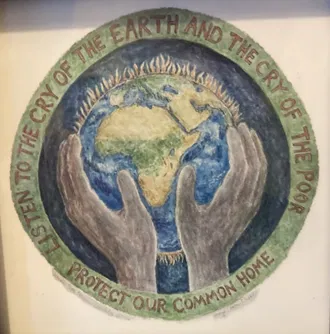
Lake Moraine reminds me that God has created a stunningly beautiful planet that He has entrusted to us to be our Common Home. Original sin points to the brokenness that exists within us and our institutions to explain why instead of caring for our Common Home, we move towards exploiting it.  God’s story of redemption through Jesus and His followers shows how grace can work within us to heal and redeem. To refocus on what truly matters, and with Christ’s love within us, act.

Prayer never fails in helping me gain perspective when I face setbacks. Prayer leads me to a space of humility: to accept that fighting this cause does not solely rest on my shoulders. Prayer is about giving Him space to work through me. And I trust Him in guiding us to Care for Creation. Our Common Home. 

Cardinal Nichols calls for Prayers for Peace in the Middle East

Cardinal Vincent Nichols sent a message to priests in the Diocese of Westminster on Saturday, asking them to include urgent intercessions for peace in the Middle East in their weekend prayer intentions.

Dear Father,

You do not need me to tell you of the seriousness of the present situation in the Middle East and, in particular, the violence presently taking place in Lebanon and Israel. We see clearly that the potential for an escalating conflict, and all that this implies, is now immediate.

I ask you to include in the intentions for prayer this weekend an urgent cry to our Heavenly Father to touch and change all hearts that are intent on warfare, and to strengthen those who work for ceasefires and the progress of peaceful cooperation.

As this conflict spreads, more division will appear. As well as the threats and dread that fill the hearts of Jewish people, this conflict will now touch more deeply all Islamic communities, especially the Shia community in Lebanon, as well as the Christian communities there. Please pray that relationships here between these three great faiths can endure, not only in the countless interfaith local projects in service of those in need, which are such a feature of our society today, but also in many personal friendships. This is the witness we must continue to give.

With all good wishes,

+Vincent

Westminster Justice and Peace E-Bulletin October 2024

Fr Dominic writes,

A new year begins.

Our schools reopen, our parishes restart catechetical programmes, search for new volunteers and, in some cases, welcome new priests.

The work of Justice and Peace goes on in and out of season as does the Church’s mission in the world but a new year is also an opportunity to pause, reflect, discern priorities, and, strengthened hopefully by holidays, we take up our work again with a new enthusiasm.

One event which aims to draw together as many as possible involved in the work of Justice and Peace in our diocese is our inaugural lecture at Farm Street Church on November 1st by Baroness Scotland, the Commonwealth Secretary General. Baroness Scotland has a huge experience and an enormous heart for putting Catholic Teaching into action. We really hope you can make it.

Sunday 29 September: World Day of Migrants and Refugees

In a message to mark the World Day of Migrants and Refugees, Bishop Paul McAleenan has praised the Catholic community in England and Wales for the generous welcome and kindness many offer to refugees and migrants.

“Fundamental to our Christian faith is the belief that we are all a pilgrim people on our journey to our true homeland. God is with us and we travel together,” says Bishop McAleenan, the Lead Bishop for Migrants and Refugees for the Bishops’ Conference. “They are looking for a place to settle, where they can live in peace with their families and have the opportunity to prosper. They are, indeed, a pilgrim people. And God walks with them.”

Bishop McAleenan believes that many parishes have responded positively to those fleeing harm and seeking sanctuary to rebuild their lives:

“I wish to thank all of you in parishes and communities who are providing support and welcome to migrants and refugees who reach these shores… There are many, many parishes in this country who have positively responded to the stranger seeking asylum… Surely through your actions, migrants and refugees who experience such hospitality can more easily believe that God is with them.”

Participation

The theme of the World Day of Migrants and Refugees is ‘God walks with His People’. We have many days of prayer in the Catholic calendar, so it is always useful to offer some practical advice to the faithful to encourage participation in the day.

“I’d like to suggest how you might celebrate this day in your parish, in your school or community,” says Bishop McAleenan. “Perhaps you can have a short prayer vigil, reflecting upon on a scripture passage which recounts how God accompanied his people on a long and dangerous journey through the desert and ask him to protect those on the move today.

“If you do have a prayer vigil, please invite migrants and refugees to join you. If your parish is blessed with grounds, you may consider having a procession – walking around the area in silence, or reciting an appropriate prayer – that would be a demonstration of solidary with all those on the move.

“If you know someone who is a refugee you may wish to invite them to join you and your friends for a tea or coffee. Why? Simply to encounter them – a word beloved by Pope Francis – to speak to them, to listen to their story, if they wish to share it.

“In such ways, we open our minds and hearts to our brothers and sisters and perhaps any prejudices or misunderstanding we may have will be dispelled.”

Saturday 28 September: An International Mass with the Ethnic Chaplaincies will be celebrated at Westminster Cathedral by Cardinal Vincent Nichols