A big concern on our hearts at the moment is the need for peace in the world as we approach nearly a year of war in Gaza, as well as remembering the on-going conflicts in Ukraine and Russia, Sudan, the Democratic Republic of Congo, Yemen and elsewhere.
The guest speaker at our Inaugural Justice and Peace Lecture at Farm Street on 1 September is Baroness Scotland, Commonwealth Secretary General, who will address the theme of ‘Delivering Peace in a Multi Polar World’.
Join us to reflect deeply on how we might contribute to building a culture of peace and not war.
Colette Joyce, Justice and Peace Co-ordinator with Westminster Diocese is currently on a pilgrimage to Jordan with Friends of the Holy Land. The visit has been hosted by the Jordanian Tourist Board who are keen to show that Jordan is still a country of peace and safety, despite the regional conflicts raging all around its borders.
Colette writes:
If there is one word that springs to mind after my first few days in the country it is ‘hospitable’. Every where we go people call out, ‘Where you from?’ ‘London, UK.’ Ah, welcome to Jordan!’ We have been extraordinarily well looked after by the hotel, restaurants, shops and site staff who want to show us the best that Jordan has to offer.
As we travel, we can see a country just getting on with life. It is hard to believe, at times, that there is so much turmoil just a few miles from here. While we’ve been here there have been attacks in Lebanon with pagers and walkie-talkies connected to Hezbollah exploding in streets and homes, killing dozens and injuring thousands more. Rockets have been fired at Israel, bombings continue in Gaza, arbitrary arrests take place in the West Bank and hostages from Israel still languish in Palestinian bunkers. Peace negotiations have faltered, as the risk of escalation rises, and it is hard to know how peace can possibly be restored.
For me, a strong motivation for making the trip was to show solidarity with the people of Jordan who are suffering from the effects of conflict in the region and also with all those in the Holy Land who are desperate to see an end to the fighting. Now that I am here, it is clear that they need that solidarity more than ever.
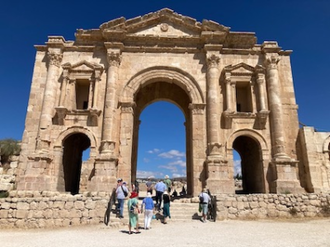
Before 7th October, Jordan would receive 7,000-8,000 tourists a day to its historic sites at Jerash and Petra. The sites are still open in all their glory but the visitors can now be counted in dozens. I have been stunned by their historic significance and beauty and hope very much to return to spend longer learning about them, hopefully with others, in the near future.
For Christians there is the added significance that these are Biblical lands and we have visited sites connected to Moses, Elijah and Jesus. Most deeply moving of all is the Baptism site, where Jesus was baptised by John the Baptist ‘on the far side of the Jordan’ which was only identified in 1995 when excavations became possible following reduced military operations. It has been endorsed by Pope John Paul II and visited by Pope Francis in 2016.
Here, between the river and the desert, I felt for myself a deep sense of connection to what our guide, Bashar, called ‘the sunrise of Christianity.’ Here is located the origin of Christian baptism that I experienced at six weeks old and which I have witnessed many hundreds of times since, most recently at Farm Street Church last Sunday. Priests from the new Catholic church rising above the shores of the Jordan poured water over our heads from a font beside the river to ‘Remember your baptism in the name of the Father, Son and Holy Spirit.’ From the actions of John and Jesus sprang a faith tradition that now connects two billion people around the world and across two thousand years of time.
For Rustom Mkhjian, the Armenian Christian Director of the Baptism Site Commission who showed us round, one of the most remarkable aspects of the restoration of the Baptism Site is that it has been sponsored by the Muslim royal family who deeply understand the significance of the site for Christians and why they should protect it and make it accessible to pilgrims. “This,” he said, “is how it should be everywhere in the world.” Relations between Christians and Muslims are good here and there are deep lessons for peace to be learnt from the Jordanian approach to welcome and hospitality.
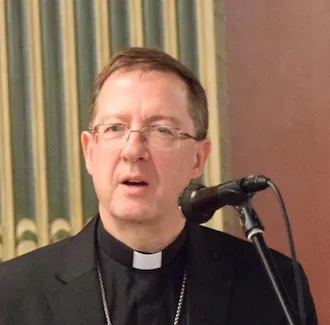
Prisoners’ Sunday falls this year on 13 October. With the support of Liaison Bishop for Prisons Richard Moth, Pact invites parishes across England and Wales to bring people in prison, and their children and families, before the Lord in prayer.
Pact is the national Catholic charity supporting prisoners, people with convictions, and their families. This year marks 125 years since the charity’s formation as the Catholic Prisoners’ Aid Society. Today Pact supports people of all faiths and none, working in more than 60 prisons, in courts, and in communities across England and Wales. The support of Catholic parishes has been and continues to be invaluable.
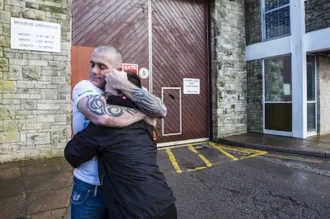
Our prisons are in crisis. There are record numbers of people behind bars. Inspectors regularly report instances of vermin, violence, self-harm and people languishing in cells with nothing to do. At the same time, too many people are released with no home, no job, no family and no hope.
The ripple effects of this crisis are felt well beyond the prison walls. The lives of hundreds of thousands of families and children are affected as they too serve a hidden sentence.
Having a mother, father, husband or wife in prison can have a devastating impact – more than half of families tell us they are struggling to afford the basics for them and their children.
In September, every Catholic parish will receive a Prisoners’ Sunday pack with a poster, bidding prayers, and a message from Pact President Cardinal Vincent Nichols. The charity encourages all parishes across England and Wales to mark the day on 13 October – or another nearby Sunday – respectfully requesting a second collection for those who choose and are able to donate. The money raised will help Pact to do more in the year ahead to support women and men in prison and their children and families.
Pact CEO Andy Keen-Downs shares: “Every day, I hear how our prisons are in crisis…” Read more
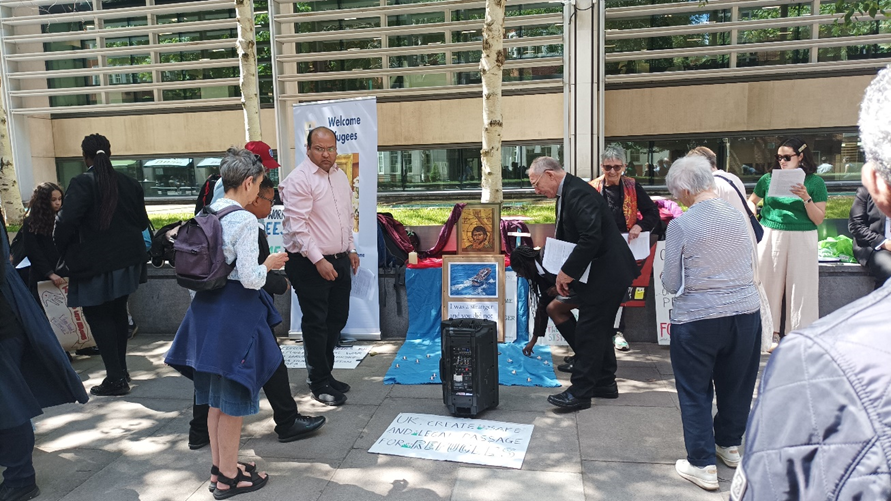
A monthly Memorial Prayer Vigil for refugees and asylum-seekers takes place on the 3rd Monday of every month outside the Home Office, SW1P 4DF, 12:30pm to 1:30pm.
Mushy peas with fish and chips from a Mayfair restaurant were served yesterday to homeless people at a West End church thanks to a service set up by a group of churches during the pandemic.
The Lord Mayor of Westminster, Cllr Robert Rigby, helped serve lunch to around 60 people on a visit to the Central London Catholic Churches Homeless lunch service run from Farm Street Church of the Immaculate Conception in Mayfair.
Set up in 2020 at the start of the coronavirus pandemic and supported by Westminster City Council, the service now offers lunch twice a week in a large dining room. Donations of food from nearby five-star hotels and restaurants including the Connaught and Claridges means around 140 people a week are fed free. The lunch served by the Lord Mayor was courtesy of the Mayfair Chippy in nearby North Audley Street.
The Lord Mayor talked with guests, ranging from a 90-year-old lady to 39-year-old Miles, a first-time visitor to the Farm Street Church, who has been rough sleeping since arriving in Westminster from Manchester. Miles said: “I am still getting used to the pace of life in London but services like Farm Street are great. It feels like somewhere friendly I can dip into while I get my life back together.”
The Lord Mayor said: “Talking to people having lunch at the Farm Street centre it’s clear the reasons why people end up sleeping rough or facing homelessness are complex and varied. While some may have substance problems in the past, for others it can just be bad luck or family rifts that mean they fall through the cracks.
“Thanks to the generosity of the hospitality trade, the team at Farm Street return a sense of dignity to people who are served at the table like regular restaurant diners. Father Dominic deserves credit for a project that began as a pandemic response but has flourished into something which is helping the homeless in the long term.”
If you would like to join the team of volunteers at Farm Street Church or donate to their projects see: www.farmstreet.org.uk/support
The Catholic Union is recruiting a full time Chief Executive.
Baroness Hollins, President of the Catholic Union, says: “The Catholic Union is going through a period of growth and renewal. Recognising the changing and changed social and political landscape that 2024 ushers in, both in the UK and internationally, we seek a Chief Executive to execute our new and exciting strategic focus”.
The Catholic Union’s Interim Director, Tristan Feunteun, will complete his contract on 30th September.
The Catholic Union say in their statement: “To drive our future reach and pace we are now looking for an energetic Chief Executive who shares our fresh focus on impact, has experience in one or more of our renewed policy focus areas and who can represent us confidently in Parliament, Whitehall and the community. The CEO will have the opportunity to shape a goals focused plan within our three strategic priority areas namely those people living at the margins; enhancing the British contribution to human rights, development, education and global health equality; and evidencing, equipping and convening Catholic contributions to the policy and the public sphere.”
The familiar blue and green logo, the registered Fairtrade Mark, appeared on the first UK product in 1994. The Mark is licensed by the Fairtrade Foundation, which was set up in 1992 by CAFOD, Christian Aid, Oxfam, Traidcraft, the World Development Movement and the National Federation of Women’s Institutes. Fairtrade seeks to achieve economic, social, and environmental sustainability for farmers and workers in less developed countries. It helps to achieve the UN Sustainable Development Goals and supports farmers to mitigate and adapt to climate change.
2024 is the 30th anniversary of the FAIRTRADE Mark in the UK, and the Fairtrade Foundation
Fairtrade Fortnight is the annual celebration of all things Fairtrade, raising awareness for the need for fairer trade to support farmers in low-income countries. Celebrating the 30th anniversary of the Fairtrade Mark, which lets people know what products are in line with the movement’s ethical and sustainably.
Fairtrade now works with more than 2 million farmers and workers around the world. Between 1994 and 2022, farmers and producers have shared an estimated £1.7 billion in Fairtrade Premium payments. But with the world facing major challenges, now is the time to redouble our efforts to do more. Many of the farmers overseas who produce the goods we rely on in the UK are facing the impacts of both climate change and poverty.
Many small-scale farmers and workers in countries most affected by climate change are often experts in adapting to climate change. But unfair trade means they don’t have the money to invest in sustainable farming techniques that can secure a fairer, greener future for people, planet and the world’s food supply.
Fairtrade are working to grow fair pay for farmers, so they have the resources and financial stability to protect the environment and adapt to the risks of climate change. Farmers are at the heart of the climate crisis; they face the worst effects of climate change and are bearing the costs to combat it. Ask the UK government to support the farmers taking on deforestation, by delivering on promised funding and making sure deforestation law gives a fair deal to farmers. Stand with farmers taking on climate change and building a sustainable future. We must act at pace in a world in which the climate crisis, global conflicts, and the pandemic have heightened threats to farmers’ livelihoods and exposed the fragility of our shared food system. Growing Our Movement for Change Report
Every time we buy an item with the Fairtrade Mark, we are part of this movement which works in partnership with producers and workers, so that they can afford to feed their families, send their children to school, cover their farming costs, adapt to climate change and have a brighter future. We are also calling upon changemakers to promote fair trade to help producers and farmers tackle poverty and climate change, and build a sustainable trade system for all. Be the Change
Fairtrade is a worldwide movement for change and trade justice.
Transform Trade supports producers around the world. Together, we fight for a fairer trade system. we can change the way we trade – in partnership with the world’s producers – we can solve big problems. trade should support humanity – and the planet we all live on. Be part of the transformation
Everyday, inspirational producer collectives and social enterprises around the world are finding new and innovative ways to tackle global challenges. They’re showing a better way of doing trade isn’t just possible – it’s already happening.
Transform Trade partner with these groups to build a brighter future for their communities and spread their influence around the world. Invest in the farmers, workers and artisans who are changing the world of trade from the ground up.
During March 2021, at the Fairtrade Fortnight celebrations, the Diocese of Westminster celebrated being recognised as the first Catholic Fairtrade Diocese.
There are lots of ways to support Fairtrade, but just two core requirements to be awarded Fairtrade Place of Worship status:
Use Fairtrade products wherever possible (at least tea, coffee and sugar) and share this information with the wider congregation.
Integrate Fairtrade into the life of your place of worship, at Fairtrade Fortnight or other times of the year e.g. events, stalls and worship.
There is a brand-new online commitment process that’s easy to complete whether you have applied for Fairtrade status before, or not, and new certificates, posters and materials available to celebrate and showcase your Fairtrade commitment.
Thank you for being part of the Fairtrade movement and for celebrating this 30th anniversary with us. Fairtrade would not be what it is today, without your support.
Did you know that over 500 Catholic parishes across England and Wales are certified Fairtrade?
Fairtrade Fortnight 9-22 September has the theme, ‘Be the Change,’ highlighting how consumer power can support farmers overseas to build stronger, more resilient communities.
This Fortnight, over 550 local community activities will be taking place, including talks, coffee mornings, breakfasts, film screenings, stalls, town displays and church services.
St Luke’s Catholic Church in Pinner, Westminster Archdiocese said on its Facebook page on Monday: ‘Every time each of us goes shopping, we cast a vote for the sort of world we want. So please choose goods with the Fairtrade Mark – it means the growers are paid a fair price. All our local supermarkets have some – look for bananas, tea, coffee, chocolate, nuts, jams, marmalade, sugar, wine and more. So let’s all BE THE CHANGE and choose Fairtrade.’
The Fairtrade Foundation is celebrating 30 years of Fairtrade products on UK shelves, having been established by CAFOD, Christian Aid, Oxfam, Traidcraft, the World Development Movement and the National Federation of Women’s Institutes. Over the course of 30 years, Fairtrade has worked with more than 10,000 local Fairtrade groups and institutions in the UK, including almost 7,000 Fairtrade Places of Worship and more than 2,500 Fairtrade Schools. There are almost 5,000 Fairtrade products from coffee and tea to flowers and gold.
New YouGov research has found that almost nine in ten Britons value fair pay for farmers and workers and 69% say they have bought a Fairtrade product. Two new YouGov research studies commissioned by the Fairtrade Foundation show that Britain’s most popular Fairtrade buy is bananas (57%), closely followed by chocolate (54%) and coffee (43%). And four in every five adults in the UK (79%) are concerned about the potential effect of climate change on the price of food in the UK. A similarly high number – 69% – are concerned about the potential effect of climate change on the supply of food in the UK.
The ecumenical group Christian Concern for One World has produced a Guide ‘Fairtrade Fortnight in your Church’ and, every day is suggesting ‘a small step to support Fairtrade.’
Bishop John Sherrington, Lead Bishop for Life Issues for the Bishops’ Conference, is encouraging Catholics to unite in prayer and compassionate action as Parliament prepares to renew the debate around assisted suicide.
‘Parliament returned this week, and with it the prospect of renewed debates on the ethics of assisted suicide. The second reading of Lord Falconer’s ‘Assisted Dying for Terminally Ill Adults Bill’, which seeks to legalise assisted suicide, will take place in the House of Lords. There will be an attempt to introduce a similar Bill to the House of Commons.
“I wish to reaffirm that the Catholic Church has always been opposed to assisted suicide in every circumstance. The legalisation of assisted suicide undermines the sanctity and dignity of human life. There is also now ample evidence across the world that the legalisation of assisted suicide puts the most vulnerable members of society at risk. 1
“The Catholic Church accompanies those suffering and nearing the end of their lives with hope and affection, but also reminds them that their life is precious until the very last breath. This is the work that hospices and other healthcare institutions and hundreds of thousands of individual carers undertake every day, helping the terminally ill and dying to leave this world whilst preserving their dignity. They truly provide assistance to those who are dying.
“In preparation for these challenging debates, let us offer our prayers for those facing the end of their lives, that they may receive the care and support they need to live their final days with respect for their dignity. Let us also pray for our politicians and our country that wisdom and compassion may guide their decisions. I also urge all Catholics to become better informed about the serious problems associated with the legalisation of assisted suicide.
“We encourage everyone to use resources on the end of life that can be found on the Life Issues pages of the Bishops’ Conference website to better understand the implications of assisted suicide. It is also possible to contact your Member of Parliament to ask their views on a number of life issues.
“Let us unite in prayer and compassionate action as Parliament prepares to consider these issues.”
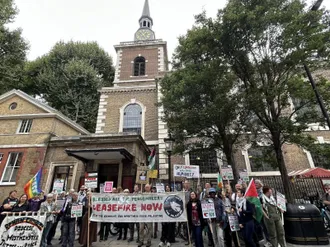
St James’ Piccadilly, was the gathering place for the Christian Bloc taking part in the 18th national march for Palestine in London on Saturday. Some participants, from churches of different denominations, came from as far away as Hertfordshire, Surrey and Sussex. After prayers together they joined the main march in Regent Street, walking alongside Jewish, Muslim and secular campaign groups, passing Hyde Park before ending near the Israeli embassy on Kensington Road. Organisers say more than 100,000 people took part.
Speaking from a stage, broadcast on screens, a series of speakers described the catastrophic humanitarian situation in Gaza and the West Bank and appealed for the British government to stop arming Israel.
Daniel Kebede from the National Education Union said: “Across the UK and in many parts of the world thousands of children are returning to school. But for the children of Gaza there is no such respite from the relentless war that has blighted their young lives for almost a year now. Palestinians place a high value on the education of their children and young people. 625,000 in Gaza have been denied the inalienable right to education since October 7 last year.
“Now we are in a second school year which there is no prospect for returning to school. No respite from the relentless bombardment that is terrorising their young lives. Scholasticide is taking place in Gaza. The destruction of all education infrastructure with the deliberate targeting of schools and universities and the indiscriminate killing of children and their teachers. Almost 10,000 schoolchildren have been killed along with over 400 of their teachers.
“According to NGOs working in Gaza, 93 per cent of their schools which have specific protection under international law have sustained major damage. 156 UNRWA schools have been hit directly, despite the fact that many are providing refuge for displaced people.
“All twelve of Gaza’s universities have been bombed, leaving 88,000 students unable to continue their education. 90 percent of the Palestinian population has been displaced. Over 40,000 killed. 94,000 injured. Many more missing beneath the rubble.
“How long must this be allowed to continue? We need a ceasefire now. The ICJ has ruled that there is a credible case that Israel is committing genocide against the Palestinian people. The UK must now ban all arms sales to Israel. My union, the National Education Union will continue to stand up for the Palestinian people. We will continue to stand up for the rights of children to have an education.”
Sophie Bolt, CND Vice Chair questioned why the UK government has no money for pensioners’ cold weather payment; no money for families with more than two children – yet they have money to supply weapons to Israel.
Dr Ismail Patel from Friends of Al Aqsa expressed his grief at the barbaric behaviour of Israeli forces towards prisoners, and Palestinian civilians. By acting like this “Israel dehumanizes itself” he said.
Husam Zomlot, Palestinian Ambassador to the United Kingdom gave a heartfelt speech in which he said: “Israel has failed for 76 years to erase the Palestinian people and it will continue to fail. It must leave occupied territory now and third parties must end their support for Israel’s unlawful occupation.”
See his full address here:
Saturday’s march was organised by a coalition of organisations, including the Palestine Solidarity Campaign, Friends of Al Aqsa, the Muslim Association of Britain, the Stop the War Coalition and the Palestine Forum in Britain. The Christian Bloc included Catholic, Anglican and Methodist clergy and religious, representatives from the London Catholic Worker, Pax Christi, Christian CND and Westminster Diocese Justice and Peace.
One Christian campaigner, a retired schoolteacher, told ICN: “These marches are tiring, but they are nothing compared to the hardships experienced by people in Gaza. I can’t imagine how they survive, sleeping in makeshift tents with severe shortages of food and water. This is the least we can do.”





 Diocese of Westminster Justice and Peace Commission