Bishop Nicholas Hudson, who oversees Justice and Peace in the Diocese of Westminster, is one of four representatives from England and Wales joining over 200 delegates from Europe in the Czech capital of Prague to discern the fruits of the synodal work at the local level. A further ten country representatives are attending remotely.
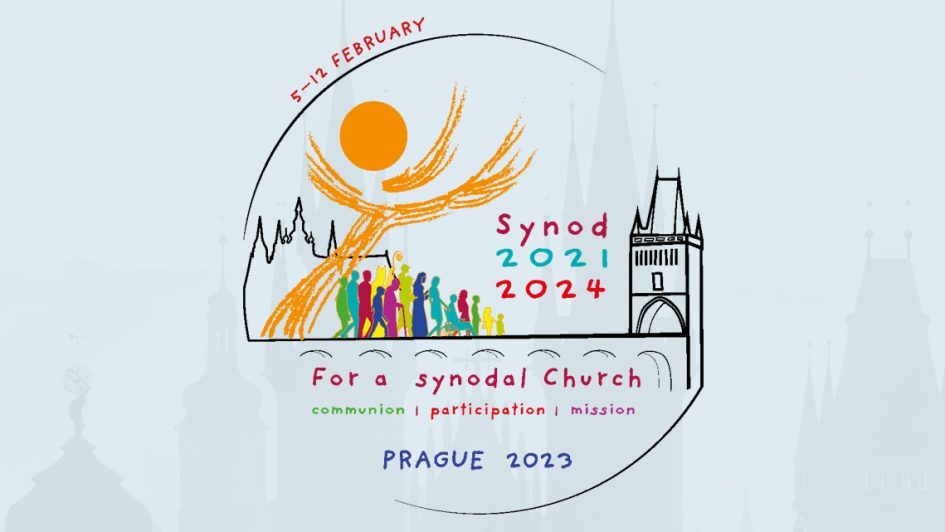
The European continental assembly for the third phase of the Synod on Synodality is taking place from 5-12 February. Then, in October 2023, the Synod of Bishops will meet in Rome for the first of two synod gatherings.
Delegation for England and Wales
Attending in person in Prague
Bishop Nicholas Hudson (Lead, Auxiliary Bishop, Diocese of Westminster) Rev. Jan Nowotnik (Director of Mission for the Bishops’ Conference) Sarah Adams (Diocese of Clifton) Jessica Wilkinson (Diocese of Leeds)
Attending via live stream
Dr Johan Bergström-Allen Amy Cameron Rev. David Cross Deborah Cottam Sr Lynda Dearlove VCF Simeon Elderfield Elizabeth Harris-Sawczenko Fr John McGowan OCD Rev. Dr Callan Slipper John Smartt
Intervention by Bishop Nicholas, Prague, 6 February 2023
In England and Wales, the resonances were deep between the Document for the Continental Stage (DCS) and our own National Synthesis. The role of women had been a headline finding of the Synod in our countries[1] – as it was in the DCS. Like the DCS, we heard fewer calls for women’s ordination than for their inclusion in the Church’s governance. However, we noted that few lay men exercise governance roles either.
Other headline findings which we shared with the DCS? Inclusion was a dominant concern of our Synodal journey: the inclusion of LGBT+ people; the inclusion of remarried divorcees in the life of the Church. These conversations often encountered a tension which the DCS echoed from our National Synthesis: the tension to be found in the Church needing boldly to “(proclaim) its authentic teaching while at the same time offering a witness of radical inclusion and acceptance.”[2]
The inclusion of young people was also a dominant topic in our Synodal journey. Many dioceses had a large youth engagement, especially from schools. The joy expressed by the young people who took part contrasted with the pain of those concerned about young people’s involvement. This tension the DCS failed to observe. However, we were with DCS in recognising the tension between young people who seek to adhere to the 1962 Missal and those who prefer more contemporary celebrations.[3] We felt DCS did not communicate sufficiently the “sadness and anger… sense of grievance and marginalisation”[4] of many around the liturgy.
As in most countries, many English and Welsh priests were unclear as to how they were supposed to engage with the Synodal process. As in most countries, there was frequent expression of appreciation for our priests, along with concern that too much is asked of them. However, clergy and laity alike were surprised to find scant reference in DCS to clerical sexual abuse.[5]
The deepest resonance came with the call for formation, which pervades both DCS and our National Synthesis[6] – a sense that diverse resonances and tensions call for diverse types of formation. This is to say:
formation which gives voice both to those who feel themselves to be on the margins of the Church and also to the voice of Tradition;
formation in truth and mercy: formation that holds in tension the authority of Scripture, Tradition, the Magisterium and personal experience;
formation in the Faith, not least in the teachings of Vatican II;
formation in Synodality – for clergy and laity together;
formation in listening;
formation in accompaniment.
The desire for formation might be expressed as a yearning for a Synodal spirituality. Such a spirituality could be captured, in essence, as a tent held up by the four vital poles – of encounter, journeying, formation, and accompaniment.
Nalini Nathan, General Secretary of the Conference of Religious and a trustee of CARJ, the Catholic Association for Racial Justice, offers three thoughts to help us focus on ‘Working Together’ for racial justice.
On 5 February, the Catholic Church in England and Wales celebrates Racial Justice Sunday. It’s the day the Church focuses on the need to oppose racism and pursue racial justice with renewed vigour.
The theme for 2023 is “All are included in the mission of Christ and His Church. Let us walk together, pray together and work together.”
This reflection, from Nalini Nathan, General Secretary of the Conference of Religious and a trustee of CARJ, focuses on ‘Working Together’ for racial justice.
+++
My name is Nalini, and I am the General Secretary for the Conference of Religious in England and Wales. I am also a member of the Christian Network Against Caste Discrimination and a trustee for a number of charities including CARJ, the Catholic Association for Racial Justice and the Margaret Clitherow Trust which supports Traveller, Gypsy and Roma communities.
In the next few minutes, I’ll be sharing three ponderings I have about working together if every race and ethnicity are to be included in the mission of Christ and His Church.
Firstly, our unique ancestries are a gift. The world has been blessed with such a broad diversity of cultures and therefore perspectives, knowledge, skills and experiences. Working with different people to ourselves should, I think feel like being in a sweet shop. I want mine and all cultures to be seen for what they are, a gift from God!
I should be so grateful that God has blessed me with chocolate brown skin that protects me from harmful rays, from cancer, even from wrinkles! I save so much money not needing to use sunbeds or fake tan. But more seriously, so often in life, my skin colour has been a hindrance. There’s the avoidance, that change in tone when someone speaks to you, the ignorant mistaken or at times deliberate aggressive comments, the being overlooked for promotion when you’re the most qualified or experienced person for the job. There’s the scapegoating, the stepping on, the passive-aggressive behaviours and the trauma of healing from ignorant comments, isolation and oppression. As a Catholic, I find this at odds with my faith. I was taught that like everyone, that I am made not just good but very good, that we are all made very good, each called to be a jewel in God’s crown.
Secondly, I want to mention privilege. I come from more than one culture. That’s my privilege, that’s one of my blessings. I humbly embrace my cultural privilege. It helps me be a better Christian, a better Catholic as it increases me empathy, compassion and communication skills to relate to the stranger, to relate to the outsider, to relate to the person who is being treated as invisible.
Privilege has become the dirty word of our post-covid society. There is absolutely nothing wrong with being given privilege. It’s your talent, it’s your gift. There’s nothing wrong with having privilege if you are a Catholic as long as you are using it for the glory of God and as long as you are not stealing it from someone else.
I wonder, are we aware of our privileges, if so, how are we using them to work with and support others? How are we using them to help others flourish?
Finally, I want to reflect on how we might look at each other through the eyes of God. The first thing we are told in the bible is that God is a creator. ‘In the beginning he created…’ I look at the diversity of what he has created, the diversity of plants and wildlife. God is clearly a creator of diversity. We are taught that we are the Body of Christ. Are our cultures also different parts of this Body, which are meant to work together to build up the kingdom of God? If we oppress one part of the body, one culture, are we damaging ourselves?
Like those of different cultures who face rejection in their workplaces, parishes and schools, Jesus too felt rejection throughout His life, even before He was born, when there was not place at the inn. It is a natural human behaviour to feel the need to surround ourselves with people who are similar to ourselves. We want to fit in, we want to feel validated and sometimes there are opportunities to preserve things by working with people similar to ourselves. But as Catholics, like the early Christians, we are called to sometimes put away our own insecurities and need to fit it, to instead look outwards. I wonder, way back when God chose the Israelites, did he consider that the land of Christ’s birth would be the place that united the known world of that time? Israel, a land that links Africa, Asia and Europe. Quietly, Christ was born at a place that brought together the continents, and then 33 years later, again, he reached out his hands to the world.
So the three things I just reflected on were that if we wish to work together it might be helpful to remember that:
Each and every culture is a gift from God that is needed for working to build up His kingdom.
Own your privilege -it is a gift to be used to help others step forward, it can be used to help others participate and share their talents.
Look outwards, that’s a part of the mission and calling of each of us who make up the Body of Christ and His Church.
Every culture is a gift, own your privilege, look outwards.
God of our past, present and future, you created each one of us in your image and likeness, help us to recognise you in each person.
As we pray for end to suffering caused by racism lead us this day to walk with one another, pray with one another and work together, so that we create a future based on justice and healing, where all can fulfil the hope you have for all peoples.
The theme for this year’s Racial Justice Sunday is:
‘All are included in the mission of Christ and his Church. Let us walk together, pray together and work together.’
It reflects the role each of us must play in promoting the mission of Christ and His Church. This was inspired by conversations around last year’s Racial Justice Sunday and Pope Francis’ visit to Canada in July 2022 when he spoke about looking towards a future of ‘Justice, healing and reconciliation’.
There are new resources for 2023 on the Catholic Bishops Conference of England and Wales website and we are also invited to return to the images produced last on ‘Made in the Image God’ for deeper reflection.
Gallery of Saints – Chosen by parishioners and especially commissioned for Our Lady of Fatima Catholic Parish, White City, in West London. Photo @ Fr Richard Nesbitt
Prayer
God of our past, present and future, you created each one of us in your image and likeness, help us to recognise you in each person.
As we pray for end to suffering caused by racism lead us this day to walk with one another, pray with one another and work together, so that we create a future based on justice and healing, where all can fulfil the hope you have for all peoples.
Fr Dominic Robinson SJ and Colette Joyce have co-authored this year’s Lent Faith-Sharing resource booklet for the Agency for Evangelisation for use by small groups in parishes over five 60-90 minute sessions in Lent, covering the themes of homelessness, racial justice, care of creation, migrants and peace, in the light of the Scriptures and drawing on local examples in the Diocese of Westminster.
Dear Friends of Justice and Peace,
This month’s Westminster Justice & Peace E-Bulletin is now available for download, packed with the usual assortment of Diary Dates: events, talks, webinars, meetings and actions across a whole range of concerns from helping the homeless into dignified work with Caritas, to Synodal explorations on the role of women in the Church with the National Board of Catholic Women, to supporting the international development work of CAFOD. We hope there is something for everyone.
Peace, hope and happiness this Feast of the Presentation.
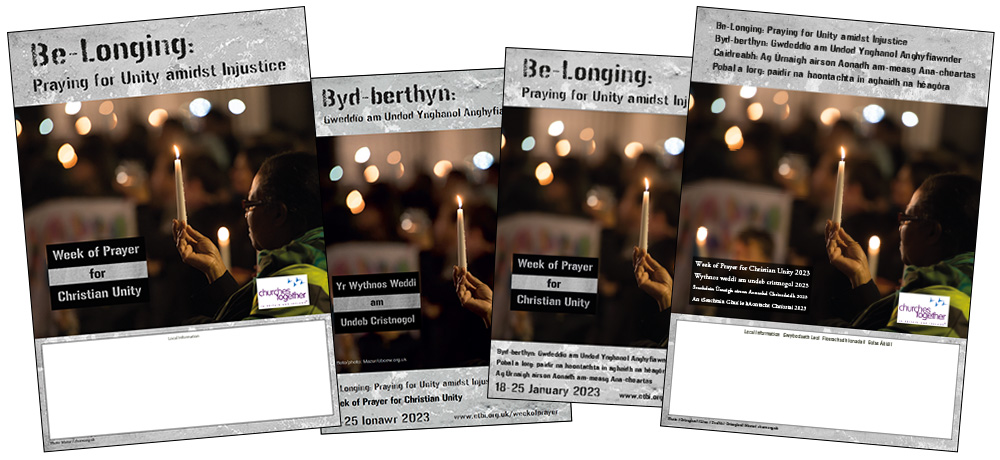
The Week of Prayer for Christian Unity is traditionally observed from the 18th to the 25th January – the octave of St. Peter and St. Paul.
For this week we are guided by the churches of Minneapolis as we seek to explore how the work of Christian unity can contribute to the promotion of racial justice across all levels of society.
Through this resource, the ecumenical Churches Together in Britain and Ireland (CTBI) writers’ group has chosen to focus our attention in the UK on the 30th anniversary of the murder of Stephen Lawrence, which we mark in 2023.
Prayer
You made us, God, in your own image, and then became one of us, proud of those you have made. Make us proud of being part of that worldwide family, and eager to discover and celebrate your image in every person, every culture, every nation that we are privileged to encounter.
Today we pray and remember Pope Benedict and the legacy he left the Church, especially in his great witness and love for the person of Jesus. Requiescat in pace.
Looking ahead to 2023, the E-Bulletin contains an update on the on-going Synodal Pathway. There are a smaller than usual number of Diary Dates – to begin the year at a gentle pace. No doubt many more will be added in the months to come!
Peace Sunday on 15th January is the next key event promoted by the Justice and Peace Commission. As we draw closer to the one year anniversary of the invasion of Ukraine by Russia (24 February 2022), we invite you to give particular consideration to this year’s Message from Pope Francis for the World Day of Peace and to look up the work and resources of Pax Christi in preparation for Masses on this weekend. We remember, too, that there are still many other parts of the world experiencing conflict and strife that are not in the headlines and we keep them in our prayers.
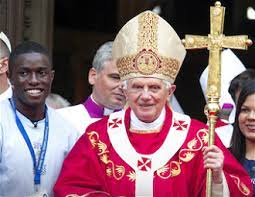
One of the most memorable images of the Papal Visit in September, 2010, was that of the young student, Paschal Uche, welcoming Pope Benedict XVI, on the steps of Westminster Cathedral after celebrating Mass, in front of thousands of cheering young people. A decade later, Paschal was ordained a priest by Bishop Alan Williams in Brentwood Cathedral. He is now serving at St James the Less and St Helen’s church in Colchester.
In an ICN exclusive, Fr Paschal reflects on that day, and the life-changing experience of meeting Pope Benedict XVI:
No matter how inevitable or indeed no matter how unexpected, death has a powerful way of gripping the heart and bringing the mind in to sharp focus of the person who has just died.
Since hearing of the death of our spiritual shepherd and father Pope emeritus Benedict, I too have been deeply moved and focused to reflect anew on his impact on my small story, our generation and the Church.
Born in Stratford East London, my first stirrings of a vocation did not come till I was in the 6th form at Trinity Catholic High School in Woodford Green. At the time, though growing, my desire to be a priest was little more than a weak aspiration, something I thought about occasionally. Even as the longing grew, talk about becoming a priest was initially something I kept close to my chest, an inclination I shared with a few friends and some priests, but no one else not even my family, for whom I thought rightly that it would not be something to celebrate. No one but close friends that is – until on the morning of the 18th of September 2010 when I had the privilege of welcoming Pope Benedict XVI to the UK on behalf of the youth of our country.
I had witnessed with growing joy the galvanising effect of the Papal visit from Glasgow and Twickenham. Excited for the opportunity to welcome the Pope I had played the scene in my head hundreds of times, how to stand, what to say how to greet etc. However, the rigid rehearsed gestures and protocol melted away beautifully as just seconds in to the speech I saw something I had not anticipated. There was the Pope looking back at me with a gentle incessant smile that almost beckoned me to keep going to say more.
Pope Emeritus Benedict often referred to the Christian faith as not being reducible to a philosophy or an ethical idea but an encounter an event. True to his words he lived something of that spirit of encounter in that moment – I felt deep call out something deep in me and the words much rehearsed were given permission to become flesh and the encounter became alive and life giving for me.
When all was said and done it was time to shake his hand, perhaps kiss his ring or simply bow. Once again protocol gave way to an unexpected embrace and bizarrely I remember the softness of his face as we embraced. Moments later it was time to take pictures. At this point he asked me about myself and I used this opportunity to tell him I was considering priesthood. He wasted no time in assuring me of his prayers and that I thought would be that.
I must confess at that time I did not know much about his writings, theology or influence, but even in the address immediately following my welcome to him, there was an introduction to his clear thought, profound faith and personal conviction about the love of God in Christ.
Needless to say my love for the Church grew and my desire for the priesthood went the same way. Just a few years later I would find myself in St Mary’s Oscott in Birmingham studying for the priesthood. Seminary could sometimes be divided by something small like breakfast menus or something big like Liturgy (heated discussions in to the late night!) but one thing I can safely say that we were united in was a love for the teachings, writings and works of the Pope Emeritus Benedict. The beauty and depth of his work made us love Jesus more. The paradox is that, in his outward expression he lacked the charisma of JPII or the personality of Francis but when you read his works you convinced that above all this was a man of prayer and profound love.
Personally, I would read Pope Emeritus Benedict’s book Jesus of Nazareth every Lent in to Holy Week as my meditation and preparation for the celebration of the Easter Liturgies. I would chose this again and again because I find that his approach is compelling, comprehensive and clear.
My generation of priests where those who sprang up buoyant from the Benedict Bounce, a phenomena associated with how the papal visit put fresh life in to the Catholic Church in Britain. I think it is all the more compelling that on face value alone it was nothing exterior that typically we would associate with celebrities that intrigued us. It was his gentleness and warmth together with his phenomenal mind and theology that spoke to us of his heart of prayer. He was clearly a Holy man and ultimately Holiness is the most attractive thing in the world.
Pope Francis Message for Peace: “No one can be saved alone.” Photo: Marcin Mazur
1 January 2023
No one can be saved alone. Combatting Covid-19 together, embarking together on paths of peace
“Now concerning the times and the seasons, brothers and sisters, you do not need to have anything written to you. For you yourselves know very well that the day of the Lord will come like a thief in the night” (First Letter of Saint Paul to the Thessalonians, 5:1-2).
1. With these words, the Apostle Paul encouraged the Thessalonian community to remain steadfast, their hearts and feet firmly planted and their gaze fixed on the world around them and the events of history, even as they awaited the Lord’s return. When tragic events seem to overwhelm our lives, and we feel plunged into a dark and difficult maelstrom of injustice and suffering, we are likewise called to keep our hearts open to hope and to trust in God, who makes himself present, accompanies us with tenderness, sustains us in our weariness and, above all, guides our path. For this reason, Saint Paul constantly exhorts the community to be vigilant, seeking goodness, justice and truth: “So then, let us not fall asleep as others do, but let us keep awake and be sober” (5:6). His words are an invitation to remain alert and not to withdraw into fear, sorrow or resignation, or to yield to distraction or discouragement. Instead, we should be like sentinels keeping watch and ready to glimpse the first light of dawn, even at the darkest hour.
2. Covid-19 plunged us into a dark night. It destabilized our daily lives, upset our plans and routines, and disrupted the apparent tranquillity of even the most affluent societies. It generated disorientation and suffering and caused the death of great numbers of our brothers and sisters.
Amid a whirlwind of unexpected challenges and facing a situation confusing even from a scientific standpoint, the world’s healthcare workers mobilized to relieve immense suffering and to seek possible remedies. At the same time, political authorities had to take measures to organize and manage efforts to respond to the emergency.
In addition to its physical aspects, Covid-19 led to a general malaise in many individuals and families; the long periods of isolation and the various restrictions on freedom contributed to this malaise, with significant long-term effects.
Nor can we overlook the fractures in our social and economic order that the pandemic exposed, and the contradictions and inequalities that it brought to the fore. It threatened the job security of many individuals and aggravated the ever-increasing problem of loneliness in our societies, particularly on the part of the poor and those in need. We need but think of the millions of informal workers in many parts of the world left without a job and without any support during the time of the lockdown.
Only rarely do individuals and societies achieve progress in conditions that generate such feelings of despondency and bitterness, which weaken efforts to ensure peace while provoking social conflict, frustration and various forms of violence. Indeed, the pandemic seems to have upset even the most peaceful parts of our world, and exposed any number of forms of fragility.
3. Three years later, the time is right to question, learn, grow and allow ourselves to be transformed as individuals and as communities; this is a privileged moment to prepare for “the day of the Lord”. I have already observed on a number of occasions that we never emerge the same from times of crisis: we emerge either better or worse. Today we are being asked: What did we learn from the pandemic? What new paths should we follow to cast off the shackles of our old habits, to be better prepared, to dare new things? What signs of life and hope can we see, to help us move forward and try to make our world a better place?
Certainly, after directly experiencing the fragility of our own lives and the world around us, we can say that the greatest lesson we learned from Covid-19 was the realization that we all need one another. That our greatest and yet most fragile treasure is our shared humanity as brothers and sisters, children of God. And that none of us can be saved alone. Consequently, we urgently need to join together in seeking and promoting the universal values that can guide the growth of this human fraternity. We also learned that the trust we put in progress, technology and the effects of globalization was not only excessive, but turned into an individualistic and idolatrous intoxication, compromising the very promise of justice, harmony and peace that we so ardently sought. In our fast-paced world, the widespread problems of inequality, injustice, poverty and marginalization continue to fuel unrest and conflict, and generate violence and even wars.
The pandemic brought all this to the fore, yet it also had its positive effects. These include a chastened return to humility, a rethinking of certain consumeristic excesses, and a renewed sense of solidarity that has made us more sensitive to the suffering of others and more responsive to their needs. We can also think of the efforts, which in some cases proved truly heroic, made by all those people who worked tirelessly to help everyone emerge from the crisis and its turmoil as best they could.
This experience has made us all the more aware of the need for everyone, including peoples and nations, to restore the word “together” to a central place. For it is together, in fraternity and solidarity, that we build peace, ensure justice and emerge from the greatest disasters. Indeed, the most effective responses to the pandemic came from social groups, public and private institutions, and international organizations that put aside their particular interests and joined forces to meet the challenges. Only the peace that comes from a fraternal and disinterested love can help us overcome personal, societal and global crises.
4. Even so, at the very moment when we dared to hope that the darkest hours of the Covid-19 pandemic were over, a terrible new disaster befell humanity. We witnessed the onslaught of another scourge: another war, to some extent like that of Covid-19, but driven by culpable human decisions. The war in Ukraine is reaping innocent victims and spreading insecurity, not only among those directly affected, but in a widespread and indiscriminate way for everyone, also for those who, even thousands of kilometres away, suffer its collateral effects – we need but think of grain shortages and fuel prices.
Clearly, this is not the post-Covid era we had hoped for or expected. This war, together with all the other conflicts around the globe, represents a setback for the whole of humanity and not merely for the parties directly involved. While a vaccine has been found for Covid-19, suitable solutions have not yet been found for the war. Certainly, the virus of war is more difficult to overcome than the viruses that compromise our bodies, because it comes, not from outside of us, but from within the human heart corrupted by sin (cf. Gospel of Mark 7:17-23).
5. What then is being asked of us? First of all, to let our hearts be changed by our experience of the crisis, to let God, at this time in history, transform our customary criteria for viewing the world around us. We can no longer think exclusively of carving out space for our personal or national interests; instead, we must think in terms of the common good, recognizing that we belong to a greater community, and opening our minds and hearts to universal human fraternity. We cannot continue to focus simply on preserving ourselves; rather, the time has come for all of us to endeavour to heal our society and our planet, to lay the foundations for a more just and peaceful world, and to commit ourselves seriously to pursuing a good that is truly common.
In order to do this, and to live better lives after the Covid-19 emergency, we cannot ignore one fundamental fact, namely that the many moral, social, political and economic crises we are experiencing are all interconnected, and what we see as isolated problems are actually causes and effects of one another. Consequently, we are called to confront the challenges of our world in a spirit of responsibility and compassion. We must revisit the issue of ensuring public health for all. We must promote actions that enhance peace and put an end to the conflicts and wars that continue to spawn poverty and death. We urgently need to join in caring for our common home and in implementing clear and effective measures to combat climate change. We need to battle the virus of inequality and to ensure food and dignified labour for all, supporting those who lack even a minimum wage and find themselves in great difficulty. The scandal of entire peoples starving remains an open wound. We also need to develop suitable policies for welcoming and integrating migrants and those whom our societies discard. Only by responding generously to these situations, with an altruism inspired by God’s infinite and merciful love, will we be able to build a new world and contribute to the extension of his kingdom, which is a kingdom of love, justice and peace.
In sharing these reflections, it is my hope that in the coming New Year we can journey together, valuing the lessons that history has to teach us. I offer my best wishes to Heads of State and Government, to Heads of International Organizations, and to the leaders of the different religions. To all men and women of good will I express my prayerful trust that, as artisans of peace, they may work, day by day, to make this a good year! May Mary Immaculate, Mother of Jesus and Queen of Peace, intercede for us and for the whole world.
Fr Dominic Robinson SJ (Chair) and Colette Joyce (Co-ordinator) join Bishop John Arnold (Environment Spokesman for the Catholic Bishops Conference of England and Wales) in signing an open letter to PM Rishi Sunak to withdraw approval for the Cumbrian coal mine and honour the Paris Agreement to reduce fossil fuels.
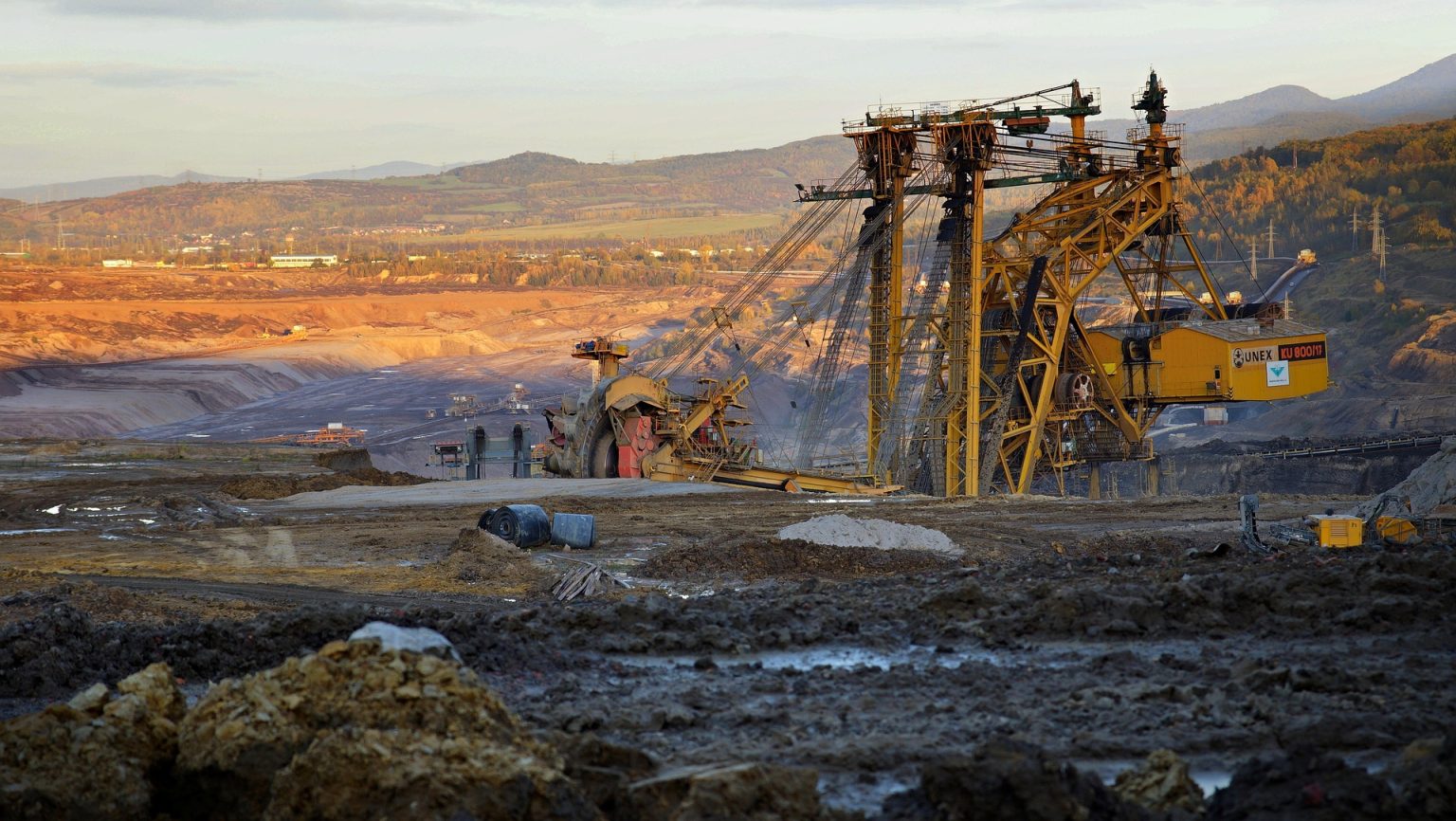
More than 450 Church leaders and Christian environmental campaigners have signed an open letter to Prime Minister Rishi Sunak and Secretary of State Michael Gove, calling on the UK Government to rethink its approval of a new coal mine in Cumbria, which received the go-ahead last week but threatens the goal of limiting global heating to 1.5ºC.
The letter states: ‘We acknowledge that this region needs investment, but the Government is supporting a dying industry instead of securing sustainable green jobs for the long term. We know that every pound of investment in renewables creates three times more jobs than in the fossil fuel industry. Coal from this mine will continue to heat up the planet, pollute the atmosphere, and most severely impact those in the world’s poorest countries who have done the least to cause the climate crisis. We lament this great injustice.’
Coordinated by Young Christian Climate Network and supported by Operation Noah and Christian Aid, the letter has been endorsed by former Archbishop of Canterbury Rowan Williams, by the lead environmental bishops for the Church of England and Catholic Bishops’ Conference of England and Wales (Bishop Graham Usher and Bishop John Arnold) and by the heads of the Church in Wales, the Methodist Church of Great Britain, the United Reformed Church, the Salvation Army, the Baptist Union of Great Britain, Undeb yr Annibynwyr/Union of Welsh Independent Churches, Quakers in Britain and the Scottish Episcopal Church. Clergy and members of other Christian denominations have also signed the letter.
Last year, the International Energy Agency said there could be no new fossil fuel developments anywhere in the world if global heating were to be limited to 1.5ºC – the internationally agreed upon goal – while research from Carbon Tracker has found that 90% of fossil fuel reserves must remain in the ground as unburnable carbon in order to limit global heating to 1.5ºC.
The open letter from Church leaders and campaigners quotes a 2018 lecture that Michael Gove gave to the Christian think tank Theos in which he said, ‘Christians are called to remember their rightful place within Creation – and the vast web of life it created – and their responsibility to protect and defend it.’ The letter states, ‘we urge the UK government to practise what (Gove) preached by keeping coal in the ground and investing in a sustainable future.’
Bishop John Arnold, Bishop of Salford, Lead Bishop on the Environment for the Catholic Bishops’ Conference of England and Wales said: “Despite a government commitment to phase out coal-mining, in spite of the possibilities of creating jobs in renewable energy production in Cumbria, despite the fact that UK steel producers will not use this type of coal, the government is permitting the opening of a new mine. While illogical, it is a blatant contribution to further climate damage at a time when the Prime Minister has recently stated, at COP27, that the UK is taking a lead in environmental care”.
Dr Chris Manktelow, Campaigns Lead for the Young Christian Climate Network said: “As young people who want a better future for everyone living on this planet, we were deeply concerned about the approval of the first coal mine in the UK for thirty years. We felt that church and Christian leaders needed to speak out against this decision. We hope that the government will listen to the cry of the earth and the cry of the poor and consider the consequences of its actions.’
Revd Dr Darrell Hannah, Chair of Operation Noah and Rector of All Saints Church, Ascot commented: “Opening a coal mine when the world must cut greenhouse gas emissions almost in half by 2030 is arguably the least conservative thing this Conservative Government could do. Not only does it threaten the international goal of limiting global heating to 1.5ºC, and thus make some of the more dangerous impacts of global heating more likely, but it is an economically disastrous policy that short-changes an area of the country that needs investment.”
“The coal industry worldwide is moving away from the type of coking coal the Cumbria mine will produce. Moreover, according to the UN, every pound of investment in renewables creates three times more jobs than in the fossil fuel industry. The people of Cumbria deserve more than this desperate gambit to extract the most polluting of all fossil fuels at the very time the world is rapidly transitioning to renewables. We should be investing in the jobs of the future, not the jobs of the past – jobs which will soon be gone.”
Sophie Powell, UK Advocacy Lea at Christian Aid said: “The UK Government is trashing the legacy of its own COP26 climate summit in Glasgow which claimed to mark the end of the era of coal just 12 months ago. Almost all the coal from this new mine will be exported, not used in the UK. The Government will be propping up the coal industry, exacerbating the climate crisis and causing more suffering to people already struggling to cope with worsening droughts, storms and floods.”



 Diocese of Westminster Justice and Peace Commission