
Rosa Lewis, Caritas Development Worker for North London, writes:
May started with the Feast of St Joseph the Worker and then two weeks later Rerum Novarum – the seminal encyclical on the rights and dignity of workers – celebrated its 130th anniversary. Against this backdrop, Westminster Justice and Peace convened a gathering on The Catholic Vision of Work.
Rerum Novarum, nearly a century and a half later, remains as pertinent as ever – some of its calls have been enculturated into working practices, whilst other gloomier portents have become even more acute. The gathering provided a space for people across the archdiocese to look at the contemporary reality of work and how the Catholic vision of work can interact with and transform that reality.

The gathering (chaired by Fr Dominic Robinson SJ) was led in prayer by the Diocesan Evangelisation Team, and opened by Bishop Nicholas Hudson. Dr Pat Jones, Vincent Fernandes, Kathy Margerison, and Fr Chris Vipers shared their perspectives on the topic before the plenary took place. Daisy Srblin summarised before the event was closed by Bishop Paul McAleenan.
So what is the Catholic vision of work? This question first requires us to question our assumptions of what work is and what it looks like, perhaps even reflect upon what our past experiences of work have been like. Has work been an experience of injustice, enjoyment or perhaps both? The Catholic vision of work might require us to change our working practices and habits of consumption – this is a necessary challenge.
Work, by its nature, is solid; even if sometimes it seems ephemeral or non-tangible – the act of making, doing and influencing change the reality around us. As such, the Catholic vision of work requires us to be creative and dare to imagine the kind of world we would like to see. It becomes incumbent on us to be discerning and responsible co-creators, who in so doing create the conditions in which others can flourish. “I found the input from speakers and attendees alike so inspiring with each contribution shedding new light on the function and meaning of work. It is conversations like these that will shape the future of work and influence the trajectory for the 140th anniversary of Rerum Novarum ten years from now!”
Introductory Remarks from Bishop Nicholas Hudson
lead bishop for Justice and Peace:
It’s my privilege and pleasure to welcome you all to this Social Justice & Peace Forum, in which we’re going to be exploring ‘The Catholic Vision of Work’. It’s a very logical follow-on from the last Forum, in which we asked what the pandemic was teaching us about the call to Justice & Peace.
That question seems more urgent than ever as society gets back to work; because the pandemic has opened our eyes to see the sheer scale of poverty and inequality in the United Kingdom; just how many are falling through the social safety net; how the poor are getting poorer – especially those who have no work. Society is waking up to the fact that it’s going to get worse, not better: inflation is already upon us, unemployment and homelessness are bound to increase. The Catholic vision of unemployment is unequivocal: unemployment is a “real social disaster”. Resort to a gig economy, with zero-hours contracts, is leaving increasing numbers of families still with too little income to put food on the table.
Into this reality the Catholic Vision of Work needs to speak ever more urgently.
The right to a just wage and the right to rest are central to it – as is the right, as Pope St John Paul II put it in ‘Laborem Exercens’, “the right to a working environment and to manufacturing processes which are not harmful to the workers’ physical health or to their moral integrity.” Of course, Catholic Social teaching doesn’t mention working from home as such: we’ve only now woken up to all the issues around that – because the pandemic forced us to.
But human flourishing has long been at the heart of a Catholic Vision of Work; and work environments which foster human flourishing after the pandemic are surely going to be part of our discussion today.
As is the impact on the environment itself. It was St Irenaeus who said, in the early Middle Ages, “By his work … man (man and woman) … makes (make) creation more beautiful.” By their work, man and woman make creation more beautiful. That’s a statement which speaks even more deeply to us now, I think, than it did even 14 months ago – because we’ve become sensitised, through reflection, observation and discussion, to the impact on creation of all our different ways of working.
How the air and our children’s lungs were spared by our not driving cars into work or flying across continents for meetings was brought home to us by the bright, bright blue skies of April and May last year!
“Just look at that sky!” I remember one homeless man telling another in Leicester Square.
The vital impact on family life of the way we work has become all the more apparent too: we see all the more clearly the prophetic wisdom of the Holy See’s Charter on the Rights of the Family, when it said, “Travelling great distances to the workplace, working two jobs, physical and psychological fatigue all reduce the time devoted to the family.”
“Life to the full” was Jesus’s message and hope. But what are we going see as the net outcome of this pandemic? Life fuller or life reduced? Some re-skilled, others de-skilled; some with priorities reordered towards a better quality of life, others left with the sense of a life diminished. If some do emerge stronger for work, others will find the decline of their physical and mental health, the stress of strained relationships at home, months of isolation leaves them frighteningly incapable. Loneliness, economic uncertainty, changed work-conditions will all have taken their toll.
All of this goes to make up the altered geography and landscape we find ourselves inhabiting as the world returns to work – or doesn’t! And I’m looking forward to each of us helping the other to deepen our perspective on it for a few hours today.
Presentation: Dr Pat Jones – The toad and the altar
So; take a moment to reflect on what work has meant in your life: it probably takes up more time than anything else except family life; certainly more time than Church activities. Has it made you feel valuable, or given you a sense of meaning? Has it been a crucial part of your identity? Or the opposite? Philip Larkin’s famous poem begins ‘Why should I let this toad work sit on my life?’
Well, the Catholic vision of work isn’t about toads. Rather, it proposes that work is part of what gives our lives meaning and purpose; part of what it means to be a human person. In CST, work shapes us as moral persons.
To put this in practical terms, think about nurses and other medical staff in the pandemic. Rachel Clarke wrote recently about their determination to sit with people who were dying alone, to hold Ipads and read letters from loved ones. Did they do that because they were already compassionate before they became nurses? Or did the work to which they were committed draw that out from them?
Let’s also put two other examples on the table, before we move to CST principles, two stories recently in the media.
The first is the British Gas workers who fought back against the company’s decision to fire and rehire a large proportion of its workforce of engineers, compelling them to accept new contracts with longer hours for the same pay, removing extra pay for working week-ends or bank holidays. Around 3-400 would not accept and lost their jobs, many of them lifetime British Gas workers.
The second is Deliveroo, a prime example of the gig economy, precarious work, paid by the number of deliveries, with no guaranteed hours or rights to holiday pay or sick pay. How many of our young adults have been pushed into such work in the last year? This was in a way a good news story; the stock market flotation of Deliveroo flopped, because investors thought that its policy on workers’ employment status and wages was likely to run into trouble.
The crucial point in both these examples is that the worker matters; indeed, the worker is more important than the product, or the profit, even than the company. What was at stake in for the British Gas workers was not just an extra 3 hours a week, but the whole structure of family life, care tasks and community belonging that each worker builds around their job. Deliveroo also seems indifferent to that, viewing its couriers only as replaceable economic units.
So what does CST offer us? There are 2 basic ideas.
And just to be clear; work in the CST vision is not just paid employment; it’s also all the other ways we labour; work done in the home, work that is part of the unpaid care economy; work that is care for creation or voluntary community or public life.
The first principle is that work expresses our dignity as human persons; it is part of the goodness of our human condition; it is good for us to work. It gives us purpose and enables us to explore our potential and reach for our fulfilment. Pope Francis expressed this beautifully in a letter for the feast of St Joseph:
‘Work is fundamental to the dignity of a person. Work anoints us with dignity, fills us with dignity, makes us similar to God, who has worked and still works, who always acts.’
This means that work should be worthy of human persons; and that those with the economic power to structure work have a moral duty to ensure this, that jobs provide what we might call decent work; in which workers have a say in how it is organised and structured; where there is fairness in what they are paid; and security when they are ill or in need.
That is the ideal, the mark of a good society, But when we look around at how work is organised in our society, it’s not always the case that jobs are worthy of human persons. Some work is degrading; some is exploitative, failing to recognise people’s dignity or rights, or treating them as commodities. Yet research shows that most people would rather work than not, even in what are called ‘bullshit’ jobs.
The second is that work in the CST vision has two dimensions, the subjective and the objective.
The subjective dimension is where I began: that work makes us more fully human. It shapes who we are; it has a formative moral effect. It is not just a practical necessity, nor is it a burden, a punishment or a toad; back to the nurses, care workers, paramedics, the restauranteurs who turned to feeding homeless people and many others. And that formative effect works too when work is exploitative; moral senses are blurred or lost.
The objective dimension is that through work, we play a part in the creative and redemptive activity of God; we collaborate with the divine purpose which is still unfolding in our history. Our work is part of ordering created reality in the interests of the vision of the Kingdom which we receive from the Gospel.
I’ve recently been doing some research into the YCW, Young Christian Workers, a movement which started in Belgium in the 1920s and spread worldwide, but is now much smaller. The founder, Joseph Cardijn, made a cardinal in his 80s, had a prophetic vision of the task of young workers. Each young worker, he said, is more precious than all the gold in the world. He spoke often of how ‘your workbench is your altar’. In the workplace, he said, you are made lay priests, you are Christ in the workplace. He saw a parallel between the ordained priest who places the host on the paten, and the worker who places ‘the host of work’ on the workbench. He was talking of factories and workshops, offices and shops, rather than laptops and courier bikes, but the principle and the theology stand. He wanted to give dignity to young people and equip them to be activists.
Years ago when I worked in adult formation, I was trying to explain in a parish group the idea that in baptism we become part of a priesthood, and our task is to consecrate the world around us to God. A man sitting at the back looked up and said to me, ‘what I do is, I shovel up shit on Blackpool beach. That’s my job. Are you telling me that’s consecrating the world to God?’. And the answer is yes. The world of dirty work, like care work, needs re-valuing.
So those are the core principles; the rest is implications; which is where our social mission starts.
CST has covered many of them: papal texts are strongly in favour of worker solidarity, worker movements and trade unions, and on worker rights; they are also keen on worker involvement in shared ownership of companies (and I note in passing that there’s a movement of 67 worker owned co-operatives courier food delivery companies spreading across Europe; that Deliveroo gave up in Germany because they were required to give workers proper contracts and benefits). CST texts have spoken out about just wages, what we now recognise as a living wage. Our own Bishops in their 1996 statement, The Common Good, cautiously endorsed the policy of a minimum wage (before we had one), one of the few practical conclusions they drew. CST has also set out a critique of economic structures and of various political ideologies, but that’s another topic.
But we have to receive and test and enact the principles; first, do they ring true? Do they resonate with our instincts? And then, if they do, we have to examine what’s happening around us that contradicts this vision, and what we can do to change it.
The pandemic has sharpened our sight. We can see that care work is under-valued and under-paid; that gig work means people live in radical insecurity so they can’t stop work when they need to self-isolate, and so infection rates go up; that people in many other jobs, in supermarkets and transport, are key workers.
On Thursday I listened to Jon Cruddas speaking in a CSAN seminar outlining his vision of how a renewed sense of the dignity of work and its intrinsic value in people’s lives could and should become the organizing principle for a new kind of politics. He could hardly have been closer to Pope John Paul’s conviction that work is ‘the essential key’ to the social question, how we organise society, and integral also to social peace and development. Cruddas’ new book, The Dignity of Work, outlines the practical ways we can do this, paying particular attention to what we have learned in the pandemic.
And here’s the rub. For much of the 20th century, this was a crucial area of Catholic social mission; Catholics were involved in labour movements. Bishops spoke out; on Merseyside, Catholic and Anglican bishops, Derek Worlock and David Sheppard led protest marches when factories were threatened, and fought to save jobs and to face the new realities of technological change. Today, I worry that we seem to have withdrawn from this field; yet for us, the baptised, our workplace is the frontline of our mission. One of my dreams for the post-pandemic church would be that in every parish we begin to talk about our workbench, whatever it is; that we re-engage in shaping the future of work; that we agitate so that our young people have work worthy of their dignity.
Presentation: Kathy Margerison – Me and SEIDs – overview of our programmes

I’m the head of programmes at SEIDs. We’re a charity and we were set up by Caritas. Our mission is to create decent and dignified work opportunities through self employment and living wage jobs. We’re a relatively new addition to the Caritas family having officially opened in January 2019.
I’m going to talk about what we do and then I’m talk about what we’ve learned about decent work over the past couple of years.
The work I do as head of programmes is specifically focused on working with people who are unemployed or on a low income and who want to start either a business or a social enterprise (which is a business with a social purpose)
What this looks like in practice is a 12 month cohort based learning programme, for 20 participants who fulfil that eligibility criteria of being unemployed or on a low income and who want to start their own business. They move through a programme that is curated by SEIDs – and it’d made up of workshops, 121 mentoring, £500 of funding and access to a desk in the SEIDs coworking space.
The workshops are on things like business planning, finance, branding, marketing and social media. But also soft skills like confidence and mental health and are hosted by a new expert facilitator every week. What’s also really important is that we’ve created opportunities for participants on previous cohorts to deliver paid workshops as part of the programme.
In addition to what we created on paper when we set up the programme, almost the strongest and most beneficial part of it is that it has created an opportunity and space for people who are often in similar circumstances to talk, gain peer to peer support and collaborate on their business ideas.
The programme overall was really helpful. Being able to talk to people at the same stage of setting up their own business was invaluable – so many fresh pairs of eyes! The workshops were useful and they got better over time – I found the finance workshop especially beneficial. Being able to speak to the programme manager about my business was great. Before lockdown, I really loved coming to the SEIDs building – actually getting out of the house and having a place to work was fantastic. The £500 of funding helped support the development of my business – and helped pay for my website update, flyers, a course on memoir writing, life coaching sessions and advice from an accountant.
Anita Kelly, participant on the first SEIDs start up business programme
Holistic approach
A lot of the people we work with experience multiple disadvantages, it’s very rare that the only difficulty they are facing is a lack of work. They also often have, housing issues, mental health issues personal relationship issues, the refugees that we work with often have PTSD.
Sometimes I think there’s a tendency was the DWP staff to think that all someone needs is a job and they’ll be ok – but actually if that job it’s zero ours minimum wage with no benefits, there’s a chance this kind of work could exacerbate any existing mental health issues and leave the person in a worse state than when they were unemployed. So it’s about looking at everything that’s going on in someone’s life and thinking about the kind of work that will promote a sustainable livelihood as opposed to just any job because it’s a job.
I think key to making this holistic approach work is partnership work. I think there is a tendency for third sector organisations to duplicate the work that they do instead of collaborating with others. I think it’s about thinking what is your organisation best placed to do – if you’re not a grass roots organisation don’t try to be one. Instead find out what your local grassroots organisation is doing and ask them how you can add value to what they’re already offering. And that way you work more intensively with people across multiple issues rather than just 10 organisations running the same CV session.
Advocacy strategy around decent work
We’re in the very early stages of developing an advocacy strategy for SEIDs, one of the things we’ve been thinking about is the idea of a decent work accreditation that would use a number of metrics to assess work – and part of this would involve doing research with low paid workers around what is most important to them –so for example hourly rate, maternity pay, sick leave, holiday allowance, in work progression. This thinking comes out of the idea that we know there are organisations, that do really well focusing on one thing, but sometimes focusing on just one metric means other things get sacrificed – so for example when Sainsbury’s upped their basic rate of pay for all 130,00 staff form £8 per hour to £9.20 per hour in 2018 (which still isn’t living wage of course) they slashed paid breaks and premium pay for unsocial working hours.
I think linked to this is the idea of Underemployment, especially as regards to some of the refugees we’ve worked with..
Just to finish – I want to talk about funding for our work and also looking to the future.
Funding
How do we get funding to do this work?
Not just relying on grants from trusts and foundations or local authority funding but
Leveraging the support that we can get from corporates, universities and local and central government – 10% of all 100k bids to brent council have to factor in social value. This is true of other LA as well as central government.
What are we thinking about in the future? Young people and innovative programming
i) Young people: offered university or apprenticeship or a job – but what about starting their own business?
ii) Thinking about how we can be innovative – preparing people for jobs that will exist in ten years.
iii) Tech – coding for refugee women – what jobs will exist in 20 years
Reflection: Fr Chris Vipers – St Joseph the Worker

Those who know me know that I love to travel, and I can’t wait to do it again. And one place I need to re-visit is the Holy Land, so much on our TV screens and on our hearts at the moment. If you’ve been there you’ll know that every stop – and sometimes every whistle-stop – can become like a prayer station. From renewing marriage vows at Cana, and praying for the sick at the church of St Ann in the Old City of Jerusalem, just by the Pool of Siloam, to praying for mothers-to-be at the Basilica of the Annunciation in Nazareth. And in Nazareth, a short walk from the Basilica, is another church, the church of St Joseph, built over Joseph’s house and workshop, the home of the Holy Family. It’s a beautiful church but I think the house that Joseph built would be more beautiful still. Whenever I’ve taken pilgrim groups we’ve always paused to pray there, and to reflect on the work we’re each of us called to do, and I’ve spoken of the creativity and craftsmanship that’s written into us, into our God-given nature. Be that a child’s picture of Mummy pinned to the fridge, a student’s nard-worked on assignment, a musician’s magnum opus, a beautiful window box to brighten up your flats, or an ambulance crew at the end of a busy shift, saying “great work team!”. For a Scripture reading there I’ve always used that powerful passage from the Book of Genesis, that poetic telling of God’s masterplan, of his purpose and his design at the beginning and birth of everything, where God sees all that he has made and declares it “very good”. Joseph’s workshop, and the home he and Mary made for the Lord, is a good place to hear that.
Naming and confessing our God as Creator, and then discovering the awesome truth that we, women and men, are created in his image and likeness, means that creativity is at the heart of who we are – creativity and craftsmanship, work and workmanship. As St Paul reminds us in Ephesians 2, “we are God’s work of art”, his mirror-image. So don’t let your gifts and talents surprise you. God made you for a reason. As our newest City-Saint, John Henry Newman, would say: “God has created me to do him some definite service. He has entrusted some work to me which he has given to no-one else”. I used that quote once in a meeting with the board of a hospital trust when I was part of the chaplaincy team there, and then I asked them who was the most important person in that hospital – chief exec, ward manager, surgeon, anaesthetist, doctor, nurse, physiotherapist, porter, cook, cleaner, receptionist, even patient! The answer being, of course, that they are all as important as each other. Each, in their own unique, God-shaped way, a work of art. I suppose that’s what we mean by the “common good”.
Theologically speaking, we are made for work because we are living, breathing, making, mending working-models of our creator, our creating, and ever-creative God.
As a model for this, and as an inspiration to discover the creativity we are made for, the Church paints us the picture of a human life, of Joseph, who she honours under the title of “the Worker” – or at least we have since Pope Pius XII gave us this Feast in 1956. Now it’s true that in imagery and iconography you are more likely to see St Joseph holding a lily (for purity, as a sign of the “spouse most chaste”), a lily rather than a lathe, a hammer or a saw. But Joseph would have known those tools – they were his tools in his creative hands. I love that throw-away line in the Gospel, that attempted put-down of Jesus, “this is the carpenter’s son, surely”. Well, all I can say is don’t knock carpenters – they’ve got nails!
We pray don’t we, in Psalm 89, “give success to the work of our hands, give success to the work of our hands”. We need to say, and we need to sing it loudly –particularly in this time of change in working patterns, in employment prospects, in the despair of redundancy or in the surprise of early retirement, in neighbourhood volunteering and in charitable service, in quiet and loving local heroism, in simple caritas, in education and in the nurturing of our young, in families and in the communities in which we are planted and in which we grow, we need to say that our working lives don’t stop until the day we die. As Cardinal Newman would pray, “and our work is done”. And that everything we do can be a work of art, even if we’re tempted not to see it that way. That meaningful work is work that means something to someone, even if it’s just me. That we could never ever be redundant. That, as Cardinal Newman puts it, “I can never be thrown away”.
In giving us this Year of St Joseph, Pope Francis accompanied his gift with a letter, Patris Corde, With a Father’s Heart. And in that letter he gives societies and governments a challenge. In the Pope’s words:
In our own day, when employment has once more become a burning social issue, and unemployment at times reaches record levels even in nations that for decades have enjoyed
a certain degree of prosperity, there is a renewed need to appreciate the importance of dignified work, of which Saint Joseph is an exemplary patron.
Work is a means of participating in the work of salvation, an opportunity to hasten the coming of the Kingdom, to develop our talents and abilities, and to put them at the service of society and fraternal communion. It becomes an opportunity for the fulfilment not only of oneself, but also of that primary cell of society which is the family. A family without work is particularly vulnerable to difficulties, tensions, estrangement and even break-up. How can we speak of human dignity without working to ensure that everyone is able to earn a decent living?
Working persons, whatever their job may be, are cooperating with God himself, and in some way become creators of the world around us. The crisis of our time, which is economic, social, cultural and spiritual, can serve as a summons for all of us to rediscover the value, the importance and necessity of work for bringing about a new “normal” from which no one is excluded. Saint Joseph’s work reminds us that God himself, in becoming man, did not disdain work. The loss of employment that affects so many of our brothers and sisters, and has increased as a result of the Covid-19 pandemic, should serve as a summons to review our priorities. Let us implore Saint Joseph the Worker to help us find ways to express our firm conviction that no young person, no person at all, no family should be without work!
And then, in the fruit of his reflections compiled by Austin Ivereigh, ‘Let Us Dream’, Pope Francis invites the world to reflect on this – how can we, how will we, build back better, to bring about that “new normal from which no one is excluded”? If you and I knew all the answers to this, how it would look not just here in our London and across our UK, but in every village and town and city in every continent across the face of the earth, we would be the miracle makers!
As the Church gathered here, we are called simply to look and see, and to see deeply, to judge, and to judge wisely and well, and to act with what Francis calls “creative courage”. In Patris Corde he writes, “God always finds a way to save us, provided we show the same creative courage as the carpenter of Nazareth, who was able to turn a problem into a possibility by trusting in divine providence”. We need to pray this into action!
We’re called to be dreamers, young and old to see visions and to dream dreams, to dream prophetically, to be dreamers of divine human possibilities, to dream big and to dream daringly. Joseph dreamt dreams before us, which is why we’re here today, listening to and learning from the carpenter’s son, the Saviour of the World.
I love this little reflection, and I’m going to end with it. It’s simply called ‘God’s Dream’:
I myself will dream a dream within you –
Good dreams come from me you know…
My dreams seem impossible,
not too practical, not for the cautious –
a little risky sometimes, a trifle brash perhaps…
Some of my friends prefer to rest more comfortably,
in sounder sleep, with visionless eyes.
But for those who share my dreams
I ask a little patience,
a little humour,
some small courage,
and a listening heart.
I will do the rest.
Then they will risk and wonder at their daring…
Run – and marvel at their speed…
Build – and stand in awe at the beauty of their building…
You will meet me often as you work –
in your companions, who share the risk…
in your friends who believe in you enough
to lend their own dreams, their own hands
their own hearts, to your building…
in the people who will stand in your doorway, stay awhile,
and walk away knowing that they, too, can find a dream.
There will be sun-filled days and sometimes it will rain –
a little variety – both come from me.
So come now, be content. It is my dream you dream… my house you build…
my caring you witness… my love you share…
(Unattributed)
SUMMARISER REPORT – DAISY SRBLIN
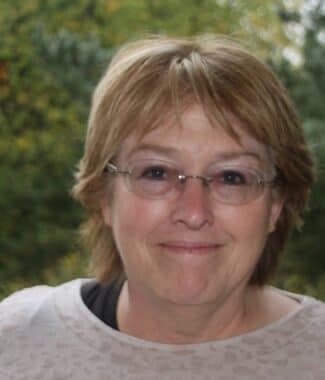
Daisy Srblin is the Director of Million Minutes, a charity dedicated to youth social action and advocacy.
INTRODUCTION
Well, that was a really rich conversation, exploring the Catholic Vision of Work, and its different dimensions, especially given the way that the pandemic has shifted experiences of work significantly (and the indignity of unemployment and under-employment.) My job is to try and summarise a two-hour conversation in 15 minutes (I’ve taken 3000 words of notes)! Inevitably there’ll be bits I miss in this summary, so I’m just going to draw on some of the key themes I’ve heard coming out of the discussion, and some questions for reflection we could take away with us.
Bishop Nicholas – Kicked us off with a question: Post-pandemic, will we see lives more fulfilled or more diminished?
KEY THEMES OF SPEAKERS
Dr Pat Jones – Explored the theology behind the principle of dignity of work.
She reminded us that we are all experts by experience – and invited us to reflect on the importance of work in our own lives. She also summarised some of the key points of around the Catholic vision of work – that it should: give our lives meaning and purpose; shape us as moral people, provides us with community and solidarity – and that in this vision, the worker matters, and worker is more important than product or profit or company – workers are more than replaceable units of productivity.
Dr Pat reminded us of the importance of revaluing work in society, not just care work, but also unpaid labour and work, the work done especially by women, that society depends on. She reflected on the Catholic Church’s role in social movements in history – and posed the question of whether we might see such activist engagement in 21st Century.
In every parish, we need to talk about our ‘workbench as our altar’ in the words of Joseph Cardijn – and explore these realities in our own communities.
Fr Chris Vipers – Developed and embedded these ideas, with the underlying theme that sometimes in society we fall into the trap of thinking that others skills are more important than our own.
He reminds us that creativity and craftsmanship that’s written into us in our God given nature – whatever our talents and skills. Jesus as carpenter’s son and St Joseph as a manual worker! Work as a means to participate in salvation – to put our talents in the service of society and community – and our working lives don’t stop until our dying day. God made us for a reason. Let’s not underestimate our skills and talents – unique to us and no one else – let us never underestimate how special our skills and talents are. We are all a work of art – Vincent’s ‘bee hive’ model of society.
Meaningful work is work that means something to someone – even if it’s just to me. I can never actually be ‘redundant’ – I can never be thrown away. Let us dream – how can we, how will we build back better / different, where no one is excluded, in every village and town and city, across the world?
Kathy Margerison – explored lessons learned from Social Enterprise Ideas Development (SEIDS) Caritas project in Wembley. Training and mentoring, particularly women and women of colour, either employed or on a low income to create their own business / social enterprise.
Challenged us to think bigger than the metric of unemployment – exploitative employment, undignified employment, underemployment (jobs below your skill levels) unsustainable livelihoods, longevity of employment beyond the next year or two – beyond per hour wages, the other metrics e.g. maternity policies.
From the work with SEIDs, she shared with us some lessons:
- Need to understand the nature of multiple disadvantage and holistic approaches. Not just about employment, but the right employment, longevity, development, good standard of living, PTSD of refugees
- We can’t do everything and there’s no benefit in duplicating efforts. So can we explore, what are we, and our communities, best placed to do? Can we collaborate better? How can we add value to their expertise? Partnership work is v important. How can parishes collaborate across communities?
- We as employers need to have our house in order – how generous are our maternity policies, sick pay, policies, progression in work?
She challenged us to think more about young people 18-25: those who have left school – starting your own business seen as something for older people and how can we prepare for future of employment, which will look different to today.
Vincent Fernandes – Gave us an on the ground perspective of how the pandemic is hitting the residents of Hounslow, and how the parish of St Michael and St Martin is responding.
In London – a capital city with so much wealth, but so much poverty. Vincent explained the fact that in West London the families suffering are people of colour, esp South Indian, blue collar workers, reliant on manual jobs. Vincent also explained to us how it is predominantly women of colour coming forward to accessing services. And, like Kathy, he showed us how there are all sorts of interrelated issues around dignity of work – benefits access, unemployment, decent work, mental health, domestic violence and sexual abuse, employment agencies exploiting vulnerable workers – all because of loss of jobs.
Vincent also explained how the social enterprise of Bee Hive has had to step in in absence of Council responses. Stressed the importance of parish priest participation, and service of local community. Imagine if we had that sort of social enterprise in every parish! Would be truly ground breaking – the Church making such a positive difference. Church sharing its love and resources.
Families = inter-community, from various parishes, some Catholics, some not, different races and cultures. Serving them all!
THEMES FROM PLENARY
- Pandemic didn’t create inequalities – they just exacerbated and brought them to light
- Power of testimony, of hearing the experiences of those on the ground – CST in practice
- How well is the value of dignity of labour known in church spaces?
- Sow seeds for young people who are inheriting unprecedented economic situation
- Not everyone shares our views of work and justice in society and in the world
- Employment of women and people of colour in the Church – putting our own house in order
QUESTIONS THAT EMERGE FROM THESE
- What are our God-given gifts?
- What are the skills that we have that are unique to us?
- What does meaningful work mean to us?
- Do we find dignity, moral formation, in our work?
- What’s around us that contradicts this vision, and what can we do to change it?
- And those we see around us? Do we truly see all those around us, all those we interact with, as also participating in God’s creation?
- When we think of the dignity of Labour, do we just reflect on employment / unemployment, or are we appreciative of multiple disadvantage and complexities of such issues in present day?
- What can the Church be saying, doing in terms of national advocacy, inspired by Let Us Dream?
- Whatever the national advocacy / policies etc (not just UBI, but reinstating much of the benefits that have been lost over the years…) how can our local communities emulate the sort of lessons that Vincent and Kathy talked about?
- What can we do NOW? e.g. research, understand needs, understand its beyond parishes. Vincent and Kathy show us that there’s so much that we can do. How can our parish priests take a lead? How can we support our communities, facing unemployment, underemployment and insecurity and more – how can we live out CST principles?
- Let’s not worry about taking care only of our ‘own’ people.
So, a great number of challenges, ideas, and really inspiring stories.







 Diocese of Westminster Justice and Peace Commission