Westminster Justice & Peace Volunteer, Anne Tran, has been researching the latest developments in the campaign to cancel the debts of developing countries. She also helped to create a collage of Justice & Peace member photos, making our own contribution to the Cancel the Debt message. In this article she gives her own assessment of the campaign. Anne is a third-year International Politics student.
The Jubilee Debt Campaign focuses on pressuring the UK Government to cancel the debt, on what is owed by developing countries, in this case the pandemic has made the situation worse. Since the coronavirus, there is a greater need to drop the debt. Countries are now faced with the decision between paying back the debt or responding to the Covid health crisis. This demonstrates the dilemma faced by poor countries and their financial situation, that prevents them from exercising their own freedom to choose and attend matters that best suits their needs. In response, this led to supporters from different organisations and religious groups such as Christian Aid, CAFOD, Jubilee Debt Campaign, Oxfam, ONE and Global Justice Now vocalising their support by encouraging online petitions and releasing supporting statements.
The Catholic church has shown their support, especially with CAFOD and their initiative to promote the campaign through gathering hundreds of images of supporters holding up signs saying ‘Cancel the Debt’, along with an uploaded video with the members of the public and other organisations expressing their solidarity to cancel the Debt. The Justice and Peace Commission Team has also contributed towards this, with the staff members participating in the picture campaign, to help put the campaign forward. Outside of the Catholic realm, Oxfam has provided research in response to the campaign by outlining suggestions for world organisations and private lenders to take certain initiatives to attempt to alleviate the debt.
However, there is indication that the Jubilee Debt Campaign at the moment is currently stagnant. My reasoning follows: In April G20 Finance Ministers agreed to suspend debt for 77 countries for the rest of the year (saving $12Billion) and also encourage the initiative towards private lenders (also saving countries $8 Billion) with the Debt Service Suspension Initiative (DSSI). But, unfortunately, over the past few months the campaign and G20 no longer became a topic of interest. Instead it was overshadowed by the United States and China’s strained relationship and lack of involvement. This hindered the development that was made in April with the campaign. Consequently, G20 then retracted their statement and revised their initial stance and became more reluctant to take on the debt suspension. Instead, they have now stated that countries that wish to cancel the debt can follow through at their own expense. However, the hidden element of pressure, stress, or lack of emphasis on the importance of the liability in the first released statement, lessened the weight of importance compared to before. This made the campaign less effective as the months passed by and no longer became an issue of interest. But not all is lost. In October, G20 made another announcement that they have chosen to extend the suspension of the debt repayments for 6 months to provide additional support, after meeting with the group’s finance ministers and central bank governors, providing more hope towards the campaign.
The Financial Times have also provided an update on the campaign in an article by Jonathan Wheatley and David Pilling on 12 October 2020. They have highlighted the importance of the necessary aid that West African countries are needing at the moment, although countries like Kenya have stated that the campaign may prolong the country’s debt repayment. Ghana has stressed upon the responsibility as a former British Colony to help them with the debt along with other western states. This outcry has led to organisations like the Jubilee Debt Campaign, Westminster Justice & Peace and CAFOD to strengthen their support by continuing to release current updates on the Jubilee Debt Campaign and promoting the cause. We have seen the success of the support received from examples above where the petition may have had a moment of pause due to the uncertain political climate, but we can clearly see the long-term benefits from all the different organisations work in their constant advocacy, that encourages and moves the campaign forward. This has been evident through G20’s recent October announcement, demonstrating progress that has been made so far with the help of these organisations.
My research on the Jubilee Debt campaign regarding the petition has led me to believe that crisis management regarding any type of social, economic or health issue is a concern for all. Prior to the pandemic, or after, these issues remain important and still affect the lives of different individuals around the world. It is unfortunate that at times like this there are no direct solutions. But through researching on The Jubilee Debt Campaign, it has allowed me to gain a deeper insight into the different realities that developing countries face. There is no straight answer that can solve all the problems proposed, but I do believe a difference can be made. I have to credit the different organisations and groups for their sense of injustice that have led the campaign to a level of success with G20’s response and public awareness. However more can be done, as demonstrated above from the various examples, publicity and petition signatures are not enough to combat the World Politics from overshadowing the aims of the debt campaign. This highlights a serious issue today, especially on the importance and relevance on certain issues proposed, that are overtaken by the political tension among powerful states. Whilst challenges are ongoing battles, developing countries are confronted with daily discernments of life-threatening ultimatums. Overall, we must continue to create awareness and provide more informed decisions as a common goal to help these countries in need.
Westminster Justice & Peace advocates call on the Chancellor, Rishi Sunak, and the G20 countries to Cancel the Debt of developing countries and restructure those repayments towards healthcare to beat coronavirus.
Colette Joyce, Justice and Peace Co-ordinator for the Diocese of Westminster, writes about the need to persist in the cause of justice in this month’s E-Bulletin:
“Two images have stood out in my head this week. You have probably seen them, too. The first is the picture of the Kurdish-Iranian family who attempted to cross the Channel on Wednesday with a group of other migrants, desperate to seek sanctuary in the UK… The other picture was of 22 year-old England footballer Marcus Rashford helping out at a Foodbank….”
On Wednesday, Bishop Paul McAleenan lamented the deaths of four family members who drowned trying to make their way across the English Channel.
Rasoul Iran-Nejad and Shiva Mohammad Panahi, both aged 35, died alongside their children Anita, aged 9, and Armin, aged 6, as they made their way from France to the UK on Tuesday.
The Kurdish-Iranian family’s 15-month-old baby, Artin, has yet to be found, whilst fifteen other migrants on the boat were rescued and taken to hospital.
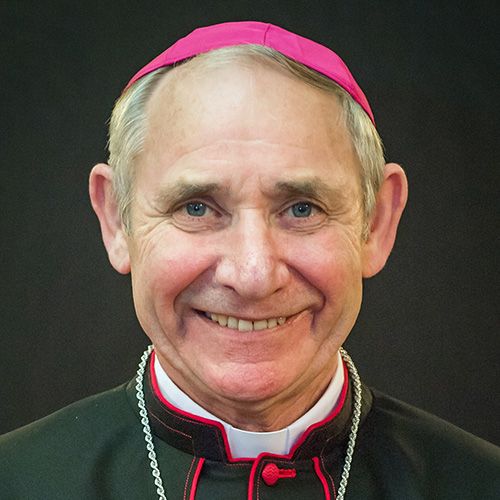
Bishop McAleenan, auxiliary bishop of Westminster, said we should be “united” in our response to the tragedy:
“All who value human life, whatever their position on migrants and refugees, will be united in sorrow following yesterday’s tragedy in the Channel,” he said in a statement.
“Immediate thoughts should be with the adults and children who died, their families wherever they are in the world, and their companions who will remember forever what they witnessed. It is hoped that no one will want to make a mere political point because of the incident.”
McAleenan, Chair of the Office for Migration Policy, said that such unity is needed to respond politically to the challenge of unsafe migrant crossings:
“What is truly needed is a meeting of minds. That will require a shifting of mindset on the part of those who set the rules, and the pursuit of heartless profiteers to ensure that no one feels compelled or encouraged to risk their life, or that of their children, in a dangerous craft on the open sea.”
In a statement on Tuesday, Prime Minister Boris Johnson said his thoughts were with the victims and he promised to tackle the smugglers responsible for the crossings.
“My thoughts are with the loved ones of those who tragically lost their lives in the Channel today. We have offered the French authorities every support as they investigate this terrible incident and will do all we can to crack down on the ruthless criminal gangs who prey on vulnerable people by facilitating these dangerous journeys.”
Back in July, Bishop McAleenan responded critically to Britain and France’s joint Declaration of Intent to establish an Operational Research Unit that would target the criminal gang networks behind migrant smuggling.
The bishop said that the two countries should prioritise trying to “eradicate the underlying reasons why these same people are willing to risk their lives in the open sea.”
“I would like to see the details of the agreement between the UK and France, that would indicate how they understand and perceive what is taking place in the English Channel,” he continued.
“Surely two countries which pride themselves on being progressive and enlightened will see that the welfare of those who are destitute is vital. Protection of people should be foremost in their thinking.”
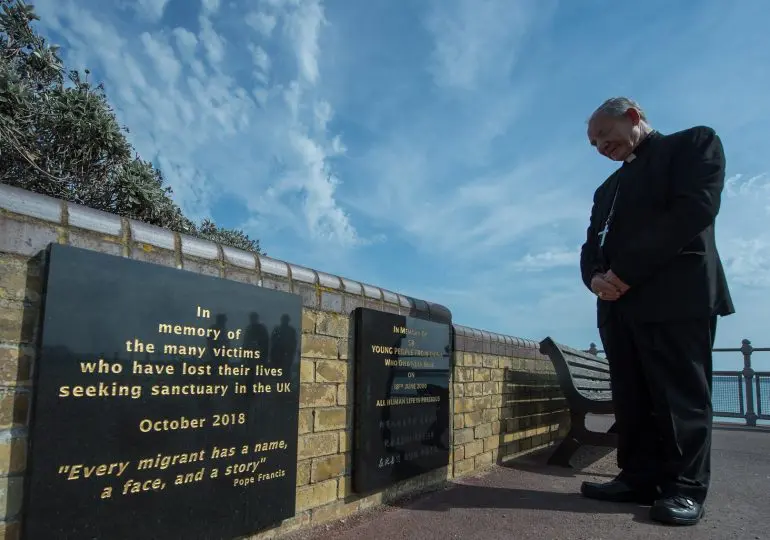
Featured Image: Bishop Paul McAleenan, centre, meets charity workers and volunteers helping refugees in Dover, England, Sept. 15, 2020. Credit: Mazur/cbcew.org.uk.
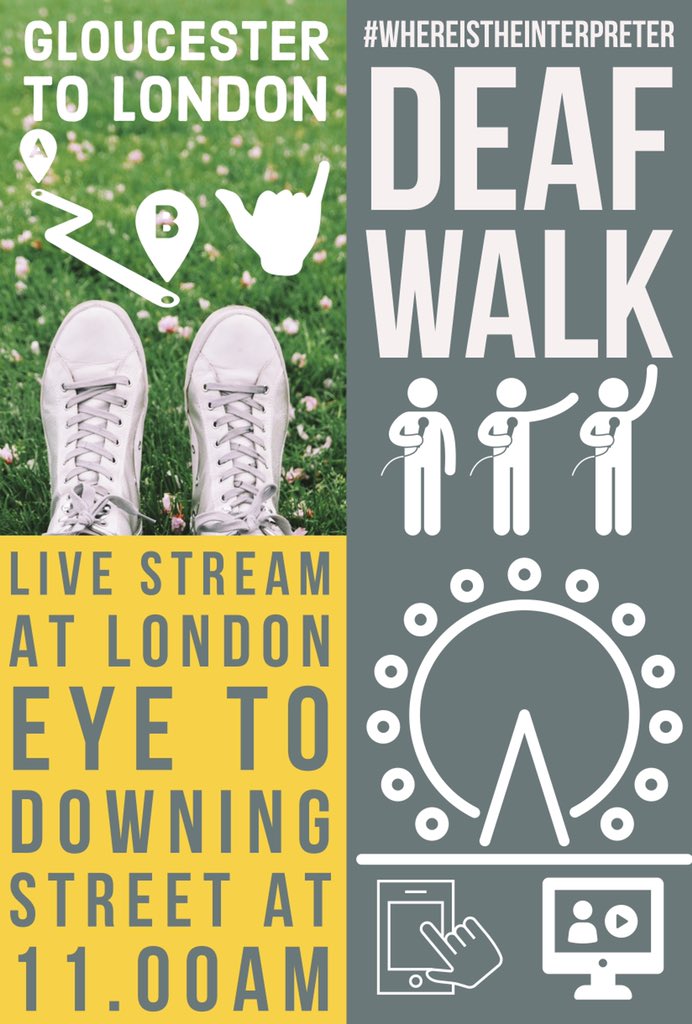
Michelle Roca, from the Caritas Westminster Deaf Service, highlighted again yesterday that Deaf people in England still do not have proper access to public service information in British Sign Language (BSL), the first language for an estimated 70,000 people in the UK.
Writer and presenter, Lynn Stewart-Taylor, is walking from Gloucester to London to raise awareness of this issue and to raise funds to challenge the government. Deaf people in England need access to information on equal terms with everybody else.
She will arrive at Downing Street today, Friday 16th October, with letters of support for this campaign.
Lilian Greenwood, Sir Mike Penning, Lord Shipley, Ian Mearns, Tommy Sheppard and Rosie Cooper are the current members of the All Party Parliamentary Group on Deafness. The Twitter campaign #whereistheinterpreter is asking for one of them to greet her with the news that an interpreter will be with the Prime Minister, other government ministers and public health officials for all future announcements during the pandemic and afterwards.
One current excuse given for not providing an interpreter is that the room is not suitable. Michelle says, “If the room isn’t suitable to socially distance from the interpreter, use a different room! This is not the broadcaster’s responsibility, it is the government’s responsibility. Scotland and Wales have both managed to provide interpreters, why on earth is it so difficult for England to do the same. Go Lynn!”
Campaigners outside Parliament representing CAFOD, Christian Aid, Global Justice Now, Jubilee Debt Campaign and Oxfam call on G20 Finance Ministers meeting on 14th October 2020 to Cancel the Debt
Against a backdrop of a world reeling under the coronavirus pandemic – in spite of appeals from international humanitarian aid agencies and campaigners – in their virtual meeting today, the G20 finance ministers failed to cancel any developing world debt.
Dario Kenner, CAFOD’s Sustainable Economic Development analyst commented: “Private creditors are profiteering off the backs of the world’s poorest people. Any debt relief that developing countries might receive from donor governments is only snatched away again by private creditors who continue to demand repayments.
“Private creditors like BlackRock, JP Morgan and HSBC have failed to do the right thing so it’s now time for G20 governments to compel them to cancel the debts of developing countries. This will free up money that is urgently needed to tackle the health and economic impacts of the coronavirus pandemic.”
The lead Catholic Bishop for Migrants and Refugees has called on all people in the UK to take up Pope Francis’ call in Fratelli Tutti to oppose racism in all its manifestations.
Speaking on behalf of the Bishops’ Conference at the start of Hate Crime Awareness week, Bishop Paul McAleenan said: “In his latest encyclical, Fratelli Tutti, Pope Francis puts before us a radical vision of human togetherness, addressing fundamental issues such as migration, peace building and the economy. One of the challenges he mentions is the need to tackle racism, warning that: ‘a readiness to discard others finds expression in vicious attitudes that we thought long past, such as racism, which retreats underground only to keep re-emerging. Instances of racism continue to shame us, for they show that our supposed social progress is not as real or definitive as we think.’
“Our own society is not immune from this pattern of behaviour. In recent years we have witnessed a disturbing resurgence of hate speech and hate crimes. These take many different forms including Islamophobia, Antisemitism, hatred towards migrants and refugees, and hostility against Gypsy, Roma and Traveller communities.
“During this Hate Crime Awareness Week we should recommit ourselves to actively opposing racism in all its manifestations. In the words of Pope Francis: ‘Let us dream, then, as a single human family, as fellow travellers sharing the same flesh, as children of the same earth which is our common home, each of us bringing the richness of his or her beliefs and convictions, each of us with his or her own voice, brothers and sisters all.'”
Palm Sunday 2020. Normally for the Christian community a day of processions often in beautiful early spring sunshine, and with the joyous expectation of Holy Week. A day when our church would normally be full and we would be looking forward to the busiest week of the year. Not so in 2020. Churches under lockdown, the streets deserted, and a sombre eerie feel of anxiety about what was to come.
The start of the lockdown was, to say the least, such an unsettling time for our parishes. Priests with no people to meet, greet, serve. Parish communities scattered and finding a way to live out eucharistic faith at a time of communal fast. Like the first Christians after the first Easter Sunday locked in behind closed doors, finding ways to share their faith, pray together, and be a community of believers in a new way. The source and summit of that faith for us, the Mass, was celebrated together by clergy and faithful but with the barrier of a movie camera between us, even most poignantly and painfully on those days of the Easter Triduum when the entire parish community should be gathered as one.
And yet amidst all this trauma there was something else, altogether more tragic and desperate. Walking out into the deserted city it became clear there was another population who were being forgotten. As the Christian community prepared to celebrate Holy Week and Easter with what hope we could muster there was a huge number of homeless left on the streets of London. Here, it became clear, was the stark reality of central London under lockdown, beyond the threshold of our closed doors and not caught on anyone’s video camera. The usually teeming streets now a ghost town – shops, pubs, restaurants locked up and displaying stark notices along the lines of “closed until further notice on account of the pandemic” and, anticipating the worst, “no cash is held here”. All offices closed and no workers on the streets. And in the midst of this, in pockets around the city, the most desperate who, in the panic of the exodus had simply been left behind. This group had no family to lock down with, were without shelter as all the night shelters had closed, and without food as soup runs had had to stop for safety’s sake and there were no businesses or people to beg from. In addition no public toilets were open from King’s Cross Station to the north to Victoria in the south. A Council official I spoke to on the ‘phone described the scene on the Strand as Armageddon and a police officer advised anyone visiting there alone would be in great danger.
Amidst all this it was also clear that much was being done to address the issues by national and local government. March 29th, Palm Sunday for the Christian community, was the date by which all homeless left on the streets would be housed in hotels and bed and breakfasts. This was the “everyone in” policy which we might have heard referred to on the news. Very many homeless were indeed housed and this was one of the great achievements of this time. Many die-hard homeless in normal times refusing help, a substantial group of whom would have entrenched addiction and mental health issues, really flourished during this time as they were given the tender loving care they surely always needed. And yet, despite the partial, very partial, success, media can cloud reality, especially at a time of great panic when our psychology is programmed to survival and part of that is to believe things are better than they are. What we hear through the media, even if it is partly true and partly fake news, becomes the true narrative.
I think it is worth stopping to reflect on this phenomenon of twisted narrative if we are to begin to comprehend the homeless issue during COVID. Palm Sunday is a helpful connector. For the crowd on that first Palm Sunday are surely victim to this phenomenon of fake news. How else would their singing hosannas to their Messiah lead to “crucify him” within just five days? Governments and politicians have always been good at this and learnt how to present what is not quite true as the Gospel. There are surely many parts of the world today where that is true and in the Church indeed, one must add with shame, we have seen how the truth can be masked by power and we end up trusting the least trustworthy and most heinous. In the midst of this, recognising how we are all sinners not just personally but socially, as society, as Church, as the human race, we are called to a new integrity which is the greatest form of truth in an age of so much fake news. That is why I think Pope Francis is reminding us especially at this time we are called not just to contribute to society through what we do but we are called to take the reins and build a new future. This must be a future of justice which exposes the truth and builds a new society in which all in society are given the respect the human being deserves as made in God’s image, and especially those who are weakest, who are forgotten, who are left in the gutter and consigned to the abyss. It is for me why, as John Bird, the founder of The Big Issue, puts it, we are called not simply to give handouts but give a hand up.
If we are guided by such a vision, the response of the Catholic community along with other Christian denominations and faiths, and importantly working together with secular and governmental authorities and organisations, has the opportunity to be truly prophetic. For me this experience of helping to rescue the homeless, in the midst of a time of great crisis, a ‘kairos’ in the biblical sense, has turned our minds and hearts back to the raw demands of the Gospel. It has called us to begin to embrace the truth about ourselves and our identity as human beings made in God’s image who are part of wider society, and to embrace what the Church can be.
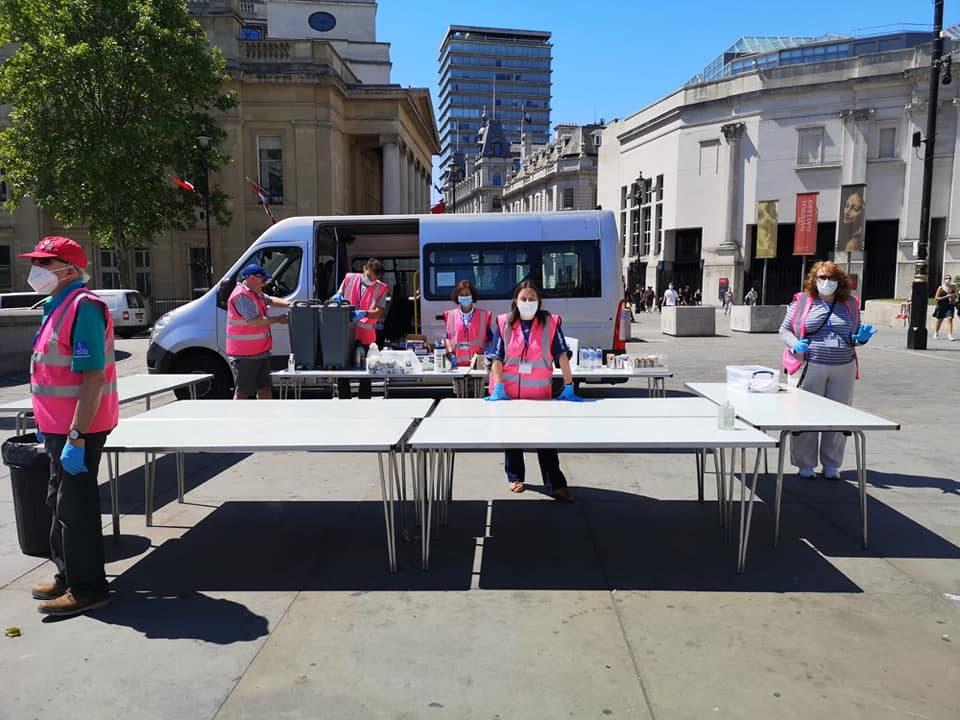
As soon as this crisis became evident our neighbouring parish St Patrick’s in Soho Square started feeding over 200 people a day. After a few weeks their resources were running low. Food was running out. Two large hotels in our parish stepped in straight away. While already housing and feeding NHS staff they volunteered to provide 200 meals twice a day for three months completely free. Our main managerial contact at the hotels is a Hindu but it was that common belief in what was just and true to our common calling which led him to make the offer. Soon we were using our knowledge of the local hospitality trade to work together with the authorities. In Soho Square there were significant antisocial behaviour complaints from neighbours, not surprisingly for a homeless population who had nowhere to go and where the nearest public toilets were two miles’ walk away. Westminster City Council asked us to help so we assembled a large team of volunteers from Farm Street and neighbouring Catholic parishes to service a new refreshments and pastoral care hub for the homeless in Trafalgar Square and this became the central mission of our parish and those parishes working with us for the time of the pandemic. The project has evolved into a homeless service under the name of Central London Catholic Churches as part of Westminster Diocesan Caritas.
Some have asked why the Church should be involved in this when it is really the job of the local authorities and national government? It is often framed as part of a larger question of why the Church should be involved in politics, or be involved in the real world, or have a mission. The answer relates to how we view our faith in Christ. For me the Spiritual Exercises of St Ignatius teach me to find Christ and my calling right in the heart of the now. This is simply the call of the Gospel. Christ is not to be found just within ourselves nor in our future hope but he is the hope of the world in the facts of everyday life. Our mission is in the present, in the midst of the battle between good and evil right now, under our noses as we are led to uncover the truth and discern what must be done to build that future now. This is a vital part of the role of the Church too who, as the Holy Father reminds us so often, simply would not exist if she did not have a mission in the heart of the world. So our mission to the homeless has been the only response the Church could give, taking account of the facts and knowing our calling as Church. And only the Church, acting as Church and not an NGO or any other organisation, could do this.
That mission has had various dimensions but I would highlight three of them. Firstly, and in common with so many secular homeless charities, we provide both material and pastoral care. This material help needs to be well discerned. The homeless need food and shelter but they also need advice on finding a job, so they need clothing and they need to be clean so need shower facilities. So, discerning the material need, our service has moved into a more personal holistic model.
The holistic model must involve one-to-one personal care. If we believe the essence of the Church’s work of charity is to respect the dignity of every human person, and especially the most vulnerable, our service of the weakest wants to develop a relationship with each individual. This human care is why the “everyone in” scheme was successful for those who were given the opportunity to stay in the hotels and B&Bs. In Trafalgar Square our wonderful team of volunteers would get to know the guests and there we touch that belief in the dignity of the human person in reality. We realise that this woman or man in the queue for food could have been me with just a few wrong turns. Everyone has a story. Relationships have broken down, finance has run out, jobs lost, mental health issues set in. And this is the person in front of us. This is Christ in front of us. And we are called to show that person how much they are loved, how much they are worth.
Secondly, again in common with many homeless services, we have a duty to work with the local authorities and to hold them to account. As Church we have the duty to advocate for these individuals individually and as society. Here the Church cannot but be involved in politics but must be aware that her role must never take on the role of party politics. Looking at the facts and advocating for a just future is very much the Church’s role as we represent our flock and take our place confidently in society. During the pandemic we got to know so many homeless still on the streets, heard their stories, and realised that the “everyone in” scheme was not for everyone. And after a certain time there was a risk that, unless there was pressure from those working with the homeless, “everyone in” would turn very quickly to “everyone out”. In addition we were meeting more and more new homeless, women and men in their 20s and 30s who had lost their jobs and were destitute.
We discovered that many on the streets, and many who were in danger of being evicted from temporary accommodation, at a time of great public health risk, had no recourse to public funds, often due to unsettled immigration status. It was our duty to show our support for them not just through handouts but by campaigning for a temporary reprieve for those in this category. This is not an issue to be used as a political football but is an issue of profound importance to the Christian who, at this extraordinary time of crisis, needs to put aside political views on benefit eligibility and immigration and show the human being in the midst of this the dignity they deserve.
Thirdly the Church has given something very distinctive to our service of the homeless at this time, as she does in all of our work in this sector. All that we have been doing is also a work of evangelisation through which all of us, volunteers and guests, grow in faith. There was one day when we had a large queue in Trafalgar Square. Because the volunteers had built up a very good relationship with the regular guests, they were chatting quite freely, getting to know them. And a guest was having some rosary beads he had requested blessed. Then some more guests got interested in this and started talking with us about the rosary and about faith. So you realized there was that connection being made between the Church and the Catholic faith and this charitable work. That was really quite inspiring to experience.
It’s also been wonderful to see the great generosity of our volunteers. This is what they needed to do to practise their faith at this time. Many parishioners have found this a very traumatic time for all sorts of reasons. I have heard much too about how we have been “starved of the Eucharist”. For all the good the livestreaming has done it is not a substitute for being gathered physically as ‘ekklesia’, as Church. And yet our volunteers gathered five times a week in the heart of the city and lived the Eucharist in such a powerful way. This was not just where the Church found a place to do charitable work as something to do during the lockdown. No, Trafalgar Square was where the Church, the ‘ekklesia’, was, and where the multitude was fed, welcomed to the sheepfold and tended.
So what can we do going forward? I would suggest three concrete things. Firstly, we must pray for the homeless and all involved in this – local and national government, NGOs, the Church and other faith groups’ services.
Secondly, we must raise awareness and find accurate information about what’s going on amid fake news and fuzzy statistics.
Thirdly, we really must learn from this dreadful time. We need to keep advocating for this most vulnerable group of people, and we need to keep our message Gospel inspired, hopeful, and in robust dialogue with those who have tough decisions to make on the issues. In doing so we must never forget above all that those we serve are human beings made in God’s image who could very easily be you or me.
Fr Dominic Robinson SJ is Parish Priest, at Farm Street Church of the Immaculate Conception and Chair, Justice & Peace Commission, Diocese of Westminster. This article was first published in the Pastoral Review and is republished here with permission.




 Diocese of Westminster Justice and Peace Commission