
Category: News
From ICN News: Blessed Oscar Romero
This article by Helen Teague first appeared on ICN
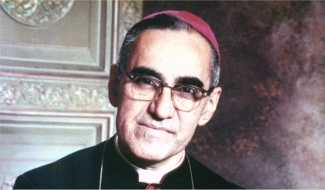 More than 100 people cheered the recent news that Archbishop Oscar Romero of El Salvador is to be made a saint at an ecumenical service on Saturday to commemorate the 38th anniversary of his martyrdom. The service was held at St Martin in the Fields Church, Trafalgar Square, and the cheering was led by Revd Richard Carter of St Martin in the Fields who presided. Sitting at the front was Julian Filochowski, Chair of the Archbishop Romero Trust, who has lobbied tirelessly for the canonisation. The congregation included representatives of CAFOD, Pax Christi, Christian Aid, Jesuits, Columbans, Servite Sisters and the National Justice and Peace Network. Also, homeless people who always receive a warm welcome at St. Martin’s – very necessary with Saturday’s blizzard conditions outside.
The theme of the service was ‘Peace – the product of Justice and Love’. The speaker was Rubén Zamora, a distinguished Salvadoran diplomat and passionate advocate for peace. His brother, the Attorney General Mario Zamora, was assassinated by a death squad in February 1980, a month before Romero. Zamora has been El Salvador’s permanent representative to the United Nations and Ambassador to the United States and to India. He is currently based in El Salvador as an advisor to the Minister of Foreign Affairs. Zamora knew Archbishop Romero and was perfectly placed to examine the social conflict and violence in El Salvador in the light of Romero’s approach to endemic violence. His talk received a warm clap at the end.
Zamora highlighted that Romero contrasted the injustice and violence in El Salvador with the God of the Gospel. Romero was “a prophet of peace and justice” in the context of “very few prophet bishops” and at a time when El Salvador was in crisis, on a path to civil war and with death squad activity rampant. Zamora was delighted that Romero is soon to be canonised, “but he will not be reduced to a plaster saint”. He reflected that, “his way of being Christian is the right one” and canonisation will confirm that. Zamora felt that with today’s world in crisis, with a lack of justice and peace and lack of respect for human rights and for “mother Earth”, Romero’s challenge to us to build “sustainable peace” is relevant today.
This issue of relevance today was picked by Revd Richard Carter Pat Gaffney at the conclusion of the service. Revd Carter spoke of the “inseparable bond between people of faith and people who are poor and abandoned”. He pointed out that “the poverty of our own nation is all around us here in Trafalgar Square as we see homeless people, refugees and asylum seekers come into our church on a daily basis”. He underlined that the “Gospel of hope” which Archbishop Romero stood for “is more needed than ever before and reflected that “we continue to celebrate Romero’s voice speaking out on social justice”.
Clare Dixon of CAFOD, who recently received an award from the Jesuit University in San Salvador for her commitment and support of the people of El Salvador, read an extract from a Romero homily where he said, “we cannot segregate God’s word from the historical reality in which it is proclaimed”. Barbara Kentish read another extract where Romero spoke about peace being “the calm and generous contribution of all people towards the common good”.
Pat Gaffney, General Secretary of Pax Christi, read the Jubilee reading from Isaiah 58. Bidding prayers were read by David Skidmore of the Romero Trust and Christine Allen of Christian Aid. Stirring Justice and Peace hymns were sung throughout, led by Chris Olding of Wheatsheaf Music. These included ‘In the land’ by Bernadette Farrell’, ‘God you raise up true disciples’ by Chris Olding and ‘The God of Liberation’ by Patrick Lee.
On Saturday 24 March, the actual 38th anniversary of Oscar Romero’s martyrdom, there will be a special Mass in St George’s Cathedral, Southwark, at 12.30pm, celebrated by Archbishop Peter Smith at which Bishop John Rawsthorne will preach.
Romero was assassinated by a right-wing death squad on 24 March 1980 while saying Mass. It happened one day after he gave a sermon calling on Salvadoran soldiers, as Christians, to obey God’s higher order and to stop blindly following orders to kill and massacre fellow campesinos. According to an audio-recording of the Mass, he was shot as he concluded his homily and moved to begin the Offertory. At the time, El Salvador was on the verge of civil war. This was stoked by gross violations of human rights and huge and growing inequalities between a small and wealthy elite, backed by the army, and the overwhelming majority of the population.
For the full speech of Rubén Zamora and details of events for Romero Week 2018 see:
http://www.romerotrust.org.uk and www.romerotrust.org.uk/literature/anniversary-homilies-talks
Press Release: Information and Background on Pilgrimage for Europe 2nd -11th April 2018
 Why We are Travelling
- We believe in building bridges between nations and not borders across Europe
- We wish to renew our links with points of inspiration – for faith, community and peace, since Europe is so much more than an economic or political entity, important though these aspects are.
Calais
We show solidarity with the migrants we support both in France and other countries, and link up with Caritas France
Brussels
- We meet representatives from faith NGOs – Pax Christi, Jesuit Refugee Service, Caritas Europa and others, to share experiences.
- We visit the European Parliament: not everyone wants to leave it!
Strasbourg and Geneva
We remain conscious of our common humanity and the common good, as we visit the Council of Europe and the UN Palace of Nations.
Taizé
We unite with Christians of all denominations, celebrating reconciliation across boundaries.
Assisi
We seek the inspiration of St Francis, in his care for creation: the human and the divine are all linked to it.
Rome
We are inspired by Pope Francis, remembering his Laudato Si, his leadership and his lifestyle, his connections with people of all faiths and none, and visit the social justice outreach community of Sant’Egidio.
Hope and Strength
Christians from throughout Britain, we travel in hope! Through our pilgrimage we hope to strengthen links with people throughout Europe, build up future contacts, and perhaps invite them to a celebration in the UK at a future date.
Please contact us at the address below for more information or go to our website, westminsterjp.wordpress.com
From ICN News
The story of Blessed Oscar Romero
News from ICN
I was a Stranger and You Made Me Welcome
March 16th, 2018Refugees, Columbans, Justice and Peace, Ellen Teague
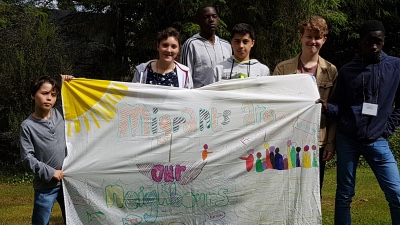
Columban youth banner
By: Ahlaam Moledina
Ahlaam Moledina (16) has won the Columbans’ young journalists print competition on the theme, ‘Migrants are our Neighbours’. She is a pupil of Bishop Challoner Catholic College in Birmingham.
We are living in an age of mobility. To some degree, we always have – anthropological studies have shown that for at least 90% of our history, modern humans have lived as nomads. (The Independent, 2014.) In today’s West, we view a society that is quick to defend the value of mobility, with the resurgence of populist politics across Europe seemingly holding up the banner of the “little man”, and advocating for the promise of the capitalist dream for ordinary people. And yet, the same politics that attempts to endorse social movement is working overtime to keep people in place.
The Home Office has been criticised for its countless layers of bureaucracy and evaluation as part of the immigration process. In 2016, the UNHCR reported that there are 23.5 million refugees and asylum-seekers globally. By this point in 2018, these statistics have only increased.
The refugee crisis and the influx of migration into Europe is no longer the problem solely of politicians. It is, as former Foreign Secretary David Miliband so pertinently put, a “crisis of humanity”. Today, an increasing number of ordinary people do more for the crisis than those in positions of influence. In the face of this humanitarian dilemma, we see the true reaches of human empathy, taught to us by religion, upbringing, everyday life. The 65.5 million displaced people around the world show us that we are not simply witnessing a breakdown of peace, but a breakdown of connectivity.
In July 2010, a mere few months before civil war broke out in the Arab Spring, my parents, five siblings and myself migrated to Birmingham, UK from the United Arab Emirates. As the anti-immigration and anti-Muslim sentiment grew, spurred on by right-wing groups such as Britain First and UKIP, we saw ourselves in the face of the fire. I was nine, my younger brothers seven and three, with limited academic ability in a country unlike any we had ever seen. Amidst the sense of antipathy that seemed to surround us, we took consolation in the kindness of our Catholic primary school. A fifteen-minute walk away from home in one of Birmingham’s most multiethnic areas, classes saw a balanced mix of Catholic, Muslim, Sikh and Hindu children, as well as children from other religious backgrounds (or none at all), put their hands together and recite the Hail Mary in perfect synchronisation. The Catholic ethos that permeated that very building, the teachings to “love thy neighbour as thyself” and the message to follow the example of the Good Samaritan imprinted onto every child that came through the green gates. In the whirlwind of political disillusionment and cultural isolation, and in the confusion of being young and uneducated and foreign, we were comforted by the repeated mantra of “migrants are our neighbours” that seeped out of every RE lesson.
Seven years and a Catholic secondary education later, I am now a passionate activist fighting for the rights of refugees and migrants in whatever way I can. Not least because I am a migrant, but because during a period where I believed my presence in this country to be invalid, I received every opportunity that my British-born peers were offered alongside me. After every class service and whole school Mass, Pope Francis’ words echo through my mind: “for us Christians, hospitality offered to the weary traveller is offered to Jesus Christ himself.”
I am not a Christian, but I was welcomed into the Church as though my headscarf strengthened our connections rather than weakened them. In 2016, as a member of my school’s Chaplaincy Team, I visited St. Chad’s Sanctuary, a centre that welcomes and hosts asylum-seekers and refugees during their respective journeys. An average of 150 people per week come to the centre to receive food, clothing and hygiene products, as well as Beginner English lessons to aid their transition into British society. In their effort to live as the Papal Message instructs them to, and to welcome strangers and comfort travellers, St Chad’s has become one of the most important places for migrants and asylum-seekers in Birmingham. It is a place of community and comfort. Volunteers at St Chad’s are now well acquainted with the Arabic word “inshallah” – meaning “if God wills.” In an increasingly divisive world where religion, language and even postcode causes strained relationships, St Chad’s Sanctuary remains an example of uniting in humanity, in compassion, and in God.
Britain is often viewed by the world as being the epitome of societal tolerance, but in a refugee crisis that bears a chilling resemblance to one which plagues our past, we must examine a history which shows the hidden truth behind the British response to the Holocaust. We see, as The Guardian states, that “current bigotry against asylum-seekers… closely mimics prewar anti-Jewish sentiments, and in both instances has been legitimised by British immigration policy.” The British government rejected ten times as many applications for asylum during the Second World War than they accepted.
Hebrews 13:2 tells us to “remember always to welcome strangers, for by doing this, some people have entertained angels without knowing it.” We have been here before. We must not repeat our mistakes. We must not push away these angels seeking the aid they are wholly deserving of.
In this crisis of connectivity, we celebrate our differences and rejoice in our similarities. It is not one’s religion, race or nationality that makes them who they are, but the strength of their character and their benevolence for their fellow human. Whether granted by Church, Mosque, parent or life experience, we have a duty to use this intrinsic concern for good to ensure that we make strangers welcome, no matter who they may be.
See the full list of winners at: www.columbancompetition.com/
See also: ICN 15 March 2016 – Former migrant and Muslim wins Columban Competition www.indcatholicnews.com/news/34524
Participating in the Permanent Peoples’ Tribunal in Paris on 15-16 March
From: joeryan@rcdow.org.uk
Date: 10 March 2018 at 08:24:12 GMT
To: indcatholicnews@emarket.bondware.com
Subject: From Joe Ryan
Permanent People’s Tribunal
I have been invited to attend the Permanent Peoples’ Tribunal on Turkey and Kurds which takes place in Paris on 15-16 March.
A panel of judges will examine n indictment served upon the Turkish State and some of its officials. Turkey has been criticised by respected human rights organisations, governments and international bodies for violations of the right to freedom of expression, freedom of organisation etc.
These violations have been extensively documented and some of them also submitted to the European Court of Human Rights.
The indictment will focus on the alleged crimes committed by Turkish forces against the main Kurdish cities such as Diyarbakir, Cizre, and Sirnak during the period 2015-17.
Several sources have reported the use of aircrafts, tanks and artillery by the Turkish army in civilian neighbourhoods of these cities causing massive destruction and loss of lives.
It has also been alleged that Turkish agents have been involved in targeted crimes against opponents, in particular representatives of the Kurdish movement, Kurdish media etc. An example is the assassination in Paris on Jan 9, 2013. The Tribunal will examine whether these crimes can be considered as “state crimes” for which the Turkish State is directly or indirectly responsible.
The findings will be presented to the European Parliament in Brussels in due course. I am delighted to be part of the process and hopefully some justice will follow.
Publicity of the Tribunal will be available as the event takes place.More info: (http://permanentpeoplestribunal.org)
From ICN news
Text: International Women’s Day address by Mary McAleese
March 8th, 2018Women, Mary McAleese,
Mary McAleese
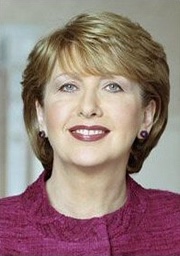
Mary McAleese, former President of Ireland, gave the following address today at the Voices of Faith International Women’s Day Conference, on the theme ‘Why women matter’ – held at the Jesuit Curia in Rome.
“Historical oppression of women has deprived the human race of untold resources, true progress for women cannot fail to liberate enormous reserves of intelligence and energy, sorely needed in a world that is groaning for peace and justice”. (extract from presentation by Professor Maryann Glendon, member of Holy See Delegation to the UN Conference on Women, Beijing 1995)
The Israelites under Joshua’s command circled Jericho’s walls for seven days, blew trumpets and shouted to make the walls fall down. (cf. Joshua 6:1-20). We don’t have trumpets but we have voices, voices of faith and we are here to shout, to bring down our Church’s walls of misogyny. We have been circling these walls for 55 years since John XXIII’s encyclical Pacem in Terris first pointed to the advancement of women as one of the most important “signs of the times”.
“they are demanding both in domestic and in public life the rights and duties which belong to them as human persons” .… The longstanding inferiority complex of certain classes because of their economic and social status, sex, or position in the State, and the corresponding superiority complex of other classes, is rapidly becoming a thing of the past.
At the Second Vatican Council Archbishop Paul Hallinan of Atlanta, warned the bishops to stop perpetuating “the secondary place accorded to women in the Church of the 20th century” and to avoid the Church being a “late-comer in their social, political and economic development”. The Council’s decree Apostolicam Actuositatem said it was important that women “participate more widely … in the various sectors of the Church’s apostolate”. The Council’s pastoral constitution Gaudium et Spes said the elimination of discrimination based on gender was a priority. Paul VI even commissioned a study on women in Church and Society. Surely we thought then, the post-Conciliar Church was on the way to full equality for its 600 million female members. And yes-it is true that since the Council new roles and jobs, have opened up to the laity including women but these have simply marginally increased the visibility of women in subordinate roles, including in the Curia, but they have added nothing to their decision-making power or their voice.
Remarkably since the Council, roles which were specifically designated as suitable for the laity have been deliberately closed to women. The stable roles of acolyte and lector and the permanent deaconate have been opened only to lay men. Why? Both laymen and women can be temporary altar servers but bishops are allowed to ban females and where they permit them in their dioceses individual pastors can ban them in their parishes. Why?
Back in 1976 we were told that the Church does not consider herself authorized to admit women to priestly ordination. This has locked women out of any significant role in the Church’s leadership, doctrinal development and authority structure since these have historically been reserved to or filtered through ordained men.
Yet in divine justice the very fact of the permanent exclusion of women from priesthood and all its consequential exclusions, should have provoked the Church hierarchy to find innovative and transparent ways of including women’s voices as of right and not in trickles of tokenism by tapping, in the divinely instituted College of Bishops and in the man made entities such as the College of Cardinals, the Synod of Bishops and episcopal conferences, in all the places where the faith is shaped by decision and dogma and doctrine.
Just imagine this normative scenario – Pope Francis calls a Synod on the role of Women in the Church and 350 male celibates advise the Pope on what women really want! That is how ludicrous our Church has become. How long can the hierarchy sustain the credibility of a God who wants things this way, who wants a Church where women are invisible and voiceless in Church leadership, legal and doctrinal discernment and decision-making?
It was here in this very hall in 1995 that Irish Jesuit theologian, Fr. Gerry O’Hanlon put his finger on the underpinning systemic problem when he steered Decree 14 through the Jesuits 34th General Congregation. It is a forgotten document but today we will dust it down and use it to challenge a Jesuit Pope, a reforming Pope, to real, practical action on behalf of women in the Catholic Church.
Decree 14 says:
We have been part of a civil and ecclesial tradition that has offended against women. And, like many men, we have a tendency to convince ourselves that there is no problem. However unwittingly, we have often contributed to a form of clericalism which has reinforced male domination with an ostensibly divine sanction. By making this declaration we wish to react personally and collectively, and do what we can to change this regrettable situation.
“The regrettable situation” arises because the Catholic Church has long since been a primary global carrier of the virus of misogyny.. It has never sought a cure though a cure is freely available. Its name is “equality”
Down the 2000 year highway of Christian history came the ethereal divine beauty of the Nativity, the cruel sacrifice of the Crucifixion, the Hallelujah of the Resurrection and the rallying cry of the great commandment to love one another. But down that same highway came man-made toxins such as misogyny and homophobia to say nothing of anti-semitism with their legacy of damaged and wasted lives and deeply embedded institutional dysfunction..
The laws and cultures of many nations and faith systems were also historically deeply patriarchal and excluding of women; some still are, but today the Catholic Church lags noticeably behind the world’s advanced nations in the elimination of discrimination against women. Worse still, because it is the “pulpit of the world” to quote Ban Ki Moon its overt clerical patriarchalism acts as a powerful brake on dismantling the architecture of misogyny wherever it is found. There is an irony here, for education has been crucial to the advancement of women and for many of us, the education which liberated us was provided by the Church’s frontline workers clerical and lay, who have done so much to lift men and women out of poverty and powerlessness and give them access to opportunity.
Yet paradoxically it is the questioning voices of educated Catholic women and the courageous men who support them, which the Church hierarchy simply cannot cope with and scorns rather than engaging in dialogue. The Church which regularly criticizes the secular world for its failure to deliver on human rights has almost no culture of critiquing itself. It has a hostility to internal criticism which fosters blinkered servility and which borders on institutional idolatry.
Today we challenge Pope Francis to develop a credible strategy for the inclusion of women as equals throughout the Church’s root and branch infrastructure, including its decision-making. A strategy with targets, pathways and outcomes regularly and independently audited Failure to include women as equals has deprived the Church of fresh and innovative discernment; it has consigned it to recycled thinking among a hermetically sealed cosy male clerical elite flattered and rarely challenged by those tapped for jobs in secret and closed processes. It has kept Christ out and bigotry in. It has left the Church flapping about awkwardly on one wing when God gave it two. We are entitled to hold our Church leaders to account for this and other egregious abuses of institutional power and we will insist on our right to do so no matter how many official doors are closed to us.
At the start of his papacy Pope Francis said “We need to create still broader opportunities for a more incisive female presence in the Church” words a Church scholar described as evidence of Francis’ “magnanimity”. Let us be clear, women’s right to equality in the Church arises organically from divine justice. It should not depend on ad hoc papal benevolence.
Pope Francis described female theologians as the “strawberries on the cake”. He was wrong. Women are the leaven in the cake. They are the primary handers on of the faith to their children. In the Western world the Church’s cake is not rising, the baton of faith is dropping.. Women are walking away from the Catholic Church in droves, for those who are expected to be key influencers in their children’s faith formation have no opportunity to be key influencers in the formation of the Catholic faith. That is no longer acceptable. Just four months ago the Archbishop of Dublin Diarmuid Martin felt compelled to remark that “the low standing of women in the Catholic Church is the most significant reason for the feeling of alienation towards it in Ireland today”.
Yet Pope Francis has said that “women are more important than men because the Church is a woman”. Holy Father, why not ask women if they feel more important than men? I suspect many will answer that they experience the Church as a male bastion of patronizing platitudes to which Pope Francis has added his quota.
John Paul II has written of the ‘mystery of women’. Talk to us as equals and we will not be a mystery! Francis has said a “deeper theology of women” is needed. God knows it would be hard to find a more shallow theology of women than the misogyny dressed up as theology which the magisterium currently hides behind.
And all the time a deeper theology is staring us in the face. It does not require much digging to find it. Just look to Christ. John Paul II pointed out that: ‘we are heirs to a history which has conditioned us to a remarkable extent. In every time and place, this conditioning has been an obstacle to the progress of women.….. Transcending the established norms of his own culture, Jesus treated women with openness, respect, acceptance and tenderness….As we look to Christ…. it is natural to ask ourselves: how much of his message has been heard and acted upon?’
Women are best qualified to answer that question but we are left to talk among ourselves. No Church leader bothers to turn up not just because we do not matter to them but because their priestly formation prepares them to resist treating us as true equals.
Back in this hall in 1995 the Jesuit Congregation asked God for the grace of conversion from a patriarchal Church to a Church of equals; a Church where women truly matter not on terms designed by men for a patriarchal Church but on terms which make Christ matter. Only such a Church of equals is worthy of Christ. Only such a Church can credibly make Christ matter. The time for that Church is now, Pope Francis. The time for change is now.
Not too late to celebrate Fairtrade

Image from the British Province of Carmelites (CC BY 2.0)
Fairtrade Fortnight started on February 26th and closes on March 11th. So it is not too late to celebrate! Although we were very disappointed that Sainsburys have abandoned the Fairtrade label for their own brands, you can still find some Fairtrade tea in the higher end category, Taste the Difference, as well as the various filter coffees. Sainsburys have, in the face of the tea protests, perhaps, committed to keeping their Fairtrade bananas, which is excellent news for the small Windward Islands such as St Lucia and Dominica. Aldi’s and Lidl have some great Fairtrade chocolate, and Waitrose continue their Fairtrade commitment.
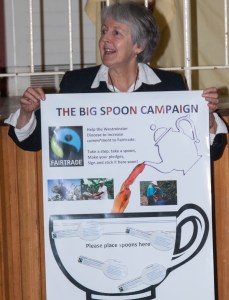
Here in the Westminster Diocese, we can count an amazing 103 parishes which have signed up to Fairtrade justice for producers. They serve Fairtrade tea and coffee at parish functions, promote Fairtrade in other ways, and hold an event once a year to celebrate it. This CAN be during the fortnight, but also can feature at other times. No time is a bad time to publicise Fairtrade. With only a handful, FIVE, more parishes, we can qualify to be a Fairtrade diocese. Maybe your parish is on the brink of signing up. TELL US ABOUT IT!
And if you still haven’t organised a celebration, just have a Sunday coffee morning or a Saturday tea party. Other ideas through the year are liturgies, films, talks, games, or cake sales, as in my own parish.
Lobbying: less developed countries are at huge risk as all our trade deals are being renegotiated. Find out what is happening to tropical products in course of our Brexit negotiations. Producers of sugar, cotton, metals, cocoa, may all be at even more risk in the months and years to come. Ask MPs about trade with poorer countries post – Brexit. Traidcraft have a campaigning department which can help with the facts. www.traidcraft.org.uk 
Update from Calais by Seeking Sanctuary
We are including this news update on our website to spread the word about the situation in Calais. The original article appeared on the Seeking Sanctuary website – click here to visit and find out more about their work. We will be holding a Spring appeal for the Calais Catholic Worker, Maria Skobtsova House, after Easter – watch out for more details!
UPDATE: The hazards of seeking sanctuary
Dear Friends
 As we started to prepare this update, news came through of a 16 year old boy who has been blinded in one eye through police use of rubber bullets. The boy was shot during the attack with gas and rubber bullets against refugees who were trying to recuperate their possessions before the police destroyed their tents set up near the food distribution place in rue Verrotieres. He suffered severe injuries to his face and there is a risk for his remaining eye. And on recent form, he’ll sent straight back to the appalling squalor of wasteland where he has been staying. The two friends who accompanied him to make a complaint at the Police Station were themselves arrested for several hours. All this just after the French President’s visit to Calais. It is in the context of reports that the Police have become particularly heavy handed during the daily distribution of food and clothes. It seems that they were determined to break up the tents which provide a minimum of basic shelter and were not hesitating to use pepper spray to render the tents and blankets unusable.
So why the surge in arrivals in Calais, currently estimated to take the number there over 800? In part this is due to a cruel deception on the part of UK and French politicians. The news that the UK had agreed to be more flexible in accepting child migrants under the Dubs agreement and speed up the processing of applications travelled fast, with the result that many young people had their hopes raised, and made for Calais, only for them to be dashed. The new UK/French ‘accord’ has yet to bring any visible results. We are also very disturbed by the inter-racial violence being reported – it is a sad fact that violence increases when those involved lose all dignity and sense of hope. Apparently trafficking gangs run by Afghans are angry when Eritreans get into lorries that they plan to use for profit, or attract attention to areas where they wish to operate. Whatever the origin of this dispute, interest from traffickers seems to have lead to gunfire and several serious injuries.
The result is a growing number of very vulnerable young people who are at risk of being trafficked and sold into modern slavery. (We are often struck by the paradox of the firmness of the rhetoric against modern slavery here in the UK and our failure to denounce the abuse and trafficking of children just 20 miles from our shores). Hence the petition initiated by UNICEF calling on the authorities to reunite children – you will find details here.
Death is also a probability. Back in June 2009, 59 young Chinese were found dead in the back of a lorry in Dover. Since then the total deaths on either side of the Channel have risen to over 200, as people attempt to reach the UK in order to claim asylum – which can be done only on British soil.
And yet in all the squalor of the current situation, human dignity and optimism can still prevail. On his recent visit to Calais, Phil was pleased to see the new Day Centre near the centre of Calais run by Secours Catholique in full operation. People could relax, chat, learn new skills and play board games or get their hair cut in a warm hall, with a video cinema running in a small room alongside and a separate space for women to meet and upcycle damaged garments, which the young men had been proud to show off in a fashion show video. Phil was accompanied by young people from the ‘Bruderhof’ Community in South East Kent, to deliver blankets that they had made and spend time as volunteers with the Refugee Community Kitchen and the Warehouse.
The Catholic Worker House had been filled far beyond comfortable capacity with young people desperate to get away from the recent inter-racial violence. And we were delighted to provide three key organisations with the proceeds (€1320) of a very generous Christmas collection by a Catholic Parish in Suffolk. And for the future, if you are able to organise a collection, however modest, we will recommend NGO’s which can make best use of the money and arrange payment as required.
And so the future – will there be an amelioration of the situation in 2018? Only if those of us who feel passionate about the issues continue to put pressure on those in authority who can make a difference – on both sides of the Channel. The few children who have so far reached the UK were only admitted after huge pressure from those felt it their duty to make their voice heard.
Ben as a local Councillor recently took part in his local Holocaust Memorial Day observance – and was reminded of the remarkable efforts of Sir Nicholas Winton in the 1930’s to bring children out of danger into the UK through the ‘kindertransports’. It’s this kind of initiative that we need again in the turbulent and often intolerant nature of our politics over 70 years later.
Fairtrade Fortnight – February 26th to March 11th
We are SO close to being a Fairtrade Diocese! Out of the 108 parishes needed, we have reached 103. Could yours be the vital clinching number 108?! If you are already Fairtrade, don’t forget to organise an event during the fortnight – see below.
Our Big ‘Ask’
Could everyone hold a ‘Big Brew’ during the Fortnight, and send a picture in? Teaparties or coffee mornings across the diocese using Fairtrade goods, would be a great way to celebrate the diocese’s Fairtrade commitment. We could collate your pictures on our Facebook page for all to enjoy. And don’t forget to tweet your pictures with #westminsterbigbrew
 Diocese of Westminster Justice and Peace Commission