Event Report: Artificial Intelligence, Faith and Ethics at a Crossroads

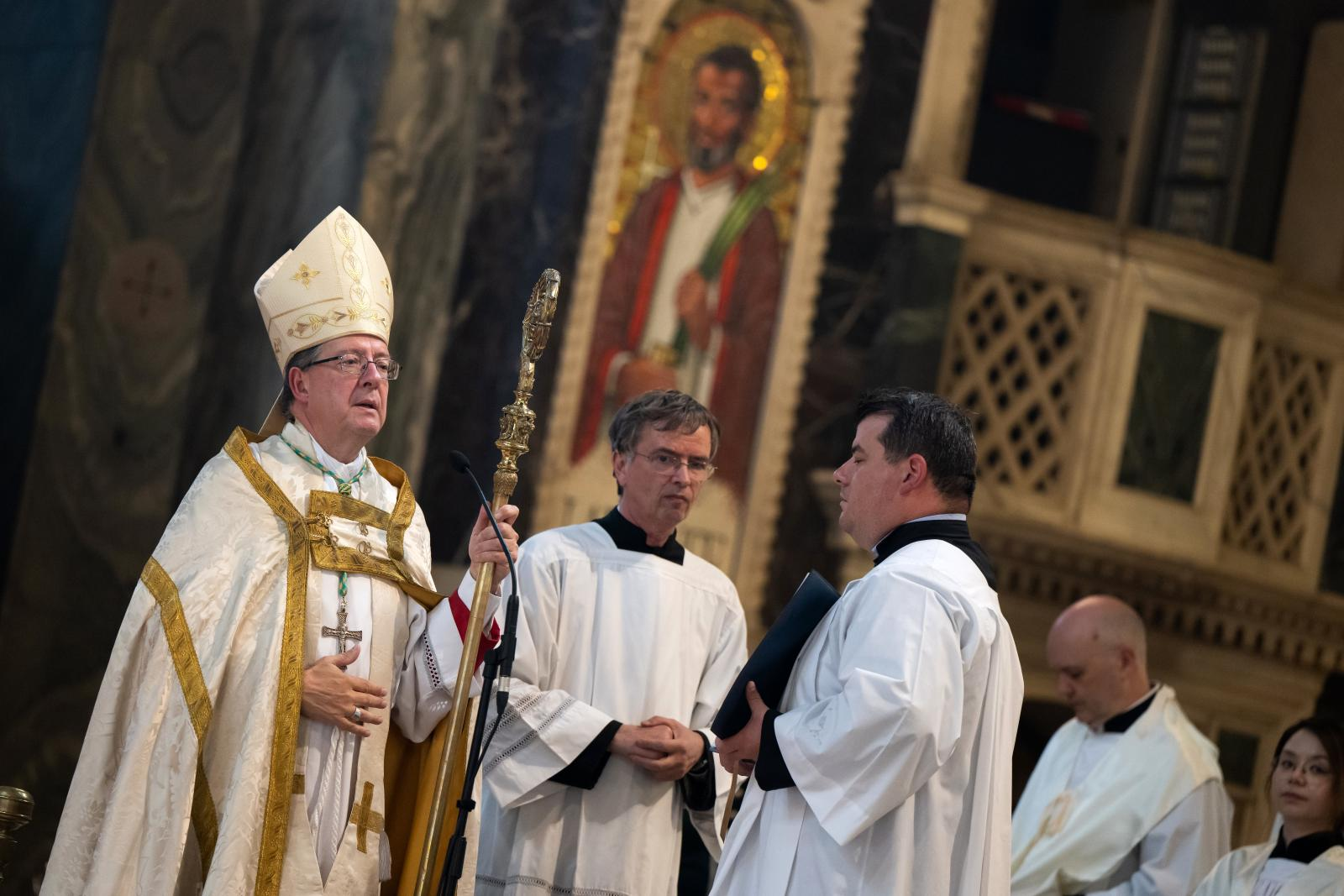
l-r: Fr Michael Baggot, Jen Copestake, Fr Dominic Robinson, Dr Karen Singarayer, Matthew Sanders. Image: Diocese of Westminster

Dr Philip Crispin

From the outset of his pontificate, Pope Leo XIV has explained how the development of Artificial Intelligence (AI) inspired the choice of his papal name.

Speaking to the College of Cardinals after his election, he said: “I chose to take the name Leo XIV. There are different reasons for this, but mainly because Pope Leo XIII in his historic encyclical Rerum Novarum addressed the social question in the context of the first great industrial revolution.”

“In our own day, the Church offers to everyone the treasury of her social teaching in response to another industrial revolution and to developments in the field of artificial intelligence that pose new challenges for the defence of human dignity, justice, and labour.”

With serendipitous timing, the Catholic Union, in collaboration with Farm Street Church, Mayfair, hosted a panel discussion last Sunday 18th May entitled ‘AI, Faith and Ethics at a Crossroads: Discerning the Way Forward’ which explored the moral and spiritual challenges in this time of technological transformation. The event was convened and chaired by Farm Street Parish Priest, Fr Dominic Robinson SJ.

In her opening remarks, Dr Karen Singarayer, Vice-Chair of the Catholic Union of Great Britain, highlighted the opportunities and risks of the development of AI. She said: “The artificial intelligence revolution holds both promise and peril. The AI revolution seems to be impacting not only manual labourers but also professionals. The written word, once the exclusive realm of the human mind, is now increasingly the domain of machines. Video and audio too are more and more frequently AI-generated. Professions that long commanded social respect as learned or creative vocations now seem vulnerable in the face of the machine.”

She added: “These developments prompt us to ask difficult questions – what does it mean to be truly present to another human being? How are relationships, education, healthcare, and even evangelisation being reshaped by the advent of AI?”

Dr Singarayer paid tribute to the late Pope Francis as the leading moral voice regarding AI. He was ever mindful of the common good she said and noted his warning about the catastrophic consequences of allowing instruments of war to develop way beyond human oversight.

Jen Copestake, Correspondent at China Global Television Network Europe, said: “AI is no longer a matter of speculation; it is deeply embedded in all of our lives. We stand at a crossroads-not just technological, but moral and philosophical. As AI becomes more capable, present and even humanlike, the question is not just what it can do, but what should we do.”

She pointed to the pitfalls of AI which was not always programmed to embrace human diversity and posed the question whether soul-less machines with no human history could replicate human empathy and dignity.

Ms Copestake cited a prediction that, by 2030, 375 million workers globally would be forced to migrate or ‘transition’ and recollected that in Laudato Si Pope Francis had insisted that technological change should never render a person obsolete.

She spoke of the “seismic effect” of a predicted 70 per cent of jobs being transformed by AI and the imperative of protecting workers and the meaning behind the work they did which might, as Pope Francis had pondered, necessitate the move to introducing a universal basic income in order to preserve human dignity.

Furthermore, she continued, it was necessary to work upon improving the ecological impact of AI which was dependent on massive energy consumption. According to Catholic social teaching on ethical stewardship, harnessing the world’s resources should be sustainable not extractive.

Speaking on AI’s use in Evangelisation, Matthew Harvey Sanders, CEO of Longbeard, Creator of Magisterium AI, said: “What we found is that there’s a lot of people out there who aren’t ready to step into a church and talk to a priest or share their concerns, but they are ready to test their problem, their query out on a chatbot. . . . This isn’t a question of trying to replace the priest at all. It’s just recognizing where people are at. . . . We’ve seen testimonials of people who started a journey to the church or had misconceptions clarified. It’s been a beautiful project.”

He hailed the accelerated polyglot digitization of the Church’s library holdings and the World’s first Catholic language AI model Ephrem designed to offer deep insights into the teachings of the Church.

Fr Michael Baggot, Professor of Theology at Pontifical University of St Thomas Aquinas, Rome, spoke about how the Church is founded upon relationship, with God and each other. He said: “We are masters of communion. We are masters of relationship. We follow a God of relationship, not a solitary God, but a God who is eternal exchange of interpersonal love. If we’re made in the image of that God, we are called into being by a God of communion for communion-with that God and with the other persons made in the image of that God. We were made for interpersonal communion.”

The Church, he said, is “expert in humanity'” adding “I hope we know how to accompany people and their most profound needs.”

He warned against the abuses of AI’s virtual world, seductive and damaging as it moved from an attention economy to an affection economy but was lacking in compassion and an interior life.

Fr Baggot warned, too, against the possibility of “outsourcing” moral agency. While AI worked with data and statistical patterns it should never replace human responsibility. The Church insisted on equity, sexual and racial, he said.

Responding to audience questions, the panel hoped that greater efficiency through AI could liberate from certain forms of toil but feared that job losses could lead to social unrest and scapegoating. They feared, too, information overdrive and saturation.

AI should never replace the gift of humanity and personhood, underscored by the fundamental truth of the incarnational God, who took on our human flesh and blood, and served ‘fleshly’ human beings. Rather AI should be based upon human wisdom. Now was the time for discernment.

Watch the entire event HERE.

Bishop McAleenan Responds to Government White Paper on Immigration

Photo: Mazur/cbcew.org.uk

Source: CBCEW

Following the recent publication of the government’s White Paper on immigration, Bishop Paul McAleenan, Lead Bishop for Migrants and Refugees, called on the government to reconsider the important role of immigration in shaping our shared history, and highlighted the vital contribution of those in low-wage, low-skilled employment.

Bishop McAleenan said:

“Whilst the Government’s commitment to skills training and education is understandable, I urge the government to carefully consider its approach to so-called ‘low-skilled work’ which is often carried out by those who come from abroad.

“We must remember the words of Pope Francis in Fratelli tutti, written in the wake of the Covid-19 pandemic: ‘…our lives are interwoven with and sustained by ordinary people valiantly shaping the decisive events of our shared history: doctors, nurses, pharmacists, storekeepers and supermarket workers, cleaning personnel, caretakers, transport workers, men and women working to provide essential services and public safety, volunteers, priests and religious… They understood that no one is saved alone.’

“The essential work carried out every day by people in low-paid, low-skilled roles must be recognised and valued. For many migrants, such jobs are the first step on the way to becoming fully integrated into our society. Without their contribution, dedication and hard work, our hospitals, schools, and care homes might not be able to function. The Catholic Church in England and Wales has been enriched by migrants throughout its recent history. Our ethnic chaplaincies, eparchies and schools have been models of integration.

“I also appeal to our political leaders, of all parties, whom we have entrusted with shaping the future of our country, to refrain from using rhetoric that risks sowing mistrust, fear, or division. Such language is unhelpful and serves only to create unnecessary fractures within our communities.

“To our Catholic community and all people of goodwill, I encourage you to welcome migrants into your communities with open hearts, offering friendship and support. In doing so, we help ensure that no one is left behind, undervalued or made to feel isolated.”

NEW DATE Announced – Wednesday 4th June, 7-9pm Celebrating Laudato Si’ with Austen Ivereigh

We are thrilled to announce that a new date has been set for the joint event hosted by the Northern Dioceses Environment Group and the Southern Dioceses Environment Network to celebrate the 10th anniversary of Pope Francis’ encyclical, Laudato Si’.

The event, originally scheduled for Thursday, 8th May, will now be held on Wednesday 4th June, 7.00-9.00pm.

All Catholics and our friends are welcome to join us for this online evening of celebration for the 10th Anniversary of Laudato Si’ – On the Care of Our Common Home.

Following the Papal Conclave, this will be the first scheduled event for each of our networks during the pontificate of Pope Leo XIV. Together we will explore the legacy of Pope Francis, especially on the environment.

We are delighted that Austen Ivereigh has been able to find a new date for us so soon after his recent labours as a commentator in Rome for the funeral of Pope Francis and on the Papal Conclave which elected Pope Leo XIV. We look forward to welcoming him as our guest speaker and facilitator.

The publication of the papal encyclical, Laudato Si‘, galvanised Catholics around the world and in every country to unite with those of all other faiths and none in the common cause of caring for our home planet and all the people on it. Pope Francis urged us to integrate questions of justice into our debates on the environment, ‘so as to hear both the cry of the earth and the cry of the poor’ – for they are one and the same thing. (LS, 49)

Both the Northern and Southern environment meetings grew out of a desire to put the teaching of the encyclical into practice. Austen will help us to reflect on where we have come in the last ten years and what we are being called to do in the next ten.

Those who booked for the 8th May meeting do not need to book again, but if you are able to confirm your attendance by rebooking via Eventbrite, then it will help us to get a better idea of numbers.

NEW DATE – Wednesday 4th June, 7-9pm, Celebrating Laudato Si’ with Austen Ivereigh.

Celebrating Laudato Si – Book with Eventbrite

Link

Southern Dioceses Environment Network

Open Letter from Women of Faith on Assisted Dying

Photo: Theos

Source – Theos

Religious think-tank, Theos, has published an open letter signed by over 100 women from different faith traditions voicing significant concerns over the current proposed legislation for Assisted Dying.

We believe that the Terminally Ill Adults Bill has insufficient safeguards to protect some of the most vulnerable in society, particularly women subject to gender-based violence.

Colette Joyce, Justice and Peace Co-ordinator for the Diocese of Westminster, and Nikki Dhillon-Keane, Head of Safe in Faith for Caritas Westminster, are among the signatories.

Our open letter was reported on in The Guardian and the Church Times.

The full text is below:

Open letter from women of faith on assisted dying

4 April 2025

We write as a group of women of faith from different traditions and backgrounds passionate about care for people in vulnerable situations, many of whom have dedicated our professional lives to preventing male violence against women and girls.  

We hold a variety of views on the principle of legalising assisted dying. However, we are all clear that the current legislation – The Terminally Ill Adults Bill – progressing through parliament, has insufficient safeguards to protect some of the most marginalised in society, particularly women subjected to gender–based violence, and abuse by a partner, who also experience intersecting barriers to a full and safe life. 

We are concerned that the proposed legislation could create a new tool to harm vulnerable women, particularly those being subjected to domestic abuse and coercive control, by helping them to end their lives. 

report out last month showed that the number of domestic abuse victims who died by suicide in England and Wales was higher than the number of people killed by their abusive partner, for the second year running. 

We know too that domestic abuse victims who are also women of faith can face a particular form of abuse[1] at the hands of their perpetrators, who may weaponise theologies and culture to harm and control their victims. We are concerned that the assisted dying legislation, as it stands, fails to take account of how faith and its role at the end of life, as well as its use by both perpetrators and the women they abuse, create complex dynamics that can lead to vulnerable women, who may also hold strong religious beliefs, seeing no way out but death.

We know that poverty and other inequalities increase the risk of women and girls being subjected to violence, ill health and the quality of care and support they receive from statutory institutions and civil society. We know too that in a society riven with inequalities, women who are from Black and minoritised communities, disabled women, migrant women and working–class women, struggle to be heard. Their voices are absent from conversations about this bill, and so too are those subjective to coercive control or violence. It is unclear to us how the legislation and its consultative process has taken account of the multiplicity of faiths, cultures, socio–economic and health backgrounds of our citizens and women who make up our country. 

Much of the debate inside and outside parliament has been conducted by those empowered to speak of the importance of personal choice, without consideration of those who struggle to be heard in the public square. It is the voices of the unheard, ignored, and marginalised that we are compelled by our faith traditions and scriptures to listen and draw attention to, in the pursuit of good law–making for the common good – legislation that considers and protects the most vulnerable, not just those who speak loudest.

Having followed the progress of the bill through parliament, we are particularly concerned about: 

  • The risk that people (mainly women) with controlling and abusive partners (mainly men) will be coerced into assisted death. While we welcome the adopted amendments that stipulate training for the assessing doctors and the panel members, this safeguard only comes into play after someone has already been coerced into declaring that they want an assisted death, and will clearly not catch all cases. We also know, from research and experience, that coercive control is a long–term process that is both insidious and subtle with women often unaware of it until the perpetrator’s behaviour escalates. 
  • The reality that since 2016, deaths by suicide have been included in the scope of domestic homicide reviews and there is growing research on women who die by suicide as directly linked to having an abusive partner. We are concerned that if this legislation passes, women may seek assisted deaths to end their suffering at the hands of an abuser. Domestic Homicide Reviews also reveal the disproportionate number of Black and minoritised women who are failed by statutory and state agencies like the police, social services, health services and specialist services like substance misuse and mental health and women’s services despite their calls for help.    
  • There are no longer High Court protections embedded in the Bill
  • There are insufficient protections for those with learning disabilities and people with anorexia. 
  • The use of the vehicle of the Private Member’s Bill for this landmark legislation. This has resulted in the impact assessment being shared after the Bill Committee stage, which makes it difficult for all of us with concerns about inequalities to gauge how this legislation will affect Black and minoritised and faith communities, people with disabilities, and those experiencing economic disadvantage.

If assisted dying is seen as a response to alleviate suffering, without addressing the underlying structural issues that make life difficult and safeguard against harm, it could put undue pressure on vulnerable women to choose death over inadequate care.

This is no way to legislate, especially not on matters of life and death. We have serious concerns about the bill and its lack of safeguards. The bill has too much potential to hurt vulnerable people and so we are uniting as women from across faith traditions to speak up for vulnerable women, including victims of violence against women and girls, and disabled women, and raise our concerns publicly.

Signatories:

  1. Chine McDonald, director, Theos
  2. Bekah Legg, CEO, Restored
  3. Huda Jawad, co–founder and executive director, Faith and VAWG Coalition
  4. Sam Clifford, CEO, Jewish Women’s Aid
  5. The Rt Revd and Rt Hon Dame Sarah Mullally DBE, Bishop of London
  6. Dr Naomi Green, Assistant Secretary General, Muslim Council of Britain
  7. Professor Sheila The Baroness Hollins, President, The Catholic Union of Great Britain
  8. Rabbi Debbie Young–Somers
  9. Zara Mohammed, former secretary general, Muslim Council of Britain
  10. Hannah Rich, director, Christians on the Left
  11. Revd Dr Helen Paynter, founding director, Centre for the Study of Bible and Violence
  12. Naomi Lerer, CEO, Noa Girls 
  13. Amanda Jackson, senior advisor on diversity, World Evangelical Alliance
  14. The Rt Revd Rachel Treweek, Lord Bishop of Gloucester and Anglican Bishop for HM Prisons
  15. Commissioner Jenine Main, Territorial Leader, The Salvation Army, United Kingdom and Ireland
  16. Louisa Collyer–Hamlin, Head of External Affairs, Catholic Union
  17. Patricia Stoat, Science Health & Bioethics Committee of the National Board of Catholic Women
  18. Rt Revd Rose Hudson–Wilkin, Bishop of Dover
  19. Dr Sahira Dar, president, British Islamic Medical Association
  20. Rachel Fink, CEO, S&P Sephardi Jewish Community
  21. Tola Doll Fisher, Creative Director and Editor, Premier Woman Alive
  22. Elizabeth Harris Sawczenko, OBE, Interfaith consultant 
  23. Nikki Dhillon Keane, Head of Caritas Safe in Faith
  24. Jagbir Jhutti–Johal, Professor of Sikh Studies, University of Birmingham 
  25. Professor Tina Beattie, Professor Emerita of Catholic Studies, University of Roehampton, London
  26. The Rt Revd Dr Joanne Woolway Grenfell, Bishop of Stepney and Lead Safeguarding Bishop for the Church of England
  27. Natalie Collins, author and activist
  28. Sian Rees, head of Bible Society Wales
  29. Rt Revd Dr Jill Duff, Anglican Bishop of Lancaster
  30. The Rt Revd Vivienne Faull, Lord Bishop of Bristol
  31. Rev Catherine De Souza, CEO, Prison Fellowship England & Wales
  32. ​​Sally Hope, Domestic Abuse Practitioner and Writer
  33. Dr Selina Stone, Lecturer in Theology and Ethics, University of Edinburgh
  34. Dawn McAvoy, Both Lives UK
  35. Mandy Marshall, Director for Gender Justice, Anglican Alliance and Anglican Communion
  36. Revd Jenni Entrican, Former President of the European Baptist Federation
  37. Alicia Edmund, Head of public policy Evangelical Alliance
  38. Dr Madeleine Pennington, Quaker writer and head of research, Theos 
  39. Damilola Makinde, Advocacy engagement lead, Evangelical Alliance
  40. Julia Bicknell, ex–BBC Woman’s Hour producer; lay chaplain for asylum seekers/refugees
  41. The Rt Revd Dr Rosemarie Mallett, Bishop of Croydon
  42. Rev Mae Christie, Vicar, All Saints, Tooting
  43. Joy Madeiros, Co–Founder, Oasis UK
  44. Ann–Louise Graham, journalist and biblical counselor
  45. Prof. Anna Rowlands, St Hilda Professor of Catholic Social Thought and Practice
  46. Canon Dr Sanjee Perera, lay canon of Liverpool Cathedral, organisational psychologist and theologian
  47. Aja Thorburn, writer 
  48. Michelle Tant, Midwifery Lecturer and writer
  49. Joanna Davey, editorial director, Hodder Faith 
  50. Rev Bryony Taylor, Rector of Barlborough and Clowne and Author
  51. Dr Elizabeth Dalgarno, director, SHERA research group
  52. Dr Caroline Hull, national director, Aid to the Church in Need (UK)
  53. Amy Summerfield, CEO, Kyria Network 
  54. Rev Liz Clutterbuck, Priest–in–Charge Emmanuel Hornsey Road, Islington
  55. Rev Leonora Wassell, Co–Chair, Methodist Women in Britain
  56. Rebecca (Bex) Chapman, General Synod member and vice–chair, Christians in Media
  57. Debra Green OBE, CEO, ROC
  58. Alice Gray, palliative care doctor and assistant pastor, Oasis Church, Birmingham
  59. Ruth Parrott, former president and co–chair, Methodist Women in Britain
  60. Shermara Fletcher–Hoyte, Principal Officer for Pentecostal, Charismatic and Multi–cultural Relations, Churches Together in England
  61. Catherine Butcher, author, lay reader, and member of General Synod
  62. Faith Van Horne, PhD, Theology and Religion, University of Birmingham 
  63. Jamie Phear, writer and speaker 
  64. Rachel Muers, Professor of Divinity, University of Edinburgh 
  65. Jayne Manfredi, Anglican Deacon
  66. Katharine Lock
  67. Rev Cham Kaur–Mann, Co–Director, Next Leadership
  68. The Rt Revd Esther Prior, Bishop of Aston
  69. Rev Dr Kate Coleman, Co–Director, Next Leadership
  70. Rosemary Nuamah–Williams, policy Adviser and advocate
  71. Jo Chamberlain, National Environment Officer, Church of England Environment Programme
  72. Dr Usha Reifsnider, Co regional Director, Lausanne Europe, Cultural Theology Consultant
  73. ​​Lucy Butt, CEO, Bramber Bakehouse
  74. Dr Janet Soskice, Professor of Philosophical Theology, Emeritus, University of Cambridge
  75. Stella Mbubaegbu CBE, FE College Principal & Chief Executive
  76. Mary McHugh, National Board of Catholic Women of England and Wales
  77. Hope Virgo, author, campaigner and Secretariat for the APPG for Eating Disorders
  78. Rev Bev Thomas Ecumenical Minister & Social Justice Advocate
  79. Rev Claire McClelland, Head of Chaplaincy, Newcastle upon Tyne Hospitals 
  80. Rev Jenny Kimble, Dean of Undergraduate Studies, Regents Theological College
  81. Rev. Michelle Nunn, Principal, Regents Theological College, and Member of Elim’s National Leadership Team
  82. The Venerable Karen Best, Archdeacon of Manchester  
  83. Dr Anne Richards, Policy Adviser, Church of England
  84. Revd Dr Hannah Lewis, Lead Chaplain among the Deaf Community, Diocese of Oxford
  85. Janie Oliver, CEO, Stewardship
  86. Dr Calida Chu, Associate Editor, Practical Theology
  87. The Revd Jessica Monopoli, Assistant Curate, St Mary’s Cockerton, and Clergy Lead at The Haven in Darlington, Co. Durham
  88. Bobbi Kumari, founder, Living in Light 
  89. Barbara Earl, Croydon Quakers
  90. Danielle Finch, freelance writer (disability, family & faith)
  91. Rev. Rebecca Amoroso, Hospital Chaplain
  92. Christina Mottram, retired lay Catholic hospital chaplain, Leicester Hospitals
  93. Salomé Criddle, CEO, Thriving Women In Real Life
  94. Revd Dr Joanne Cox– Darling, Methodist presbyter
  95. Anupama Ranawana, Postdoctoral Researcher, Department of Theology and Religion, University of Durham
  96. Danielle Wilson, Pioneer Pastor, Birmingham
  97. Dr Claire Williams OMS, Lecturer in Practical Theology, Academic Inclusion Advocate, Regents Theological College
  98. Reverend Joyce Fletcher, National Executive Director of Women and Family for the Church of God of Prophecy
  99. Dionne Gravesande, trustee of Restored and co–chair, National Church Leader Forum
  100. Dr Beverley Samways, Director, Unique Connections
  101. Alianore Smith, member of the General Synod of the Church of England
  102. Revd Novette Headley,  Chair – Birmingham Methodist District
  103. Colette Joyce, co–ordinator, Justice and Peace Commission, Diocese of Westminster
  104. The Revd. Lis Goddard, vicar, St James the Less Pimlico
  105. Doreen Patricia Waugh, domestic abuse practitioner, Justice and peace representative
  106. Rev. Sarah Whittleston, National Elim Prayer Director
  107. Dr Eve Poole OBE Lay Canon, York Minster 
  108. Revd Alexandra Lilley, Vicar, St George and All Saints Tufnell Park and Dean of Women’s Ministry
  109. Michelle Dumont
  110. Revd. Canon Kate Wharton, Vicar of St. Bartholomew’s Church, Roby, Liverpool, General Synod member, and Prolocutor of the Lower House of the Convocation of York.
  111. Rani Joshi – South Asian Forum coordinator / Evangelical Alliance
  112. Baroness Shaista Gohir – CEO, Muslim Women’s Network UK 

This initiative follows a meeting organised in partnership with the Faith and Violence Against Women and Girls Coalition, and Restored, facilitated by Jewish Women’s Aid, and brought together by Theos.

For more information, see:

Addressing Spiritual Abuse in Ending Violence Against Women – Faith & VAWG Coalition

The Meaning of Dignity: What’s beneath the assisted dying debate? – Theos 

Fr Dominic Robinson Signs Letter of Protest over Police Raid on London Quaker Meeting House

Photo: Quakers UK

A group of West End Christian church leaders from different denominations have written a letter to the government and Mayor of London expressing their grave concerns over the violent police raid on the Westminster Quaker Meeting House. The full text of their letter follows:

Rachel Blake MP
Sir Keir Starmer, MP
Yvette Cooper MP, Home Secretary
Mayor of London Sadiq Khan

As Christian clergy responsible for parishes and churches in the West End of London, we are writing to you as our two constituency members of Parliament, Home Secretary and Mayor to express our deep concerns about the police raid at the Westminster Quaker Meeting House on 27 March.

We lead work in buildings that, like the Quaker Meeting House, include a variety of activities: worship, meals for those in need, mental health counselling, classes, community group meetings, 12-step programmes, rehearsals, private staff residences, and commercial hires. We also host, whether as a part of our expression of faith or an act of hospitality, conversations and meetings on issues of social justice and global concerns.

The actions of the police at the Quaker Meeting House on 27 March could have happened to any of us.

Without knocking or ringing the bell, the police forced entry into the Meeting House, causing property damage to a historic building. Into a community space deeply committed to non-violence and pacificism, officers armed with tasers entered to control and intimidate. After showing unnecessary force toward a meet-up for people exploring non-violent social action, police then intruded upon and disrupted other events happening simultaneously at the Meeting House, including a life-drawing class, therapy sessions and staff working and living on site, seizing property such as phones and computers.

This incident has caused great fear and alarm in the Quaker community, who have historically represented a voice for peace and compassion for all. We stand with them in their sense of shock and violation. We share their distress, knowing that the same force could be directed against our own ministries and the community groups hosted in our buildings.

This is not an acceptable police response to a peaceable assembly of any kind, whether in church, mosque, synagogue or community centre.

We ask you to clearly condemn the police actions on 27 March, and reassure us that clear measures will be taken to ensure there are no future incidents of disproportionate and inappropriate police responses in places of worship and community centres.

Faithfully,

Rev Simon Buckley, Rector, St Anne’s Church Soho
and Area Dean of Westminster (St Margaret’s) Deanery

Rev Jared Jaggers, Associate Minister,
American International Church

Rev Jennifer Mills-Knutsen, Senior Minister,
American International Church

Fr Dominic Robinson SJ, Parish Priest,
Farm Street Church of the Immaculate Conception.

Rev Dr Simon Woodman, Minister,
Bloomsbury Baptist Church

Bishop John Sherrington Appointed as new Archbishop of Liverpool

Bishop John Sherrington at Westminster Cathedral Photo: RCDOW

Source: CBCEW

His Holiness Pope Francis has appointed Bishop John Sherrington as Archbishop of Liverpool.

Ordained as a priest for the Diocese of Nottingham on 13 June 1987, Bishop Sherrington has been an Auxiliary Bishop of Westminster and Titular Bishop of Hilta since 14 September 2011.

Archbishop-elect Sherrington will become the tenth Archbishop of Liverpool in succession to Archbishop Malcolm McMahon OP, who has been Archbishop of Liverpool since 2014.

His Installation will take place in the Metropolitan Cathedral of Christ the King on Tuesday, 27 May at 12 noon.

Archbishop Malcolm McMahon OP said: “I am grateful to God and to the Holy Father, Pope Francis, for appointing a bishop to serve this local church, the Archdiocese of Liverpool. We are receiving a new Archbishop with considerable gifts, talents and skills, but most of all we are receiving a man of deep prayer who loves the Lord Jesus and who loves His Church. I have had the pleasure to serve with Archbishop-elect Sherrington in the Diocese of Nottingham and in the Catholic Bishops’ Conference of England and Wales and I am delighted to welcome him today.”

On hearing of his appointment, Archbishop-elect Sherrington said: “I thank Pope Francis for his trust in me on my appointment as Archbishop of Liverpool which I accept with humility and joy. We pray for our Holy Father at this time of sickness as he recuperates and prepares for Holy Week and Easter.

“I look forward to serving as shepherd of the historic and faith-filled Church in the Archdiocese of Liverpool which is rich in its heritage of the English martyrs, Irish immigration, and now looks to the future.

“Archbishop Malcolm McMahon OP has served Liverpool Archdiocese with love and generosity, and I am honoured to succeed him… I look forward to building on the foundations already laid in the synodal pastoral plan ‘Together on the Road’ to serve the Church and bring the hope and joy of Jesus Christ to all people.

“In this Jubilee Year, we are a people living the hope of Christ who has loved us, saved us and walks with us. We share this hope with other Christians and people of all faiths and good will. I welcome meeting and building friendships with leaders, both Christian and of other faiths, which has always been a strong dimension of the Church here.

“May we receive the fire of the Holy Spirit into our hearts to bring Christ to others.”

Cardinal Vincent Nichols, said about the appointment: “Those who have been following reports on the health of the Holy Father and keeping him in their prayers will know that he has continued his work, including the appointment of bishops.

“I am so pleased that he has appointed our Bishop John Sherrington to be the next Archbishop of Liverpool. Liverpool is, of course, my home diocese and I am delighted that it is to be led by Bishop John.

“In Westminster we know his gifts, dedication and utter generosity only too well. We will miss him greatly. Archbishop Malcolm will welcome him with great joy as, I’m sure, will everyone across the extensive Archdiocese of Liverpool.

“Today we offer our profound thanks to Bishop John for all that he has given to us over these last fourteen years, and we assure him, wholeheartedly, of our prayers and constant support.

“And, of course, we continue to hold Pope Francis very much in our prayers, too.”

Bishop John Sherrington was born in Leicester on 5 January 1958. Before entering the seminary, he graduated with a BA in mathematics from Queens’ College, Cambridge, where St John Fisher was once President. Upon graduation, he worked for a short period in management consultancy. Having been ordained a priest for the Diocese of Nottingham in 1987, and after a short period in a parish, he then completed an STL in Moral Theology at the Gregorian University, Rome.

He lectured in moral theology at All Hallows College, Dublin and St John’s Seminary, Wonersh where he was also a member of the formation staff, before serving as a parish priest from 2004-2011.

Bishop Sherrington was ordained as an Auxiliary Bishop of Westminster and Titular Bishop of Hilta on 14 September 2011 by the then-Archbishop Vincent Nichols, the co-consecrators being Cardinal Cormac Murphy-O’Connor and the then-Bishop Malcolm McMahon of Nottingham.

He has responsibility for the pastoral care of the parishes and deaneries of North London and is Moderator of the Curia and a Trustee of the Diocese. He is Chair of the Governing Body of Mater Ecclesiae College.

He served on the Methodist Roman Catholic International Commission (MERCIC) for ten years and was Co-Chair for five years. He was also, for some years, a Trustee of CAFOD which gave him further insight into the international mission of the Church.

Within the Catholic Bishops’ Conference of England and Wales, he is a member of the Department for Social Justice with responsibility for life issues since 2014, and a member of the Education Department since 2022. He is a member of the governing body of the Anscombe Centre, Oxford, and a Trustee of the Hospital of St John and St Elizabeth.

Internationally, he is a member of the Overseas Seminary Committee. He is also a Trustee of the Pontifical Beda College and Venerable English College in Rome, and a Trustee of the Royal English College in Valladolid, Spain.

Reflection on the Ministry of Archbishop Elect John Sherrington

20 November 2024 – Red Wednesday Mass and Events at Brompton Oratory, London

Source: ACN

A special evening of prayer and music with guests and an Aid to the Church in Need award ceremony will take place on Wednesday, 20 November at the Brompton Oratory, Brompton Rd, London, SW7 2RP.

The chief celebrant will be Bishop Nicholas Hudson.

The Oratory will be illuminated in red to shine a light on Christian persecution, giving hope to those suffering around the world.

#RedWednesday Programme – The Oratory, London

  • 6:30pm: Gathering below Church steps
  • Be part of the #RW show reel filming. Ahead of group photograph at 6:45pm.
  • 7:00pm: Holy Mass at The Oratory
    Please join us for sung Holy Mass to remember our persecuted brothers and sisters in prayer. Celebrated by Bishop Nicholas Hudson, Auxiliary Bishop of Westminster. Concelebrating will be Archbishop Linus Neli of Imphal, India and Monsignor Michael Nazir-Ali.
  • 8:10pm: #RW Award Presentation
    Presentation of ACN’s #RedWednesday Courage to be Christian Award. Followed by a short update on ACN’s ‘Persecuted & Forgotten?’ report and how you can help.
  • 8:30pm: Reception
    Enjoy refreshments and conversation with ACN staff and benefactors.
  • 9:30pm: Close

All are welcome. For more details and to book see  www.acnuk/redwednesday

Bishops of Holy Land Co-ordination Call for Peace

Photo: Holy Family Church in Gaza (Mazur/CBCEW.org.uk)

Bishops of the Holy Land Coordination have issued a statement after two Christian women were killed in a sniper attack on the Holy Family Church compound in Gaza on 16th December 2023.

Holy Land Coordination Statement

The Bishops of the Holy Land Coordination were profoundly shocked and distressed at the killing by snipers on 16th December of two Christian women sheltering in the compound of the Holy Family church, Gaza. Messages were sent immediately to the Patriarch, His Eminence Cardinal Pierbattista Pizzaballa, and to the Parish Priest, Fr Gabriel Romanelli.

The Holy Land Coordination has been warmly welcomed by priests and parishioners on numerous occasions. We have witnessed firsthand the faith and commitment of the few parishioners who remain; and the dedicated care by the Missionaries of Charity of some fifty profoundly disabled people who live in the convent alongside the church.

The desecration of this compound and the destruction of the Sisters’ convent, ‘signalled’, according to the Patriarch, ‘as a place of worship since before the beginning of the war’, is profoundly disturbing. The shooting in cold blood of Nahida Anton and Samar Antoun, a mother and daughter seeking to enter the convent is unfathomable.

The Holy Land Coordination bishops represent a broad sweep of countries, each bishop committed to a just peace for all and to holding the plight of Christians of the Holy Land at the forefront of their governments’ concerns. We visit the Holy Land regularly to reassure these Christians that they are not forgotten. We seek also to understand better, and at first hand, the realities experienced by the people of three Abrahamic faiths sharing this Land; to fathom the possibility of hope in a two-state solution.

The atrocities perpetrated against Israeli Jews on 7th October and the subsequent killing by the Israeli Defence Force of nearly 20,000 Gazans, of whom 70% were women and children, would appear profoundly to jeopardise the prospects of any such resolution of this deep-seated conflict. Yet, the approaching celebration of Our Saviour’s birth two thousand years ago in the heart of the West Bank should serve as an incentive to people of faith, across the globe, to call down the Holy Spirit ever more fervently to move the hearts of all who can bring influence to bear on these lands and to find a way to cease the hostilities from all sides.

Bishop Nicholas Hudson (Chair of the Holy Land Coordination)
Auxiliary Bishop of Westminster
England and Wales

Bishop Nicolo Anselmi
Bishop of Rimini
Italy

Archbishop Udo Bentz
Archbishop-elect of Paderborn
Germany

Bishop Pierre Burcher
Bishop Emeritus of Reykjavik
Denmark, Finland, Iceland, Norway and Sweden

Bishop Christopher Chessun
Anglican Bishop of Southwark
Church of England

Bishop Michel Dubost
Bishop Emeritus of Evry-Corbeil-Essonnes
France

Archbishop Richard Gagnon
Archbishop of Winnipeg
Canada

Bishop William Kenney
Auxiliary Bishop Emeritus of Birmingham
England and Wales

Bishop Declan Lang
Bishop of Clifton
England and Wales

Bishop Donal McKeown
Bishop of Derry
Ireland

Archbishop William Nolan
Archbishop of Glasgow
Scotland

Archbishop Joan Enric Vives i Sicilia
Bishop of Urgell and Co-Prince of Andorra
Spain

Bishop Sithembele Sipuka    
Bishop of Mthatha
South Africa

Bishop Paul Terrio
Bishop Emeritus of St Paul
Canada

Since 1998, the Bishops’ Conference’s Department for International Affairs has organised the annual meeting of the Coordination of Episcopal Conferences in Support of the Church of the Holy Land. 

Safe in Faith Project supporting victims of domestic abuse wins community award

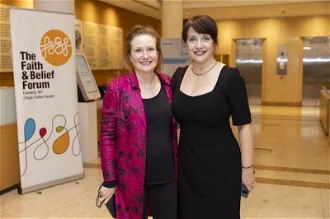
Esther Sweetman and Nikki Dhillon Keane. Image: Faith & Belief Forum

Source: Independent Catholic News

Safe in Faith, a Caritas Westminster project, providing faith-based support to victims of domestic abuse, was recognised in the London Faith & Belief Community Awards recently. The project was presented with the award in the Health & Wellbeing category, which recognises projects that create specialised services for the health and wellbeing of Londoners.

Accepting the award were Nikki Dhillon Keane, Head of Safe in Faith, and Esther Sweetman, Partnership Manager at Restored, a partner organisation that provides faith-based counselling.

Safe in Faith supports survivors of domestic abuse, sexual violence and exploitation in ways that understand how their faith impacts their experiences. Although it is a Catholic organisation, it provides support and counselling to anyone who would benefit from a faith informed approach.

Bishop John Sherrington, Auxiliary Bishop in Westminster and Lead Bishop for Life Issues at the Bishops’ Conference of England and Wales, said: “This is a significant recognition of the importance of a faith formed support for victims/survivors of domestic abuse and gender-based violence (GBV).

“Congratulations to Nikki Dhillon Keane of Caritas Westminster whose dedication and persistence have led to the development of this programme. Nikki has contributed to the Domestic Abuse Working Group of the Bishops’ Conference in the past and now develops this work in coordination with CSAN (Catholic Social Action Network).”

Safe in Faith provides training for clergy, religious sisters and pastoral workers to understand domestic abuse in the context of religious faith; how faith can be a support but also at times a barrier to safety. The training equips faith leaders to provide trauma-informed and knowledgeable support and signposting to help victims/survivors access the support they need.

Safe in Faith also has an interfaith network of counsellors and psychotherapists working at the intersection of domestic abuse, gender-based violence and faith. The project provides free and low-cost training for practitioners in working with abuse and trauma in the context of faith and spirituality.

For more information on Safe in Faith see: https://safeinfaith.org.uk/