Nikki Dhillon-Keane writes on assisted suicide: protecting victims of domestic abuse

Nikki Dhillon-Keane

Source: CBCEW / thetablet.co.uk

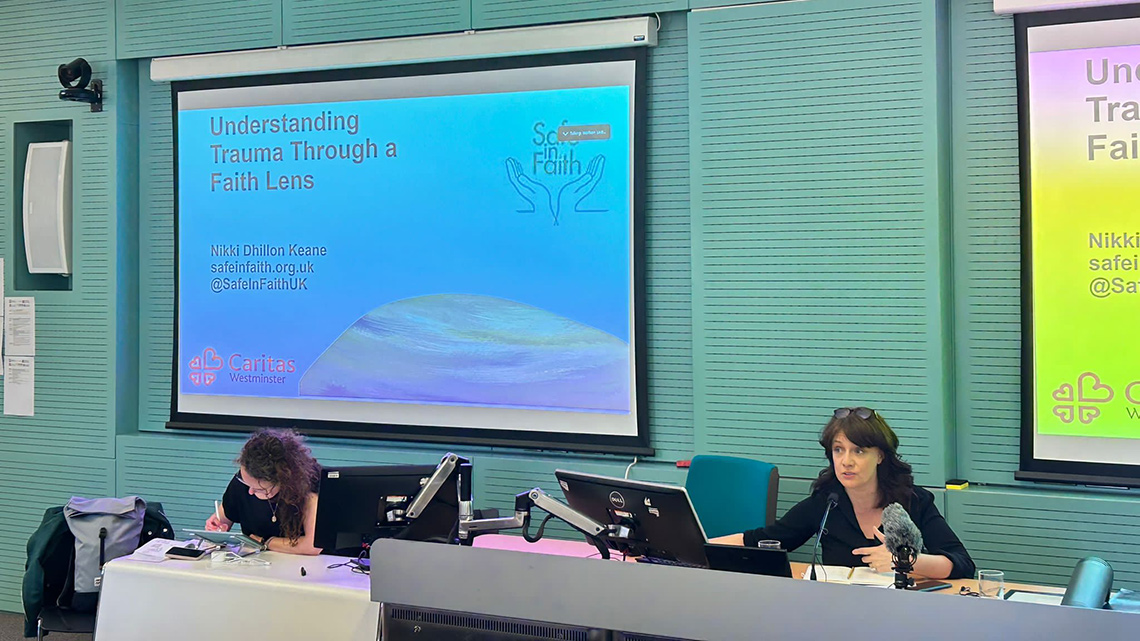
Nikki Dhillon Keane, founder of Safe in Faith UK, is a therapist who helps survivors of abuse and Head of Service at Caritas Safe in Faith on domestic abuse and assisted suicide.

‘The criminal justice system is just acknowledging the scale of possible criminal culpability in domestic abuse and suicide, while at the same time, a bunch of MPs seek to make it non-criminal.’

The questions raised by the proposed Terminally Ill Adults (End of Life) Bill are highly complex. It is difficult to imagine the deeply personal experience of terminal illness, for patients and their families. Raising questions about the safety of proposed legislation should in no way be viewed as a lack of compassion for people nearing the end of their lives; rather as an attempt to ensure that all people affected by this legislation, particularly the most vulnerable, are safe from harm.

There is one particularly vulnerable group for whom this legislation could significantly increase risk: victim/survivors of domestic abuse.  Often invisible, they have, until very recently, been all but totally absent from the debate around assisted suicide.  For many people being subjected to domestic abuse, however, this danger is all too evident.

Shortly after the evidence session of the Committee stage of the bill began. I found myself listening to Helena (not her real name), who was telling me why she was so worried about the bill: “It’s not for the same reason that other people have a problem with it,” she tells me.

Helena is a domestic abuse survivor, who used to live with her former husband in a country with legalised assisted dying. She explained her fear: “It is when your spouse wants to kill you, and the state gives them a totally legal way to do it…”

As a disabled woman, Helena had a higher risk of domestic abuse. In the UK, one in two deaf and disabled women experience domestic abuse during their lifetime. Helena continued: “My husband used to threaten to euthanise me if he got fed up with being my carer.” She tells me that legislation had expanded there to include chronic, not just terminal, illness – the all-too-familiar slippery slope.

For almost 20 years, Helena was subjected to coercive control by her then husband. Recognised in the UK as a criminal offence under the serious crimes act 2015, coercive control is the umbrella under which all the other forms of domestic abuse are perpetrated. Threats and isolation are common tactics, as is weaponising whatever is available for the perpetrator to gain and maintain control. If a victim has a disability or chronic illness, it is very common for that to be used by the perpetrator as part of the abuse, restricting access to medication, or aids such as wheelchairs or hearing aids. If the perpetrator also has the role of carer, escape – or even a chance to safely disclose abuse – can be almost impossible. Disability or illness can leave domestic abuse victims completely trapped with their abuser.

I have spent most of the last quarter century working with victim/survivors of domestic abuse. Coercive control, which tends to escalate slowly and subtly over time, can be extremely hard to recognise, even for those being subjected to it. It is even harder to prove. Any signs of physical harm are probably well hidden, or more often not present at all. Sometimes the first act of physical violence is the fatal one. More often, however, when domestic abuse becomes fatal, it is through suicide. An estimated three women take their life every week as a direct result of domestic abuse. A further 30 female domestic abuse survivors contemplate suicide every day. Recognition of the causal link between domestic abuse and suicide is a very recent development in British law. Domestic Abuse Related Death Reviews (which unlike Domestic Homicide Reviews, investigate domestic abuse related suicide) were only introduced in May 2024. While this development is welcome, most health and social work professionals receive little or no training in coercive control, missing opportunities to prevent further deaths.

Proposed amendments to the assisted suicide bill would require mandatory training for professionals to help them spot coercion. Most likely, this is intended as an important protection against relatives, motivated perhaps by thoughts of a dwindling inheritance, gently pressuring a terminally ill relative to consider the option of a swift assisted death, rather than expensive palliative care. However, training to help professionals recognise a terminally ill person wishing for death as the only escape from the torment of abuse is a more complex matter.

Macmillan Cancer Support has released a toolkit for professionals working with cancer patients to help them recognise domestic abuse. Just as they do with disabilities, domestic abuse perpetrators tend to weaponise critical or terminal illness as part of their abuse. Domestic abuse victims and perpetrators can be any age. Sometimes perpetrators abuse their spouse for decades. We need to be aware that there is a very real possibility that someone nearing the end of their life may also be a victim of domestic abuse, and that this is likely to affect decisions about assisted suicide.

Given the high levels of suicidality among victims, and the control that abusers have over them, it is easy to see how assisted suicide legislation could be twisted into a method for perpetrators to kill their spouse with impunity.  Prof Jane Monkton-Smith, a specialist in fatal coercive control, has shared her fears about the bill on social media: “The CJS [criminal justice system] is just acknowledging the scale of possible criminal culpability in domestic abuse and suicide, whilst at the same time, a bunch of MPs seek to make it non-criminal.”

Currently, in the UK, a woman is murdered by her partner or former partner every five days. In countries where assisted suicide is legalised there is (perhaps unsurprisingly) a significant lack of research into any potential links between legally assisted suicides and domestic abuse. However, there is information from the UK regarding so-called “mercy killings”. This is a term used to describe someone being killed illegally but with the claimed intent to relieve suffering. A disturbing review of over 100 UK mercy killings by the research centre The Other Half found that “mercy killings are not the wanted, hastened deaths that need assisted dying. They are overwhelmingly violent domestic homicides of women by men”.

Whatever views people may have about what it means to die with dignity, it is clear that there are serious risks which would arise from passing the assisted suicide bill into legislation. As Helena put it: “I just don’t want anyone living with the fear and threats that I had. Whatever we do, we need to make sure that we don’t open the door to another way for men to harm women and get away with it.”
Link

Caritas Westminster – Safe in Faith

Cardinal Nichols Criticises ‘Deeply Irresponsible’ Assisted Suicide Bill

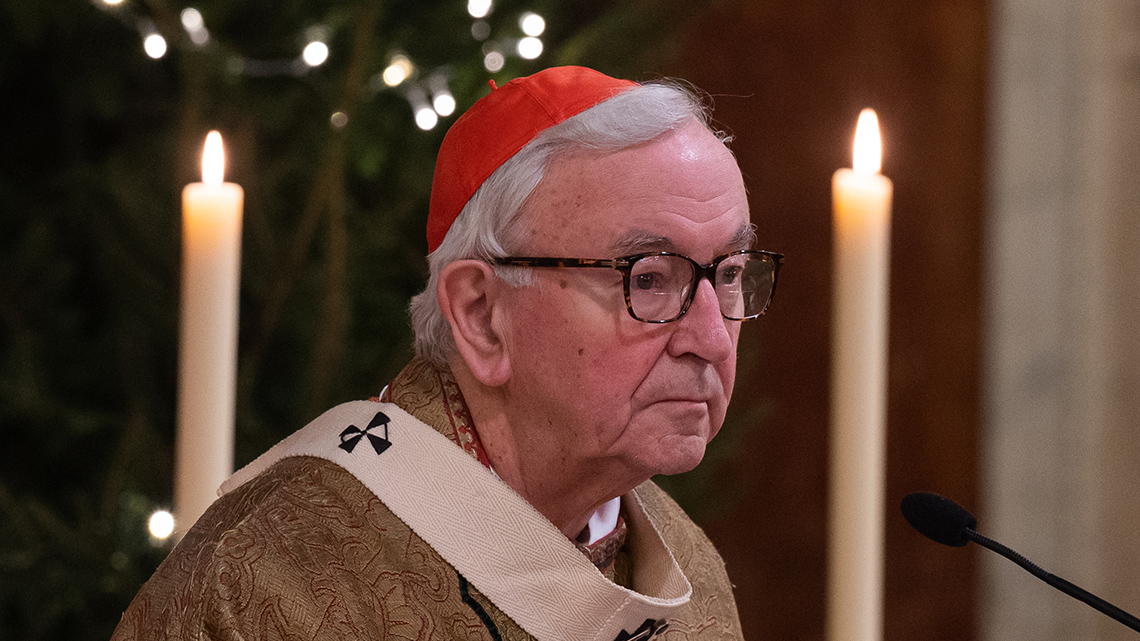
Source: RCDOW Photo: © Mazur/cbcew.org.uk

Cardinal Nichols has called the way in which the assisted suicide bill is being handled ‘deeply irresponsible’ and a ‘shambles’.

Speaking to Christian Fellowship, a group at News UK, the Cardinal expressed serious concern that MPs had only spent a few hours debating assisted suicide when they spent more than a hundred times longer debating banning fox hunting in 2004.

He said:

‘I believe it is deeply irresponsible of any government to allow a change of this magnitude to be carried out without due, proper, government-supported parliamentary process’.

‘I think what’s happening, if it came to pass, would be the biggest change that this country has seen for many, many decades at least, probably more. On the back of what – five, six, seven hours’ debate?

‘I was told that the fox hunting bill [in 2004] endured 700 hours of debate.’

Despite these concerns, he hoped that the bill could still be defeated as it makes it way through the Houses of Parliament: ‘I don’t think that story’s over yet.’

The Hunting Act 2004 passed after 700 hours of parliamentary debate and a government inquiry – the Terminally Ill Adults (End of Life) bill, passed on November 29 by 330 to 275 last year after five hours of debate.

Cardinal Nichols added that there was ‘something deeply lacking in a government that isn’t prepared to guide and sponsor,if it wants to, this process of legal change’.

In October last year, Cardinal Nichols issued a pastoral letter to his diocese, encouraging Catholics to contact their MPs ahead of the debate.

In it, he raised concerns: ‘the right to die can become a duty to die’.

He said:

‘Once assisted suicide is approved by the law, a key protection of human life falls away. Pressure mounts on those who are nearing death, from others or even from themselves, to end their life in order to take away a perceived burden of care from their family, for the avoidance of pain, or for the sake of an inheritance.’

‘The radical change in the law now being proposed risks bringing about for all medical professionals a slow change from a duty to care to a duty to kill.’

Catholic Medical Association Statement on Assisted Dying

The president of the Catholic Medical Association, Dr Mike Delany has appealed to Members of Parliament to oppose legislation to bring in assisted suicide when the Terminally Ill Adults (End of Life) Bill is given its second reading on 29 November.

Dr Delany commented that assisting a person to end their own life is contrary to the Christian understanding of the sanctity of life and the role of medical practitioners and that it is also contrary to our understanding of the meaning of compassion. Compassion means to “suffer with” another person. It involves accompanying people, especially during sickness, disability and old age when we know that people are frail and vulnerable. Such accompaniment is the responsibility of all those who care for those who are suffering, including medical practitioners.

We believe it is wrong for doctors to help somebody to deliberately kill themselves and that such actions have no place in a compassionate society.

In common with many others, we see the dangers of the legalisation of assisted suicide for the future of palliative care and we also fear the progressive relaxation of the proposed safeguards. However, there are particular concerns for the medical profession.

This legislation has the potential to fundamentally change the relationship between doctor and patient. Doctors will be allowed to initiate a conversation about assisting patients to commit suicide if they meet the criteria. No doctor should be allowed to initiate a conversation that leads to him or her offering to help a patient kill themselves.

We reject entirely the language of the proponents of the bill who have suggested that assisted dying “does not shorten life, it shortens death.” This changes fundamentally how we think about people in the later stages of life who are very much alive and have a right to the care they need to live in dignity.

The conscientious objection clause proposed in the bill is very weak. Any doctor who refuses to participate in discussions about assisted suicide will be required to refer the patient to another doctor who will. This means that any doctor, upon qualification, will be required by law to co-operate in the deliberate taking of the life of another human being: if not in person, by referral to another doctor. No Catholic doctor could do that in good conscience.

We are concerned too for the Catholic hospices and care homes in which we work. It would seem likely that, if the bill becomes law, they will be required to co-operate with assisted suicide. This would create major problems for our Catholic care sector, which has genuine compassion at its heart, and it would undermine further the provision of palliative care in this country.

On these grounds, and on many others, I ask all Catholic healthcare workers to write to their MPs to oppose this bill.

Contact your MP

There is a simple online mechanism to contact your MP. It takes little more than a few minutes to input your postcode, make sure the suggested text suits your viewpoint and submit your message to ask your MP to stop assisted suicide being rushed into law.

Click here to contact your MP via the Right to Life UK website.

LINK

Catholic Medical Association: https://catholicmedicalassociation.org.uk/

Cardinal calls on Catholics to take action and oppose assisted suicide

Photo: RCDOW

Cardinal Vincent Nichols, President of the Bishops’ Conference and Archbishop of Westminster, has issued a pastoral letter on assisted suicide that will be read in the churches of his diocese on the weekend of 12-13 October. 

Referring to a private members’ bill on assisted suicide that will be introduced to the House of Commons on Wednesday, 16 October 2024, the Cardinal offers three key points for Catholics to be aware of, and calls on the faithful to be fully engaged in the debate and to write to their MP to oppose assisted suicide being rushed into law.

Slippery slope

‘The evidence from every single country in which such a law has been passed is clear,’ says Cardinal Vincent. ‘That the circumstances in which the taking of a life is permitted are widened and widened, making assisted suicide and medical killing, or euthanasia, more and more available and accepted.’

Be careful what you wish for, he says: ‘This proposed change in the law may be a source of relief to some. But it will bring great fear and trepidation to many, especially those who have vulnerabilities and those living with disabilities. What is now proposed will not be the end of the story. It is a story better not begun.’

A right to die can become a duty to die

The Cardinal’s second key point examines how removing legislation that prohibits an action in favour of introducing a law that permits, changes societal attitudes – that which is permitted is often and easily encouraged.

‘Once assisted suicide is approved by the law, a key protection of human life falls away. Pressure mounts on those who are nearing death, from others or even from themselves, to end their life in order to take away a perceived burden of care from their family, for the avoidance of pain, or for the sake of an inheritance,’ says Cardinal Vincent. ‘I know that, for many people, there is profound fear at the prospect of prolonged suffering and loss of dignity. Yet such suffering itself can be eased. Part of this debate, then, must be the need and duty to enhance palliative care and hospice provision, so that there can genuinely be, for all of us, the prospect of living our last days in the company of loved ones and caring medical professionals. This is truly dying with dignity.

‘The radical change in the law now being proposed risks bringing about for all medical professionals a slow change from a duty to care to a duty to kill.’

Being forgetful of God belittles our humanity

His third point is that being forgetful of God belittles our humanity. For people of faith, our life flows from God and is a gift of the Creator. Cardinal Vincent emphasises that suffering is an intrinsic part of our human journey:

‘The questions raised by this bill go to the very heart of how we understand ourselves, our lives, our humanity,’ he says. ‘Every human being is made in the image and likeness of God. That is the source of our dignity and it is unique to the human person. The suffering of a human being is not meaningless. It does not destroy that dignity.’

One of the fundamental concerns surrounding this bill is that it will give a person of sound will and mind the right to end their life:

‘We know, only too well, that suffering can bring people to a most dreadful state of mind, even driving them to take their own lives, in circumstances most often when they lack true freedom of mind and will, and so bear no culpability. But this proposed legislation is quite different. It seeks to give a person of sound will and mind the right to act in a way that is clearly contrary to a fundamental truth: our life is not our own possession, to dispose of as we feel fit. This is not a freedom of choice we can take for ourselves without undermining the foundations of trust and shared dignity on which a stable society rests.’

This is not a debate that starts and ends next week. Cardinal Vincent concludes by asking Catholics to play an active part in the conversation in the coming months. ‘Have discussions with family, friends and colleagues. And pray,’ he says. ‘Please remember: be careful what you wish for; the right to die can become a duty to die; being forgetful of God belittles our humanity.’

Read the Cardinal’s Pastoral Letter in full here.

Link

Catholic Bishops Conference of England and Wales – Ten reasons to oppose assisted suicide and euthanasia

Better Off Dead? – Review of BBC1 documentary presented by Liz Carr

Right to Life – Contact your MP