Nagasaki 75 – Witness Outside Westminster Cathedral

A stark reminder

Report from Independent Catholic News

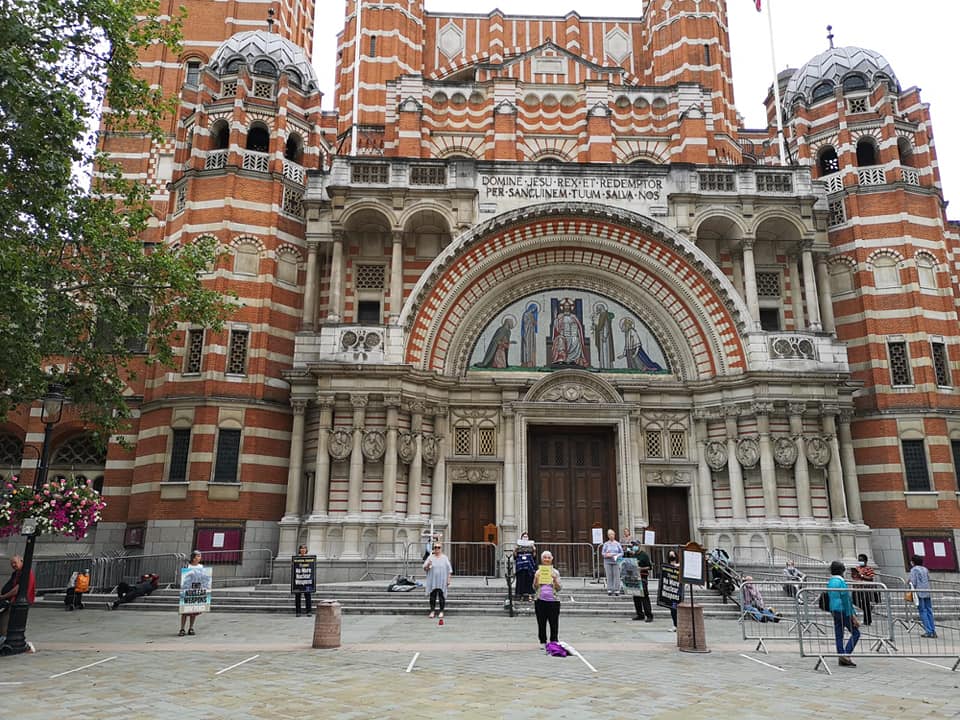
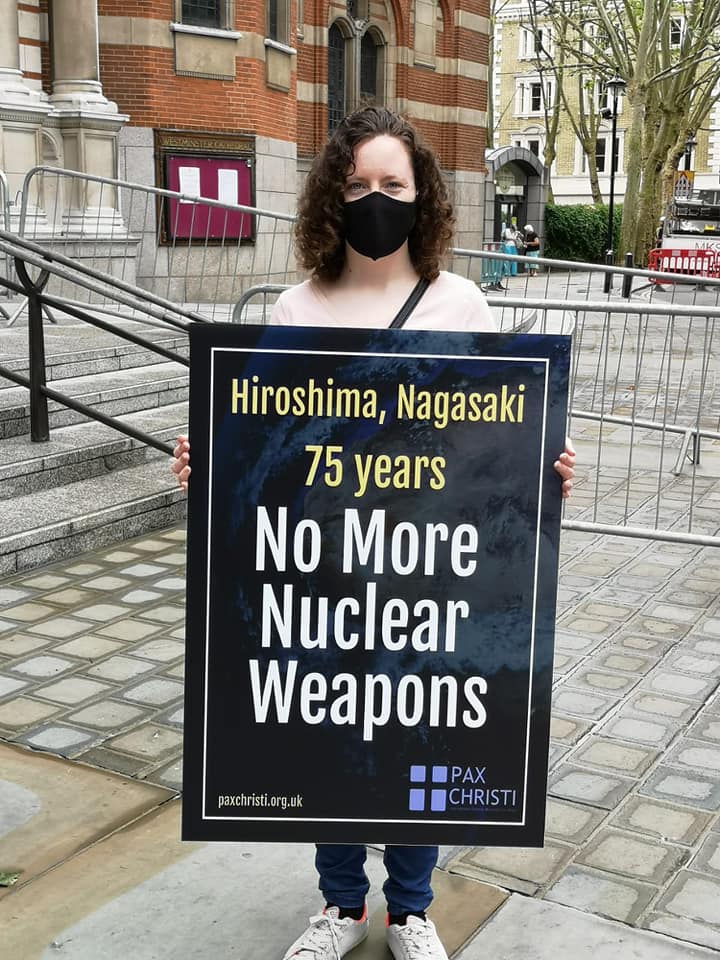
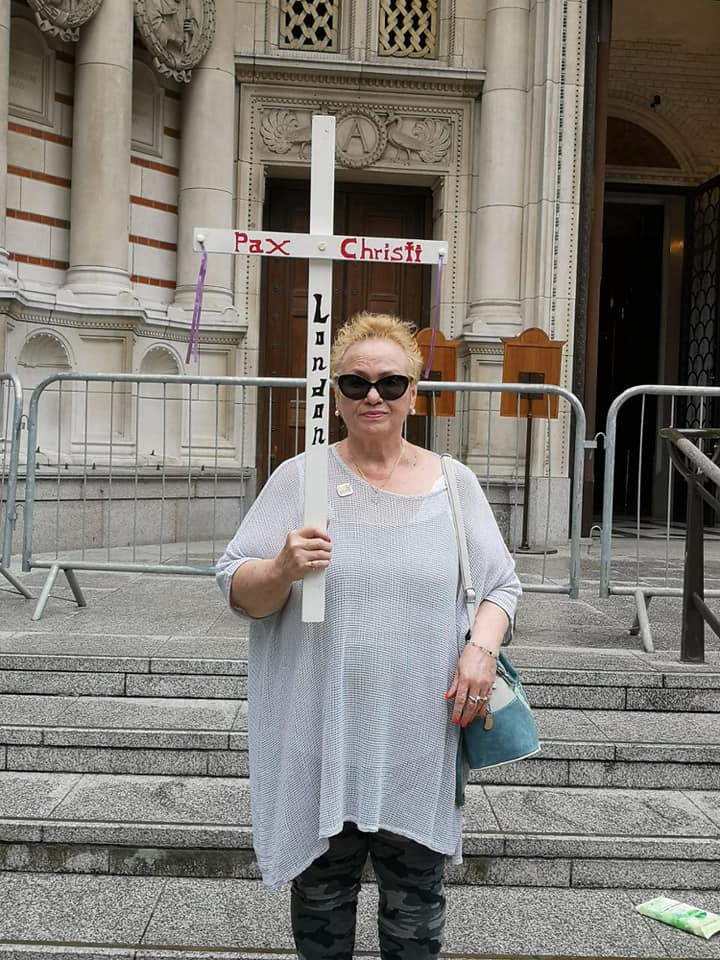
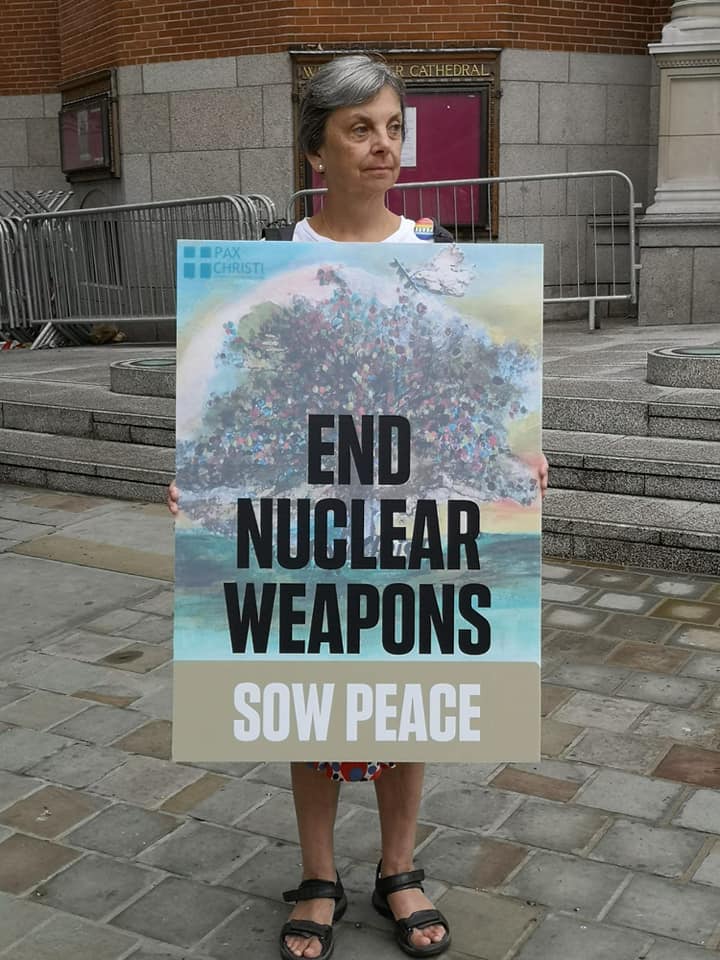
Peace campaigners stood in the Piazza outside Westminster Cathedral on Sunday for the annual vigil commemorating those who died when the second atomic bomb was dropped on Nagasaki killing about 80,000 people. A vigil was also held outside the Cathedral on Thursday 6 August, marking the first atomic bomb on Hiroshima which left 146,000 dead.

Pat Gaffney, former general secretary of Pax Christi, told ICN: “It was good to be with members of Pax Christi and Westminster J&P for the annual Nagasaki vigil outside Westminster Cathedral. To witness to the horror and suffering inflicted on that city was especially important this year, the 75 anniversary.

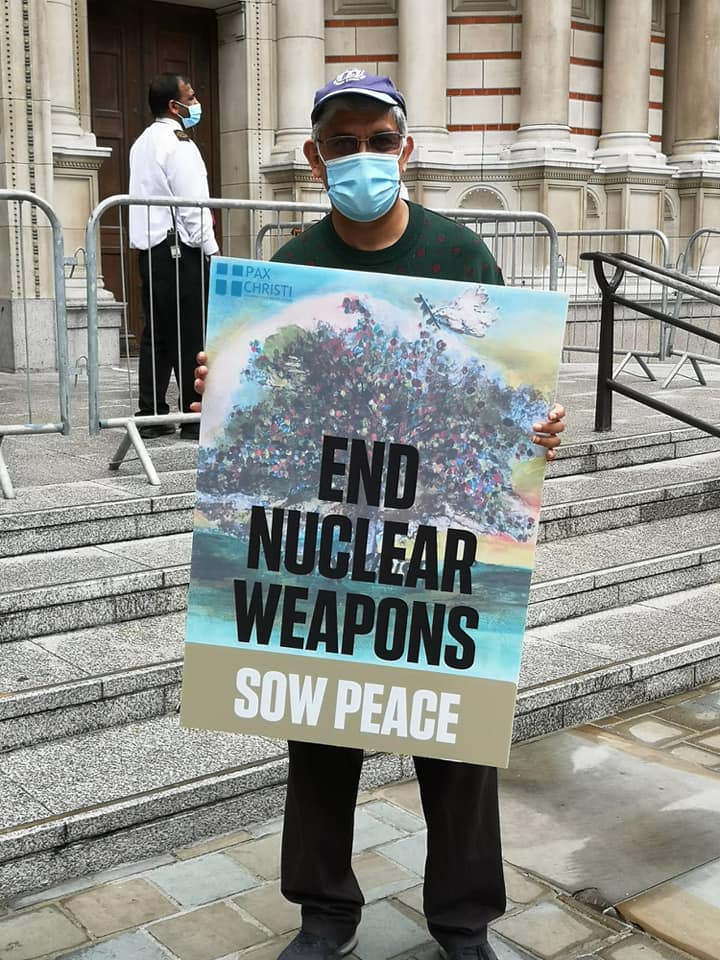
“Our messages were clearly presented in a safely distanced way to those waiting to attend the two Masses in the Cathedral. Our call and prayer were for the abolition of nuclear weapons with the practical ask to our own Government to become a signatory to the Treaty on the Abolition of Nuclear Weapons.”

Find out more about Pax Christi here: https://paxchristi.org.uk/

Hiroshima 75 – Witness at Westminster Cathedral

Pax Christi and J & P members outside Westminster Cathedral, 6th August 2020

Westminster Justice & Peace joined Pax Christi this morning for a silent witness outside Westminster Cathedral to remember those who died in the nuclear bombing of the Japanese city Hiroshima 75 years ago today, and to call for a ban on nuclear weapons. We will return on Sunday for another witness to recall the bombing of the second city, Nagasaki.

Details for joining the Witness on Sunday 9th August 2020

Hiroshima and Nagasaki Remembered – Call for nuclear powers to sign UN Treaty

Statement from the Westminster Justice and Peace Commission:

In August we as a country will want to mark the 75th anniversary of the atom bomb attacks on Hiroshima and Nagasaki.  This was the world’s first, and only ever, use of nuclear weapons in conflict. Pope Francis visited both cities last year, laid a wreath at the memorials, and prayed for the more than 200,000 people who died instantly or in the months after the two attacks.  He said “this place makes us deeply aware of the pain and horror that we human beings are capable of inflicting upon one another”.

In marking this important anniversary, we commend to our fellow Catholics, and all people of goodwill, Pope Francis’ call for a world without nuclear weapons.  We can surely all agree with Pope Francis when he said that “In a world where millions of children and families live in inhumane conditions, the money that is squandered and the fortunes made through the manufacture, upgrading, maintenance and sale of ever more destructive weapons, are an affront crying out to heaven”.

75 years on from Hiroshima and Nagasaki, we have an opportunity now to demonstrate creative moral courage.  We have a particular responsibility to reflect on Pope Francis’ conviction that possessing or deploying nuclear weapons “is immoral”.  So as we look forward to the UN Treaty for the Prohibition of Nuclear Weapons passing into international law soon, we call on the government, along with the other nuclear powers, to sign the treaty and be part of a future built on just international relationships and the common good of all humanity. 

Hiroshima and Nagasaki – 75th Anniversaries 6th & 9th August 2020

Paper Cranes for Peace

Pax Christi England and Wales have organised a series events from 6-9th August 2020 to mark 75 years since the first atomic bombs were dropped on the Japanese cities of Hiroshima and Nagasaki at the end of the Second World War.

Thursday 6th August 10.00-11.30am: Hiroshima. There will be a silent, outdoor, socially-distanced presence outside Westminster Cathedral. If you can safely join us, please come and stand in silence for a while. The plaza space is large so you will be able to maintain a distance. You might like to bring a candle, some flowers, or a sign, but just to be present will be enough.

Sunday 9th August 10.00-11.30am: Nagasaki. There will be a silent, outdoor, socially-distanced presence outside Westminster Cathedral. If you can safely join us, please come and stand in silence for a while. The plaza space is large so you will be able to maintain a distance. You might like to bring a candle, some flowers, or a sign, but just to be present will be enough.

Pax Christi also invite you to join them each morning from 6th to 9th August at 8.00am for an Online Time of Prayer and Reflection.

‘Come, Lord, for it is late, and where destruction has abounded, may hope also abound today that we can write and achieve a different future. Come, Lord, Prince of Peace! Make us instruments and reflections of your peace!’

Pope Francis

Advocacy for London’s Homeless

From: Catholic News Agency 28th July 2020

Fr. Dominic Robinson, pastor of Farm Street Church in Mayfair, told CNA the newly homeless would require government support in order to survive the crisis.

“It’s going to be a long haul. I think that they’re going to need a lot of help. They are going to need charitable help from faith groups, including the Church. They’re also going to need local authorities and national government to be on their side,” he said.

Robinson explained that many of those on the streets were unable to receive public funds because their immigration status was unclear. Some of the new homeless are from the 30 countries within the European Economic Area, but many come from outside Europe. 

He said: “There are a large number of newly homeless on the streets who have lost jobs, especially in places like the hospitality sector, who fall into a category of ‘no recourse to public funds.’ This is largely because of their unsettled status. Their status as a refugee hasn’t been verified yet.” 

“And so they fall into this limbo. They lose their jobs, then they lose their home and they have no access to benefits.”

When the government imposed a lockdown in March to curtail the spread of the coronavirus, around 15,000 homeless people were placed in hotels. Around 4,000-6,000 of them were categorized as having “no recourse to public funds,” which meant that they were not normally eligible for housing support. 

Robinson said: “We’ve been advocating that the government give a temporary reprieve on ‘no recourse to public funds’ because we’re seeing a large number who would be barred from benefits and who’ve been on the streets of London — and I’m sure other places up and down the country — at the time of a great public health risk. That’s not acceptable.” 

In a July 3 interview with the BBC’s Newsnight program, Cardinal Vincent Nichols of Westminster also urged the government to continue providing assistance to those who are formally barred from receiving public funds.

He said: “Well of course some people are here without proper paperwork. Of course they are. We know that. That’s been a fact of life in this country for many, many years.”

“But at this point we should be prepared to put all those things to one side and deal with the person in front of us. This is a human being whose life is full of trauma. They are here. We need to respond to that humanity in front of us, recognizing the innate dignity of each person and not simply consign them into an abyss.”

Robinson has served London’s homeless population throughout the crisis. When lockdown was imposed in March, the local authority, Westminster City Council, asked him to offer refreshments to the needy in Trafalgar Square, while the nearby parish of St. Patrick’s, Soho Square, provided food to more than 200 people a day.

“So at Farm Street we got together a team of local parishes — Westminster Cathedral, Holy Apostles, Pimlico, Holy Redeemer, Chelsea — and worked with Caritas Westminster to set up a project which five days a week served up to 200 homeless at its peak,” he said. 

“The refreshments were provided from people’s donations — people were very, very generous — and from local hotels, such as No 45 Park Lane at the Dorchester. We were working with the Connaught Hotel and Claridge’s, within Farm Street parish, to provide the food for the St. Patrick’s, Soho Square, service.”

The Jesuit priest said volunteers noticed that many people seeking refreshments were newly homeless. 

“What we were seeing was that a lot of people who were working for hospitality agencies — restaurants, pubs, hotels — were losing their jobs. So it seems to be an effect of the pandemic that there is now this even more serious crisis of many people who’ve lost their jobs who’ve become destitute — many of whom are homeless, some who are not homeless but have very little to live on — and so need a good deal of help.”

Robinson said he had experienced “a real mixture of emotions” while serving the homeless during the lockdown.

“It’s been wonderful to see the great generosity of our volunteers. It’s great to see the Church playing such an important role of serving those who are most vulnerable at this time,” he noted.

“It also breaks your heart — as it has done for a lot of our volunteers — to see young men and women in their 20s and 30s who have lost jobs, who have broken relationships, who’ve lost their way in society during this dreadful crisis.”

He continued: “There was one day when we had a large queue in Trafalgar Square. Because the volunteers had built up a very good relationship with the regular guests, they were chatting quite freely, getting to know them. And a guest had asked for some rosary beads and he was being given them. Then a whole group of guests came and also asked if they could have rosary beads.” 

“So you realized there was that connection being made between the Church and the Catholic faith and this charitable work. That was really quite inspiring to experience.” 

As the lockdown eases, the volunteers have moved from Trafalgar Square to a new base.

“We’ve been asked to set up a service in Warwick Street at the Church of Our Lady of the Assumption and St. Gregory, the ordinariate church,” Robinson said. 

“There, we’re providing showers for the homeless, and some help with IT, so that people can be helped to apply for jobs, and we’re just building that up at the moment. And we’re getting a steady stream of homeless, many of whom, again, are newly homeless.” 

Robinson suggested three ways in which Catholics can help the new homeless.

“Obviously at this time, when so many people are not able to go out very much, maybe have more time on their hands, it’s to pray — to pray for the homeless and to pray for the work which is going on for them and with them,” he said. 

“It’s to raise awareness as well — the second thing — to find accurate information about what’s going on. Because there’s a lot of fake news around. There’s a lot of fuzzy information, but to actually find out what’s really going on with the homeless on the street and to realize that it’s a much more serious state of affairs than some people might have us to believe.”

“And the third thing would be charity. We’re looking for more volunteers at Warwick Street. But also funds. While we need to hold local authorities to account in providing funds, we also do still need funds to continue to provide these services. So it’s prayer, more information, real information, and charitable action.”

Robinson said many of the newly homeless would struggle to get off the streets and return to employment.

“We need to keep advocating for them, for this most vulnerable group of people, and we need to keep them also hopeful, I think, through our presence in looking after them,” he said.

A Catholic Response to George Floyd and Black Lives Matter

Article by Ellen Teague, Independent Catholic News

“When you say, ‘I’m not racist’, you deny structural injustice” an African-American woman from the United States told a Westminster Justice and Peace zoom meeting on Friday. More than 65 people joined the meeting, ‘A Catholic Response to George Floyd and Black Lives Matter,’ where Leslye Colvin, speaking live from Alabama, deplored “racially segregated Christianity”. She highlighted the conflict between lived experience in her country and American ideals, saying that Catholic Social Teaching calls for Catholics to demand justice for all our neighbours. She felt “patriotism and faith” is fuelling nationalism in the US, but we must be, “ruled by a love and build the beloved community”.

Leslye lamented the recent killings of George Floyd and three other black people. “They were murdered because of systemic racism” she said; “it could have been me; maybe it will be me the next time.” Seeing colour is not the problem, she felt, but judging people because of colour. Referring to the particular discrimination experienced by the black community, she suggested that, “when you say ‘all lives matter’, you deny our lived experience”. She invited participants in the meeting to become allies and, “take one step at a time, for this is not a sprint, it’s a marathon, for the roots of racism are deep within our societies”. Leslye said she appreciated, “knowing I have brothers and sisters in the UK”.

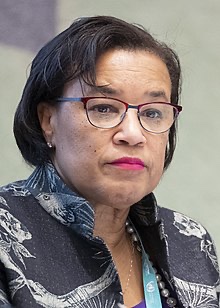
The second speaker was Baroness Patricia Scotland of Asthal, QC and Secretary General of the Commonwealth of Nations. She is a dual citizen of the UK and the Caribbean island of Dominica, where she was born, and was the first black woman to be appointed a Queen’s Counsel. She spoke about ‘Black Lives Matter’ from the UK perspective, saying, “US experience is mirrored here – it’s a common global experience”. She agreed that racism is systemic and endemic. Describing herself as a Catholic “of the Windrush generation,” she remembered as a child seeing TV images of black children being hated and shot at in South Africa and asking ‘Why?'” She saw similar images in the south of the United States. “Being black meant I would be spat at, beaten up on way home,” she reported, and “growing up, there was a feeling that black people could not achieve”. However, she was also taught that, “each of us had a gift from God and we have to use it.” 

She felt the Commonwealth has been radical, wanting mixed sport, for example. It has not accepted discrimination, and in 1953, Queen Elizabeth ll described the Commonwealth as a new concept of the best of humankind. The story was highlighted of the queen breaking barriers by dancing with President Kwame Nkrumah of Ghana in 1961, demonstrating her acceptance of a new footing between their countries.

Baroness Scotland felt, “our humanity is on trial, and the George Floyd case highlighted this”. She suggested we must reflect on what Christianity means for us? “Christianity is not something we do but something we are?” and she reflected, “there are no races in God’s eyes – just one race, the human race”. She called for the election of leaders better able to address the issue and for prayer and action for racial equality.

The meeting on 24 July was the most ethnically diverse I have been on and with a strong international dimension, with participants from several parts of the United States and the Zimbabwean Chaplain in London. Catholic groups represented included Catholic Association for Racial Justice (CARJ), Newman House Chaplaincy, Caritas Westminster, Catholic Children’s Society, Pax Christi and Columban JPIC. A range of Westminster parishes included Holloway, Royston, Pinner, Finsbury Park, West Green, Twickenham, Eastcote, Euston, and Wealdstone. There was participation from Southwark, Hexham & Newcastle and Clifton dioceses as well, showing the considerable interest in the subject.

Fr Dominic Robinson, SJ, Parish Priest, Farm Street Church of the Immaculate Conception and chair of Westminster Justice and Peace Commission, said “this was an inspiring and challenging evening”. He feels “racial justice is central to Catholic Social Teaching and so to all our lives as Church”. 

The Chair, Suddie Komba-Kono, said she was disappointed with Church silence in the UK over ‘Black Live Matter’. Many seemed to agree, saying in the chat that the Church, particularly priests, have a responsibility to highlight racism as a sin as is done for other social justice issues. “Even black parish priests don’t preach about racism during times when racial injustice takes place, which is very disappointing” was one comment, and “the Church needs to pay attention to ensuring that the clergy and those in leadership positions access ‘Cultural Competence’ training as part of their preparation for leadership and service to the faithful.” Lorna Panambalum, a black teacher, commented that education is key and, “we need to look at the structure of our education system”. She asked, “how are we making sure we know the history of racism in our society and Church?”

Participants agreed we have a special opportunity at this time for learning about structural racism. The Quaker ‘Black Lives Matter’ five-week seminar course was recommended, which has an extensive reading and resource list. It was felt that the Quakers have always been activists on the race issue, being against the Trans-Atlantic slave trade and supporting abolitionist efforts and now their ‘Black Lives Matter’ initiative.

LINKS:

Leslye Colvin at: https://leslyeslabyrinth.blogspot.com/

Article by Baroness Scotland:  https://news.trust.org/item/20200608160407-7o4ug/

Being Black and Catholic + Videos – Produced by Westminster Diocese – www.indcatholicnews.com/news/40033

Black Lives Matter: Learning for Quakers: www.quaker.org.uk/events/blacklivesmatter

The history (and teaching) of racism was addressed in the recent Cumberland Lodge webinar series, with recordings on their website www.cumberlandlodge.ac.uk/project/dialogue-debate-black-lives-matter

E-Bulletin July 2020

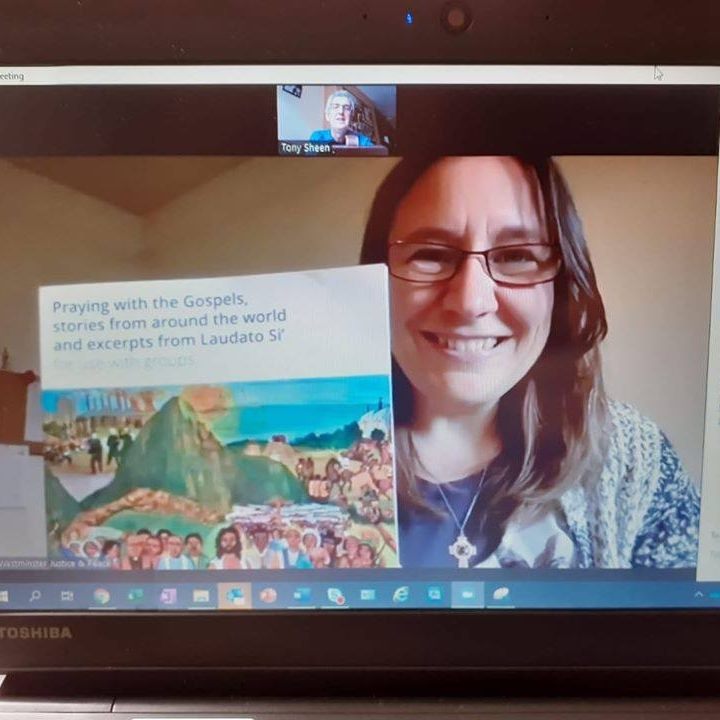
Colette Joyce, Westminster Justice & Peace Co-ordinator, practises for the Caring for Creation Zoom Webinar

For us at the Commission, it has been an important month for conversation and dialogue, as we try and grapple with the ‘new normal’ and reflect on the world we are trying to build as we emerge, tentatively, from coronavirus lockdown measures. What have we learnt to do differently that we want to keep? What do we need to change?

Last week we held a webinar to help parishes and other organisations prepare for the Season of Creation 1st September – 4th October, with people attending from all over the Diocese and beyond. A Zoom recording of the event is available to view on our website, along with a page of resources to get you started. Please let us know about any ideas, reflections and other resources you may have…

Resources for the Season of Creation   

We are also looking forward to our next webinar on racial justice on Friday 24th July, 7.30-8.30pm. Please sign up and join us in reflection on our response as Catholics, individually, as a Diocese and as an international Church:

A Catholic Response to George Floyd and Black Lives Matter

More details for both these events and more can be found in the E-Bulletin. Please download and share.

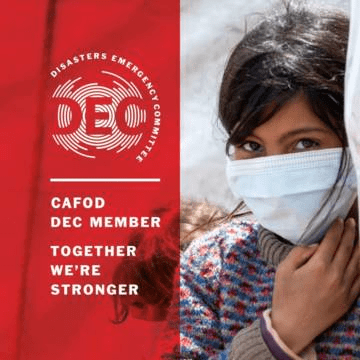
CAFOD Join DEC Coronavirus Appeal

CAFOD have joined forces with the Disasters Emergency Committee (DEC) to scale up our response, ensuring that no one is beyond reach of the aid they need to survive.

Families who have been forced to flee their homes and have lost everything in places like Syria, South Sudan and DR Congo are particularly vulnerable to the virus.

For countries that have had years of conflict, people will struggle to access healthcare. Lockdown in these countries means that many people will suffer a huge loss in income, pushing people further into poverty and putting millions at risk of hunger and malnutrition.

For refugees, such as the Rohingya refugees in Bangladesh, overcrowding and a lack of hygiene facilities in refugee camps means that the spread of the virus will be devastating.

How can I help?

In order to continue protecting and improving the lives of those in poor communities, your gifts are needed now more than ever. Your essential support will help families survive.

DONATE TO CAFOD