AnnaElisa is on an intern placement with Caritas Westminster and has been visiting a number projects around the Diocese. She spent an afternoon (online!) with Westminster Justice & Peace as part of her placement and here she shares some reflections on her learning.
With an ongoing war in Ukraine and a resulting refugee and human rights crisis, I often hear the terms “justice” and “peace,” but I rarely hear them in the context of love. As a young Catholic, I believe love is the link between justice, peace, and the urgent need for both in our present society. The idea of love for all in society was advocated by Jesus Christ in the Bible verse: “The second is this: love your neighbour as yourself. No other commandment is greater than these.” – Mark 12:31. Within this commandment, I find the meaning of justice and peace and the calling to promote these ideas in our world today.
The root of justice is the equality of love: if we must love our neighbour as ourselves, then everyone must be treated with equal dignity, respect, and kindness. Furthermore, each of us, as God’s children, must be given an equal opportunity to fully live our lives and participate in society. Thus, the struggle for justice is the struggle to ensure that we love each of our neighbours equally so that we are able to live the life God intended for us.
Peace, in light of Jesus’s commandment, is more than the absence of violence. Peace comes from knowing you are loved, valued, and cared for by God and others around you. Peace comes from the harmony and solidarity of an entire community helping each member to achieve a state of value and well-being through loving and caring for each other. In this way, the struggle for justice is working for peace for all of us, and striving for us to love each of our neighbours equally.
The national Synthesis developed by the Catholic Bishops Conference of England and Wales (CBCEW) is a marvel of lucidity, and one which tackled a series of difficult, and potentially controversial, issues in a thoughtful and sensitive manner. It constitutes an incredible contribution to the global debate about how the People of God should journey together to live out our Gospel values.
There is so much in it to be welcomed that it seems petty to focus on a serious weakness, rather than proceed to embed this model of a listening church into our faith lives in our homes, our parishes, our places of work etc. Still, this moment should not be let pass, without some recognition of the blindness that the Synthesis seems to show with regard to the issue of racism.
There is a paragraph devoted in the ‘marginalised groups’ section to “People of Colour” (paragraph 71), which might be considered an improvement on some of the diocesan reports which did not allude to this issue at all. However, the paragraph is, in my view, very wrong headed. The national Synthesis notes that there are few references in the diocesan reports to ‘people of colour’ being excluded (the word racism still does not appear anywhere), but this silence is ‘explained away’ on the grounds that our congregations are often so ethnically diverse. The impression is given either that racism is not a problem within our church, since people of colour themselves did not raise it in the diocesan reports; or, alternatively, racism cannot be a problem experienced in our church because we have such ethnically diverse congregations. Neither interpretation is credible.
The commitment to addressing the need for more diversity in leadership roles is important but insufficient.
Talking with others, they confirmed my view that the final Synthesis seems “totally blind to the issue of racism” and some felt “let down” by its silence on the topic. I accept that the diocesan submissions might not have addressed the issue of racism explicitly but surely our duty as a church is to listen to what the Holy Spirit is saying in the silences too? Were ‘people of colour’ engaged in the process in proportionate numbers (I was a parish synodal rep and noted in our written report that no non-white people engaged in our process)? If they did engage, were they comfortable in raising sensitive issues such as their treatment within broader society, and maybe also the treatment received from fellow parishioners? Maybe it is worse still if people of colour engaged in their parish or synodal processes but did not raise any concerns about exclusion because they did not feel that their experiences of racism had anything much to do with their faith journeys? There is plenty of documentation to show that racism is a problem that needs to be addressed from a faith perspective – just read the ground-breaking Rooting Out Racism report carried out by White City parish in Westminster diocese; or the submission to the national synodal process by the Catholic Association for Racial Justice (CARJ).
The Bishops will present this national Synthesis to the global church and (rightly) alluding to the fact that “the racial and cultural diversity of Catholics is seen as one of the great gifts of the Church in England and Wales”. However, I think that they must also be willing to see that racism is experienced by many in our society, and even in our pews. We, the People of God, need support in celebrating our diversity but also in recognising that many of the people we are journeying with experience racism. Absent this support, many faithful Catholics will remain blind to racism and, even perhaps quite unthinkingly, engage in it.
The next leader of the Conservative Party and the next Prime Minister must aspire to make the UK a global leader on climate change, nature restoration and environmental health. The environment needs to be centre stage in their campaign. Below are 10 commitments that a candidate, who’s genuinely commited to the environment, should be comfortable in making. If delivered, they would make a substantial difference to people’s lives and the environment and demonstrate global leadership.
Invest in the biggest ever UK-wide home insulation programme through a council-led street by street programme and provide additional financial support to low-income households.
Reject calls for the scrapping of the moratorium on fracking and the development of any new oil, gas, or coal extraction and instead say ‘yes’ to the rapid growth of onshore and offshore renewable energy.
Accept the Office for Environmental Responsibility’s recommendations for stronger targets for nature restoration and air quality, reverse plans to weaken habitats and environmental assessment laws, and swiftly implement the Environmental Land Management Scheme to reward nature-friendly farming.
Support calls for the human right to a clean, healthy and sustainable environment to be recognised by the UN General Assembly and put this into UK law, as an essential part of protecting people’s health and eradicating environmental inequalities.
Fix the Net Zero Strategy so it delivers on legally binding carbon reduction targets and the commitments made at COP26, ensuring all departments in Whitehall deliver their part, including the Treasury.
Decentralise power and resources to devolved nations and councils so that they can properly eradicate environmental inequalities, deliver on the Climate Change Act, restore nature and ensure planning rules are in line with the climate and ecological emergency.
Introduce a new UK Business, Human Rights and Environment Act to make companies accountable for environmental damage and human rights abuses in their overseas supply chains and to eliminate the UK’s role in global deforestation.
Follow through on the UK’s world-leading commitment to ending the financing of fossil fuel projects abroad by speeding up the decarbonisation of the UK Export Finance agency’s portfolio. This must include withdrawing funding from the Mozambique gas project and switching financial support to renewable energy.
Ensure all new trade deals have strong, enforceable climate change and nature protection safeguards and that food standards and nature-friendly farming are not undermined by imports produced to lower environmental standards.
Make the UK a beacon of democracy by reversing draconian restrictions on protest, guarantee the independence of the Electoral Commission, stop the attacks on the Human Rights Act, and ensure citizens can challenge unjust decisions through the courts.
Bishop Nicholas Hudson, auxiliary Bishop of Westminster and long-term bishop delegate of the Holy Land Coordination, has been named the new chair of the group.
The Holy Land Coordination, made up of bishops from across Europe, North America and South Africa, was set up at the end of the twentieth century at the invitation of the Holy See. The purpose was to visit and support the local Christian communities of the Holy Land.
The Coordination’s main remit is often expressed using four Ps: Prayer, Pilgrimage, Pressure and Presence.
The bishops are present every year, and by their presence they hope, above all else, to remind the ‘living stones’ – the Christians of the Holy Land – that they are not forgotten by their brothers and sisters in other parts of the world.
Bishop Hudson’s predecessor in the role, Bishop Declan Lang, stood down at the end of the May 2022 Coordination.
In an interview given from a rooftop overlooking the holy city of Jerusalem, Bishop Hudson talked about his previous visits to the Holy Land and why he’s so passionate about the region and its people.
Transcription
Interviewer:
Bishop Nicholas Hudson, standing here with me in this holy city, looking out across Jerusalem, and it’s a beautiful view, actually, in a city that means so much to us. You’re here as part of the Holy Land Coordination and you’ve been here half a dozen times or more now. Tell us where your passion comes from for this wonderful place…
Bishop Nicholas Hudson:
I think I’ll always remember the first pilgrimage I came on when we visited Bethlehem and Jerusalem, and I was deeply, deeply touched by it. It had more of an impact on me than I even expected, really, to be in the places that we don’t just associate with, but actually are the places of Jesus’s life, Passion, death and Resurrection. And it was deeply powerful.
I remember as well, part of the pilgrimage was going out to a refuge for elderly women where we were made truly welcome. It gave me a sense of something that I began to discover more through the Holy Land Coordination, just how much social outreach Palestinian Christians do – especially for those who are more on the margins of society. Then I was so pleased to be asked to be part of the Holy Land Coordination and began to get a deeper sense of what life is like for Palestinian Christians. When we talk about the Holy Land Coordination, we talk about the three Ps that describe the essence of what it is – prayer, presence and pressure.
Interviewer:
Meetings with people making a really big difference in society, those on the margins, whether it’s migrants, asylum seekers, the undocumented, those have no status in this country – these are very important meetings. But it is actually those parish visits, isn’t it? Standing alongside people, learning from them and understanding them a little bit more, understanding the pressures on their lives… I found that the most moving aspect, despite the fact that both components are important.
Bishop Hudson:
That’s very well said. There’s something deeply touching, not least the fact that you’re aware in some places that the parish communities have become quite small. And when, with respect and gentleness, you talk to the parish priest about it, he’ll tell you, well, yes, a lot of families left because they felt they needed to plan for their children’s future. But one of the signs of hope that we’ve seen during this Holy Land Coordination is the number of people, especially young people, who are saying, “whatever happens, we’re going to stay”. Now, that’s a very significant statement for us to be hearing out of Palestine’s Christian community, and we’re going to have to see to what extent that remains a possibility for them.
The other thing that I find really touching, is when we actually go and pay visits to some of the communities who are being cared for by members of those parish communities. I think a real highlight was when, a few years ago, we were in Bethlehem and we went to visit L’Arche.
L’Arche means the Ark, Noah’s Ark, and is a community founded about 60 years ago to welcome people with learning disabilities. There’s a centre just behind the Nativity Grotto very, very close to where Jesus was born, in Bethlehem. What I find really impressive about it is that it’s a mixed Muslim and Christian community. There in the heart of Bethlehem, they’re welcoming Muslim and Christian people with disabilities and really giving them life. The name of this community in Arabic is Ma’an lil-Hayat, which means ‘together for life’ and that really is part of the essence of what L’Arche is. L’Arche says to someone with learning disabilities, you can stay with us forever.
On another occasion we visited one of the sites which is thought to be the place of the Emmaus story called Abu Ghosh. Emmaus may have actually been in one of three places, but Abu Ghosh is one of the places where the story is revered. And I was so touched that alongside the church was another home where women, many of whom have learning disabilities, are welcomed and, again, they’re being valued and given life. We had another experience of going to a refuge for children of migrant workers. So there’s a great deal of Christian social outreach taking place and it truly warms one’s heart.
Interviewer:
It has been said, but it probably bears being said once more, that a lot of the Christian charity projects aren’t just for Christians, are they? This is a complicated region in many ways – a beautiful one, but a complicated one. You must be heartened, as a bishop, to see the Christian communities under pressure, providing for way more than just themselves.
Bishop Hudson:
I really am, and I think this is certainly a feature of those communities I’ve mentioned, but it’s writ large in the schools, the Christian schools under the care of the Latin Patriarchate, where they are truly open to having Muslims who want to send their children there. One hears from Muslims who do send their children to these schools something similar to what we hear from Muslims who want to send their children to our Catholic schools in England and Wales. That is “we like your values” and implicitly, therefore, “we want those values to communicate themselves and be communicated to our children.” So it’s writ large, particularly in the schools, yes.
Interviewer:
Now, it would be remiss of me not to point out that this is a bustling, busy, chaotic city. We can hear the trams, we hear the noise, we hear the beautiful bells, and, to be honest, the muezzin, the Islamic call to prayer, the Jewish life and culture is imprinted all over the city as well. It is a lovely place, but many people in England and Wales may not be able to come here. It’s not easy to come here. What would you say to them in terms of bringing a little bit of these holy lands back to England and Wales?
Bishop Hudson:
Well, I’d want to say straight away, that Jerusalem belongs to all of us, and there are 13 Christian denominations in Jerusalem, and it belongs to all Christian men, women and children. But we have to be careful when we say that and how we say that. Because one of the lessons of this Coordination, which has been focusing on Jerusalem the city, as a sacred city, is that we’ve been sensitised to the fact that we’re not the only ones who say “this is our city”. The Jews say “this is our city”, the Muslims say “this is our city”. I think we’ve woken up as a group to the reality that this is a Jewish city, this is a Christian city, this is a Muslim city. And that calls for us to be deeply respectful, but it also calls us to witness as Christians in and around this city to our conviction about all that Jesus says in the Gospels about loving your neighbour as yourself, to be respectful to those of other faiths, but also to have a special care for the poor. Christians, both in Jerusalem and around Jerusalem, are exemplary in that regard.
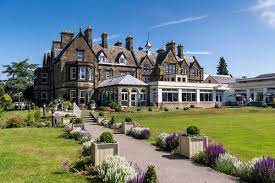
Owing to a cancellation, the Westminster Justice and Peace Commission is offering one free place for someone who lives, works or worships in the Diocese of Westminster to attend the 44th annual conference of the National Justice and Peace Network of England and Wales on 22-24 July 2022 at The Hayes Conference Centre, Swanwick, Derbyshire.
Travel costs and Conference fees will be fully covered.
To apply please contact Colette Joyce on colettejoyce@rcdow.org.uk or call her on 07593 434905
No takers yet! Deadline extended to 5pm on Monday 18th July...
The NJPN Conference theme this year is: ‘Hope is a verb with its sleeves rolled up.’
The Conference programme includes talks, workshops, times of prayer and a Just Fair. Every year it provides an opportunity to meet and network with other Justice and Peace activists from Dioceses across England and Wales as well as gain some fresh insights and encouragement to face the multiple challenges of our complex well. The Hayes is a beautiful and well-appointed Conference Centre whose facilities include a chapel and a labyrinth! The Conference is family-friendly, offering a creche and separate programmes for children and teenagers.
The opening address at the 2022 NJPN Annual Swanwick Conference is to be given by Philip McDonagh. In his talk, ‘Towards a Civilisation of Hope,’ he will speak of a hope that requires courage and action for the sake of the future. Philip is co-author of the recently published work ‘On the Significance of Religion for Global Diplomacy’ (Routledge 2021). He is Adjunct Professor in the Faculty of Humanities and Director of the Centre for Religion, Human Values, and International Relations at Dublin City University. As a serving Irish diplomat and Political Counsellor in London, Philip played a part in the Northern Ireland peace process in the build-up to the Good Friday Agreement. He later served as Head of Mission in India, the Holy See, Finland, Russia, and the OSCE (Organisation for Security and Cooperation in Europe).
Another conference speaker is Fr Patrick Devine SMA of the Shalom Center for Conflict Resolution and Reconciliation. A missionary priest, he has 25 years of experience helping to mitigate conflict and poverty in Africa.
The Conference Chair is Tim Livesey, CEO of Embrace the Middle East, who works with Christian partners in Egypt, Lebanon, Israel, Palestine, Syria and Iraq.
Revd Ruth Gee, a Methodist Minister and one of NJPN’s Patrons, will lead an Ecumenical Service on the Saturday.
We are reflecting on the theme of summer holidays for this month’s E-Bulletin.
Every year the first weekend of the school summer holidays, 22nd-24th July, witnesses the annual National Justice and Peace Network conference in Swanwick, Derbyshire, at the beautiful The Hayes Conference Centre. Fr Dominic and Colette will be attending and would love to see you there. It is always a great event with speakers, workshops, prayer, music, social time and networking to refresh and re-inspire your enthusiasm for peace and justice in our complicated world. Everybody is welcome and there are special programmes for children and teenagers, so the whole family can come along.
If you are the festival-going type, you might like to consider Greenbelt, the ecumenical Christian festival at Boughton House, near Kettering, 26th-29th August, the bank holiday weekend. Colette is a regular attendee and happy to tell you all about it if you give her a call!
There are the many other events to note across the usual array of issues. Please note that there is no E-Bulletin in August so the deadline for items for the September E-Bulletin is 30th August.
Kew Gardens Outing to the ‘Food Forever Festival’ with Westminster Justice & Peace, CAFOD and Caritas
This summer holidays, why not join us for a visit to see the world-famous botanical gardens and explore Kew’s exhibition on the future of sustainable food?
Protecting sustainable food sources is a major theme of social justice that is of great concern to CAFOD, Caritas and Justice & Peace.
Tony Sheen (CAFOD Westminster Community Participation Co-ordinator), Niki Psarias (Caritas Westminster Lead for Food) and Colette Joyce (Westminster Justice and Peace Co-ordinator) are coming together to lead this day out, enjoying the beauty of nature at Kew Gardens while learning more about this essential topic.
We will meet together inside the Gardens at the Victoria Gate entrance at 11am for an introduction to the festival and again in the same place at 4pm for a time of sharing and a closing prayer.
You are welcome to walk with us or to explore the gardens at your own pace.
There will be the option to bring a picnic to eat together (weather permitting!) or you can go independently to any of Kew’s restaurants or food outlets.
You will need to book your own tickets. We recommend doing this at the earliest opportunity, booking in advance on the Kew website, to ensure your place, although tickets can also be purchased on the day. Tickets vary in price depending on number and type bought. A standard single adult ticket booked online in advance costs £15.
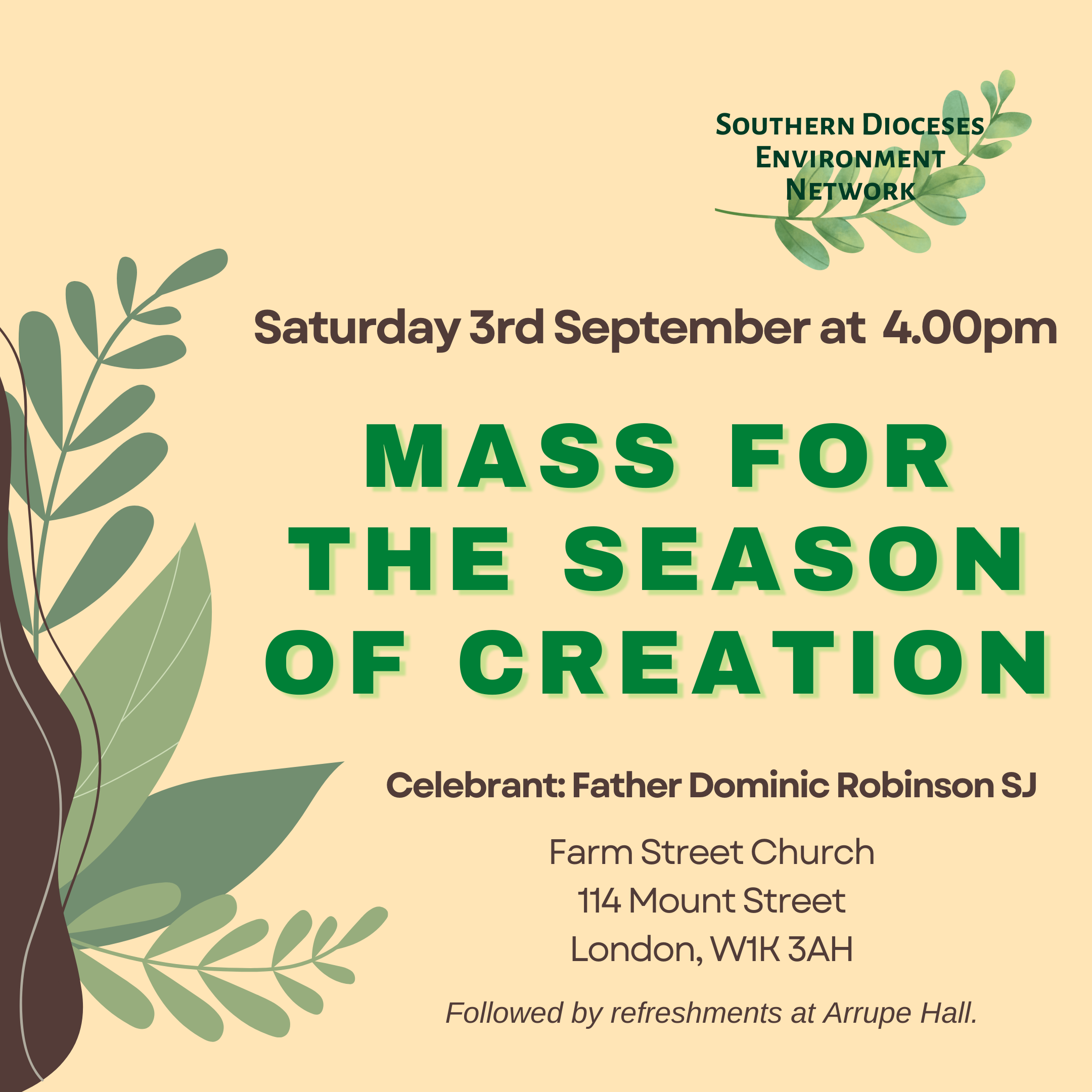
The Mass will be held at Farm Street Church, W1K 3AH (nearest tube – Green Park) and the celebrant will be Fr Dominic Robinson SJ.
The Southern Dioceses Environment Network was launched in January 2022 and organises monthly online meetings to support Catholics and our friends who share a concern for the care of creation. Anyone can join and participants include CAFOD volunteers to Diocesan staff, clergy, religious, parishioners, Laudato Si’ Animators and Christian Climate Action activists.
We are drawn from the Dioceses of Arundel & Brighton, Brentwood, Clifton, East Anglia, Plymouth, Portsmouth, Southwark and Westminster, and also collaborate with the Northern Dioceses Environment Group.
This Mass will be our first in-person event and we warmly invite people who have not been able to attend the meetings, but support our aims, to come along and join us in prayer and networking. Children and families welcome.
There will be refreshments in the Arrupe Hall afterwards, along with displays of work for the environment being carried out around the dioceses.
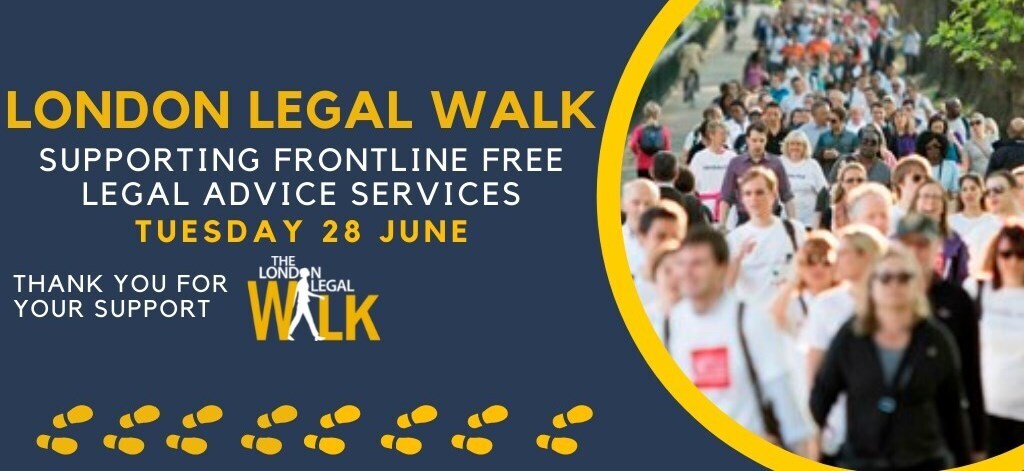
The London Legal Walk supports over 100 organisations in London and the South East each year, helping them provide more free and pro bono legal advice.
Barbara Kentish, well known to Westminster Justice & Peace as our former Fieldworker, is one of the trustees of the Notre Dame Refugee Centre and she will be joining other walkers from the Centre on Tuesday 28th June to raise funds to maintain their frontline free legal advice services.
They are walking with the Lord Chief Justice and thousands of lawyers to raise funds to ensure that there is access to justice for all.
The team is: Shaku Williams, Ines Ignasse, Alice Chalkey, Alice Goeh, Brian Mitchell, Pascal Boidin, Richard Kuhn, Anne-Lise Gaillac, Benjamin Dieu, Elliot Dieu, Barbara Kentish, Vera O’Shea, Viv Parker, Rebecca Kirk, Philippe Lespinard, Hubert Bonnet-Eymard, Etienne Rougier, Nadine Carle-Edgar, Violaine Oustry and Elizabeth Millar.
Barbara writes:
Our centre, which opens onto Leicester Square, was started by the French Church 20 years ago and does a great job in getting refugees their papers. The advice team somehow cuts through lots of Home Office red tape to get Leave to Remain for 100s of people. As one person said, there are lots of small charities offering help to refugees, but not if they are in Rwanda!
Get ready for the Season of Creation, 1st September – 4th October, with this webinar from the international Laudato Si’ Movement to launch the Season of Creation Celebration Guide.
This year’s theme is ‘Listen to the Voice of Creation’
Speakers:
Bino Makhalanyane, Youth Coordinator at Anglican Environmental Network of Southern Africa
Dr Paulo Ueti, Theological Advisor and Regional Facilitator for Latin America of the Anglican Alliance
Christina Leaño, Associate Director of Laudato Si’ Movement
Rachel Mander, Strategy Development Officer at A Rocha International
Patricia Mungcal, Co-Chair for ACT Alliance Community of Practice for Youth Participation
Rev Sikawu Makubalo, General Secretary for Church Unity Commission
Rev Dr Chad Rimmer, Program Executive for Identity, Communion and Formation for the Lutheran World Federation
Rev Rachel Mash, Provincial Canon for the Environment in the Anglican Church of Southern Africa
Suzi Moreira, Coordinator of Eco-Conversion Programs for Laudato Si’ Movement



 Diocese of Westminster Justice and Peace Commission