Update on Rwanda Deportations from Care 4 Calais

Source: Care 4 Calais

The refugee support organisation, Care4Calais, are challenging government proposals to begin deporting asylum seekers to Rwanda as soon as 14th June. They circulated the following update on 6th June:

We are now working with 80 out of the 100 people that the Government have sent ‘Notices of Intent‘ saying that they will be sent to Rwanda. 17 have received notices to say their deportation is imminent, ten of which mention 14 June. They are all in detention centres and they are all very scared.

Priti Patel says the Rwanda plan will offer migrants “an opportunity to build prosperous lives in safety”. However every single one of the people we have spoken to is shocked and traumatised at the thought of being forcibly sent. We’ve had a five day hunger strike and numerous late night conversations with people who feel suicidal. One said “They can send my dead body to Rwanda, but I would rather die than go there”.

The Home Office say they are only sending single men to Rwanda, but the reality is that they are sending men who are not accompanied by their wives, children or other dependent relatives at this point in time.

The reason that many embark on these incredibly dangerous journeys is that they see it as the only way to find a safe future for their families. I spoke to a man from Sudan who left his wife and unborn child in a refugee camp where they could be trapped for many years if he did not find an alternate future for them. His journey took two years and has left horrific scars, but now he is terrified he has let them down. If he gets sent to Rwanda he may never meet the child that was born after he left.

Another man will be forced to leave his 16 year old brother behind in the UK, and another, the wife that he came here to join and has not seen for three years. Many are fearful of the effect that being sent to Rwanda will have on their families back home.

We have not yet been told how people are selected to go to Rwanda but around a third of those we are talking to in detention are from Sudan. The next biggest group is from Syria. In our experience this is not representative of those who generally cross the Channel.

By contrast, we only have three Afghan refugees in our sample with a Rwanda notice – yet we are told that Afghans make up 25% of those crossing in small boats.

Two of the boys say that they are just 16 years old. The Home Office say they are 23 and 26 so it is essential that proper age assessments are done before any deportation takes place. One 16 year old saw his brother killed in front of him when his village was raided in Sudan. He escaped and went back later to find the whole village gone.

We estimate that over 70% of those with Rwanda notices have suffered torture or trafficking either in their home countries or on the incredibly dangerous journeys they have made. As a result, many have serious physical and mental scars and are finding the intense stress of detention, coupled with the threat of being sent Rwanda, intolerable.

One man who endured extreme torture in Libya told me that every time the door to his room bangs shut it gives him flashbacks to being tortured in Libya. This makes him feel like he is going insane.

Every single one of these people has a devastating account of the horrors they have escaped from in their home countries. Be it war, torture or persecution, they are all difficult to hear. The fact that our Government is putting them through the intense trauma of a deportation to another dangerous future is simply barbaric.

I spoke to another man who was tortured In Libya. They broke his nose and his shoulder twice; he has scars on his back and stomach from being electrocuted. He said “Things like that can happen in Libya, there is no government and it is lawless. But I never expected to be put in prison in the UK for committing no crime.”

He said that when he was being tortured the one thing that kept him going was hope in the UK as being a place where fairness and equality exists. Now, being told that the UK will forcibly deport him to a country that has been condemned for human rights violations smashes that hope to pieces.

That people believe that the UK is a good place that will treat them fairly is something we should be proud of; that throughout the world the UK is a beacon of all that is good is an amazing reputation that we could now lose.

The ‘logic’ to the Rwanda plan is that we take people who, by definition, have escaped from the very worst things in this world, who are so desperate they are willing to get in frightening and flimsy boats to cross the Channel, and present them with something that fills them with even more terror in order to deter them from coming. Is this really what we as a civilised nation want to do?

There is a more humane and civilised solution right in front of us now. If we gave all refugees visas to cross the Channel, in the same way we do with Ukrainians, no one would need to risk their lives in small boats, and people smugglers would be put out of business overnight. This must be possible – we are taking seven year’s worth of Channel refugees in our 200,000 Ukrainians this year.

Over the four day bank holiday weekend the Care4Calais access team and our fabulous refugee volunteers have worked right through to stay in touch with everyone, sort out paperwork, keep people up to date and reassure them. We cannot thank them enough for their efforts. The work of this team is essential; more than ever given the Nationality and Borders Act. We are raising funds for a new caseworker and need all the help we can get. Please donate now – no amount is too small to help bit.ly/c4caccess

What can I do?

Plans to send asylum seekers to Rwanda have been criticised by a number of Christian leaders including Catholic Bishop Paul McAleenan. Read – Bishop Critical of Rwanda Plans

Visit Care 4 Calais website – Stop Rwanda

Write to your MP – Bail for Immigration Detainees Website

Sign the Parliamentary Petition – Stop the Government’s One Way Ticket Plan

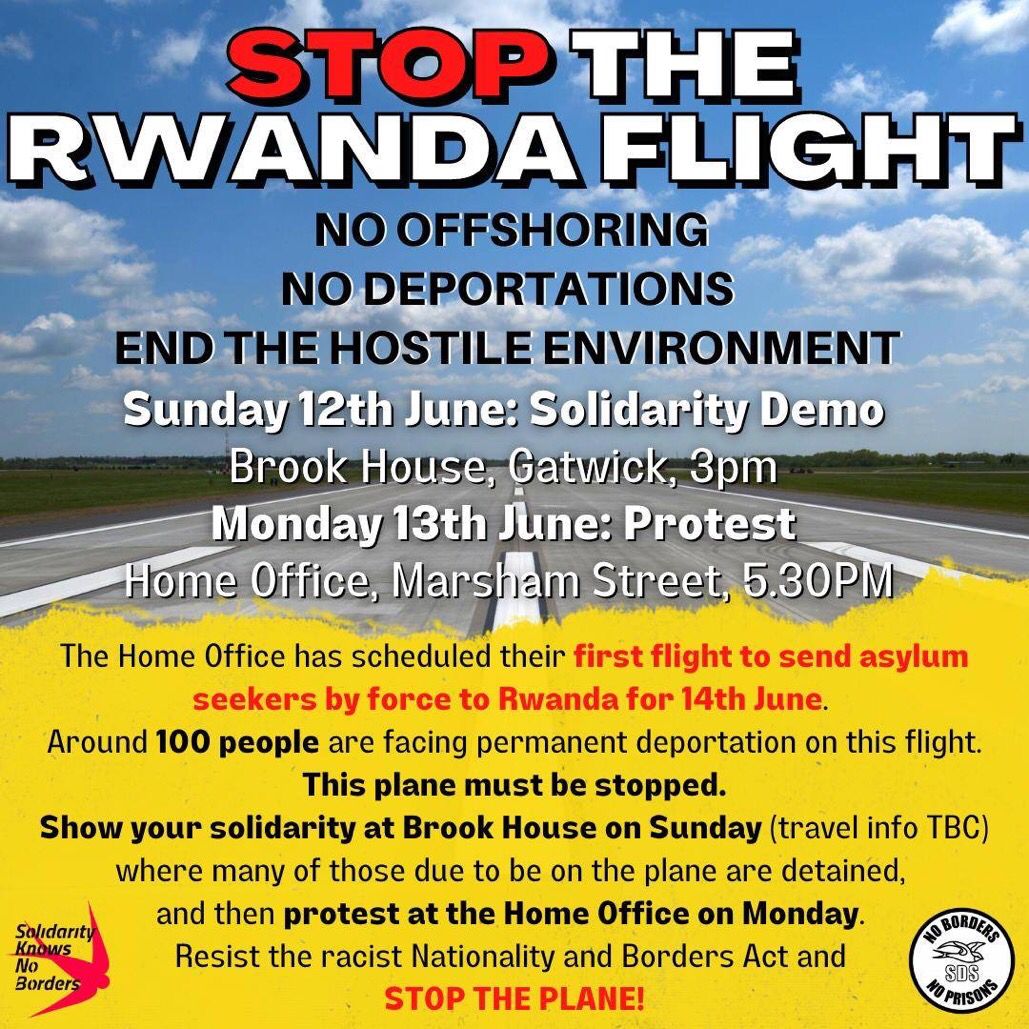
Demonstrate – Demo Dates and Venues
Southern Dioceses Environment Network Meeting – Sustainable Summers, Monday 13th June 12.45-2.00pm

We invite you to the next ‘Southern Dioceses Environment Network’ meeting, on Monday 13th June 12.45-2.00pm where we will explore the theme of ‘sustainable summers’. In preparation it would be helpful if you could have a think about a place, attraction, or venue in your Diocese to encourage families to explore the many things a sustainable holiday in England can offer. We would like to know something great about each Diocese! At the meeting, in Diocesan groups, you will be tasked to give each suggestion a trip advisor type review.

Things to consider could be:

Public Transport
Cost
Facilities
Accessibility
What is on offer
Opening times
Extra information
Web site

Although this is a serious topic, we intend this to be an enjoyable session as we look towards the much-needed holiday season.

The next meeting will be on the 11th July exploring the preparation for season of creation and COP-27. See here for further information:

Southern Dioceses Environment Network

Former Irish diplomat to speak on ‘Hope’ at NJPN’s July 2022 Conference

Philip McDonagh

Philip McDonagh

Source: National Justice and Peace Network

The opening address at the 2022 NJPN Annual Swanwick Conference is to be given by Philip McDonagh. In his talk, ‘Towards a Civilisation of Hope,’ he will speak of a hope that requires courage and action for the sake of the future.

Several hundred J&P activists from around the country are expected to attend the 44th annual conference of the National Justice and Peace Network of England and Wales on 22-24 July 2022 at The Hayes Conference Centre, Swanwick, Derbyshire. The theme is: ‘Hope is a verb with its sleeves rolled up.’

Philip is co-author of the recently published work ‘On the Significance of Religion for Global Diplomacy’ (Routledge 2021). He is Adjunct Professor in the Faculty of Humanities and Director of the Centre for Religion, Human Values, and International Relations at Dublin City University.

As a serving Irish diplomat and Political Counsellor in London, Philip played a part in the Northern Ireland peace process in the build-up to the Good Friday Agreement. He later served as Head of Mission in India, the Holy See, Finland, Russia, and the OSCE (Organisation for Security and Cooperation in Europe).

Philip has published poetry and works for the theatre, including ‘The Song the Oriole Sang’ (Dedalus Press, Dublin, 2010) and ‘Gondla’, or ‘The Salvation of the Wolves’ (Arlen House 2016), a translation of Nikolai Gumilev’s Irish-themed play written during World War 1.

Another conference speaker is Fr Patrick Devine SMA of the Shalom Center for Conflict Resolution and Reconciliation. A missionary priest, he has 25 years of experience helping to mitigate conflict and poverty in Africa. The Conference Chair is Tim Livesey, CEO of Embrace the Middle East, who works with Christian partners in Egypt, Lebanon, Israel, Palestine, Syria and Iraq.

Revd Ruth Gee, a Methodist Minister and one of NJPN’s Patrons, will lead an Ecumenical Service on the Saturday.

Further details and booking form for the NJPN July Conference at: www.justice-and-peace.org.uk/conference/

For more conference details visit: www.indcatholicnews.com/news/44571

Westminster Justice and Peace E-Bulletin June 2022

Last week we heard the staggering news that the number of people displaced from their homes owing to violence, conflict or persecution passed 100 million for the first time.

United Nations Report

“It’s a record that should never have been set,” said UN High Commissioner for Refugees, Filippo Grandi. “This must serve as a wake-up call to resolve and prevent destructive conflicts, end persecution, and address the underlying causes that force innocent people to flee their homes”.

This month in the UK we mark Refugee Week from 20-26 June 2022 and the E-Bulletin Diary Dates highlights a number of events, especially from London Churches (of all denominations), as a means of engaging with the needs arising.

At the request of Bishops Paul McAleenan and Nicholas Hudson, our next Westminster Social Justice and Peace Forum will continue to support these efforts with a coming together to explore our Catholic response to migration, alongside all other sectors of society. This will be our first in-person Forum since the pandemic and we warmly invite you to join us at St Aloysius Church Hall, Euston, on Saturday 17th September, 10am-1pm, whether you are already involved in accompanying refugees, have personal experience of migration or are newly concerned and wanting to do more. 

Register for ‘To Accompany Refugees’ – 17th September 2022, 10am-1pm

There are many other events to explore, including a day out at Kew Gardens with CAFOD, Caritas and Justice & Peace during the summer holidays on 9th August and, of course, the NJPN national annual gathering at Swanwick 22nd-24th July.

We wish you all an enjoyable few days over the Platinum Jubilee bank holiday.

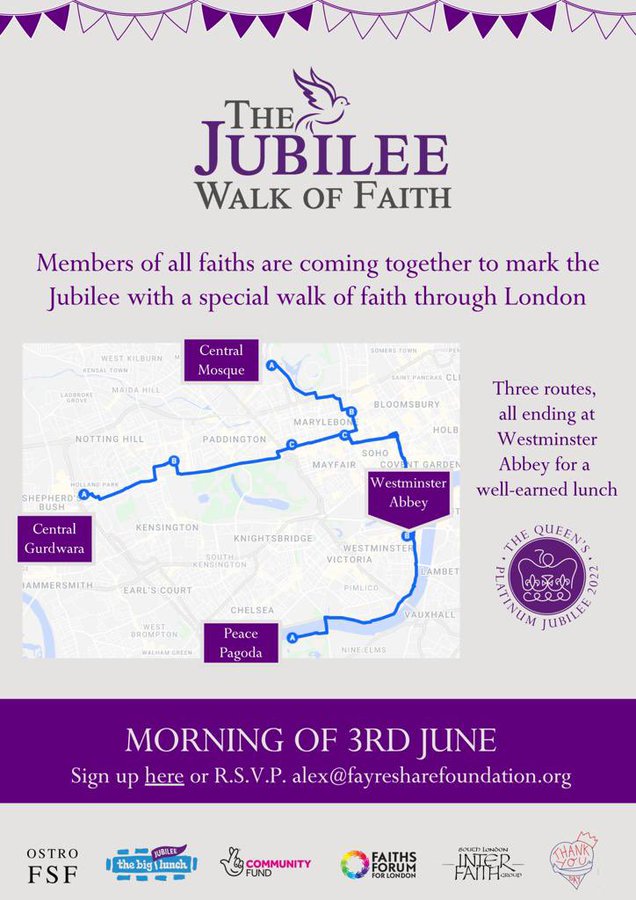
The Jubilee Walk of Faith, 3rd June morning

All are welcome to join people from many different faiths for this walk across London to mark the Queen’s Platinum Jubilee.

Walks start from three points – Regent’s Park Central Mosque, Shepherd’s Bush Central Gurdwara & the Battersea Peace Pagoda – and converge at Westminster Abbey for a celebratory lunch.

Statement from Bishop Nowakowski to mark the third month of Russia’s invasion of Ukraine

Statement of Right Reverend Kenneth Nowakowski, Bishop of the Ukrainian Catholic Eparchy (Diocese) of the Holy Family of London, marking the third month of Russia’s full scale invasion of Ukraine

London 24th May 2022: Today marks the third month of Russia’s full scale invasion of Ukraine, an escalation of the ongoing war that Russia has been openly waging against Ukraine for the past eight years.  Ukraine has become a familiar site on the map of Europe. The names of cities until recently known to few people outside of Ukraine, have become the focus of daily news reports—cities like Mariupol (the city of Mary), Bucha, Kyiv, Lviv and Kharkiv.  Many of these cities and towns have witnessed horrific and brutal war crimes, the deliberate destruction of civilian infrastructure—residential homes, hospitals, schools, churches, museums, theatres, bridges, etc. We have seen the displacement of more than 15 million people, including the more than 5 million who crossed into countries of Central and Western European seeking shelter and help. The average Ukrainian displaced person is a young mother of one or two children whose husband has remained in Ukraine to defend their homeland. 

In these past three months we have seen an outpouring of support from the people of the United Kingdom. Tens of thousands have opened their homes to provide a safe haven to Ukraine’s displaced people. With the help of so many NGOs and private sector businesses, Her Majesty’s Government has developed various programs to assist those who have already arrived and will be arriving in the UK. 

We have seen how the people of the UK have stood for peace in Ukraine, and showed their outrage and support through many acts of solidarity, be it in the display of the now familiar yellow and blue colours of the Ukrainian flag, in marches through our cities, in the sending of much needed humanitarian aid to Ukraine and its closest neighbours.  The initial shock and disbelief that we experienced in those first few days after the invasion has turned into resolve to stand with those brave men and women who are defending not only their own country’s independence, but the ideals of liberty and democracy of the entire free world

People of faith continue to support Ukraine with prayers to the Almighty, that He might open the eyes of those who have allowed evil to take hold of their hearts, so that they might be horrified by their actions. We continue to pray for a just and lasting peace for Ukraine. We pray for those who have lost their lives, for the wounded, for those tortured and abused, physically, mentally, spiritually. By divine grace and with the assistance of all people of good will, Russia’s openly stated goal to destroy Ukrainian statehood and “resolve the Ukrainian question once and for all” must end in failure. The alternative is simply too horrible to imagine. Evil must not prevail.

Ukrainian Catholic Eparchy of the Holy Family of London

Duke Street, London, W1K 5BQ, Great Britain

press@ucc-gb.com

More on the Diocesan support for Ukraine 

Saturday, 11th June, 10am-4pm, JPIT Conference, Oasis Hub, Waterloo

£5 Online – £12 On Site – Free for under 25s and those on a low income

The Joint Public Issues Team (JPIT) is a partnership between the Baptist Union of Great Britain, the Methodist Church, and the United Reformed Church. The purpose of JPIT is to help the Churches to work together for peace and justice through listening, learning, praying, speaking and acting on public policy issues. JPIT will be ecumenical partners this year for the National Justice and Peace Network Annual Conference in Swanwick, Derbyshire, 22-24 July 2022.

As the rising costs of living impacts families across our communities, what does it mean to seek justice?

As war rages and refugees are met with hostile policies, where can we unearth hope powerful enough to bring change?

When politics and international events make us feel angry or powerless, what can we discover by starting locally?

From the Ground Up: Unearthing Hope and Seeking Justice will begin here, with the local. This one-day conference will explore how we can listen to our communities, amplify local voices and connect these together to make local action for change part of the bigger picture of building God’s kingdom.

Keynote speakers include:

Emma Revie (CEO of the Trussell Trust) – How does a network of over 1200 foodbanks help to bring about the eradication of poverty in the UK from the ground up?

Zrinka Bralo (CEO of Migrants Organise) – Where’s the power in organising with lived experience at the centre in order to change the asylum system?

Revd Al Barrett (Hodge Hill Birmingham) – How might the Church be disrupted by what the people on the margins of our communities have to tell us?

Marsha De Cordova MP – As people of faith, how can connecting our call for justice with parliamentary structures and procedures be a route to change?

Bishop Mike Royal (General Secretary of Churches Together in England) – Where is the Church called today to organise and speak up for justice and peace?

Take part in workshops exploring…

Refugees; Racial Justice; Climate; Healthcare; Community Organising; Theology; Tax Justice; Peacebuilding; Housing Justice; Poverty.

With poetry, creative reflection, networking and more…

Together, we hope to be inspired and re-energised to speak, pray and act boldly for peace and justice.

Register by 4th June 2022

National Justice and Peace Network Annual Conference

24th May, 2-4pm, Laudato Si’ Study Session, Vaughan House

Join Colette Joyce, the Westminster Justice and Peace Co-ordinator, on this, the 7th anniversary of the publication of Pope Francis’ encyclical Laudato Si’: On the Care of our Common Home for a fresh look at this prophetic teaching document on the environment.

About this event

We know there is a climate crisis and the need to change our lifestyles is urgent, but still we struggle to find common ground or workable programmes. COP26 has only taken us so far and there is much more to be done before CO27 in Egypt in November. How are we getting on as a Catholic community?

How can a re-reading of Laudato Si’ animate our efforts for change in our parishes and homes?

Book with Eventbrite

Free. All welcome.

24th May – Circular Tree Walk from Westminster Cathedral

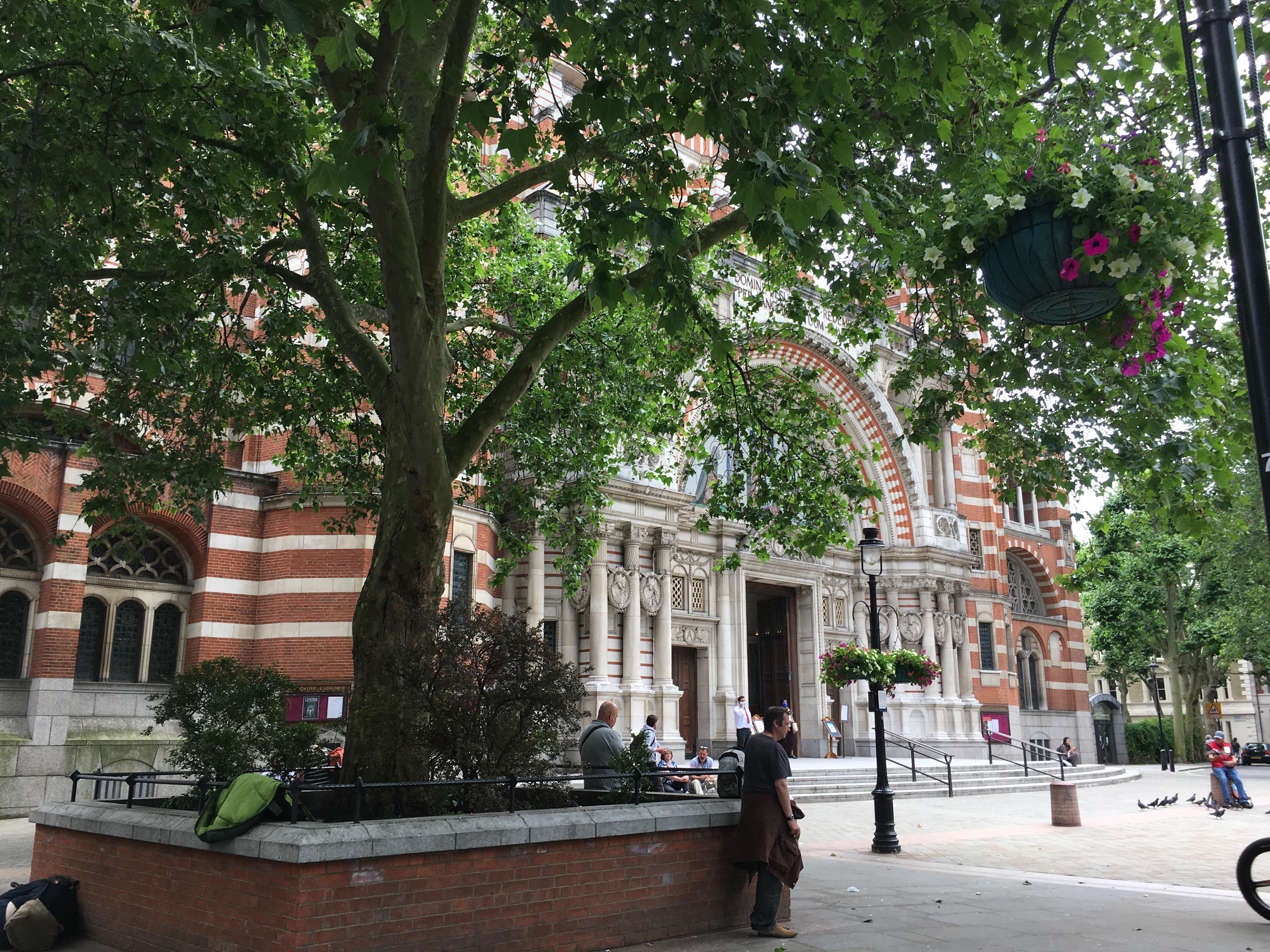
Plane Tree outside Westminster Cathedral

Join Colette Joyce, the Westminster Justice and Peace Co-ordinator, to mark the 7th Anniversary of the publication of Pope Francis’ Encyclical Laudato Si’: On the Care of Our Common Home (2015) with this wander around the scenic streets surrounding Westminster Cathedral, reflecting on some fascinating trees we will meet along the way.

About this event

Trees are essential to life on earth as we know it. They bind soil, remove carbon dioxide from the air and release oxygen, as well as providing a home for many species from birds to insects to squirrels.

This walk will include reflections on the importance of trees within the Christian tradition and invite contemplation of some of the many beautiful trees within easy walking distance of Westminster Cathedral.

Along the way we will consider, too, the significance we attach to trees – from the celebratory decoration of the Christmas tree to the solemn prayer before the wood of the cross.

Families and children welcome.

Meet outside Westminster Cathedral.

We will return to the Cathedral a little before 12noon or there is the option to leave the Walk in St James’ Park.

Book with Eventbrite

Advance registration helps us to meet health and safety requirements. Thank you.

Thursday 26 May, 6pm Lecture at Notre Dame: ‘What does human dignity mean and why should we care?’

Professor McCrudden

Professor Christopher McCrudden

Professor Christopher McCrudden will be giving the annual Richard O’Sullivan Memorial Lecture this Thursday 26 May 2022, 6pm at Notre Dame University near Trafalgar Square, London on: “What does human dignity mean and why should we care?”

International human rights purport to be based on the principle of ‘human dignity’, and references to it are now commonplace in political discourse and judicial opinions throughout the United Kingdom, Europe, the Commonwealth, North and South America, and the Global South.

For such an omnipresent and core idea, ‘human dignity’ has become more, not less, controversial since its inclusion in the Universal Declaration on Human Rights in 1948.

What does ‘human dignity’ mean? What hangs on the different meanings that have been attributed to it? And why is it so controversial, both from the Left and the Right, from religious adherents and proponents of secularism? Based on recent examples, the lecture explores what these debates say about the contested understanding of human rights, and indeed what it means to be human, in our current political and legal systems.

Christopher McCrudden has been professor of human rights and equality law at the School of Law, Queen’s University Belfast since 2011, when he returned to Queen’s, and holds the visiting position of L Bates Lea Global Law Professor at the University of Michigan Law School. He was formerly Professor of Human Rights Law at Oxford University (the first), and a Fellow of Lincoln College, Oxford. Specializing in human rights, he concentrates on issues of equality and discrimination, the relationship between international, European, and comparative human rights law, and most recently the effect of the UK’s withdrawal from the EU on the law and politics of Northern Ireland.

This free lecture is only in person. Refreshments will be provided for attendees.

Register to attend here: www.eventbrite.co.uk/e/christopher-mccrudden-what-does-human-dignity-mean-and-why-should-we-care-tickets-315287753157