Cardinal Vincent Nichols has called for an immediate cessation of the Russian attacks in Ukraine and for the protection of innocent civilians.
In a message following the invasion of Ukraine by Russian forces on 24 February, he writes: ‘I appeal for all to pray for the people of Ukraine, who are suffering the brunt of this conflict. I pray for their strength and perseverance under this onslaught.
‘The international community must unite in seeking an end to this conflict through peaceful means, including dialogue and negotiation, as the only way forward. It is their responsibility to ensure that international law and territorial sovereignty are respected. We must also keep in mind the plight of those who will become refugees as a result of this attack and the humanitarian crisis that will inevitably follow.
‘In this precarious moment for the people of Ukraine and further across Europe, I pray for the victims of this conflict and their families. I will be celebrating Mass in Westminster Cathedral at 10am on Sunday for these intentions.’
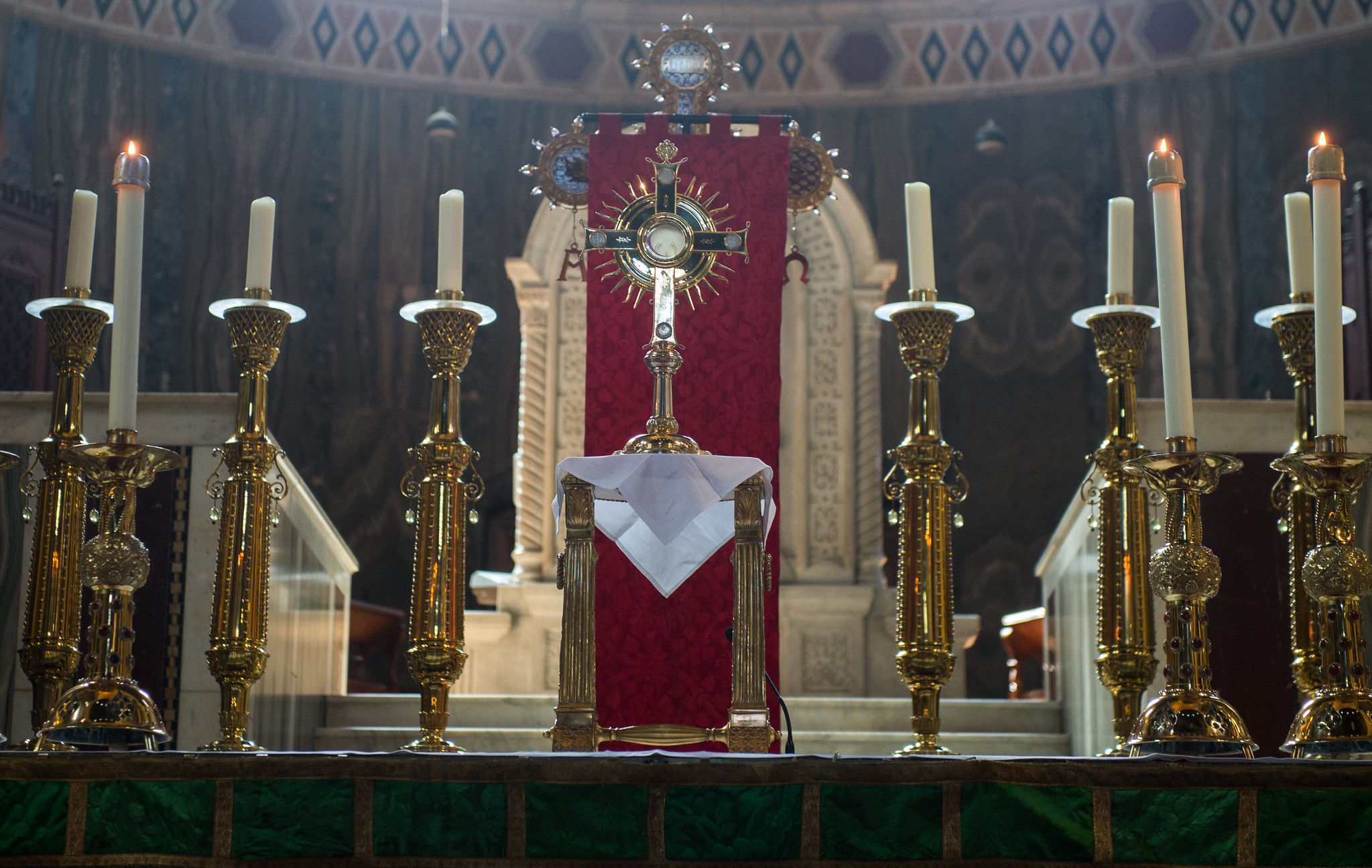
Come and pray for #peace in #Ukraine. Join us for a Holy Hour tonight (24th February) from 6.30pm in Westminster Cathedral with prayers and Adoration, concluding with Benediction. All are welcome.
By Santana Luis, Westminster Justice & Peace Contact for St Mary’s Parish, Hampstead, London
This Monday marked the start of Fairtrade Fortnight (21st February – 6th March.) This year, the focus of Fairtrade Fortnight is climate change, and the growing problems this poses to farmers and workers within the Fairtrade community.
Sunday 27th February, 11:30am-12.30pm– Hampstead Parish Church will be holding a Big Brew, with a Traidcraft stall, cakes, games and a raffle. http://www.stmaryshampstead.com/
Friday 4th March, 12pm-2pm – Fairtrade Afternoon Tea at Chef’s Restaurant, Croydon College, CR9 1DX. Book here!
Friday 4th March, 6pm – Zaytoun are taking part in an evening of inspiration and insight about Fairtrade and sustainability at P21 Gallery near Kings Cross. Book here.
How is climate change affecting the farmers that grow our food? What does that mean for all of us and how we can all help?
The threat to the future of many supply chains is very real and our planet’s farmers and agricultural workers are on the frontline of this global climate crisis. We must do everything to ensure they are not left behind and that they are indeed a part of the solution.
Dramatic weather patterns spurred by climate change will likely deliver severe blows to agricultural production in key regions around the world, from Latin America to the Asia-Pacific. Banana producers in the Caribbean and in Central America, for instance, are expected to face less rainfall and more extreme temperatures, while those in Southeast Asia and Oceania will see an increased risk of tropical cyclones. For their part, coffee producers in Brazil, Central America and South India could soon encounter temperature spikes combined with drought, directly impacting Fairtrade coffee production. Meanwhile, in the Dominican Republic and Peru, as well as in parts of West Africa, cocoa farmers are likely to encounter more hot and dry weather periods, while their counterparts in eastern Ghana and northern Côte d’Ivoire may face heavier rains.
Other Fairtrade products are at risk too. Sugarcane producers in Southeast Asia may face increasing drought and heat stress. Similar conditions could soon afflict tea production in Asia and Africa as well, with producers across Asia and in Malawi and Tanzania predicted to be most severely impacted.
The Fairtrade and Climate ChangeReport, October 2021, produced by researchers from The Vrije University Amsterdam and Bern University of Applied Sciences, ahead of the UN Climate Conference COP26, points to the need for the international community to financially support farmers in adapting to climate change through context-specific approaches, ranging from agroforestry and improved shade tree management to mulching and crop diversification.
There are millions of people around the world who are working hard to grow the world’s food, earn a living, and protect the planet. But too often, unfair trade denies whole communities the chance to earn enough for essentials like medical care and decent food. So they can’t afford to adapt to the extreme weather climate change is already bringing.
That’s why it’s time to choose something better – it’s time to choose the world we want. This Fairtrade Fortnight, let’s celebrate the great work of farmers taking on the climate crisis.
And let’s take this chance stand with them by choosing Fairtrade, and speaking up about the chance we all have to build a fairer future. E.g Supporting Traidcraft
A few months ago, we were demanding a Fair Climate Promise at COP26. Over 33,000 campaigners joined 1.8m Fairtrade farmers and workers in backing the ‘Be Fair With Your Climate Promise’ challenge to world leaders at the UN COP26 summit.
And although the COP26 agreement should have gone much further, it did include vitalpromises to deliver important funding for farmers on the front-line of the climate crisis. Four months on from those promises, and as we prepare for Fairtrade Fortnight, it’s time for action.
The 1.7 million Fairtrade farmers only make up a fraction of the planet’s 500 million smallholder farmers, so we need to make sure that adequate funding for climate adaptation and best practices in fair trade are available to all.
The expertise of small-scale farmers is such a valuable tool in the fight against the climate crisis.
So let’s ask our MPs to do the right thing. Tell your representative to make sure that promised funding ends up in the hands of the real world leaders in taking on the climate crisis – the farmers and workers living with climate change every day.
Huge concern over the loss of Biodiversity in the natural world and a call for Churches to engage with the issue was explored at an online talk on 17 February. It was organised by the Livesimply group of St John Vianney parish in West Green, Westminster Diocese, a Livesimply award-winning parish.
Watch the talk
The speaker was eco-theologian Fr Sean McDonagh, who is now based in Ireland, but worked in the Philippines for two decades, particularly with the T’boli tribal people. His 2004 book, ‘The Death of Life,’ gave a prophetic warning about diminishing Biodiversity. Around 70 participants included parish priest Fr Joe Ryan and parishioners, representatives of the National Justice and Peace Network from other dioceses – including Clifton, Hexham and Newcastle, and Leeds – and some international friends from as far afield as Taiwan, Australia and the United States.
Fr Sean spoke of the international meeting in Kunming, China, in a few months’ time. This Conference of Parties (COP15) offers opportunities to make links between Biodiversity and issues raised in the Climate Change talks in Glasgow in November 2021 and with Pope Francis’ Encyclical entitled ‘Laudato Si – On Care for our Common Home’. It is hoped that strategies to stem the crisis of extinction will be devised.
Some countries which are poor economically and very susceptible to severe climate impacts are rich in species, such as the Philippines. Sean reported that Kew Gardens has information on 1.8 million species – but there could be 10 or 100 times that number, particularly in the world’s hotspots for diversity. Species are becoming extinct, largely because of habitat destruction, before they can be discovered. “We are living through the greatest extinction since the dinosaurs were wiped out 65 million years ago,” he warned, “and the cause is human activity.” Sean presented chilling statistics: 24% of large animals currently face extinction and 30% of birds. Water ecosystems are threatened and oceans increasingly polluted. He highlighted how important biodiversity is to human food security and health, quite apart from the right of other species to survive, which is a concern highlighted in the latest statement of the Filipino bishops on Ecology two weeks ago.
Sean hoped COP15 would get the same publicity and support as the COP26 UN climate talks in Glasgow last November. He himself has engaged with the Irish government over its COP15 delegation and urged participants to dialogue with their own country representatives. Columban JPIC internationally is in talks with the UN coordinators and seeking accreditation to the meeting.
Sean called for Christian Churches to be sensitive to the challenge of mass extinction of species and to justice for future generations. Good stewardship is central to Christian tradition. “We need a pro-life theology” said Sean. He quoted the patron of the Columban missionaries, St Columban, who said, “if you wish to know the Creator, learn about Creation.” Laudato Si’ underlined this issue and its inclusion in Catholic Social Teaching in 2015. “The Church should be part of the debate,” he said.
Sean invited participants to look at issue of Biodiversity in the vicinity of their parishes and support environment and justice groups such as the RSPB and Birdwatch Ireland, which are protecting birds. On advocacy, he suggested challenging chemical agriculture. He also asked, “how can we live more simply?” and “how can we build a better understanding of the Seasons and Earth systems?” All this should link in with prayer and liturgy. He called on parishes and Catholic organisations to work though the Laudato Si’ encyclical and consider responses.
In the discussion, Colette Joyce of Westminster J&P reported that “for those who live in the South of England we have a Southern Dioceses Environment Network which meets monthly for prayer, input from speakers on a range of topics related to the care of creation, discussion and mutual support, with an accompanying monthly newsletter.” It is open to anyone and includes Diocesan and CAFOD staff as well as parishioners and clergy.
There was a general feeling that system change is needed in the area of economics and it would be great to see Church leaders speak out about this, as Pope Francis has done. Such structural change is needed to address both Biodiversity and the Climate Crisis. “We need to challenge an economic model based on relentless growth, consumption and profit” was one comment in the chat.
Daniel St Guillaume, Chair of the Livesimply group at West Green, chaired the meeting and reflected afterwards that the presentation, “reached an audience which may not have heard about Biodiversity and how it affects our daily lives.” He added that, “Fr Sean has encouraged us to go out and spread the word in our parishes.”
Last week it was revealed that nearly 100,000 households in England are homeless and living in temporary accommodation. This includes more than 120,000 children.
Temporary accommodation is extremely insecure, often cramped, and poor quality. It’s also far from ‘temporary’ – with some families living in it for over a decade. And its very expensive – with most rents being paid to private landlords.
Hannah Rich, Senior Research Officer with Shelter writes: “Instead of spending billions on such poor-quality accommodation, which can be incredibly damaging to children, it’s clear what we should be doing. We should be investing in genuinely affordable, decent, permanent and well-regulated social housing.
This would help to truly level up the life chances for families right across the country. Not least as the growing cost of living crisis adds fuel to our housing emergency.
Temporary accommodation is the name given to the accommodation that is offered to people who seek help from their council because they are homeless. Councils have a legal duty to accommodate most homeless families until a suitable settled home is offered.
More than a quarter (27%) of these households are accommodated outside the local authority area they previously lived in because councils can’t find suitable accommodation locally. This can lead to long, tiring journeys to school and work and families becoming isolated from support networks. The number of households living in temporary accommodation is now approaching levels last seen in the mid-2000s. In the last 10 years alone it has increased by 96%.
As well as being insecure and unsuitable, temporary accommodation is also hugely costly. New figures show that councils in England spent £1.45 billion on the provision of temporary accommodation between April 2020 and March 2021.2 This cost is covered in part by housing benefit and people having to top up their rent.
The cost of providing temporary accommodation has increased by 18% in the last year alone and more than doubled (increased by 157%) in the last 10 years. This means that the cost of temporary accommodation has increased at a greater rate than the number of people living in temporary accommodation.
Of course, housing costs are likely to increase over time. However, this disproportionate increase in the cost of temporary accommodation can be explained, at least in part, by the lucrative market that has emerged in the last few years.
Our recent Cashing In report showed that councils procure most of their temporary accommodation from for-profit private providers, who are often unregulated. This hasn’t changed.
The majority of the £1.45 billion goes to private providers of temporary accommodation. At least £1.16 billion (80%) was spent on accommodation leased by councils and social landlords from private letting agents, landlords or companies. And this doesn’t even include temporary accommodation provided directly by private landlords.
More than a third (38%) of this money was spent on emergency homeless B&Bs – considered some of the least suitable places for families and children to live. Councils in England spent £444 million on this type of accommodation between April 2020 and March 2021.
Almost a fifth (18%) of the total spent on private providers was spent on nightly paid, privately managed accommodation. The amount spent on this type of temporary accommodation has increased by 64% in the last year alone.
This increase reflects a shift from longer-term leasing of private sector accommodation to the charging of expensive nightly rates. The use of this type of accommodation now accounts for a quarter of all temporary accommodation.”
Fr Dominic Robinson, Chair of Westminster Diocese Justice and Peace and Parish Priest at Farm Street Church which offers food and support to homeless people with Central London Catholic Churches (CLCC) commented: “At our service at Farm Street we are seeing more and more guests living in substandard temporary accommodation. This is not a solution to the growing homelessness problem. Our experience tells us we need to come together and develop a holistic approach ….. learning the lessons of the pandemic and building on the good work that has been done already.”
A new knife amnesty bin has been installed at St Mary & St Michael Roman Catholic Church in Tower Hamlets, and was blessed by Bishop Nicholas Hudson on Wednesday 9 February.
This is the fifth knife bin installed by the partnership between Caritas Westminster and Word4Weapons, in parts of London which are known to have an issue with knife crime and gang related violence. These amnesty bins have been placed on church premises, for anyone carrying a weapon to deposit it safely away from any harm to others and themselves.
Minet Masho, Development Worker for Caritas Westminster said: “Violence and killing destroys the lives of those involved: victims and perpetrators and their families and communities. The knife bins are not aesthetically glorious to see, but they are there to highlight the issue of criminal activities and their presence might give reassurance to people that knives are not hidden and found in parks, houses’ front gardens or in a young person’s bedroom.”
The blessing of the knife bin was attended by the Mayor of Tower Hamlets, John Biggs, different faith leaders, representatives from the police, Caritas Westminster, Word4Weapons and staff and students from the nearby Bishop Challoner school, as well as members of the local community.
Raymond, head boy at Bishop Challoner Catholic secondary school, said: “The blessings of the knife bin showed me the beauty that occurs when a community comes together from all backgrounds to solve such a significant problem that is violence against all people, to protect ourselves and the potential victims”.
Fr Willie Skehan the Parish Priest at the church, which is in the Commercial Road area of Tower Hamlets, gave an example of how the knife bin might be used: “If granny is cleaning her grandson’s bedroom today and finds something in the bedroom and she doesn’t know what to do with it, now we can let her know that she can put into the bin.” Acknowledging that a knife bin is just one part of the work happening in the community to prevent violence, he went on to say “just like in a bow of a violinist, there are many threads in the bow, we are just one of those threads.”
Bishop Nicholas Hudson said: ‘It will soon be Lent. And when we think of Lent, we think of the powerful words of the Lord spoken through the prophet Joel, “Come back to me with all your heart.” A knife bin announces the same call, to have a change of heart. The knife bin standing here now on Commercial Road announces peace. “Be peacemakers, not peace-breakers,” it cries out to everyone that passes it.”
The Prince of Wales’ recent visit to the ‘Metamorphosis’ Icon Exhibition at Farm Street Church was a particularly memorable occasion for those involved with the community homeless service based there. After seeing the exhibition and meeting artist Dr Irina Bradley, with her family, priests and parishioners, he particularly requested to meet them.
Formed at the beginning of the first Covid lockdown in March 2020, Central London Catholic Churches (CLCC) is a group of volunteers from several London churches responding to a need to serve and provide for the homeless. They began operating as a hub in Trafalgar Square, but are now based in Arrupe Hall next to the church – providing a cooked lunch for the homeless on Wednesdays and Saturdays.
Yasko Kurahachi, president of Farm Street’s St Vincent de Paul Society, (who has earned Mayfair Times award for her work with the homeless) was one of the people who met the Prince. She told ICN: “He was charming. Very approachable. I told him about our soup run on Monday night. He wanted to know where we start and finish – many details. He was really concerned about what we do.”
Volunteer Ade said: “He was really interested in our work. I told him we provide a warm safe environment for people . Prince Charles wanted to know how many guests we have. There are up to 50 each time. I explained that we’re here Wednesdays and Saturdays. At 11.30 we serve tea and coffee. Between 12-2 there’s a hot meal. We also have a Christmas dinner.”
The meals served in Arrupe are provided by neighbouring Mayfair restaurants – and guests say, are of very good quality.
Nick who is a guest and helps organise the project said: “We had a general chat to begin with. I told him I was ex Navy reserve and that we had actually met before at the Centenary parade of the Royal Navy Reserve. He was taking the salute and we met afterwards. Prince Charles said he wanted to thank us all for our service to the country.
Nick said: “He’s very friendly, interested and easy to talk with. He really cares about the welfare of people who have served in the armed forces. I told him about another of our guests here who is actually a former Army medic. When you leave the armed forces it can very difficult. There are so many barriers to getting help. So much bureaucracy. If you lose your home it can be very difficult to get back on course.”
Next month, a panel discussion entitled: Homelessness and the Pandemic: What have we learnt? – hosted by Diocese Of Westminster Justice & Peace and Caritas, will take place at Farm Street Church. Speakers will be CLCC guests, Mick Clarke, CEO at The Passage; Jon Kuhrt, from the Ministry of Housing, Communities and Local Government; Parish priest Fr Dominic Robinson SJ, from CLCC and Liz Wills from Caritas Westminster.
Light refreshments will be served. There is need to book. Donations to homeless services welcome.
The event takes place on Monday, 28 March, from 6.45-8.15pm, at Farm Street Church, 114 Mount St, London W1K 3AH. It will also be livestreamed at: www.farmstreet.org.uk
The St. Vincent de Paul Society states that the government’s long-awaited Levelling Up White Paper represents a missed opportunity to address the ingrained social and economic disparity across the UK.
The SVP believes that high streets and deprived areas can only thrive if the people living there have access to good quality jobs, fit for purpose education and affordable housing. So far, the majority of levelling up funding has been spent on physical infrastructure rather than social which is seen as a vital component in binding communities together. The SVP has first hand experience of the challenges facing those addressed by the Levelling Up agenda and so believes the insight it can offer as invaluable.
The SVP operates nine St Vincent’s community support centres across England and Wales, each providing a tailored response to the need in their community. Requests for support from their national office have increased since the start of the pandemic which indicates a worrying trend in the most deprived areas of the country, all of which are in urgent need of levelling up funding.
We welcome the government’s proposal that “by 2030, pay, employment and productivity will have risen in every area of the UK, with each containing a globally competitive city, with the gap between the top performing and other areas closing.”
However, the success of this agenda will be determined by the detail, and the White Paper fails to lay out a clear plan for reaching this ambitious goal. There is little mention of quality employment or secure employment. Without these embedded in the levelling up strategy, it will be hard to reach this goal. The white paper lacks crucial details of how funding will be allocated.
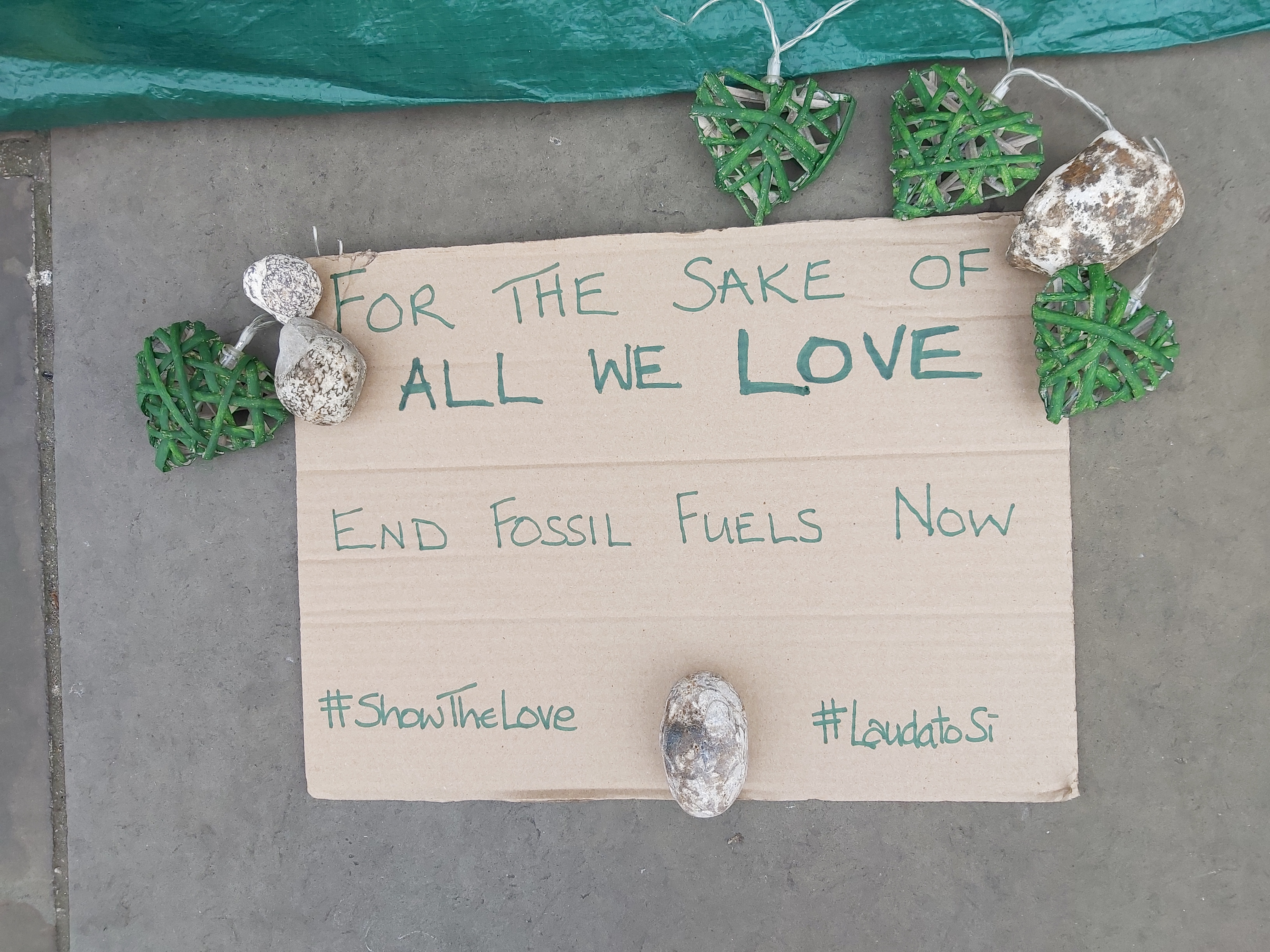
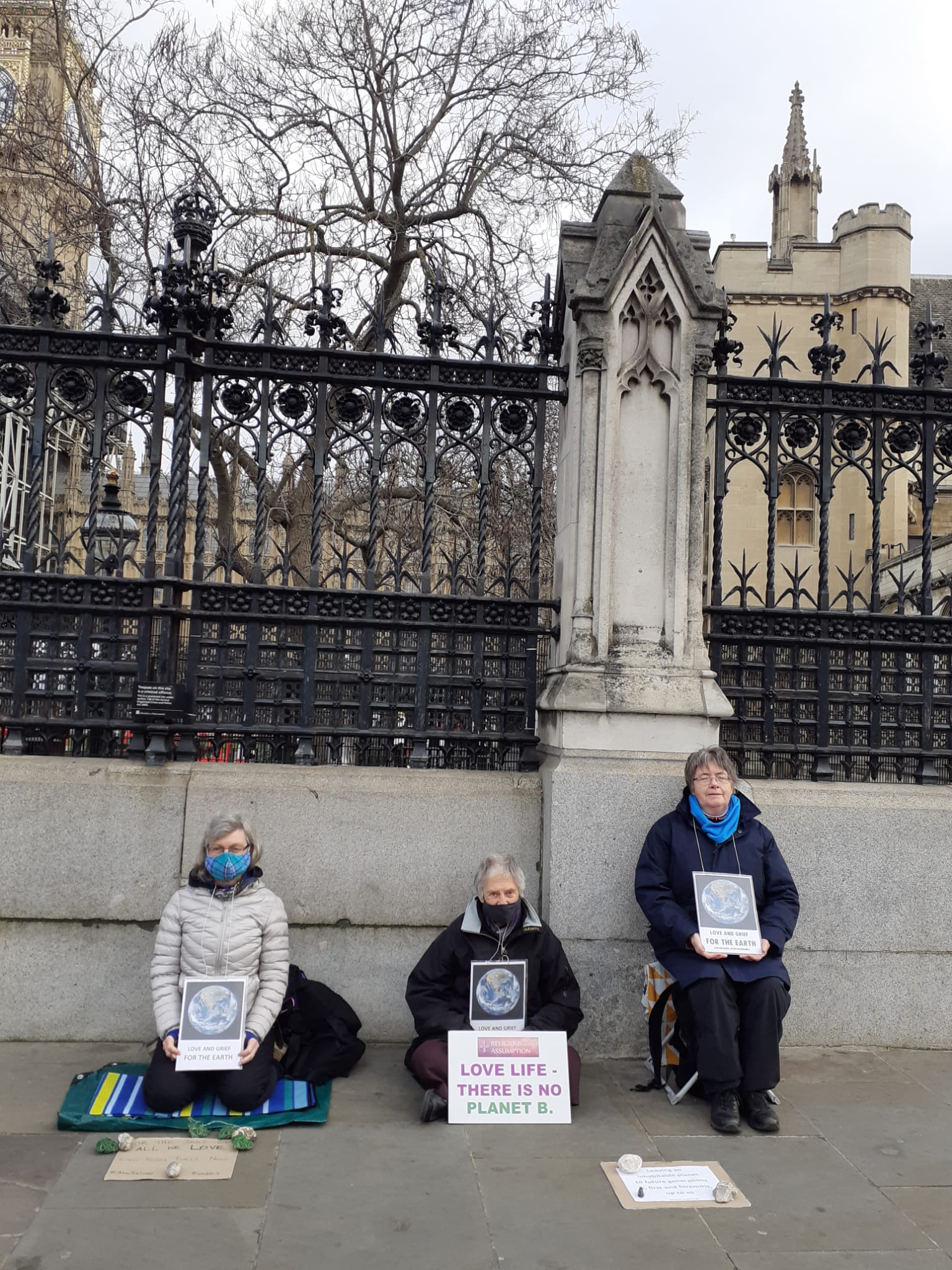
The #ShowTheLove campaign has been the perfect partner for February’s Westminster Earth Vigils.
In my experience Earth Vigils are beautiful and powerful places of prayer and have a positive impact on many people who walk by them
People of different faiths or of none are invited to simply ‘be’ in silence and solidarity with each other and with all God’s creation. Many of us who gather at the Westminster Vigil are Catholics motivated by our faith to contemplative action and prayer-witness’.
Details of Earth Vigils:
Every Wednesday 11am to 3pm outside Parliament – initiated originally by XR Faith Communities but open to anyone. https://www.earthvigil.co.uk/faqs/
Bishop John Wilson, delivering Racial Justice Sunday homily, 13th February 2022 – Photo: Marcin Mazur
The Archbishop of Southwark, Most Rev John Wilson gave the following homily in St George’s Cathedral, Southwark during the Racial Justice Sunday Mass on 13 February 2022.
Dear brothers and sisters, I don’t know who is more excited about today – me or Father Victor. I hope we’re all a little bit excited about this great celebration of the Holy Mass, but also with a focus today on our unity in Christ, our oneness in Christ.
It is an absolute joy to be able to welcome you to our cathedral today. our cathedral. It belongs to all of us.
We are people of different nationalities, people of different heritage together and only together we form parts of that wonderful mosaic that God has created, which we call humanity, which in the church we call the body of Christ.
We are one in Christ and one with each other.
You are my brother and my sister. We are brothers and sisters of each other.
And so on this Sunday when we focus especially on racial justice, we give thanks first to Almighty God for the rich and beautiful diversity of peoples and cultures which make up our world which make up our communities which make up this Archdiocese. I am proud to be the Bishop of a diocese that is so diverse and so rich.
Today, we affirm and celebrate the gift of every human life. Every human life, from its first moment in conception to its natural end at death. When the Lord Jesus commanded us to love one another he made no exceptions.
And neither can we. Neither should we.
When the Lord Jesus speaks about God’s kingdom in the Gospel we heard today, he announces a radical inversion of values.
Those who are poor, hungry, sorrowful, those oppressed. Those who so often in our world, have no value and no voice. These are the ones who are great in the kingdom of God.
What an important lesson this is for us to learn and to keep learning for how we live, the weakest, the poorest, those the world thinks as nothing. These are the ones who are great in the kingdom.
Our archdiocese is marvellously diverse. People in our parishes and schools represent a rich variety of culture of ethnic and racial backgrounds, from every country across the world.
There is a place for everyone in our church. And if you don’t like that, there’s the door.
You might think I’m joking. I’m not – there is a place for everyone in our church.
The diversity that we are is a gift.
The Catechism teaches us every form of social or cultural discrimination in fundamental rights on the grounds of sex, race, colour, social conditions, language or religion must be eradicated as incompatible with God’s design, to put it straightforwardly racism is incompatible with our faith.
There is and they can not be any place for racism, no place. But our faith does more than this. Our faith calls it calls us to be prophetic in our world.
To speak out with the values of God’s Kingdom to challenge racism, to eliminate its causes to heal the wounds it brings. And we each of us my brothers and sisters have a place to play in this, by making sure we think of every other person as someone worthy of respect by holding the rights and the equality and the sanctity of every human life and it is with great joy that in our diocese, we established our commission for promoting racial and cultural inclusion with Father Victor as its Episcopal vicar and it’s already working. It’s already making a difference to our parishes and our schools to challenge racism in all its forms.
Dear friends, if we think that racism is a thing of the past, then suddenly we need to think again.
It’s a present reality in our communities.
I was shocked the year before last I met with a group of young women young students from a school in our diocese, and I was shocked to listen to their experience of racism.
Through comments through insults through slurs through discrimination, alive and present today.
Racism is not a thing of the past, and therefore we cannot be silent about it. We cannot be silent about its existence, and we cannot be silent about its causes.
We must unite in Christ with other people of goodwill. We must unite in Christ, to work for justice. To speak out for equality for every person no matter what the colour of their skin is, no matter what language they speak. No matter where they come from, no matter what they look like.
My friends, it is our mission to continue to make our parishes and schools places where the gifts and the skills and the experience and the heritage of all people of every background honoured and valued and cherished and celebrated.
We will work to make our parishes and communities places where everyone is welcome where everyone is affirmed where everyone is encouraged. Where everyone is respected for the person God has created them to be and the person God is calling them to be.
We have in our church some inspiring examples of people who have spoken out, spoken out against slavery and work to overcome the sufferings of those enslaved. I want to name just two today. There are many others we need to learn of them because they’re truly inspirational.
The first is perhaps more familiar to us.
Josephine Bakhita, a Sudanese woman sold into slavery and eventually brought to Rome where she was cared for by a community of religious sisters.
And she developed her own Christian faith and joined a religious community. She was such an outstanding example of what it means to live the values of the kingdom that in the year 2000 She was made a saint – Saint Josephine Bakhita.
I think of someone perhaps very few of us maybe only one other in this church today will know the name of Sister Dorothy Stang.
An American Sister of Notre Dame, who was martyred 17 years ago yesterday, the 12th of February 2005.
Why was she martyred? Because she upheld the rights and the dignity of indigenous peoples in Brazil.
The voices of all those in our church who have defended and protected people of different racial and cultural backgrounds, those voices must be alive in us. They must be.
Dear friends,
Are we one in Christ? nGive me some nodding heads please.
Are we one in Christ? We are one in Christ who is risen. Christ who is risen, who has overcome death, who has conquered sin and therefore we are people of hope. Are we not – people of hope? And as people as hope, one in Christ, we are committed to working side by side to consign racism to history.
And so, we pledge today, to continue journeying together into the future.










 Diocese of Westminster Justice and Peace Commission