Catholics around the world celebrated Peace Sunday yesterday, heeding the Pope’s call to create a ‘Culture of Care’ for one another in 2021 to create a world of peace.
Holy Apostles Parish in Pimlico, London, UK, put their contribution online with a group rendition of the popular hymn ‘Peace, Perfect Peace.’
The Treaty was negotiated at the United Nations in 2017 and supported by 122 states. It will enter into legal force on 22 January 2021, banning nuclear weapons under international law.
THANKSGIVING SERVICE
On Friday 22 January at 11.30am the Network of Christian Peace Organisations will be gathering to celebrate the entry into force of the Treaty on the Prohibition of Nuclear Weapons with a short Thanksgiving Service hosted by the Network of Christian Peace Organisations. It will take place on Zoom and they hope to finish with bells ringing in celebration of nuclear weapons being banned. Click here for the Zoom link.
Join Pax Christi to reflect on Pope Francis’ World Peace Day Message ‘A Culture of Care as a Path to Peace’.
About this Event
Together we will gather on zoom to pray, share and reflect on Pope Francis’ message ‘A Culture of Care as a Path to Peace’. We will explore what this message calls us to do as peacemakers and how we respond to the call to live nonviolently.
If you have any questions or problems registering for this event, please contact the office at admin@paxchristi.org.uk
This year has been one of unprecedented and continuing challenges. We are all conscious of the need to restore and rebuild our communities here and around the world, accepting that we need new ways of working and relating to each other. The Christian message of peace, through reconciliation, justice and nonviolence, can offer hope and direction in these times. I invite you to seriously consider facilitating a collection for, or making a donation to, the work of Pax Christi at this time as a way to make a practical contribution to continuing the work of peace
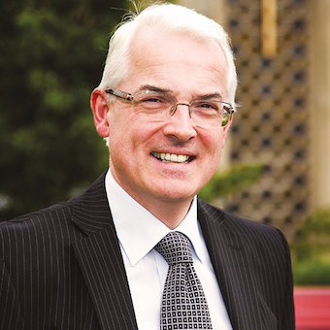
Pax Christi National President, Archbishop Malcolm McMahon
Throughout the pandemic increasing numbers of families have faced extremely challenging circumstances, with many losing income and having to support children at home whilst schools have been closed.
Unfortunately, as schools have been forced to close again we are seeing the same problems of the first lockdown repeating themselves, with families struggling to access free school meal vouchers and being provided with low quality food parcels. Already the projects and schools we support have seen an increase in need with more families being referred for emergency support.
Anna Gavurin, Caritas Food Collective Co-ordinator said: “We believe every child deserves to have access to fresh, nutritious food and every family should be able to access food in a dignified manner. At Caritas Westminster we have supported this during the pandemic by running a supermarket voucher scheme that has so far distributed over £170,000 to more than 5000 people. This has enabled families to shop for themselves, with dignity and buy the items their families need most. This scheme has also supported parishes and schools to provide support for those who slip through the gaps and do not qualify for Free School Meals for certain reasons such as having no recourse to public funds. In the last week we have also been able to help schools support families who lost their jobs before Christmas and have not yet been given access to Free School Meal support.”
Anna continued, “These vouchers have provided a life line for many and do give choice to families, however increasing the cash available to struggling families is the most dignified solution. This offers families the ability to manage their budget more flexibly and keep on top of bills and other demands. It also allows them to shop in any retailer without stigma, enabling them to make savings and support the local economy. Direct financial support allows families to plan ahead and make the most efficient choices, rather than relying on food parcels. To call for this Caritas Westminster has joined with the Joseph Rowntree Foundation and a coalition of charities to ask the Government to make permanent the £20 uplift in Universal Credit and Working Tax Credit, and to extend it to people on Employment Support Allowance, Income Support and Job Seekers’ Allowance.”
Colette Joyce, the Co-ordinator of Westminster Justice and Peace said, “We have to ask as a society, who is benefiting from these food parcels – the recipients or the companies with the government contracts? It is not good enough. We have to ensure that when parents are struggling, every child has access to a proper meal of the same quality that you or I would choose for ourselves.”
Caritas Westminster and Westminster Justice and Peace call on the Government to:
Ensure families have the option to access supermarket voucher and cash options.
Expand Free School Meal provision to ensure children do not miss out because of their parent’s immigration status.
Keep the £20 uplift to Universal Credit so families have enough to live on and can manage their own budgets.
On Friday 22 January 2021 the Treaty on the Prohibition of Nuclear Weapons comes into force. This is an historic milestone on the path to nuclear disarmament and an opportunity to refocus on genuine peacebuilding rooted in dialogue, justice, respect for human dignity, and care for our planet.
In setting out the “moral and humanitarian imperative” for complete elimination of nuclear weapons, Pope Francis reminded us that “international peace and stability cannot be based on a false sense of security, on the threat of mutual destruction or total annihilation.” [1]
We urge support for the Treaty and repeat our call for the UK to forsake its nuclear arsenal. The resources spent on manufacturing, maintaining and upgrading these weapons of mass destruction, should be reinvested to alleviate the suffering of the poorest and most vulnerable members of our society, for the Common Good of all peoples. [2]
At the same time, we implore the government to strengthen its arms control regulations, tackling the manufacture and sale of other weaponry, which continues to destroy so many lives throughout the world.
Above all we pray: “Lord, Father of our human family, you created all human beings equal in dignity; pour forth into our hearts a fraternal spirit.
Move us to create healthier societies and a more dignified world, a world without hunger, poverty, violence and war.” [3]
+Declan Lang Bishop of Clifton Chair, International Affairs Department, Catholic Bishops’ Conference of England and Wales
+William Nolan Bishop of Galloway Commission for Justice and Peace, Catholic Bishops’ Conference of Scotland
Welcome to the first Justice & Peace E-bulletin of 2021.
We begin a new year with so many uncertainties and challenges. We are right in the midst of this dreadful pandemic which is changing so much of the way we live our lives. Our parish communities will each have their own stories of those who are suffering in different ways: physical illness, bereavements, loneliness, depression, lost jobs, increased poverty and destitution, and the inability to come together in person as a parish community. It’s a tough time and is likely to continue to be so for months ahead.
And yet there are so many heroic stories too of living out faith in sacrificial service of those who are victims of the pandemic, often by society forgotten, through the food banks, homeless services, and the different groups serving and advocating for the vast numbers of newly poor here on our streets. The Gospel of Justice and Peace has certainly been proclaimed throughout these last months in our communities and on our streets. If we can say there are graces of this dreadful time they are clearly visible in the social action and advocacy work going on around the Diocese. Here Justice and Peace Westminster has worked closely alongside Caritas Westminster marrying advocacy and action and so bringing to life the Church’s social conscience and mission.
While so much of the work of Justice & Peace has rightly focussed on these immediate and pressing needs the Commission, sub-committees and parish groups have addressed other issues of ongoing importance. In the wake of Black Lives Matter we have seen great motivation in addressing issues of racial justice in parishes, in the Church and society. Racial Justice Sunday on January 31st will be an opportunity to focus on this important issue. Similarly, Peace Sunday, celebrated on January 17th, will challenge us to think outside of our domestic borders to be in solidarity with those overseas ravaged by war and conflict and to examine our own complicity there through passive support of weapons manufacture and investment.
In a similar vein Pope Francis’ call to care for creation will continue to be echoed through how we promote environmentally friendly projects and policies and raise awareness of green issues, all leading up to a diocesan group going to COP 26 in November.
As we begin this new year of such uncertainty and challenge may we make a new commitment to allow the Gospel of justice and peace to take root in all our communities and respond to the Holy Father’s call on New Year’s Day when he encouraged all of us to work for a peace “sustained with patient and respectful dialogue” and “constructed with an open collaboration with truth and justice,” so 2021 may be “a year of peace, a year of hope.” It is up to everyone, Pope Francis says to take “by the hand those who need a comforting word, a tender gesture,” he said, and if “we begin to be in peace with ourselves,” it will spread to “those who are near us.”
May the God of Peace be with you and your loved ones at the start of this new year.
Fr Dominic Chair, Justice & Peace Commission, Diocese of Westminster
Caritas Social Action Network (CSAN) has announced the appointment of Raymond Friel as Chief Executive Officer to succeed Dr Phil McCarthy who will retire from the role at the end of March 2021 after over five years.
Raymond Friel was born in Scotland and after graduating from Glasgow University, has spent most of his professional life in England. He started teaching in London in 1990 and was a head teacher in Catholic secondary schools from 2002 until 2016. He was then General Secretary of the Catholic Independent Schools Conference for two years before becoming CEO of Plymouth CAST, a multi-academy trust of 36 Catholic schools until 2020. He is a published poet and the author of several influential books on Catholic education, including How to Survive in Leadership in a Catholic School.
Bishop Terry Drainey, the Chair of CSAN said: “The Board of Trustees is delighted to announce the appointment of Raymond Friel as CEO. He has a wealth of leadership experience and expertise, a wide knowledge of the Church and a deep commitment to the Gospels. I look forward to working with him to further Catholic social action across England & Wales.”
Sr Lynda Dearlove, Vice Chair of CSAN said: “CSAN has a crucial role animating and coordinating Catholic social action. The Board looks forward to working with Raymond to realizing Pope Francis’ vision of a ‘poor Church for the poor’.”
Raymond Friel said: “I am delighted to be taking up this new challenge. I look forward to contributing to this important part of our Church’s mission, which will be even more vital as our country recovers from the Covid-19 pandemic.”
Bishop Nicholas Hudson gave this homily at the JRS Advent Service, in Farm Street Church.
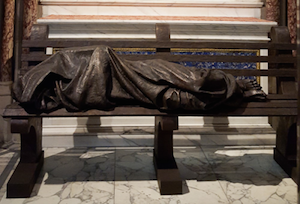
Ask any Refugee or Asylum Seeker what he or she likes best about this church, and I’m confident it will be this, the sculpture of the Homeless Jesus. The one who has nowhere to lay his head; not really to lay his head. Yes, he’s found a bench but as everyone knows who’s been homeless when you sleep rough, you sleep with one eye open your head is never truly resting. Jesus used that phrase about himself. If you remember ‘the Son of Man has nowhere to lay his head’, he said, meaning he would always need to be on the alert, always on the run.
As Jesus was arriving into this world, Luke tells us Mary and Joseph could find nowhere to lay him down. They had to settle on an outhouse where they could only lay his head in straw prepared for animals.
That’s why Saint John Chrysostom tells us as Christians to remember the poor. ‘Do you wish to honour the body of Christ?’ he asks, ‘then do not despise him when he is naked. Do not honour him here in the church building with silks only to neglect him outside when he is suffering from cold and from nakedness, for he who said “This is my body” is the same who said “you saw me a hungry man and you did not give me to eat”. Of what use is it to load the table of Christ? Feed the hungry and then come and decorate the table you are giving a golden chalice and you do not give a cup of cold water.
These are sobering words and they find an echo in another saintly man whom we’ve been thinking about much in recent years, Archbishop Oscar Romero. The Christmas before he died he spoke these words at Mass ‘If we wish to find the Child Jesus today, we should not expect to find him in beautiful crib figures. We should look for him rather among the malnourished children who went to bed tonight with nothing to eat. We should look for him among the poor newspaper boys who will sleep tonight on doorsteps wrapped in their papers’.
Pope Francis captures the essence of this when he urges us not to forget the words of Saint John of the Cross that ‘As we prepare to leave this life. We will be judged on the basis of love’. As we prepare to leave this life, we will be judged on the basis of love.
I was once in a prayer group where someone asked “How does God answer prayer?” “Through us” replied an older woman. He answers prayer through us and she should know she’d helped found the hospice movement. That was a marvellous movement which transformed the way the sick and dying were cared for in this country. Ever since this pandemic took root people of faith have been asking God to save us, to set us free from this contagion and now their prayer seems to be being answered through the inventors of not just one but several vaccines. We can look at scientists and say through them. He answered our prayers through them.
We call Jesus Emmanuel a name which means God is with us. But how is he with us? Through others. We know it instinctively. That’s why, if you think about it, every film representation of Jesus birth has a good woman from the town who comes to help Mary in her moment of need. I don’t know a single film of the Nativity which doesn’t insert this generous soul into the drama. When I see this saintly woman comforting Mary and tending the newborn baby, I think of words which Pope Francis has been saying ever since he became Pope. That when you reach out to the poor and needy you touch the wounded Body of Christ. When you give welcome to the homeless man or woman who comes knocking at your door you welcome the homeless Christ.
At the end of time we shall see Jesus risen from this bench now in all his glory accompanied by angels and we shall hear him say to us “Come you blessed of my father because I was hungry and you gave me to eat, thirsty and you gave me drink, sick and in prison and you visited me, a stranger and you made me welcome. Now, let me share with you my home forever.”
Every year we sing ‘O Little Town’ but how much do we really know about life in Bethlehem? As we journey through advent each year our thoughts turn to the place where Jesus was born. But how much do we actually know about Bethlehem today? A world apart from carols and Christmas cards is a living, breathing city in the West Bank whose people face unique challenges in a place like no other.
Justice and Peace Scotland invite you to join them on Sunday to hear voices from the Christian community in Bethlehem sharing their experiences and hopes for their city.
Speakers include:
Vera Baboun – A teacher and academic Vera Baboun became the first woman to be elected Mayor of Bethlehem leading a party list of both Christian and Muslim candidates from 2012-2017. Facing the challenges created by the security barrier, mass unemployment, and an exodus of the Christian population during her time in office she sought to improve infrastructure, create opportunities for young people to work, and to promote the cultural, historical and spiritual heritage of Bethlehem.
Laila Asfoura – A businesswoman and the Director of Laila Tours & Travels, Laila Asfoura is a dynamic member of the Christian community in Bethlehem, involved with establishing St Martha’s House, a centre for elderly women, many widowed and isolated from family who have moved abroad, to meet, spend time together and share their experience.
The event takes place on Sunday 13th December from 4.30pm – 6pm
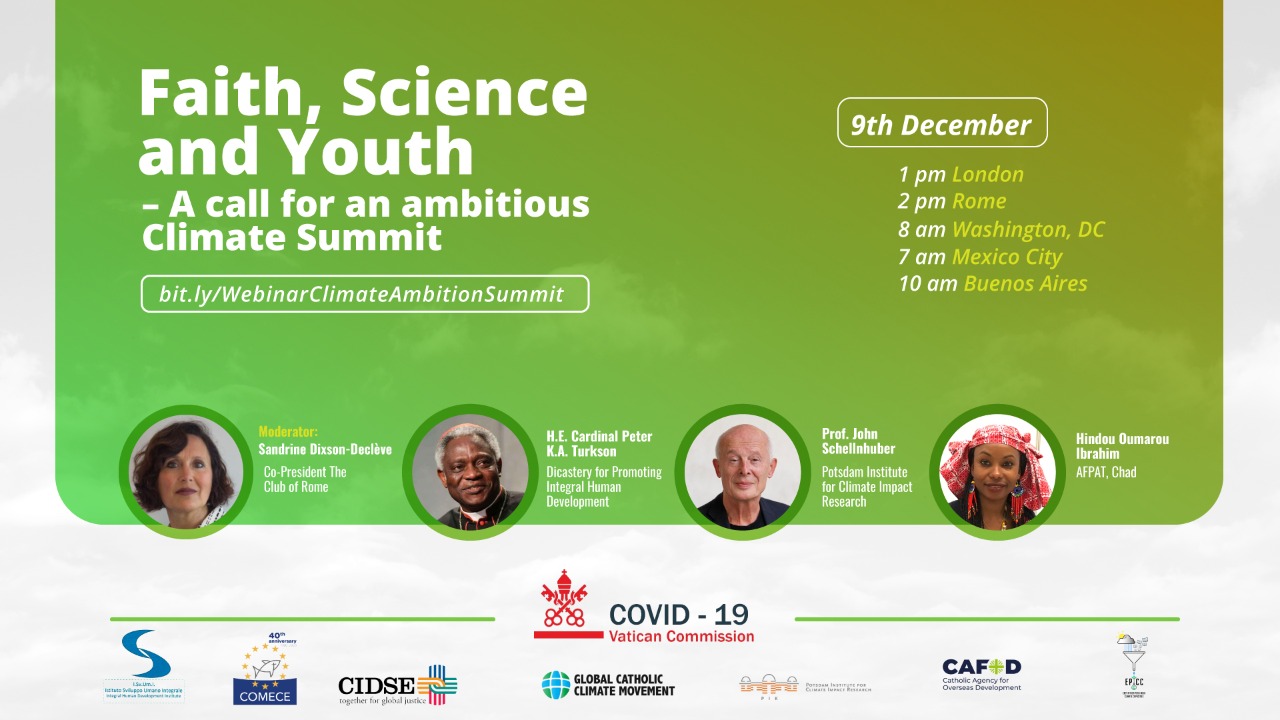
In occasion of the five years anniversary of the landmark Paris Agreement, adopted in Paris in December 2015 and ahead of the Climate Ambition Summit (12 December), the Vatican Covid-19 Commission (#VaticanCovidCommission) and its partners will highlight through this webinar the need to urge governments to raise ambition for tackling the climate emergency, through the points of view of:
H.E. Cardinal Peter K.A. Turkson – Prefect of the Vatican Dicastery for Promoting Integral Human Development, on how faith and Pope Francis’ messages can help address the climate crisis;
Prof. John Schellnhuber – Founding Director of the Potsdam Institute for Climate Impact Research, on what science is telling us today and what that means for world leaders, civil society and businesses;
Hindou Oumarou Ibrahim – Coordinator of AFPAT, on the impact of global warming on communities and the role of youth activism.
The webinar, moderated by Sandrine Dixson-Declève, Co-President: The Club of Rome, will provide a platform for a high-level exchange on the climate crisis in the context of the efforts to build a just and sustainable recovery. Participants will be able to engage with the speakers through a Q&As session.







 Diocese of Westminster Justice and Peace Commission