Bishop Jim Curry, Lead Bishop for the Holy Land for the Bishops’ Conference, has offered his reflections as the Holy Land Co-ordination pilgrimage passes its halfway point.
The Bishop delegates have learned of the struggles of Bedouin tribes in the West Bank and have celebrated Mass with the local Christians in Palestine’s only fully Christian town – Taybeh. They have listened to Jewish perspectives from groups like Rabbis for Human Rights and the Rossing Centre that advocates for interreligious peacebuilding. The group has also spent time with Hebrew-speaking Catholics at the Vicariate of St James in Jerusalem.
Many perspectives have been heard, and many experiences shared.
In a short video reflection, Bishop Curry processes what he’s heard over the past two days:
‘What we’re discovering is that Israel and Palestine – because of the 7 October attack, the war in Gaza, and the encroachment in the West Bank – are in a state of absolute shock and trauma. Communities have been paralysed. Conversations have stopped. And yet there are still small seeds of hope because communities and individuals are trying to reach out to each other, to re-engage with each other, to begin a process of healing – not ignoring what’s happened, seeking just solutions, seeking to embody the legitimate rights, both of Israel to security and safety, but also security and safety for the Palestinian people.
‘Because if those two peoples don’t have a mutual assurance of safety and respect, then the imbalance between them seems to promise yet more unease, more destructive behaviour, more a deterioration in the civic structure of this promised land.’
Solutions are in short supply, positions are entrenched, but Bishop Curry does recognise what true hope looks like:
‘The people we’ve met have shown a bravery, a faithfulness, a commitment to peace that is humbling. And the challenge they’ve given us is how can we be part of that peace? Hope is how we live. Hope is the choices we make. Hope is the way we treat each other. Hope is how we refrain from mistreating each other. Hope is who we are. And this land of promise is full of hope, but it’s a hope and a potential yet to be fully realised.’
Westminster Justice and Peace Pilgrims arriving at Westminster Cathedral. Photo: RCDOW
“Pilgrimage is of course a fundamental element of every Jubilee event. Setting out on a journey is traditionally associated with our human quest for meaning in life. A pilgrimage on foot is a great aid for rediscovering the value of silence, effort and simplicity of life. In the coming year, pilgrims of hope will surely travel the ancient and more modern routes in order to experience the Jubilee to the full.” (Spes Non Confundit, 5)
A group from Westminster Justice and Peace completed the Westminster Way Pilgrimage for the Holy Year on Thursday 29th May 2025, the Feast of the Ascension.
Setting out from English Martyrs Roman Catholic Church, 30 Prescot Street, London, E1 8BB, at 11.00am, the pilgrims visited five other churches along the way, finishing with Westminster Cathedral at around 4.15pm.
At each station we heard reflected on saints connected to London and the inspiration they continue to be for us today – St John Houghton and The Carthusian Martyrs of the Reformation, the missionary St Augustine of Canterbury, St Anne Line who sheltered priests and held secret Masses in her home during the Elizabethan persecution, St Erconwald, St Ethelburga and St Etheldreda, the scholars of the 7th Century who brought learning and education to both men and women, and St John Henry Newman whose own spiritual journey of conversion and prophetic sense of the nature of the Church had a profound influence on the 20th century leading up to the Second Vatican Council.
We also passed by the Tower of London and stood sombrely on the site of the scaffold where St John Fisher and St Thomas More were executed, among others.
As we were walking during Laudato Si’ Week, pilgrim leader Colette Joyce also invited pilgrims to reflect on the flora and fauna of London as we went along. London is a surprisingly green city, blessed with around twenty percent tree coverage – which makes it technically a forest! We are especially grateful to the Victorians who planted the ubiquitous London Plane trees which can be found in streets and parks all over the city, while there are over 400 other species of tree to discover.
“The entire material universe speaks of God’s love, his boundless affection for us. Soil, water, mountains: everything is, as it were, a caress of God… contemplation of creation allows us to discover in each thing a teaching which God wishes to hand on to us.” (Laudato Si’, 84-85)
On arrival at the Cathedral, the weary walkers were greeted by the Cathedral Dean, Fr Slawomir Witoń. We ended our pilgrimage with prayers in the Martyrs Chapel and a reflection from Fr Slawomir on the life and witness of St John Southworth, patron saint of clergy in the Diocese of Westminster.
The pilgrims received the final stamp in their Pilgrim Passports and a blessing before returning home.
In the context of increasing complexity and geopolitical uncertainty surrounding peace in Ukraine, the Presidency of the Commission of the Bishops’ Conferences of the European Union (COMECE) issued a statement on Tuesday, 4 March 2025, expressing strong support for Ukraine.
“Ukraine’s struggle for peace will also be decisive for the fate of Europe and the world.” COMECE
The statement emphasises that “Ukraine’s struggle for peace and the defence of its territorial integrity is not only a fight for its own future. Its outcome will also be decisive for the fate of the entire European continent and of a free and democratic world.”
In a geopolitical landscape that the EU bishops describe as “complex” and marked by “the unpredictability of actions taken by some members of the international community”, the Presidency of COMECE calls on the European Union and its Member States to remain united in their commitment to supporting Ukraine and its people.
“Russia’s invasion of Ukraine is a blatant violation of international law. The use of force to alter national borders and the atrocious acts committed against the civilian population are not only unjustifiable but demand a consequent pursuit of justice and accountability,” the statement reads.
The EU bishops affirm that a comprehensive, just, and lasting peace in Ukraine can only be achieved through negotiations, which should be backed by strong transatlantic and global solidarity and must involve Ukraine. “In order to be sustainable and just – state the EU bishops – a future peace accord must fully respect international law and be underpinned by effective security guarantees to prevent the conflict from re-erupting.”
Furthermore, COMECE urges the international community to “continue to assist Ukraine in the reconstruction of the destroyed infrastructure” and specifies that Russia “must adequately participate in this effort.” The Presidency of COMECE emphasises that Ukraine is the victim in this war and Russia the aggressor, stressing that any attempts to distort the reality of this aggression must be firmly rejected.
Regarding Ukraine’s request to join the European Union and the internal reforms undertaken to achieve this goal, the EU bishops call on the EU “to advance with the enlargement process in a timely and fair manner alongside other candidate countries.”
The statement concludes by expressing hope that the European Union “will remain faithful to its vocation to be a promise of peace and an anchor of stability to its neighbourhood and to the world”, particularly at a time when the contours of a new global security architecture are being redrawn.
The declaration follows the recent interview (read the interview: EN – IT) with H.E. Mgr. Mariano Crociata, released last week to mark the third anniversary of Russia’s invasion of Ukraine. In the interview, the President of COMECE not only underscored the need for a just and lasting peace in Ukraine but also warned against “a disgraceful spectacle” that falsely portrays the victim as the aggressor.
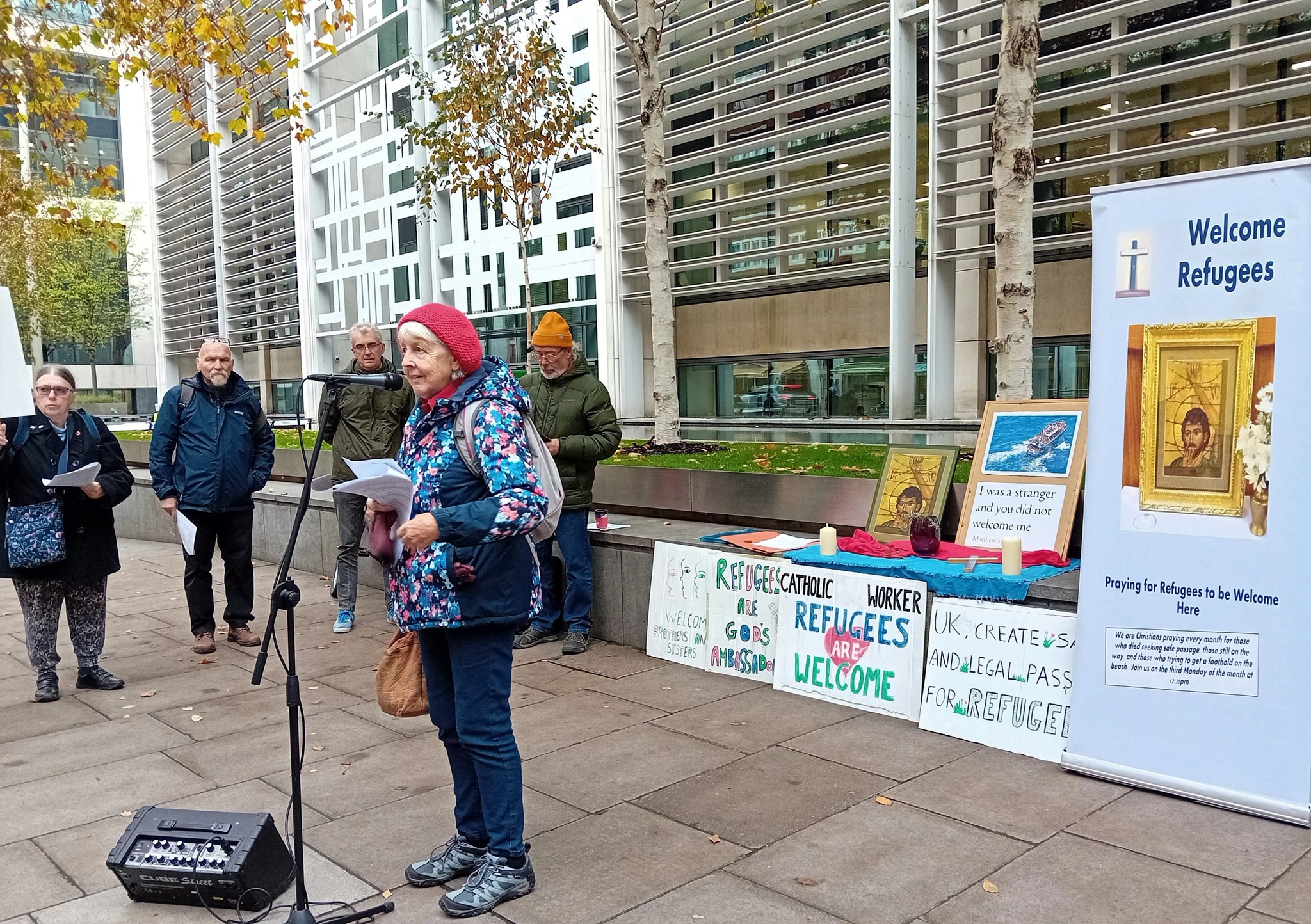
Monthly Prayer Vigil outside the Home Office – next Vigil 17 March 2025
Source: Ben Bano and Phil Kerton
According to the Pas-de-Calais prefecture, “in 2024, 77 people died trying to reach Great Britain aboard a small boat”, a record since the start in 2018 of the use of this means of crossing the Channel. According to British authorities, in 2024, 36,816 migrants managed to cross the Channel on boats, 25% more than in 2023.
According to the count of migrant aid associations, which also includes deaths on land, 89 exiles died on the coast of northern France in 2024. Support groups and political parties organised a march “for justice and dignity” in Calais recently to draw attention to these figures.
First deaths of 2025
The body of Abdul Raheem, a Yemeni aged around 24, was discovered on the morning of 22 January on the sand of Salines beach at Sangatte, facing England, where illegal boats regularly depart.
On the night of Friday to Saturday, 11 January, Suleiman, a Syrian migrant in his early twenties, died at Sangatte during an attempt to cross the Channel. He was one of about 60 people who left on a small boat, only to return very soon, soaked to the skin, leaving the victim on the floor of the boat in a state of cardio-respiratory arrest, probably crushed by the others.
In the early hours of 4 February, a Portuguese driver found the body of a migrant at the side of the A16 motorway near Calais. He was of Eritrean origin and had been hit by a truck.
The prefecture states that two people have been arrested as part of an investigation opened by the Boulogne public prosecutor’s office and entrusted to the office for combating illicit migrant trafficking.
Small boats
According to a 2024 report from the Global Initiative Against Transnational Organized Crime, there has been the rise in the use of ‘small hands’ – migrants who recruit others for the smuggling gangs, helping them to fill their boats. They recruit migrants of their own nationality or ethnicity and know the embarkation points from the beaches, working in groups to prepare and launch boats.
These middle men in the supply chain may charge for their service – a fee of between €1,000 and €1,500 for each boat that leaves the French shore. With up to four hands working on a boat, this is an additional cost for the smuggler of up to €6,000 (on condition that if the boat is intercepted no payment is made). The hands sometimes recruit a third person to act as ‘security’, for which they are paid €200 to €500, or a free passage on a boat after they have worked some shifts. The hands can make some extra cash by adding their own clients to the boats, increasing the overcrowding.
Some smugglers have developed low-cost options for poorer clients (for example, Sudanese and Eritreans), who are offered passage for around €1000. To make up the margins, smugglers may load the boats with more low-paying customers.
Allegedly, for those migrants, generally from sub-Saharan Africa, who cannot afford the crossing, even at a low fee, there is still hope in the shape of what are known in local jargon as ‘zig-zag’ brokers. For a fee of €100 to €400, these brokers take a migrant to a point on the coast where a boat is being prepared for launch, so that the migrant can attempt to board it, by force if necessary, without paying the fare. The migrants already on board often have little option but to comply.
The Vietnamese phenomenon
In recent months, more Vietnamese nationals have attempted to cross the Channel in small boats than any other nationality. Many wonder why so many risk their lives trying to reach Britain. On one hand, Vietnam is a rapidly growing economy, often referred to as “mini-China”. Over the past two decades, per capita income has increased eightfold and the country boasts beautiful landscapes and a vibrant culture, attracting tourists from around the world. Yet, despite these advancements, many Vietnamese feel a sense of “relative deprivation.”
The country is a one-party Communist state, where political dissent is not tolerated. While most Vietnamese have learned to navigate this system, the lack of political freedom and economic disparity between urban and rural areas drives many to seek opportunities abroad. Average wages remain low, especially in rural areas, where many workers lack job security.
The desire to migrate is deeply rooted in Vietnam’s history. In the 1970s and 1980s, many fled the country due to economic hardships and political repression. The shift in the economy in 1986, which opened Vietnam to global markets, fuelled a new wave of migration. The narrative of “catching up and getting rich” became prevalent, leading many to believe that success lay beyond their borders. Families pool resources to finance the migration of one member, hoping they will send money back home to improve living standards. This cycle perpetuates the desire to leave, even as the risks grow.
Events in Calais
Despite the hardcore survival conditions with storms and negative temperatures, the ‘Severe Cold Plan’ hangar was only open to take in people from the street for 15 nights. Furthermore, they have to take a bus to get there and must be gone by 9am sharp the next morning. When it is unoccupied (i.e. almost the rest of the year) the hangar is closed and monitored.
Harassment and evictions remain the norm. Every 48 hours, four to seven living spaces are cleared without a legal framework. People are arrested and tents, tarpaulins and personal belongings regularly stolen.
The ‘BMX Site’ near the Town Hall has been fenced off and cleared by order of the town council which has also requested the “evacuation” of migrants surviving under two bridges and on two quays. Likewise, the ‘Fontinettes’ camp has been cleared and fenced off to prevent people from resettling. Witnesses say that police turn up every morning in Black Mercedes, using batons to wake up and arrest people in tents.
Vocabulary in the UK
The word “illegal” has been one of the terms most strongly associated with migrants in UK parliamentary debates over the past 25 years, research by the Runnymede Trust has found.
After Theresa May’s 2012 pledge to “create a hostile environment for illegal immigrants”, media coverage containing hostile rhetoric around migration and migrants more than doubled (a 137% increase) compared with the two years before.
It seems plausible that the acceptance of such language may have supported growth in racial unrest, especially given a scarcity of well-presented factual media accounts that speak well of migrants.
Ben Bano writes:
The demonisation continues …
Have we lost all sense of proportion? Have we been infected by ‘Trumpism’? Across Europe migrants and refugees are seen as a threat to civil order and anyone who does not have a white skin is suspect. The narrative fostered by Angela Merkel has given way to something much more sinister which conflates migration with a threat to our society – never mind the fact that our care homes and farms would be severely affected by reductions in migration. We need to put a halt to the point scoring between the two major parties on who can do better on halting migration.
And can we find ways of being prophets of hope in responding to these events, as major parts of the world are affected by climate change, war, and much else? Those of us who are activists need to continue to speak out about the tragic effects of climate change which is an existential threat to so many, particularly in Africa. A recent estimate by the UN suggested that 420 million people are affected by climate change, drought, and war. The latest news from Goma in the Democratic Republic of Congo suggests that another tide of displaced people is very possible, adding to the millions who are seeking refuge from Syria, Sudan, and other war zones and areas of unrest.
We need to talk about global citizenship and our responsibilities to help those around us, not least to our MPs. In terms of awareness raising of the issues I fear that we are going backwards at a time when Trumpism and allied ideologies are making too much headway.
A Vigil sponsored by Westminster Justice and Peace, London Catholic Worker and the London Churches Refugee Fund, is held outside the Home Office from 12.30pm-1.30pm, 2 Marsham St SW1, on the third Monday of each month to pray for migrants who have died attempting to reach England. The next one will be on 17 March 2025.
The NJPN have issued the following response to President Trump’s announcement that he plans to evict the entire population of Gaza and redevelop it.
The National Justice and Peace Network of England and Wales rejects completely the proposal of the President of the United States for the ‘takeover’ of Gaza and the obscene plan to create yet another playground for the wealthy. The proposal violates international humanitarian and human rights law and blatantly disregards the basic rights of the Palestinian people.
To suggest that movement of the population of Gaza will be voluntary, when the area has been deliberately rendered uninhabitable, is contemptible.
There is no concern for Palestinian people who have no wish to leave their homeland? Where are they expected to go?
As pilgrims of hope in this Jubilee year, where is the hope for the people of the land called ‘Holy’? Hope is to be found in the countless displaced Gazans as they trek back to their homes in the desecrated neighbourhoods of Gaza. NJPN applauds their courage and supports them in their right to be agents of their own future in a Palestinian homeland.
As people of faith, we are called to speak and act with truth and integrity and to condemn injustice and any failures to recognise the innate dignity of all our sisters and brothers, who have the right to live in a land of their choosing.
We call on our elected leaders, and our faith leaders, to listen to the voices of those who condemn such an outrage, to speak out and to actively stand against the proposal from the United States, in solidarity with the people of Palestine. To remain passive is to collude in crimes against humanity. We must ALL speak out for a sustainable peace that is built on justice and on the recognition of the equal rights and dignity of all people.
A special evening of prayer and music with guests and an Aid to the Church in Need award ceremony will take place on Wednesday, 20 November at the Brompton Oratory, Brompton Rd, London, SW7 2RP.
The chief celebrant will be Bishop Nicholas Hudson.
The Oratory will be illuminated in red to shine a light on Christian persecution, giving hope to those suffering around the world.
#RedWednesday Programme – The Oratory, London
6:30pm: Gathering below Church steps
Be part of the #RW show reel filming. Ahead of group photograph at 6:45pm.
7:00pm: Holy Mass at The Oratory Please join us for sung Holy Mass to remember our persecuted brothers and sisters in prayer. Celebrated by Bishop Nicholas Hudson, Auxiliary Bishop of Westminster. Concelebrating will be Archbishop Linus Neli of Imphal, India and Monsignor Michael Nazir-Ali.
8:10pm: #RW Award Presentation Presentation of ACN’s #RedWednesday Courage to be Christian Award. Followed by a short update on ACN’s ‘Persecuted & Forgotten?’ report and how you can help.
8:30pm: Reception Enjoy refreshments and conversation with ACN staff and benefactors.
Sr Liz O’Donohoe with 3 students from Queen Mary College who study Human Rights
Around 60 people took part in the Westminster Justice and Peace annual day on Human Rights on Saturday October 28th. The Commission had decided that in this uncertain European transition period, it was time to reflect on the state of human rights across the continent, particularly, but not only, with reference to the migrant and refugee phenomenon. The session began with prayers around the Lampedusa Cross, symbol of welcome onto European shores.
Julie Ward says EU is a Peace Project
Julie Ward MEP for the North West opened with the emphatic statement that the EU was first and foremost a Peace project in its conception, not simply a set of trading agreements. She pointed out in passing that there was not a European refugee crisis, as it is called, but a crisis of solidarity and humanity. Julie came late to politics, only becoming an MEP in 2014 after much campaigning through the arts, on, amongst other things, women’s issues and trafficking. She expressed outrage that no guarantees had been made to EU citizens living abroad whether in the UK or other EU countries. The so-called ‘Henry VIII law would short-circuit discussion and implement government wishes without challenge. The EU is a powerful human rights institution, and while we will remain with the Convention on Human Rights, we will leave the Charter of Fundamental Rights which strengthens many basic rights including those concerning data protection, children, disability, and workplace discrimination. The global achievements of the EU on human rights are not reported back sufficiently in the UK.
Patrick Riordan says the ground of human dignity is the basis of all rights
Dr Patrick Riordan SJ, lecturer in philosophy at Heythrop College, gave a scholarly examination of what we mean by rights, which, he explained, are discussed in very different registers. Lawyers talk about rights as principles to be defended legally. Philosophers try to establish whether there are intrinsic rights to being human, such as for water, air, food, while rights can also be claimed by individuals simply because they have a very strong wish for something. As to the question of why we believe in rights, this depends on what we believe to be the origin of human dignity, – which Christians see as deriving from our being made in God’s image. The dignity of the human provides the common language of rights.
Nicolette Busuttil of JRS reminded us that standing up for rights costs us personally
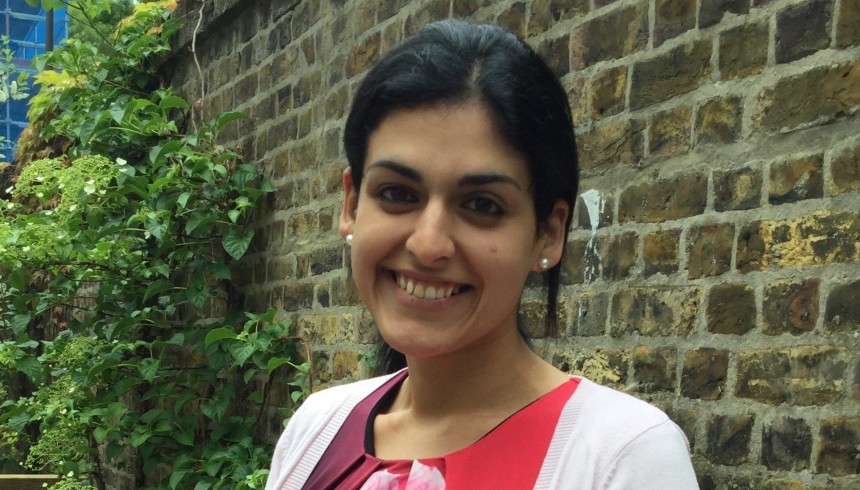
Nicolette Busuttil, of the Jesuit Refugee Service, gave a vivid presentation of the relationship of her work to the rights which for many asylum seekers, are being violated: rights to safety, to work, to have a home, to asylum from persecution and so on. She spoke honestly of how reaching out to refugees can touch us in a very personal way: a man claiming asylum had had to be admitted to hospital for a serious medical procedure, and rang her shortly beforehand, to ask if he could name her as the next-of-kin. He had no-one near to hand when in such a vulnerable situation. Reaching out demands faith and courage, and defending rights becomes a very practical matter.
l to r Fr Joe Ryan, Julie Ward MEP, Dr Patrick Riordan SJ, Nicolette Busuttil, JRS, Barbara Kentish
After a delicious lunch provided by St John Vianney parish caterers, participants chose from a variety of workshops on action for human rights by partner agencies: the Apostleship of the Sea, the Catholic Association for Racial Justice, the London Catholic Worker, Safe Passage, London Mining Network, Haringey Migrant Support Network and Taxpayers against Poverty, and Human Rights in a Brazilian community.
Thank you to all who contributed a recipe (or two!) to our new vegetarian cookbook, which is now available to order in time for Lent. Eating meat puts a huge strain on the Earth’s resources, and also contributes a large number of carbon emissions to the atmosphere. Therefore, we suggest going veggie for Lent. The 40 recipes in this book are a good place to start.
Also available are our ‘Paris Diaries’, a photo journal of our exciting cycle ride to Paris for the UN conference on climate change. It features a written account of the ride as well as an in depth reflection written by our chair Fr Joe Ryan.
Get the books for £3 each or £5 for both. Download an order form here.
Danny Bonnett, a wind turbine engineer from Bristol and a cycling pilgrim, shares his experiences of the road to Paris.
The group get ready to take the train to Newhaven
Day 1 – Newhaven to Dieppe
Mileage: almost nil.
Events: a few episodes of queasiness, great hospitality in Dieppe, and a great tour of historic churches – if only we had known how cold it was going to be! Our hosts were so welcoming it was lovely. Continue reading →
Barbara Kentish and Fr Joe Ryan with Jean Lambert, MEP
Barbara Kentish and Fr Joe Ryan met with Jean Lambert, London’s Green Party MEP, on Friday 13th November at her London offices to discuss our pilgrimage to Paris as well as our hopes for the climate change talks.
She was very helpful and supportive, giving guidance and providing us with excellent background knowledge of the conference: Continue reading →





![20171028_130609[1]](https://westminsterjusticeandpeace.org/wp-content/uploads/2017/10/20171028_1306091.jpg)

![20171028_130422[1]](https://westminsterjusticeandpeace.org/wp-content/uploads/2017/10/20171028_1304221.jpg)


 Diocese of Westminster Justice and Peace Commission