Holocaust Memorial Event

Holocaust Memorial Day was marked around the country on 27th January 2020. Here is a report from a Year 12 pupil of an event held at his school:

“This year, St Mark’s was proud to host the London Borough of Hounslow’s Holocaust Memorial Day commemoration. The event was attended by several local dignitaries included the Mayor of Hounslow, Tony Louki; Steve Curran, the Council leader; local MPs, faith leaders from across the borough and 150 students from St Mark’s.

As the guests arrived, they were accompanied by the noble sounds of Elgar’s Nimrod, wonderfully played by the string section from St. Mark’s orchestra. Then, people’s attention turned with the processional entrance of the Mayoral party. After all guests had re-taken their seats the Mayor made his opening speech. In his speech they Mayor addressed the importance of the day, while emphasising the power of togetherness and the strength this brings to a society. After the Mayor’s speech, Reverend Richard Frank, Vicar of All Souls Church, Isleworth, took the opportunity to thank all guests present for being there and further emphasised the importance of the day. In commemorating the Holocaust and other genocides, “We count what needs counting”, Rev Frank movingly intoned.

This was followed by a powerful performance, by a group of Year 9 Drama students combining words, music and movement, of the poem Tormented Hearts by Misba Sheikh which was written in response to the atrocities committed in Srebrenica in 1995.

Next up was the guest speaker for the event, Natalie Cummings. Natalie’s talk was absolutely mesmerising as all eyes were glued to her for the entirety of her speech. At the beginning of her speech Natalie presented the audience with some family context. Natalie, stated that her father was of Jewish heritage and violin tutor to the Tsar’s children in Russian in 1917 when they were forced to flee the Bolsheviks and endure a lengthy, daring walk across Western Russia in order to escape. The walk lasted nearly a year and they were phased with hazardous conditions and lack of basic necessities such as food and drink for the entirety of the walk to Minsk. Upon arrival to Minsk, Natalie’s dad and her family were met by other Jews who told them not to enter the village or they would be faced with harsh punishments. After this the family were left with no choice but to look for safety elsewhere.

Eventually they would be given the opportunity to come to England and the family started their new life in Leeds. The family settled down and found comfort in the form of their music, more importantly the violin as Natalie’s grandfather, father and auntie were all successful violinists. Her auntie Rosa was especially successful. In 1935 Rosa was invited to perform with the Berlin Philharmonic. Of course she gratefully accepted the offer, however this would have disastrous consequences for Rosa. In 1938 when the Nazi’s reign of terror was gathering pace, Rosa was arrested and brought to a small concentration camp where she was later transferred to Auschwitz. Upon arrival Rosa’s pride and joy her violin was confiscated by a Nazi officer. Rosa believed that she would never see that violin again. To her disbelief after a few days she was asked to perform in the Auschwitz orchestra who played to those coming into the camp in an attempt to lure them into a false sense of hope. Due to playing in the orchestra Rosa’s violin was given back to her and she managed to survive in Auschwitz all the way up to its liberation.

Unfortunately, Rosa did not live for long after, although she lived long enough to tell Natalie her story and now her story will live on through Natalie and future generations through Natalie’s own talks and her recounting of the family history in her book, The Fiddle. Natalie’s powerful talk, was followed by questions from the assembled students.

After all events had concurred Reverend Frank introduced closing moment of contemplation where all guests participated in a 2 minutes’ silence with candles lit in memorium in front of a very evocative painting of the memorial site in Srebrenica, specially painted for the occasion by the Art department.

The closing speech was made by Council Leader, Steve Curran, who further emphasised the importance not just of commemoration but learning from the events of history to remain vigilant against a current re-emergence of prejudice and ethnic hatred. His words “not only do we need to stand together, but we also need to act together” beautifully summed up the overall message of living together in a peaceful society where nobody is discriminated, thus bringing to close a wonderful ceremony.”

Cormac Divers, Year 12 Pupil, St Mark’s Catholic School, Hounslow

New Co-ordinator

From ICN News Jan 10th 2020

Colette Joyce has been appointed as the new Justice and Peace Coordinator for the Diocese of Westminster. She began her new job on Monday, 6 January.

Originally from Great Dunmow in Essex, Colette was previously working as a Parish Catechist at St Michael and St Martin’s in Hounslow, West London, and has also served in the Catholic Parishes of Borehamwood, Hertfordshire, and Stephendale Road in Fulham.

Colette has a particular interest in migration issues, and was the Coordinator of the St Mary Magdalene Centre for Refugees and Asylum Seekers (now the Islington Centre) for five years from 2007-2011. She was a project worker for the Westminster Justice and Peace Commission during the year of the London 2012 Olympic and Paralympic Games and continues to enjoy exploring the links between peace and sport. Colette has acted as an accredited representative for the Faith Workers Branch of the trade union Unite since 2010 and in 2018 was elected as the Equalities Officer for the National Executive of the Branch.

Commenting on her new job, Colette said: “Promoting justice and peace seems a very daunting challenge as we face the threats and uncertainties that have heralded the start of this new decade. Nevertheless, I am hopeful that 2020 will also bring many opportunities for dialogue and action to bring about positive change.

“In particular, all eyes will be focused this year on the COP26 Climate Conference to be held in Glasgow in November. I look forward to helping to encourage and promote the contribution of Westminster Catholics to that critical debate.”

Fr Joe Ryan, former chair of Westminster Justice and Peace said: “Everyone is delighted that Colette has taken up this new post, working with the new Westminster J&P chair, Fr Dominic Robinson SJ, in collaboration with Caritas Westminster. I’m hopeful that they will encourage and inspire all in the diocese on environmental issues, justice and peace. We send them our best wishes and prayers.”

Fr Dominic Robinson SJ, said: “The work of justice and peace as a central core of Catholic life is more urgent than ever in our society so I’m really looking forward to getting down to working hard with our new co-ordinator Colette Joyce to support, promote, and discern vision for the impressive and vital network of initiatives through which Catholic Social Teaching is put into practice in the parishes, schools and chaplaincies of the Diocese.

“In conjunction with the Justice and Peace Commission and with the Caritas Network I hope we can as a team help to develop this work together. Colette’s commitment, theological background, experience of work in the field and knowledge of the Diocese will bring an exciting new dimension to this work and I’m sure she will be warmly welcomed.”

Colette is based in Vaughan House and can be contacted on colettejoyce@rcdow.org.uk or justiceandpeace@rcdow.org.uk

Our Place: How do we achieve the global UN Sustainable Development Goals?

After the success of the first Social Justice and Peace Forum on Energising Young People in Social Justice and Peace, we are pleased to announce that the next one will take place on Saturday 6th July, titled ‘Our Place: How do we achieve the global UN Sustainable Development Goals?’.
This forum is one of the ways that we are trying to bring the practical expression of Justice and Peace to all activity in the diocese. It is hoped that through listening to accomplished speakers and sharing experiences we will all become more confident in the values of justice and peace that underpin our work, and be able to find solutions together.
To inform and drive this, each forum has a particular theme. We have invited Christine Allen, Director of CAFOD, James Buchanan from Operation Noah and Edward De Quay from the Bishops Conference of England and Wales to talk about the UN Sustainable Development Goals. Their talks will be followed by discussion in small groups and then a shared lunch.
The Social Justice and Peace Forum is open to all but we would especially welcome your attendance and contribution to the discussion.

It will be held at St Aloysius Church Hall on Saturday 6th July from 10:30am to 1:30pm. The discussion an any outcomes of the forum will be shared with the Archbishop’s Council. This is an excellent opportunity not only to discuss the practicalities of bringing the values of justice and peace to the forefront, but to support the work of the Diocese of Westminster’s Justice and Peace Commission.

Click here to RSVP

People not Walls, Calais-Dunkirk visit

Calais Reflections March 25th 2019

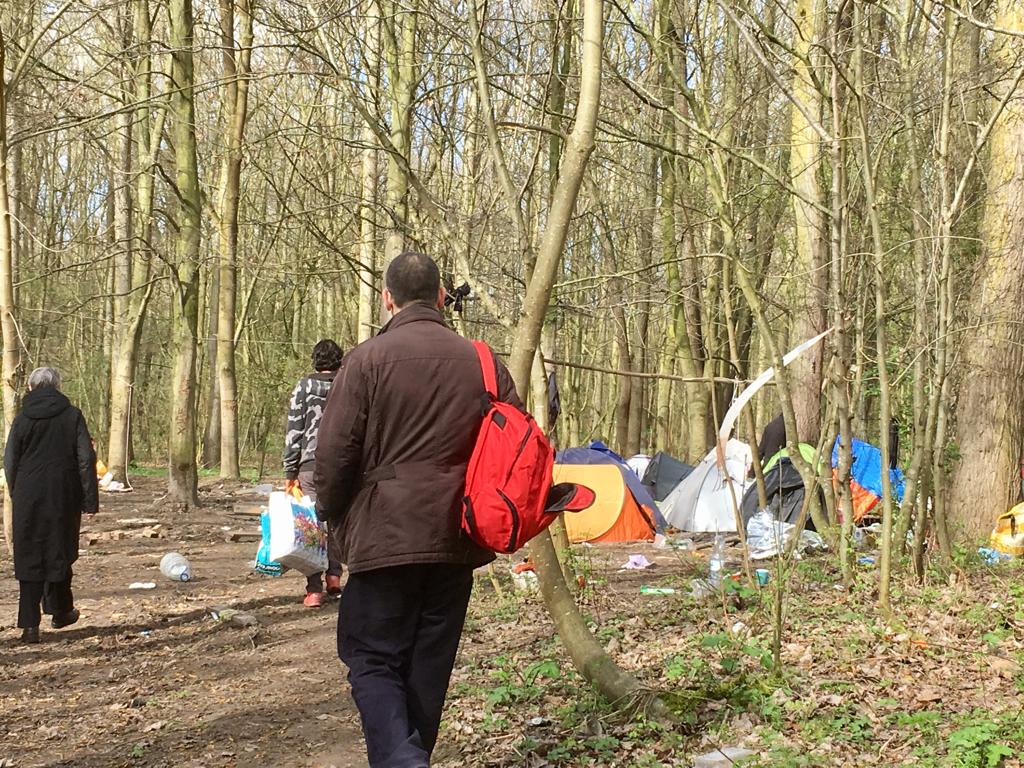
I spent this weekend in Calais and Dunkirk for a ‘People Not Walls’ meeting.   ‘People Not Walls’ – a working title – consists of several charities/associations and NGOs on both sides of the Channel who meet regularly to strengthen our solidarity for the  humanitarian treatment of migrants on our borders*.   Organisations  based in France, such as Help Refugees, l’Auberge des Migrants, Utopia 56 and Calais Catholic Worker, the Diocese of Europe,  meet with some in England, such as Justice and Peace, the Diocese of Canterbury, Samphire, Seeking Sanctuary and others.IMG-20190325-WA0009 (1)

The Afghan camp outside Dunkirk. 

We seek to show our respective governments that investing in barriers is a futile way to build human flourishing.  Instead we call for investment in the welfare of the hundreds, if not thousands, who continue to congregate along the coast, from the Belgian border to Calais and beyond.   The monthly meeting took place this weekend (late March) at Secours Catholique in Calais, with 10 or 12 people who are getting to know each other and building a programme of action.

Our Calais friends were downhearted and even traumatised by the recent violence of the riot police (CRS), who had demolished a small settlement on the outskirts of Calais.  Each time this happens, tents, sleeping bags and clothing are destroyed.   They nevertheless hold out some hope that new avenues of collaboration can change the situation.

We are planning this on 3 levels, exchange of information; a joint symbolic action on both sides of the Channel on June 20th, World Refugee Day; and a collaborative campaign for greater humanity from both our governments.  All these objectives are in progress, aided by some semi-professional lobbyists, as well as volunteers, all with determination to seek better for the hundreds forced to ‘drift’ around the coastline.  For most ‘exilés’ there is now no alternative but to attempt some illegal entry to the UK.

Two of us had booked to stay over till Sunday and travel northwards to Dunkirk.  A quiet farm B&B near the coast seemed far from the struggles of the Calais streets, but we reached Grande Synthe on the outskirts of Dunkirk early next morning.  Here, Sylviane, a volunteer friend, met and led us to a nature reserve where we discovered a group of 20 plus Afghans camping in the woods, safe, they said, from police disturbance.  One was known to my friend who had seen him in Calais two years before.  Others had spent time in Italy before coming North.  Pallets kept the men from the worst of the mud, and there was a substantial camp fire. We were offered a cup of tea – I remembered Afghan hospitality from the Calais Jungle – but we had other visits to make.

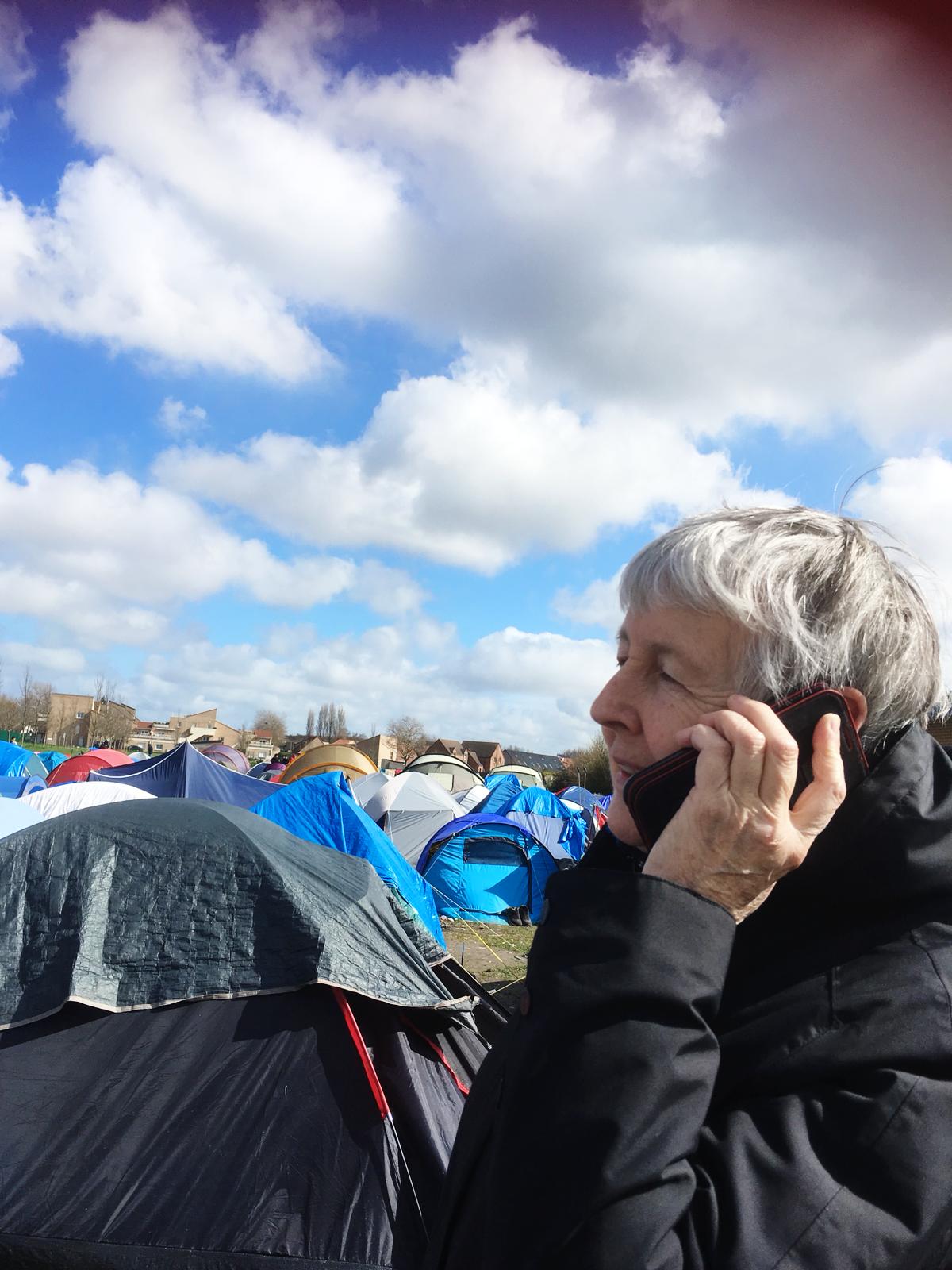
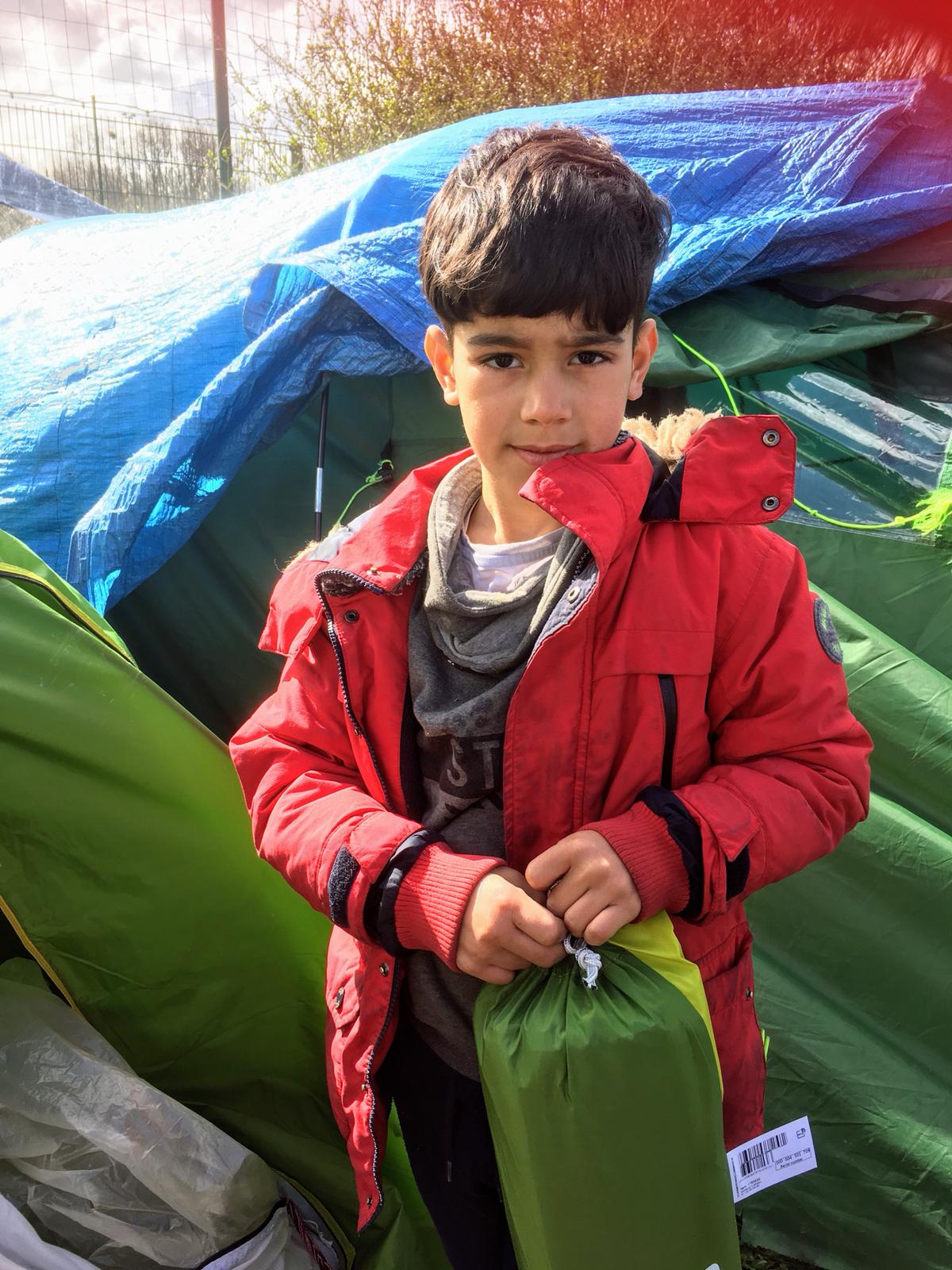
On to the municipal gymnasium where open ground and surrounding sports pitches have been made available for camping.  We saw perhaps a hundred tents of varying sizes and 200-300 people, mostly men, enjoying the comparative warmth of the morning sun.  With goods from our friend such as sleeping bags, tents and warm jackets, we were temporarily popular, till these ran out, and the men returned to their serious occupation of getting phones recharged on multiple socket cables.  A favourite criticism of migrants is of course that they can afford smart phones.  But it is a lifeline for most, not only to keep them in touch with family – generally with free Whatsapp, but also it tells them where the lorries are, the traffic flow, and so on. Perhaps also family can transmit money via phone.  A few children, one Iranian with excellent English after only 8 months in Europe. 

 Phones are important here at the gymnasium camp in Dunkirk!

This 7 year old Iranian was a brilliant English translator

IMG-20190325-WA0017IMG-20190325-WA0005

Sylviane then drove us to a municipal children’s holiday centre where women and children are housed, a lovely sheltered modern house in its own grounds.  Alas, both the gym and the holiday house will be needed in the warmer weather and the migrants will be out on illegal ground again.

By lunchtime Sylviane decided we needed feeding and took us to an amazing Vietnamese ‘eat all you want for a fixed price’ meal, where we did just that, without much encouragement.  Then we continued on to her  house on a street by the sea in town, where she proudly pointed out where the blockbuster ‘Dunkirk’ had been filmed. Her house, of old 19th century architecture, had been part of the film  set, close to where sandbags had blocked the way. 

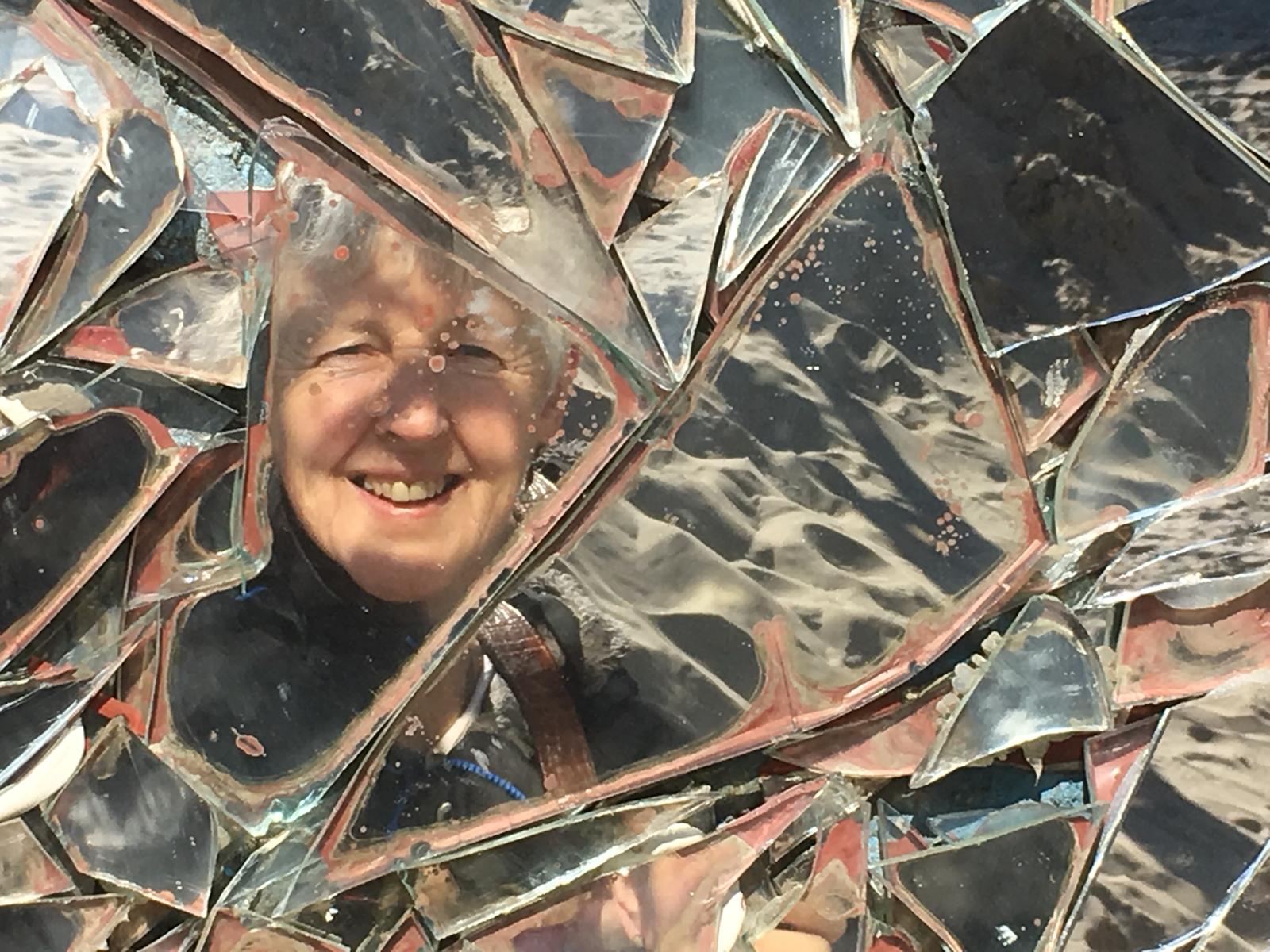
Walking along the beach we were treated to enormous icecreams and a visit to an old German bunker on the beach, which a local artist has just completely covered with fragments of mirror, calling it ‘Reflections’.   Modern barbed wire fences in Calais, old German war bunkers in Dunkirk:  you do indeed have to reflect on this stretch of the French coast!   Who is protecting whom from what?IMG-20190325-WA0025

Réflexions – sculpture sur la plage de Dunkerque.

My reflections were mostly, however, on the resilience of the migrants, and the support needed by volunteers and aid workers for the long haul in seeking justice on the borders, and that  the money spent on walls would be much better spent on food, clothing and shelter for migrants.

Barbara Kentish,  Westminster Justice and Peace    March 25th 2019


*The political border between the UK and France is on the French coast, rather than mid-way across the sea;  border security, therefore, while geographically on French land, is financed greatly by the UK.   The hundreds of migrants, having entered Europe through Greece, Italy or even Northern Europe,  and crossed several Schengen borders, are brought up short when arriving on the North coast of France, facing a daunting barrier of steel, barbed wire, and 25 miles or so of freezing English Channel. 

Churches invited to support Climate action by ‘Extinction Rebellion’ during Holy Week

Fr Martin Newell alerted Westminster Justice and Peace to the need for accommodation for climate protesters from 14th to 21st April 2019 in London, when up to 5000 people will protest about lack of action by our government on climate change.  A sense of urgency is building.  Students are turning out on Fridays to protest.  David Attenborough, probably one of THE world authorities on the threat of bio-extinction,  is addressing President Trump about the action needed.  But we too can do small things, and Justice and Peace tries to ‘do its bit’.  Here is a chance for our parishes to do a bit too! Read below how your parish can offer accommodation to the Extinction Rebellion movement:

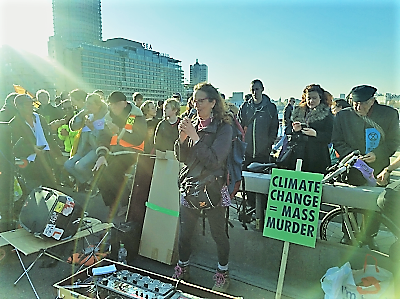
1542661397Pw36rqsyokWKj5TB2YtCdalImNEQ7A (3)Extinction Rebellion blocks Blackfriars Bridge in October 2018.  Ruth Jarman from Green Christian at microphone.

ACCOMMODATION REQUEST

I’m writing on behalf of the climate change campaigning organisation “Extinction Rebellion”
(XR) , which you may have heard of.
They are organising more protests in April, and are looking for church halls and other accommodation for ‘indoor camping’ from April 14th for a week, for protesters who will be staying in London for up to a whole week. (I do realise this will be Holy Week – not good timing)
Overall, they are expecting 1,000’s of people to take part.
I received the details below about they are looking for and what they can offer:
“1) Confirming what XR are looking for in terms of accommodation.
We are primarily looking for large indoor spaces – church halls are perfect – anywhere in London.  It doesn’t need to be super close to Zone 1, but I think we do need spaces that are suitable for indoor camping.
The ideal we’re looking for is spaces we’d be able to use 24/7 , but use of halls during the night or day would still be very useful (for example, a group might be out all night, so could usefully camp in a certain hall the following day).  Night access-only would be brilliant too.
2) What XR would offer: We would make sure members of our well being and stewarding team are on shift at all times to ensure the safety of members and also to look after the space.
These spaces won’t be ‘free-for-alls’ but allocated to specific local groups from around the country – people who already know and trust each other.  This is also a way of making sure maximum capacity isn’t exceeded.
We don’t really have much budget but I’d be very happy to talk about deposits/contracts etc.”
3) Questions and Contacts: 
To get in touch with their accommodation co-ordinator, please contact:
Thomas Lloyd: xr.accommodation@gmail.com
Or, if you have questions I could answer, feel free to contact me.
As well as email, my phone numbers are:
0121 772 7933 / 07985 728 464
4) Extinction Rebellion
All the above, and more information about XR, is in the attached Word doc, for ease of use.
As I say, I do realise this will be Holy Week, and as such is not good timing from a church point of view. But if there is a possibility your parish or community could help, we would all be very grateful. And please do feel free to get in touch if you have any question etc.
with thanks
Martin
Martin Newell
Austin SmithHouse, 96 Ivor Road, Sparkhill, Birmingham B11 4NX
Tel: 0121 772 7933
Blog:martinnewellcp.wordpress.com
Twitter: @jesuxpipassio

Kurds on hunger strike to free Kurdish leader Abdullah Ocalan

By Fr Joe Ryan

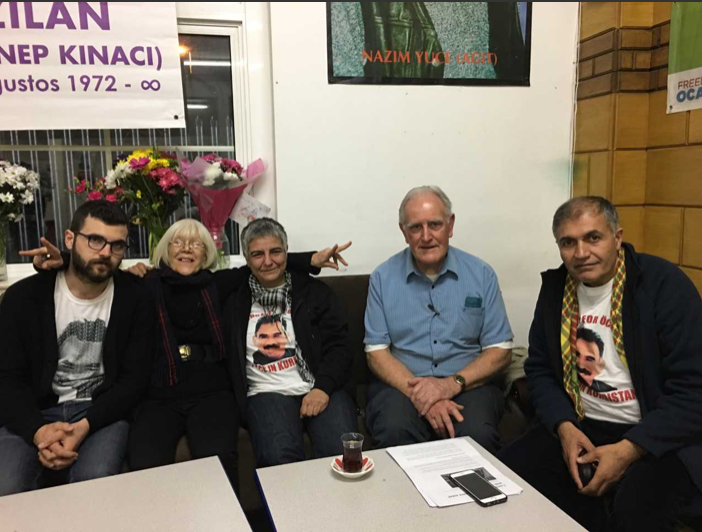
L-R: Mehmet Sait Yilmaz, Estella Schmid, Nahide Zengin, Fr Joe Ryan and Ali Poyraz [Hunger Strikers in T-shirts]

Kurdish picture 2


KURDISH HUNGER STRIKERS  March 2019

Fr Joe Ryan

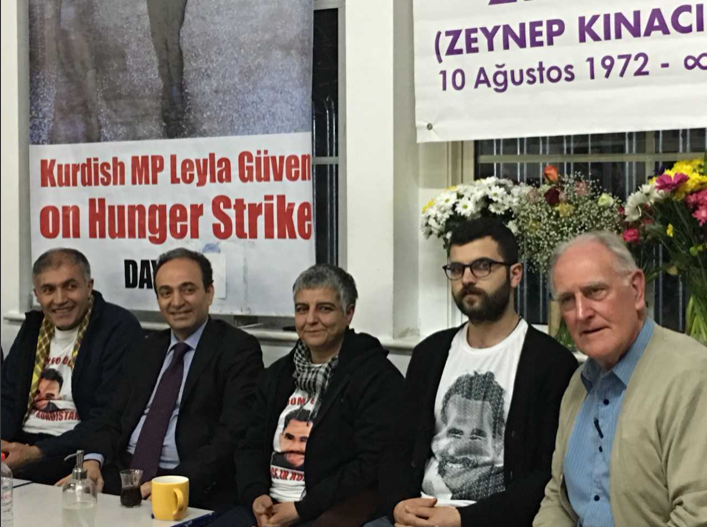
On Thursday evening, 21st March 2019, I visited the Kurdish Centre based in St John Vianney Parish, West Green N15.  There I met the three local Kurdish hunger strikers, Ali Poyraz, Nahide Zengin, and Mehmet Sait Yilmaz.  They have been on hunger strike since March 14th.  Their only nourishment is water, some sugar and salt.  At present they are in good spirits and really appreciate any support and solidarity.  Their efforts are to highlight the twenty years imprisonment and totally inhumane conditions of their Kurdish Leader, Abdullah Ocalan.  He has been in solitary confinement on Imrali Island without access to lawyers and family for the past five years.

As members of the Imrali Delegation, we have made several visits to Istanbul with requests to visit him in prison.  We have been making representations in Brussels and  the Council of Europe in Strasbourg, but with no success.  Many Trade Unions and others have taken up the cause for Abdullah Ocalan’s release, but without recognition or response from the Turkish Government.  No country will take an interest in the campaigns, even though basic human rights are denied and the Geneva Conventions  ignored.kurdish picture 1

L-R: Ali Poyraz, Osman Baydemir, [Former Mayor of Diyarbakir], Nahide Zengin, Mehmet Sait Yilmaz and Fr Joe Ryan. [Hunger Strikers in T-shirts]

Abdullah Ocalan, (he “Nelson Mandela” of the Kurdish people) has written many peaceful plans from his prison cell on Imrali Island. Peace negotiations with the Turkish Government were progressing, but then when it seemed like something might happen, the latter backed off.  The main problem is that the PKK (Kurdish Workers Party) is still on the international terrorist list.  The  intricacies of the political situation in Syria make it convenient for Turkey, USA, Israel and others that  it should remain so.  Abdullah Ocalan is a key player towards peace in the Middle East and beyond.  It’s very difficult to negotiate for peace from a prison cell in solitary confinement!!

Any publicity and solidarity for the Kurdish cause is very much appreciated by the Kurdish community.

Fr Joe Ryan   Chair of Westminster Justice and Peace Commission

For further information about these issues, see following links:

www.PeaceinKurdistan.com and www.freeocalan.org

Diary of Calais events

August in Calais – not exactly a summer holiday for some!

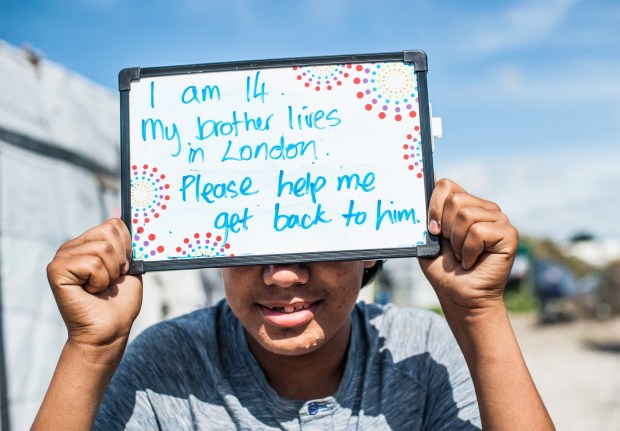
I went to Calais for 5 days to recruit for our Justice and Peace October Cross-channel meeting.  Staying with Maria Skobstova House gave me a unique angle on life with young migrants. 

Calais seemed quiet and lethargic with heat when I arrived at the beginning of August, though a sea breeze made it slightly cooler than London.  Many shop fronts were shuttered, due to the holiday season, and few locals on the streets.   I had come to recruit for an Autumn day of cross-Channel dialogue between volunteers and NGOs, and stayed with other volunteers at a flat rented by Maria Skobstova House, helping out with basic housework in between encounters.

MS House contin ues to offer drop-in facilities to many young men, usually Eritrean, and very importantly, a chapel where they pray in their Orthodox tradition several times a week.  One volunteer described the people she met ‘a gentle people, at the end of a deeply harrowing journey’. These polite young men – the  French volunteers call them ‘exilés’ rather than migrants – continue to jump onto lorries to the UK as their best option for a viable future.  Since that is by definition a clandestine activity, and there is no large encampment, the febrile atmosphere of the Jungle seems long gone.  Instead they go about their business of surviving, quietly and with dignity.  Most live out, under tents or awnings, in little encampments on scrubby land around Calais, which are interspersed with the many depots and light industrial factories stretching for miles around the perimeter.  I took part in two ‘Maraudes’, not raids, as the name suggests, but more a sort of soup run, where food, water, hot drinks and toiletries might be distributed.
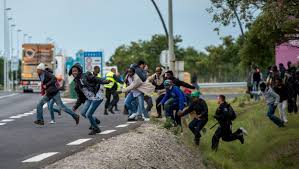
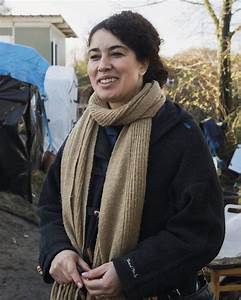
Mariam Guérey from Secours Catholique led one, on a midweek morning, where 5 of us helped to distribute tea and water.  Mainly, however, we donned rubber gloves, grabbed black refuse sacks and did a site clearance of some of the rubbish which collects when people live hand to mouth and are moved on regularly by the CRS – riot police from other regions.  Arriving in the early morning, I was told, the police slash the tents and spray the fabric of clothing and bedding with tear gas.  Volunteers are also treated with hostility, so that opposition to these armed personnel is virtually impossible.  Mariam smiled and greeted the young migrants with huge bonhomie, playing Eritrean music loudly when we arrived at a site, with the same aim as an ice-cream van might arrive in our street:  ‘We are here, we are your friends, we bring good things’ was the message.   
The second site we visited, the ‘Little Forest’, I had heard of from the young men at the Maria Skobstova drop in house.  Sandwiched between a pleasant residential area and the Calais ring road, this long patch of wooded land seemed a haven hiding many little tents, and was popular because of its proximity to a lorry park the migrants called ‘Belgium Parking’.  This was currently a favourite place to try entering the lorries.  So close to the port, it was being well-guarded however, and I met 2 young men who failed to reach the UK during my stay.  Finally, Mariam took us to the Auberge des Migrants warehouse, where the big NGOs, Utopia 56, Calais Kitchen, Help Refugees, and the Auberge itself, work together to provide support to the ‘exilés’ still flocking to and through Calais.   Exact numbers are difficult, but can be gauged by the number of meals distributed by huge modern efficient kitchen.  Currently around 700 could be in Calais, but Calais Kitchen also supplies Dunkirk, 20 plus miles away, and points in between.  So the total on that stretch of the north coast could be upwards of 2000.  Few women and children stay in Calais but move towards Dunkirk.

Before my next ‘Maraude’, I was fortunate to be invited to a meeting of the ‘Inter-asso’, the weekly meeting of the NGOs held on this occasion at Secours Catholique.  It proved an excellent snapshot of the state of play.  Present, as well as the main players already mentioned, were Amnesty International,  Gynecologistes sans Frontieres, Caritas Italy, Medecins du Monde, and of course Westminster Justice and Peace!  Each of the points I noted had backstories that I could only guess at, representing as they did a whole history of day-to-day specialised efforts for human rights whether to clean water, health, to the proper treatment of children or simply the right to demonstrate.  
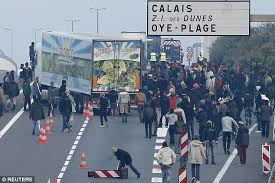
  • Feelings were high over a very recent demonstration where an English activist called Tom had been deliberately pushed in front of an oncoming lorry by the CRS. We saw Youtube videos confirming this, though he was released after 48 hours.  Other UK volunteers had been threatened by police, and lawyers were on standby.
  • One lawyer at the meeting mentioned that written guides for those on demonstrations were on their website, and suggested hard copies in different languages might be distributed.
  • Worryingly, volunteers carrying out the ‘Maraudes’ have been bothered by the police, though this is a legal humanitarian activity.
  • Many reported an increase in alcoholism amongst the migrants and this would be referred to the various alcoholism support agencies in the city.
  • Some minors are refusing to talk at all to police when stopped, even to give their names. I was not sure if this was good or bad – discussion proceeding at such a pace!
  • Victory over the Council! There was much jubilation that some small concessions have been extracted from the Préfecture:  a lump sum of 1500 euros, 2 extra standby taps, more showers, and 900 jerrycans of water (the large plastic containers I saw at the Little Forest, containing about 18-20 litres).
  • Despite this, there was no mention of the human right to water, the original demand.  What is more, the Préfecture disputes the numbers of migrants, and the boycott which seems to exist regarding Council meetings will continue, since with no common agreement on basics, some NGOs see these joint discussions as a charade.
  • Medecins du Monde had made a serious attempt by to gather all health professionals around a table for dialogue, but some NGOs had shown negativity and the recent meeting had not been a success.
  • Finally, I was given the floor for a few minutes, to extend an invitation to all the NGOs to our day of dialogue in Dover on October 20th .  Justice and Peace in Southwark and Westminster have begun planning a day of ‘Friends in Solidarity across the Channel’, just to exchange information and get to know each other in our common humanitarian concern for the hundreds, if not thousands, who suffer at our common border.  There was a gratifying amount of interest.   Véronique, a volunteer at Secours Catholique, who has carried out ‘maraudes’ along the Calais coast for the last 15 years, was particularly anxious to know what happens to the young people on their ‘illegal’ arrival in Kent.  I promised to find people with more knowledge than me to speak at that day.

The meeting thus provided a fascinating snapshot of what was currently going on, even allowing for the remarks in slang I didn’t quite catch!   It certainly helped me understand a little of what I was seeing in my short visit.

Brother Johannes had suggested I talk to several individuals for their perspective.  A sobering talk with Leo from Eritrea helped me understand why it can be impossible for young exilés to return home, besides the high fences of the UK border.  As a government employee involved in a pay dispute, he had been imprisoned for 15 months, and emerged to find his job taken away, and the only option forced military service*.   His family sold cattle and jewellery for him to undertake the exile.   Having survived the  perilous journey North to the Mediterranean, Leo was finger-printed in Italy, and made his way through southern Europe to Calais, en route to the UK, where he hoped, and still hopes, to refresh his qualifications, with the good English he already possesses.  He has tried for 7 months to hitchhike a lorry across the Channel, attempting another sortie the day after our talk.  Alas for him, he returned defeated and sad;  I felt my conversation with him had perhaps also renewed his sense of frustration and futility.   A gentle, kind and quiet person, he explained Eritrean pop music to me, and we checked my son’s music career on the internet.  Next day, he set out in the daytime on a recce as to the possibilities of lorry rides at Belgium parking.  Another day, new hope.  I would really like to see him get to the UK.

My second ‘maraude’ was  organised by Maria Skobstova House, a weekly Saturday event, serving breakfast at the Little Forest.  Véronique, Lise and Gilles, all Calaisians who sometimes take ‘exilés’ into their homes in emergencies, do these runs regularly.   The ‘crime of solidarity’ has been dropped, and we distributed breakfast of tea, water, hardboiled eggs, tinned sardines, cake and fruit to a small crowd, who relaxed sufficiently to play a little football in the sunny clearing.   Week in and week out, it cannot always be so pleasant.  These Calais residents have conducted ‘maraudes’ continuously since the Sangatte camp days around 2001.

The Secours Catholique approach of ‘Aller Vers’, ‘Moving Towards’, is more than just the offer of material goodies, but of a hand of friendship.   The migrants need food, water, clothing, shelter, but more than all that, they need a reason to hope for better things.  ‘We are living like animals’, said Leo, referring to their life in the open air.   Yet with welcome and solidarity, miracles can happen.   The resilience of these young migrants is astonishing.  Given a helping hand one day – a shower, a meal, a set of new clothes, even just a smile – they can get up and carry on the next.

*Forced labour and slavery  in Eritrea

The mandatory national service continued to be extended indefinitely despite repeated calls from the international community on the government to limit conscription to 18 months. Significant numbers of conscripts remained in open-ended conscription, some for as long as 20 years. Despite a minimum legal conscription age of 18, children continued to be subjected to military training under the requirement that they undergo grade 12 of secondary school at Sawa National Service training camp, where they faced harsh living conditions, military-style discipline and weapons training. Women, in particular, faced harsh treatment in the camp including sexual enslavement, torture and other sexual abuse.  Amnesty International report 2017-18 

Update from Seeking Sanctuary

14 August 2018

AUGUST UPDATE

Despite  the holiday season important news (often overlooked by mainstream UK media) continues to arrive … not least that the recent extreme heatwave has proved a cause of much suffering, even for those used to hotter climates. The complete lack of shelter and accessible running water are just two of the problems, notwithstanding the efforts of the committed volunteers who are ever present with supplies, including fresh water and other essential goods.

NEWS ON THE DOVER MEMORIAL

Earlier in 2018 we told you about our desire to establish a memorial to those who have died seeking sanctuary in the UK. We know that the number is at least 150 since 2000 and still rising. The memorial will be a simple plaque to be placed next to the existing Chinese memorial in line of sight of the French coast. You can see the wording for the memorial here. We have now obtained all the relevant permissions and the cost is likely to be about £800. If you would like to make a donation towards this please let us know and we will let you know payment details in due course. The official inauguration is planned for later in the year, but we plan to visit the memorial at the end of following event.

SATURDAY 20 OCTOBER

As advised in July, we are collaborating with others to arrange conversations at St Paul’s Church in Dover about the situation facing exiles in Calais and in the UK, with attendance expected from people who live, volunteer and/or work there. We hope that many of you will tell other interested people and be able to join us. A flyer is attached and we will announce more details soon.

RECENT FIGURES AND THEIR IMPLICATIONS

The latest report from the UN’s International Organisation for Migration indicates that from 1 January to 25 July 2018, 55,001 migrants and refugees entered Europe by sea. This compares to 111,753 at this time last year, and more than 250,000 in 2016. So despite perceptions, the numbers are well down. However, the number of deaths is well up, with 2018 being one of the deadliest years on record. 1,504 men, women and children have died attempting the Mediterranean crossing, more than half of them since 1 June when Italy’s policy began to change. In Calais, the exiles stand out, huddled in small groups, seeking shade under trees at roadsides or beneath bridges, or walking through fields of long grass. In a patch of woodland next to a main road, around 60 young men from Eritrea sleep between the trees. Elsewhere, there are camps of Sudanese, Afghans, Kurds and Ethiopians (including Oromo Ethiopians). There are also people from Syria, Iraq and other African countries such as Chad and Cameroon. They are mostly men, although aid workers in nearby Dunkirk, report increasing arrivals of women and children.

For further updates from Seeking Sanctuary, see the website, http://www.seekingsanctuary.weebly.com

Our Common Home Interfaith event

Our Common Home Poster-2

We are all affected by climate change. What do our respective faiths have to offer in the quest to care for our common home?  Join us for an evening of discussion on Climate and our faith response.  Christian, Muslim and Buddhist speakers will help us explore and reflect together on the climate challenge.  See poster for more details.

Spring Appeal for Calais migrant children

Spring Appeal 2018-3            After raising nearly £16000 for the Maria Skobstova House in Calais last Autumn we are opening up the appeal once again as the work goes on to reach out to young people adrift in Northern France, set on reaching the UK. On our European pilgrimage we were fortunate to meet dedicated Secours Catholique volunteers helping and monitoring the situation, which some have been doing for many years. Dismantling the ‘Jungle’ has not meant an end to the migrants’ quest to reach the UK – only a riskier environment. See our appeal leaflet for more details.