Human Rights in a post-Brexit era

Barbara Kentish

20171028_130609[1]

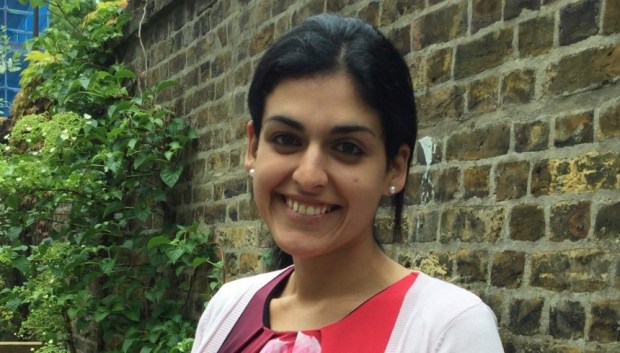
Sr Liz O’Donohoe with 3 students from Queen Mary College who study Human Rights

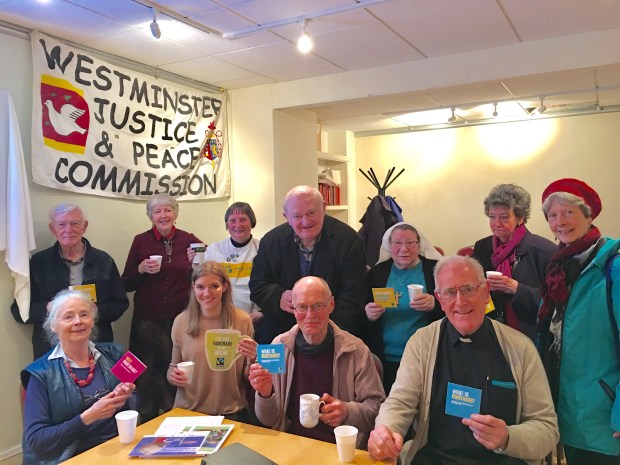
Around 60 people took part in the Westminster Justice and Peace annual day on Human Rights on Saturday October 28th. The Commission had decided that in this uncertain European transition period, it was time to reflect on the state of human rights across the continent, particularly, but not only, with reference to the migrant and refugee phenomenon. The session began with prayers around the Lampedusa Cross, symbol of welcome onto European shores.

JulieWardMEP

Julie Ward says EU is a Peace Project

Julie Ward MEP for the North West opened with the emphatic statement that the EU was first and foremost a Peace project in its conception, not simply a set of trading agreements. She pointed out in passing that there was not a European refugee crisis, as it is called, but a crisis of solidarity and humanity. Julie came late to politics, only becoming an MEP in 2014 after much campaigning through the arts, on, amongst other things, women’s issues and trafficking. She expressed outrage that no guarantees had been made to EU citizens living abroad whether in the UK or other EU countries. The so-called ‘Henry VIII law would short-circuit discussion and implement government wishes without challenge. The EU is a powerful human rights institution, and while we will remain with the Convention on Human Rights, we will leave the Charter of Fundamental Rights which strengthens many basic rights including those concerning data protection, children, disability, and workplace discrimination. The global achievements of the EU on human rights are not reported back sufficiently in the UK.

Patrick Riordan says the ground of human dignity is the basis of all rights

Dr Patrick Riordan SJ, lecturer in philosophy at Heythrop College, gave a scholarly examination of what we mean by rights, which, he explained, are discussed in very different registers. Lawyers talk about rights as principles to be defended legally. Philosophers try to establish whether there are intrinsic rights to being human, such as for water, air, food, while rights can also be claimed by individuals simply because they have a very strong wish for something. As to the question of why we believe in rights, this depends on what we believe to be the origin of human dignity, – which Christians see as deriving from our being made in God’s image. The dignity of the human provides the common language of rights.

NicoletteBusuttil

Nicolette Busuttil of JRS reminded us that standing up for rights costs us personally

Nicolette Busuttil, of the Jesuit Refugee Service, gave a vivid presentation of the relationship of her work to the rights which for many asylum seekers, are being violated: rights to safety, to work, to have a home, to asylum from persecution and so on. She spoke honestly of how reaching out to refugees can touch us in a very personal way: a man claiming asylum had had to be admitted to hospital for a serious medical procedure, and rang her shortly beforehand, to ask if he could name her as the next-of-kin. He had no-one near to hand when in such a vulnerable situation. Reaching out demands faith and courage, and defending rights becomes a very practical matter.

20171028_130422[1]

l to r Fr Joe Ryan, Julie Ward MEP, Dr Patrick Riordan SJ, Nicolette Busuttil, JRS, Barbara Kentish

After a delicious lunch provided by St John Vianney parish caterers, participants chose from a variety of workshops on action for human rights by partner agencies: the Apostleship of the Sea, the Catholic Association for Racial Justice, the London Catholic Worker, Safe Passage, London Mining Network, Haringey Migrant Support Network and Taxpayers against Poverty, and Human Rights in a Brazilian community.


Help a Calais Minor!

Justice and Peace has launched an appeal for the young people in Calais who are surviving hand-to-mouth as the French authorities try to prevent any humanitarian aid on the streets. See our newsletter for more information.


CONTRIBUTIONS:

You can contribute via our Justgiving page –

https://www.justgiving.com/campaigns/charity/rcdiocese-westminster/helpacalaisminor

We at Justice and Peace will also be collecting items as requested by Brother Johannes, who lists them as follows:

Donations and gifts are welcome     We can use:    For Personal use:  Shower gel, shampoo, toothbrushes, body cream or oil (like Vaseline, Nivea), Socks 36-43  Boxer shorts S/M  (No Large please), Sport shoes 39-40-41, Pocket nail cutter  (Also helpful: Power bank mobiles).   

IMG_20150919_114340578

Clothes for young men are welcome, BUT PLEASE FOR NOW ONLY small size T-shirts and jeans!  WE HAVE ENOUGH TOWELS AND TOOTHPASTE thank you!   For the house:   Disinfectant,  All-purpose cleaner, Anti-scalant, Toilet cleaner, Washing powder or liquid (mostly color wash, Laundry Stain remover, Softener, Calgon, Washing-up liquid, Tablets and liquid for the dishwasher, Toilet paper.   Food:   Ground Coffee  and lots of MILK – the youngest ones really drink a lot of it. (J&P advise: Buy it at French supermarkets if you visit, or send money.

For small amounts, send the money via our Justgiving website.

For large amounts (making it worth paying the exchange rate), go to Maria Skobstova bank account direct:

Association Maria Skobtsova.  Here are the bank details:  IBAN: FR7615629026250002172700193   BIC: CMCIFR2A Bank: CCM Calais, 85 rue Mollien, 62100 Calais, France


Archbishop Romero, his people and Pope Francis – a new film

New film previews in London: ‘Archbishop Romero, his people and Pope Francis’

July 2nd, 2017

Q&A  after screening with director Gianni Beretta (centre)  Julian Filochowski  left,  Clare Dixon on right

Q&A after screening with director Gianni Beretta (centre) Julian Filochowski left, Clare Dixon on right

By: Ellen Teague

A quarter of a million people attended the beatification ceremony in El Salvador for Archbishop Oscar Romero on 23 May 2015. A huge crowd chanted songs and carried banners as a procession moved from the cathedral, where Archbishop Romero’s tomb lies in the crypt, to Salvador del Mundo (Saviour of the World) Square in the centre of San Salvador. Here the Vatican envoy Cardinal Angelo Amato presided over the beatification ceremony.

These were the opening images in a new film about Romero, subtitled ‘Archbishop Romero, his people and Pope Francis’, which had its first UK viewing in London on 1 July. It will probably be entitled ‘Making Amends’ in its English version, suggesting that Romero is finally being recognised as a martyr, after Pope Francis declared two years ago that he was killed “in hatred of the faith” and not, as some contended, for political reasons.

Beatification is the penultimate step before Archbishop Romero is, hopefully, declared a saint. He was shot dead by a marksman as he celebrated Mass in a hospital chapel in San Salvador on the evening of 24 March 1980. The film contained much new footage of Romero, particularly from the last three years of his life when he challenged the violence going on in El Salvador. He regularly visited poor communities and affirmed young people who were growing up amidst poverty and repression. The film showed spontaneous clapping as he walked among people, standing close to them and entering their homes. A real love between Romero and the Salvadorean people was evident. “The Church is trying to give them a little hope” he said.

His homilies in these years were a dynamic challenge to the military-backed government, especially since they were broadcast nationwide on the Church’s radio station. When the US-backed Salvadorean army used death squads and torture to silence leftist movements demanding change, he was not afraid to speak out in his weekly sermons. “The law of God which says thou shalt not kill must come before any human order to kill; it is high time you recovered your conscience,” he said in his last homily in 1980, calling upon the national guard and police to stop the violence. “I implore you, I beg you, I order you in the name of God: Stop the repression” he urged. That sermon, interpreted as calling for insubordination, cost him his life. A day later, while saying Mass, he was shot through the heart by a single bullet.

The film records those who knew him well, giving insight into his character. Monsignor Ricardo Urioste, who died last year, told us that that when Romero was chosen as archbishop he did not attend his swearing in. “I thought he was not a good choice for archbishop” he said “and that he was appointed to control the priests who were interested in Medellin”, a reference to the 1968 meeting of the Conference of Latin American Bishops which stated that the Church should make a “preferential option for the poor” and tackle “the institutionalised violence of poverty”. Theologian Jon Sobrino reported on the change evident in Romero just a month after his appointment, following the murder of his friend, the Jesuit priest Rutilio Grande, on 12 March 1977. “He was shocked at what was happening to poor people, catechists and priests” reported Fr Sobrino, “and was outraged at the bumper stickers put out by the military, ‘Be a patriot, kill a priest’”.

But Romero’s adversaries were not just in the military and the affluent families who controlled El Salvador. His focus on social justice, condemning the concentration of power and wealth in El Salvador, and speaking out against structural violence, attracted criticism from his fellow bishops who complained to Rome that he had Marxist leanings. Roberto Cuellar, a lawyer who was hired by Romero to run a free legal-assistance office in San Salvador, reported on Romero’s sadness when his fellow bishops mocked him and laughed in his face “like hyenas”, and he was so upset he asked Romero’s permission to leave the meeting. When Romero travelled to Rome in 1979, with copious documentation regarding victims of repression to show to Pope John Paul II, the latter told him, “you should not have come to Rome with so many documents”. In a difficult meeting, the pope expressed concern that the priests killed were linked to the guerrilla movement and that Romero was not making enough effort to get along with the Salvadorean government. Romero not only continued his challenge but wrote a letter to President Jimmy Carter begging the United States to stop sending weapons to the Salvadorean military government which were used to repress the people. Pope John Paul II clearly had a change of heart when he visited El Salvador in 1983 and 1996 and both times asked to visit Romero’s tomb and pray before it. Thereafter he gave his full support to Romero’s beatification. Unfortunately, many senior officials in the Curia did not.

Archbishop Romero comes across as a brave man of whom the Church can rightly be proud for his defence of the poor, and his call for justice and peace. Was he ever fearful that he too would die a violent death? The film contains an interview where he says: “I am mildly fearful, but not in a paralysing way that affects my work.” He was one of over 70,000 people who died during El Salvador’s Civil War, and a UN report records that approximately 85% of all killings of civilians were committed by the Salvadorean armed forces and death squads.

The film highlighted things that were new to me – for example, Romero consulted widely before delivering his explosive sermons, and he spent the final morning of his life on a trip to the beach with some of his priests and a packed lunch!

Several Latin American cardinals in the Vatican had blocked his beatification for years because they were concerned his death was prompted more by his politics than by his preaching. But with Pope Francis the process has been “unblocked”, as he himself put it.

Now that Romero is beatified the next stage is canonisation. However, he has been a saint by popular acclaim in Latin America ever since his killing. Roberto Cuellar told of walking down a street in San Salvador on the evening Romero died and finding a group of beggars who said, “they have killed the saint”. He reports that as being “the first time I heard him called a saint”. At his beatification Pope Francis said: “In this day of joy for El Salvador and also for other Latin American countries, we thank God for giving the martyr archbishop the ability to see and feel the suffering of his people”.

The film was introduced by Julian Filochowski, the chair of the Archbishop Romero Trust, who has lobbied tirelessly for the canonisation of Romero. He knew the archbishop and worked with him in the late 1970s. He was present at the beatification two years ago, just as he had been at his funeral in 1980 – where the military dropped smoke bombs on mourners leading to around 40 deaths. In the 1980s, during his visits to El Salvador as Director of CAFOD, he made a photographic record of the mutilated corpses left out on the streets of San Salvador daily by death squads. Julian is one of many who have long regarded Romero as an extraordinarily meaningful figure far beyond El Salvador, and an important witness from the Church to the world for the 21st century. When Bishop Gregorio Rosa Chavez was recently elevated to become El Salvador’s first cardinal, one of the first things he did was to say Mass at the tomb of Blessed Oscar Romero and say, “I dedicate this appointment to Archbishop Romero”.

Taking questions after Saturday’s preview from assembled Catholic journalists and friends of the Archbishop Romero Trust, filmmaker Gianni Beretta explained that the likely title, ‘Making Amends’ refers to the “moral reparation” of recognising Romero, nearly four decades after his death, as a champion of the common good, of the same standing as Martin Luther King, Mahatma Gandhi and Nelson Mandela. It was pointed out that the date of his killing – 24 March – is now the United Nations ‘Day for the Right to the Truth Concerning Gross Human Rights Violations and for the Dignity of Victims’. The day is explicitly linked to Archbishop Romero and could be described as a secular canonisation.
Look out for details of the film’s availability on the website of the Archbishop Romero Trust www.romerotrust.org.uk

As part of celebrating the centenary of Archbishop Romero’s birth in 1917, the Archbishop Romero Trust has organised a Centenary Pilgrimage to El Salvador in November. Places are still available:
www.romerotrust.org.uk/news/romero-centenary-pilgrimage-el-salvador-2017


Finsbury Park Mosque Community Service of Hope

A Service of Hope held by Finsbury Park Mosque and Muslim Welfare House

Hundreds attended a prayer service held at very short notice for the victims of the Finsbury Park hate attack today, July 3rd, which was attended by many London leaders, including the Secretary General of the Muslim Council of Britain, Sophie Linden, Deputy Mayor of London for Policing and Crime, Sarah Newton MP, Parliamentary Under Secretary of State for Vulnerability, Safeguarding and Countering Extremism,  Dr Ahmad Al Dubayan, Director General of the London Central Mosque, Bishop Pete Broadbent, Acting Bishop of London,  Councillor Richard Watts, Leader of Islington Council, the Rt Hon Jeremy Corbyn MP,  Member for Islington North and Leader of Her Majesty’s Opposition, and Dr Omer El-Hamdoon, President of the Muslim Association of Britain.

image

Mohammed Kozbar, Chair of Finsbury Park Mosque, and Jeremy Corbyn MP

Every speaker offered condolences to the victims, especially to the family of Mr Makram Ali, who was murdered, and also offered praise and thanks to Imam Mohammed and  the members of the community who prevented further violence who prevented retaliation towards the attacker,  as well as to the emergency services for their prompt response.   Many speakers further made the point that such non-violent responses did not just happen out of the blue, but were the work of years of community-building and peace-making between groups.

Mohammed Kozbar, Chairman and Director of the Finsbury Park Mosque, cited the Constitution of Medina as central to Islam, in proclaiming a bond between all humanity, with equal rights for all, together with the right to practise one’s religion in peace.   The recent crimes were hate crimes, and that terrorism had no religion.  He stressed that Islamophobia is a fact, and is experienced by his and mosques throughout the country, despite the fact that they have opposed extremists such as Abu Hamsa for the last 12 years.   He called for open discussion of why young Muslims turned to violence, and not to be afraid to analyse the causes.


Bishop Pete Broadbent celebrated the fact that London communities have been able to work together for the Common Good, and that this is the reality, not the hate crimes.  We should resist the media myth that social problems are caused by migration, and affirmed that any scapegoating and hate crime are not done in the name of Christianity.


Several Muslim leaders paid special tribute to MP Jeremy Corbyn, who, despite his recently assumed national leadership role, has not slackened his longterm support for the Muslim Community in Finsbury Park.  Corbyn  declared that all local communities and faith communities were united against the attempted divisions of violence, having come together in great numbers several times over the last 2 weeks to offer support to the mosque communities.  He further thanked the Finsbury Park Mosque and Welfare House for their services to the whole community over the last decade, reiterating that such solidarity is not the fruit of a few hours, but is produced over years of service and interaction.

Dr Omer El-Hamdoon, President of the Muslim Association of Britain led the final prayers, including,

‘O Allah, … Allow us to work together in that which we agree upon, and allow to pardon each other on matters we disagree … and to rejoice in that which brings us together’.

Trade Justice, Brexit, and Fairtrade Fortnight 2017

Holborn Fairtrade

We had good cause for celebration during Fairtrade Fortnight this year, when the theme was ‘It’s time to put Fairtrade in your break’. We now have 95 parishes signed up to Fairtrade – out of 214 comprising our diocese. Supporting Fairtrade means giving producers from small farms and cooperatives a fair price for their goods, and a chance to improve their lives.

Justice and Peace held 2 gatherings, at St Cecilia and St Anselms in Holborn and at Our Lady Immaculate and St Andrews in Hitchin, on the theme of ‘Free Trade and Fairtrade – Towards trade justice in the Post-Brexit era’. The speakers, Mary Milne and Emilie Schultze, from the development organisation, Traidcraft, explained how many new trade deals would have to be negotiated after Brexit, and that the poorer countries were a long way down the UK’s list of priorities. It is up to supporters to campaign on their behalf, they argued, so that Brexit does not mean that even more cards are stacked against them in the international trade scene.

Traidcraft is the organisation which many parishes order from when they run a stall, and Marion Hill, a ‘Fairtrade trader’ from St Dominic’s parish kindly ran a stall offering their goods. Traidcraft, explained Emilie Schultze, is not only an importing company, but also a charity which supports growers and producers to develop their goods and communities. It is currently running a card campaign to encourage us to contact our MPs and raise the issue of justice for the small farmers who produce the Fairtrade goods we buy, whether at a church stall or in the supermarket.

St John Vianney’s organised a cake sale early in the Fortnight, and raised £300 for fairtrade producers.

If your parish has not signed up, do get in touch and we can send you a pack telling you what is needed.

REPORT ON THE 3RD IMRALI DELEGATION TO DIYARBAKIR AND ISTANBUL, TURKEY, 13TH – 19TH FEBRUARY 2017.

It was a privilege to be part of this Delegation from 13th – 19th February. Thanks to the EU Civic Commission for organising the Delegation to Turkey. Some of us have participated in the first Delegation in February 2016 to Istanbul and then followed on to Strasbourg to encourage the Committee for Prevention of Torture to intervene for Mr Ocalan, who has been in prison since February 1999. Most of this time; he has been in solitary confinement and not allowed visits either by his family or his lawyers. This has been the case for many years. This inhumane treatment is against all natural law and even against the Turkish Constitution on Human Rights, which they have signed up to.

The Delegation in Diyarbakir:

Our Delegation met with several groups and individuals: Democratic Society Congress (DTC) and Co-Chair Leyla Guyen who had just been released from prison. She explained her role in trying to bring together all members of society. She indicated that the Kurdish people are united as never before and their single aim is to have democracy in Turkey.

We met with the Democratic Regions Party (DBP), Co-Chairs and had lunch with local authorities – Co-Mayors in Diyarbakir. We met with the Free Women’s Congress (JJA) and MPs of the People’s Democratic Party (HDP). The Trade Unions, KESK and DISK told their story, as did the journalists, news agencies and TV representatives whose offices were closed down by the authorities.

It was very revealing that all of these different groups that we met indicated the harassment, oppression, and total aggression that they were experiencing. The following statistics give evidence of this

  • More than 100,000 people have been fired from their jobs. Nearly 30,000 of them were teachers and 4000 of them academics.

  • 40,000 people have been detained, 20,000 people were arrested, and investigations have been opened against 70,000 people.

  • 1500 civil society organisations were closed down.

  • 177 media outlets, including TV stations and newspapers, have been closed. More than 150 journalists and writers were jailed.

These numbers grow every day. Thousands of investigations have been opened against film makers, writers, lawyers, doctors, academics and others.

We attended a court hearing of an MP whose trial was conducted by video link because of the distance; she was removed from her home constituency. We stayed as long as we could at the hearing and were told later that the judge said: “You can easily carry out your constituency duties from prison! I ask you!!

The Delegation in Istanbul:

On our return to Istanbul from Diyarbakir we made the three hours trip to see if we could visit Selahattin Demirtaş –HDP, Co-Chair MP at Edirne prison. No member of our party were allowed to visit. We held a Press Conference in the region of the prison and were able to convey our solidarity through the lawyers who had arranged their visit to the MP. (More information on our Istanbul stay is in the House of Commons Report).

Report at the House of Commons:

On Wednesday 22nd February, four member of the 3rd Imrali Delegation presented a report in the Committee Rooms at the House of Commons. This event was kindly hosted by Natalie McGarry MP and chaired by Bert Schouwenburg, International Officer GMB.

Dr Federico Venturini gave the background details of the meaning of our visit to Turkey. He indicated that the request made by Julie Ward, MEP had not been responded to. He outlined our plan to visit Strasbourg and meet with the CPT Representative (Committee for the Prevention of Torture) just as we did last year. Then to do a return visit to Strasbourg when the full Council was in session.

Fr Joe Ryan reported on the Delegation’s meeting with Mr Ocalan’s lawyers in Istanbul. Mr Ibrahim Bilmez reminded us that they had not been able to visit their client since 27 July 2011, despite hundreds of applications. In the period of January 1st to 15 July 2016, all of the 57 applications of lawyer visits were rejected by the Chief Public Prosecution Office in Bursa for various reasons like ‘boat maintenance’ or ‘adverse weather conditions’.

His family applied for a visit 26 times in that same period, but again a similar reply. His brother was able to make one visit last year and reported that Mr Ocalan was in reasonable health and in good spirits. He was unable to elaborate any more.

We also met with Ms Pervin Bundan who leads the support Delegation for Mr Ocalan. She would have been the last to see Mr Ocalan on Imrali Island. There is real concerns for his well-being and the inhumane condition under which he is held. They too made appeal after appeal to visit him in prison, with no success.

Mr Jonathan Steele gave his impression as a journalist and indicated the same concern for Mr Ocalan. The engagement of the Council of Europe is vital if any real progress is to be made.

This was the same message from Julie Ward, MEP. She has already set in motion plans to move the process forward. She will be requesting that the matter be on the agenda at the next full council meeting. She will be using her Parliamentary Privilege to indicate the urgency of raising the whole Turkish/Kurdish situation.

Simon Dubbins, Trade Union Representative, reported on the support now being generated amongst trade unionists on the whole process of Peace in Kurdistan.

THE SILENCE: We in the free world, we here in the House of Commons, members of the Council of Europe and Governments of the free world need to respond. The reality is that silence means compliance, compliance means agreement, agreement means consent and consent means that everything is just fine as it is! When we are privy to injustice and total disregard for even natural law, not to speak of the Geneva Convention etc., and do or say nothing, this is a terrible indictment for us to carry. We cannot wash our hands of this terrible situation. We need action.

  • Freedom of Abdullah Ocalan, as he is a key person in whole peace process not only in Turkey but in the whole of the Middle East.

  • Stop the reign of terror against the Kurdish people

  • Start the peace process again between Turkey and the Kurdish Committee

We have a mandate and an obligation as a result of the 10.3million signatures presented to the Council of Europe in 2014 demanding the release of Mr Ocalan.

We will have a full report in due course.

We must continue the struggle

Signed: Joe Ryan

24th February 2017

APPENDIX:

The delegation is made up of; MEP Julie Ward from the Group of the Progressive Alliance of Socialists and Democrats in the European Parliament, British journalist and author Jonathan Steele, Parliamentary Assembly of the Council of Europe (PACE) and Group of the Unified European Left member Ulla Sandbaek, Member of the Parliament of Iceland, former Minister and Chairman of BSRB (Confederation of State and Municipal Employees of Iceland) Ögmundur Jonasson, former MEP Francis Wurtz, PACE member Miren Edurne Gorrotxategi, Chair of Westminster Justice and Peace Commission Joe Ryan, Westminster School of Geography at the University of Leeds and International Institute for Social Ecology Advisory Board Member Federico Venturini, International Institute for Social Ecology Advisor from Canada Dimitri Roussopoulos and Cambridge University Political Sociology Professor Dr. Thomas Jeffery Miley.

March Events

Wed 1st March

Ash Wednesday Annual act of resistance and repentance to nuclear war preparations at the Ministry of Defence in London organised by Pax Christi 3 – 4.30 pm Whitehall. Meet at 3.00pm, Victoria Embankment Gardens, Whitehall Section (nearest tube Embankment ). Between Northumberland Avenue and Horseguards Avenue.

Go Silent for 100 Minutes during Lent. Getting sponsored this Lent will help us to give a voice to young people for whom silence isn’t choice, those overlooked by society and who are cast out of decision making. So get sponsored to give up Facebook or stay silent this Lent and help us to do something amazing for young people. Challenge yourself and your community to cut out the noise in your life this Lent: go without Facebook or stay silent with us. – More information at http://millionminutes.org/silent

Interfaith Encounter in Israel and Palestine A group for Christians of all denominations interested in the work of St Ethelburga’s to strengthen Christian support for and awareness of the mission of the Centre, through prayer, discussion and worship. Discussion led by The Revd Dr James Walters on interreligious conflict and LSE’s student program “Interfaith Encounter: Israel and Palestine” at St Ethelburgha’s, 78 Bishopsgate London EC2N 4AG United Kingdom 1.45 – 4.20 pm. For more information contact Claire Chou Doran on 0207 496 1612 or claire.doran@stethelburgas.org

Thurs 2nd March

Spring Concert for Peace. Musicians for Peace and Disarmament (MPD). All proceeds from Musicians for Peace & Disarmament concerts go to organisations in the peace movement. Tickets: £15 Concessions: £10. 7pm at Hinde Street Methodist Church 19 Thayer Street London W1U 2QJ. Book online (with no booking fee) at www.wegottickets.com/event/386634 Or purchase tickets with cash on the door.

2 March – 30 April

20 millisieverts per year: An exhibition about Fukushima. Conway Hall, 25 Red Lion Square, Holborn, London. Contact Conway Hall before visiting as opening hours vary: 020 7405 1818.

Fri 3rd March

Prayer Service for Women’s World Day of Prayer 2.15pm Green Lanes Methodist Church near Newington Green N1

And 7.30pm St Olave’s Church Manor House N4 check website for events near you:

Women’s World Day of Prayer: wwdp.org.uk

Sat 4th March

NHS Day of Action National Demonstration Assemble 12am Tavistock Square, London, WC1 (Nearest Tube Russell Square) healthcampaignstogether.com

Sun 5th March

A Tea Party! At St Mellitus Church Tollington Park, N4 3AG 3-5.30 pm with Tombola, Raffle, Facepainting, Conjuror, Stalls and more. Music from King Toad and the All-Weather Riders. Fundraiser for Prisoners Maintaining Innocence a campaigning organisation for prisoners who maintain their innocence. Tickets £5 adult, £2 Child Donations for Tombola and Raffle welcome via Bruce Kent.

Tues 7th March

Christian CND Embassies Walk. This year the walk will be focussing on the Nuclear Ban Treaty, and will be visiting embassies of countries closely involved with the negotiations. Meet at 11am in St Martin-in-the-Fields for a short service followed by a light lunch and briefings. We aim to start the walk around 1pm..

Tues 7th, 14th, 21st and 28th Mar

Westminster Diocese Lent Talks 2017 Season of “Faith Matters” talks, organised by the Agency for Evangelisation.7-8.30 pm. . Building on the Holy Year of Mercy and the Holy Father’s recent letter at the close of the Year inviting us to go on opening new doors of mercy, we have chosen “Faces of Mercy” as the theme of our four talks. Speakers include Fr Geoffrey Wheaton SJ, Sarah Teather, Peter Scott and Mgr. Roger Reader. Main conference room at Vaughan House, Francis Street SW1P 1QN

Catholic Worker Vigil for Refugees (every first Tues of the Month) 12.30pm in front of the Foreign Office, King Charles St. Join the Catholic Worker as they pray for refugees and call for our government to ensure safe passage for refugees. If you cannot join these vigils why not organise your own on the same day and time?

Wed 8th March

International Womens Day internationalwomensday.com Postcards from paxchristi.org.uk, 020 8203 4884

Is Christianity Good News for Animals?’: London greenchristian.org.uk/whats-on

Free Trade and Fair Trade: Trade Justice in the Post-Brexit Era 7-9pm St Anselm and St Cecilia’s, 70 Lincolns Inn Fields, WC2A 3JA (entrance on Holborn). Speaker Emilie Schultze, Campaigns Officer, Traidcraft

Fri 10th March

CAFOD Lent Fast Day on Zambia: cafod.org.uk

Sat 11th March

Fukushima March on Parliament. Assemble 12 noon for 12:30 start outside Japanese Embassy, 101 Piccadilly, London. March to Parliament for rally in front of Statue of George, Old Palace Yard. https://rememberfukushima.org/

Free Trade and Fair Trade: Trade Justice in the Post-Brexit Era 10:30-12:30pm, Our Lady Immaculate and St Andrew, 16 Nightingale Lane, Hitchin, SG5 1QS. Speaker Marie Milne, Campaigns Manager, Traidcraft

Wed 15th March

Fukushima Parliamentary Public Meeting. Public meeting to discuss ‘Fukushima after Six Years’ with Dr. Ian Fairlie, Margaret Ritchie MP, Professor Andy Blowers. Chaired by Catherine West MP (Shadow Foreign Secretary). 7pm-9pmCommitte Room 9, House of Commons, Westminster, London.

Thurs 16th March

CARJ Urban Network Meeting, 12-5pm, Newman House, Gower St, Fitzrovia London, WC1E

Sat 18th March

A Day for Burma: St Andrew’s Waterloo, London christiansaware.co.uk, 0116 254 0770

Tues 21st March

Catholic Worker Vigil for Refugees Every 3rd Tuesday of the month, 12:30pm, by the Home Office, Marsham Street: CW vigil. We pray for refugees and call for our government to ensure safe passage for refugees. If you cannot join these vigils why not organise your own on the same day and time?

Wed 22nd March

World Water Day

Friday, 24 March

Feast Day of Blessed Oscar Romero. St George’s Cathedral, Southwark SE1 7HY 12.30pm Mass with Bishop Patrick Lynch SSCC on the feast day of Blessed Oscar Romero, followed by light refreshments

Sat 25th March

The Secret of Romero – Passion for God and Compassion for the Poor 11am Ecumenical Service in memory of Archbishop Oscar Romero at St Martin in the Fields

Uncharted Territory: Arms Control and Disarmament in the New Nuclear Age’: Student/Young Pugwash Conference: London: newnuclearage.eventbrite.co.uk, 020 7405 6661

Tues 28 March

Does Trump’s Arms Race Mean a Race to War? North London Stop the War hosts this meeting with CND General Secretary Kate Hudson and Jude Woodward (blogger, NewColdWar.org) on the implications of Trump’s Presidency in light of his pledge to enter into a new nuclear weapons arms race and his increasing hostility to China. 6:30-8pm Old Fire Station, 84 Mayton St, London. http://tinyurl.com/jzqo47l

Westminster Diocese is lowering carbon emissions

Conor Gearty, Lord Stern & Anne Power, 10th March 2016We have been working on climate for years.   Recently we helped to publicise  a meeting at LSE with Lord Nicholas Stern and Conor Gearty about the contribution of Laudato Si.   Now J&P, CAFOD and CARITAS are clubbing together to run some workshops around the diocese.  The diocesan property department has put out a handout on reducing our Environmental Footprint*.      See our poster  with the 3 dates:   24th September in Hitchin, 1st October in Chiswick and 15th October in Kensington.

FINAL Laudato Si Poster

You can also have a look at the diocesan advice on how to green your parish buildings and property, and what to think about if your parish wants solar panels.

*DOW Reducing Environmental Footprint HANDOUT – April 2016

Selecting Solar Panels – final draft (4)

Come along to our workshops and get stuck into cutting the carbon!  The UK Climate Act sets us a target of reducing emissions by 80% by 2050.  What can WE do to help?