
Category: Climate Change
Westminster Diocese is lowering carbon emissions
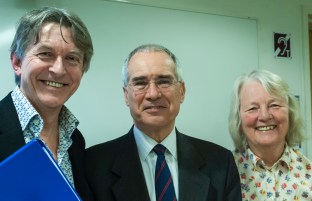 We have been working on climate for years. Recently we helped to publicise a meeting at LSE with Lord Nicholas Stern and Conor Gearty about the contribution of Laudato Si. Now J&P, CAFOD and CARITAS are clubbing together to run some workshops around the diocese. The diocesan property department has put out a handout on reducing our Environmental Footprint*. See our poster with the 3 dates: 24th September in Hitchin, 1st October in Chiswick and 15th October in Kensington.
You can also have a look at the diocesan advice on how to green your parish buildings and property, and what to think about if your parish wants solar panels.
*DOW Reducing Environmental Footprint HANDOUT – April 2016
Selecting Solar Panels – final draft (4)
Come along to our workshops and get stuck into cutting the carbon! The UK Climate Act sets us a target of reducing emissions by 80% by 2050. What can WE do to help?
Lord Stern on Climate Change and Laudato Si’ at LSE
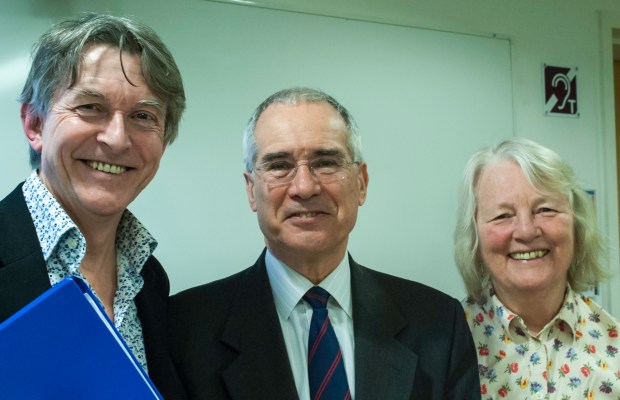
The LSE Student Catholic Society and the Department of Housing and Communities held an exciting discussion on Thursday March 10th, with renowned environmental economist Lord Nicholas Stern, and Human Rights professor Conor Gearty, who is also a Catholic. The dialogue between these two was chaired by Catholic Anne Power, professor of Social Policy and head of LSE Housing and Communities department. The discussion was attended by a packed audience of around 135 people in a hall designed for 120, and was a mix of academics and church climate activists. Lord Stern endorsed many of the points made by Pope Francis, on the need for solidarity between rich and poor worlds, and the necessity of a carbon tax in order to support sustainable development in poorer countries. He highlighted the success of the Paris Climate Talks, where 195 nations had agreed on a global strategy on climate change, without minimising the fragility and difficulties of such an agreement. When asked about the Pope’s denial that population increase was contributing to the problem, he answered that while he felt that this was an issue, he agreed with Pope Francis that it was not the main one, and that population was in any case decreasing for a number of reasons, separately from the climate issue. Lord Stern thought that action could take place on several levels, but that acting in community with others we could encourage and be encouraged by change. One of the factors which had altered the thinking of governments since the Copenhagen talks was seeing the many alternatives possible to our carbon emitting economies. We could continue to work with communities but also to lobby our political leaders to focus on reducing our use of fossil fuels according to the targets we set ourselves in Paris.
The event was supported and publicised by Westminster Justice and Peace. LSE is producing a transcript of the discussion which will be available shortly.
A World Free from Nuclear Weapons, or renewal of Trident?
The statement below expresses our view on the Trident nuclear weapons system. The climate good we are trying to work for is not helped in any way by renewing this weapon which, when used, is so pervasively destructive of humanity and the environment. We add our voices to all those who campaign for an end to our nuclear deterrent. We think Trident should be scrapped. Our statement explains why.
As Labour attempt to resolve their defence policy in relation to nuclear weapons, we look at the arguments for and against retaining the UK Trident system in the light of our Faith, and call for an unequivocal refusal to renew Trident, this costly and deadly weapons system. Pope Francis called for an end to nuclear weapons in October last year, saying: ‘There is an urgent need to work for a world free from nuclear weapons, in full application of the Non-Proliferation Treaty in letter and spirit with a goal of a complete prohibition of these weapons’. How is this to be achieved? There are vital questions of security, economics and the very purpose of nuclear weapons to be considered.
How did it start? Some remember the devastating destruction caused by the bombs dropped on Hiroshima and Nagasaki and were horrified to read and see, soon after, pictures of a bomb that could vaporise human flesh for a half mile radius and burn thousands of men, women and children, who were miles away from the epicentre. Perhaps we were made aware of the horrors through the Campaign for Nuclear Disarmament founded in the 1950s, and Ban the Bomb marches to Aldermaston, which went on for decades. Yet, not only do the tragic consequences continue 70 years later, but there are now 9 countries in possession of nuclear weapons, some not even signed up to nuclear armaments limitation treaties (Israel denied it had them) – hardly a sign that the issue has ‘gone off the boil’.
The UK’s nuclear capacity today
“The UK’s nuclear deterrent force currently consists of an operational system known as Trident: four Vanguard-class submarines each capable of carrying up to 1611 D-5 ballistic nuclear missiles. At least one submarine constantly is on patrol, while one undergoes maintenance; and the other two carry out manoeuvres” Wikipedia
This is operated by the Royal Navy and based at Clyde Naval Base on Scotland’s West Coast – Faslane and Coulport are the two key locations. Each of the submarines can be armed with eight missiles and 40 warheads: so a total of 160 warheads. Frighteningly, each of the 160 warheads has eight times the explosive power of the bomb that destroyed the Japanese city of Hiroshima in 1945. It is very hard to contemplate the capability of destroying over 1,200 Hiroshimas! It is estimated that 75,000 people died in that blast; another 140,000 died some days/weeks later. The death toll reached 200,000 by the end of 1950. There are still health problems for the people of Hiroshima today.
The Modern Potential of Nuclear Weapons
Most of us have no idea of the tragedy, suffering and devastation caused by a nuclear bomb; Trident replacement is discussed like a play-station game. The consequences of using these weapons would far outstrip those of the World War II bombs. One image of the stupidity and insanity of even a single warhead, for instance, is, two men in a large tank of petrol up to their shoulders; one has a lighter which he is threatening to strike to destroy his enemy! The fact is, both will be incinerated by the strike!
The arguments
1 Deter or Use Politicians frequently argue that atomic weapons are a deterrent never to be used. But this had been argued right up to when politicians and generals had them dropped on Japan in 1945, almost as soon as they were available. Ever since, there have been plans for nuclear wars. US bombers planned for and practised small and large scale nuclear bombing runs against North Korea with live nuclear bombs in the early 1950s. President Eisenhower also threatened China with nuclear bombs, saying “I see no reason why they shouldn’t be used just exactly as you would use a bullet or anything else”. The threat of a nuclear war between the US and Soviet Union escalated in the 1960s. The Soviet Union put medium range nuclear missiles on Cuba, from where they could reach the US West Coast within minutes. The US had placed similar missiles in Turkey. Fear spread across the globe as it became clear that a false alarm could trigger a missile attack. Generals now discussed a “first strike” policy. Rather than risk missiles being destroyed before hitting their targets, they prepared to hit first and discussed ways to “win” a nuclear war. To these ends, the US first put nuclear bomber planes on permanent flight. By the 1980s, following a near-disastrous crash, both NATO and the Eastern Bloc began siting short range missiles across Europe. US President Ronald Regan even talked of a “limited nuclear war” in Germany. After the fall of the Soviet Union these dangers began to feel like ancient history.
Current tensions But tensions between superpowers are rising again. NATO ally Turkey shot down a Russian jet bombing Syria last November. There are regular standoffs between the US, its allies and China over control of the South China Sea. The only way to make sure nuclear bombs are never fired is surely to get rid of them. The danger is exacerbated by the number of countries which possess nuclear weapons and yet are not signed up to nuclear armaments limitation treaties. Israel denied it even had them – it took Mordechai Vanunu to expose them. He served 18 years in an Israeli jail and was released in 2004. He is still victimised for the stand he took.
2 Shield or Target? Supporters of Trident and nuclear weapons generally try to convince us that having atomic weapons will keep us safe and deter wars. Britain has had nuclear armed submarines on patrol since the 1960s. Yet, they did not deter war, conflict or terrorists. ISIS gunmen or any other terrorist will not be prevented from launching an attack on Britain because the state has nuclear weapons. The many attacks or atrocities or suicide bombers and so on, in recent years, have not been resolved by possessing nuclear weapons.
3 Job losses or new opportunities? In the nuclear debate, the idea of job losses is thrown in as a final salvo. Surely £160 billion could be put to better use – to save lives; to fight diseases; to educate our young people, to develop renewable energy.
Spend on Peace, not War If some of the hundreds of billions of pounds due to be spent on quickly out-of-date nuclear weapons, were directed, along with humanity’s energy, skills, wisdom, cash, and peace negotiating abilities, towards work for peace, then we might succeed. Yesterday’s enemies can become today’s friends. Many peace workers, such as Mordechai Vanunu, have struggled and suffered to rid the world of these weapons of mass destruction. We should not let their stand be in vain.
A Will for Peace As individuals, groups and nations, we need a new ‘way of thinking’ about how nations should relate to one another. We endorse the Pax Christi vision on nuclear weapons:
‘Integrity will bring peace, justice give everlasting security’ (Is 32:17)
The peace we seek cannot come from weaponry, but from a commitment to justice and nonviolent actions which recognise the dignity of every human person and all creation. We reject models of security that rely on fear, the demonisation of others or on the strength of arms – conventional and nuclear.
We need to support and listen to those who have been on the Peace Trail for years and years. We need to believe that international peace is possible. We need work for peace and to dialogue with our so-called enemies. We need to scrap Trident.
It is ridiculous to make efforts to save our planet on the one hand, and to build up nuclear weapon systems on the other. Our world is too small and precious to have it destroyed.
Westminster Commission for Justice and Peace
February 2016
The Pope on Care for Creation
Pope Francis recently released this video about his February prayer intention for Care for Creation.
Two publications just out!
Two Blockbusters from Justice & Peace!
The Paris Diaries – Laudato Si’ Climate Cycling Pilgrimage2Paris
The Paris Diaries is a written and photo account of our epic ride for the UN COP 21 Climate Talks at the end of 2015: who went, why we went, how, and what happened when we got there. It witnesses to our passion for the climate, and provides a tribute to all the fine people, fellow activists for the climate that we met on the way. It celebrates the agreement reached by international leaders, and concludes with a call to expand our efforts for the climate. Fr Joe Ryan concludes, ‘We need to keep vigilant and hold our leaders to account. We all need to play our part. A lot of unpacking, monitoring and action will have to go on in the days ahead’.
40 glossy pages, colour print Price £3 inc postage
Lent Fast, Vegetarian Feast – Go veggie for Lent!
The first modest little step is this cookbook for Lent! We have all read about the huge problems created by our meat-dependent diet: the amount of water and the acres of grain needed for one kilo of beef. We noted that ‘Agriculture is a significant driver of global warming and causes 15% of all greenhouse gas emissions, half of which are from livestock’. But how to change habits of a lifetime? We suggest trying to go veggie at least during part of Lent. Our cyclists and Justice and Peace activists have contributed 40 tried and tested recipes – one for every day of Lent. Our personal commitment really counts.
40 glossy pages, colour print Price £3 inc postage
Order an equal number of each at £5 for 2 from Westminster Justice and Peace, 4 Vincent Road, London N15 3QH or email justice@rcdow.org.uk.
Lent Cookbook Now Available

Thank you to all who contributed a recipe (or two!) to our new vegetarian cookbook, which is now available to order in time for Lent. Eating meat puts a huge strain on the Earth’s resources, and also contributes a large number of carbon emissions to the atmosphere. Therefore, we suggest going veggie for Lent. The 40 recipes in this book are a good place to start.
Also available are our ‘Paris Diaries’, a photo journal of our exciting cycle ride to Paris for the UN conference on climate change. It features a written account of the ride as well as an in depth reflection written by our chair Fr Joe Ryan.
Get the books for £3 each or £5 for both. Download an order form here.
Go Veggie For Lent

Now that the dust has settled after our 150 mile cycle pilgrimage to Paris for the climate talks, it is important that the pace is not lessened in the fight for climate justice. World leaders must be held accountable to the promises made in Paris, and we should take action in our own lives to reduce our carbon footprints.
The rearing of livestock is a huge environmental burden, not only because of the huge amounts of land required to house animals or to grow the grain to feed them, but also because of the emissions generated by their slaughter, packaging and transport.
Lent is usually a time when we think about giving something up, such as alcohol or chocolate, so why not meat? At Justice and Peace, we thought about ways we could continue to pray and fast for the climate, and came up with the idea of producing a Lenten vegetarian cookbook featuring 40 tasty veggie recipes.
However, we need your help!
If you have a vegetarian recipe you would like to share with us then download the form here, fill it out including the ingredients, method, backstory, any credit if necessary, and a photo (of the dish or yourself or both), and send it back to us at justice@rcdow.org.uk no later than Monday 17 January.
Happy eating!
The Paris Diaries – Cycling Pilgrimage
Danny Bonnett, a wind turbine engineer from Bristol and a cycling pilgrim, shares his experiences of the road to Paris.

The group get ready to take the train to Newhaven
Day 1 – Newhaven to Dieppe
Mileage: almost nil.
Events: a few episodes of queasiness, great hospitality in Dieppe, and a great tour of historic churches – if only we had known how cold it was going to be! Our hosts were so welcoming it was lovely. Continue reading
Green Party MEP gives support to Paris cycle ride

Barbara Kentish and Fr Joe Ryan with Jean Lambert, MEP
Barbara Kentish and Fr Joe Ryan met with Jean Lambert, London’s Green Party MEP, on Friday 13th November at her London offices to discuss our pilgrimage to Paris as well as our hopes for the climate change talks.
She was very helpful and supportive, giving guidance and providing us with excellent background knowledge of the conference: Continue reading
 Diocese of Westminster Justice and Peace Commission